DayTradeToWin Review

A Deep Dive into ABC Method and Trade Scalper Signals!

Greetings, traders! Welcome back to our journey in the world of finance. Today, I’m excited to lead you through the dynamic realm of market intricacies, showcasing the prowess of both the ABC method and our Trade Scalper software. But before we plunge into the details, it’s crucial to emphasize the inherent risks in trading. Only invest what you can afford to lose. Now, let’s delve into the secrets of the markets together! Head over to DayTradetoWin.com, where we provide the ABC method for free with a straightforward free member account. This distinctive approach, rooted in price action, dissects the day into three pivotal parts: A, B, and C. I’ll illustrate how combining these segments with the ABC method can grant you a strategic edge in your trades. Today, our focus is on the E-Mini S&P, demonstrating the ABC method’s efficacy. As volatility surges, it often signals a potential trend. Monitoring the Average True Range (ATR) enables you to identify market shifts and seize opportunities. The ABC method, with its clarity and simplicity, delivered a well-timed short signal, resulting in a successful breakout trade. As we approach the holidays, let’s not lose sight of the season’s essence—cherishing moments with family, friends, and embracing the promise of a new year. On the topic of celebrations, check your email for exclusive promotions on our software. We’re offering fantastic discounts to enhance the rewards of your trading journey. Now, let’s augment your trading toolkit with the Trade Scalper. This program, compatible with various markets, excels in detecting short-term opportunities. I’ll guide you through today’s signals, showcasing the software’s reliability for both long and short trades. Remember, the key is selectivity, and feel free to use additional indicators if needed. Aligning with Trade Scalper signals, we’ve witnessed a string of successful short and long opportunities. The double confirmation from multiple signals serves as a robust indicator of a trend. Understanding when to enter and exit positions empowers traders to maximize each opportunity, as exemplified by the signals throughout the session. As a special holiday treat, exclusive discounts on our software packages are available. For those committed to advancing their trading skills, consider joining our mentorship program, granting access to all our tools at a discounted rate. Visit DayTradetoWin.com, sign up for a free member account, and explore the myriad possibilities. Conclusion Before we conclude, don’t forget to subscribe to our YouTube channel for more insights. Check the description for valuable links to our site and software. If you have any questions, feel free to reach out via email. Now, click on the videos on your screen to delve deeper into the world of trading price action. Wishing you a joyous and profitable holiday season! Happy trading!

Market News

S&P 500 Futures Respond Bullishly to Fed’s Rate-Cut Signals, Dow Gears Up for Breakthrough

Early on Thursday, U.S. stock index futures saw gains as investors continued to applaud an unexpected dovish shift in the Federal Reserve’s policy. Here’s the current status of stock-index futures trading: Wednesday’s market performance showed the Dow Jones Industrial Average rising 1.4% to 37090, the S&P 500 increasing 1.37% to 4707, and the Nasdaq Composite gaining 1.38% to 14734. Driving the market are key factors: Investor sentiment remains positive after the Federal Reserve’s surprising announcement, signaling the conclusion of its interest rate hike cycle and contemplating a 75 basis points rate cut in 2024. The Bank of England and the European Central Bank are expected to maintain their main interest rates at 5.25% and 4%, respectively. Anticipation of lower U.S. borrowing costs in the coming year has propelled equities and bonds, with the Dow Jones Industrial Average reaching an all-time high and the 10-year Treasury yield dropping to its lowest level since early August. Stephen Innes, managing partner at SPI Asset Management, noted the unexpected shift’s harmonious resonance across global financial markets. Investor optimism persisted on Thursday, with 10-year Treasury yields dropping to 3.95%, and stock-index futures extending their rally. The Dow was set to establish a new record, aided by Apple shares. The S&P 500, up 22.6% in 2023, was on course to open only about 2% below its record. The S&P 500 Equal Weight Index also reached its highest level in 21 months. Despite positive trends, some analysts cautioned against potential overconfidence and a short-term overextension of the rally. The CBOE VIX index, gauging expected S&P 500 volatility, was at its lowest in about four years, and the S&P 500’s 14-day relative strength index closed at 78.2, surpassing the overbought threshold of 70. Mark Newton, head of technical strategy at Fundstrat, highlighted positive aspects but expressed concerns about elevated RSI readings and an unchanged risk/reward scenario after a roughly 13% rally in the last seven weeks. Economic updates scheduled for Thursday include weekly jobless claims, November retail sales, and November import prices at 8:30 a.m. Eastern. Business inventories for November will be released at 10 a.m. Costco and Lennar are set to release their results after the closing bell.

DayTradeToWin Review

Mastering Dual-Market Trading: A Live Experiment with Trade Scalper

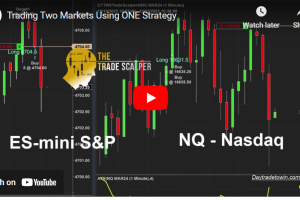
Good morning, fellow traders! Today, we embark on an exhilarating journey, navigating the uncharted waters of trading not one but two markets simultaneously. Join me as we apply the esteemed Trade Scalper method to both the E-mini S&P on the left and the NASDAQ on the right. The anticipation is tangible, yet it’s crucial to remember that trading carries inherent risks. Only engage with funds you can afford to lose. Setting the Scene In the vast landscape of trading options—E-mini S&P, NASDAQ, Dow, crude oil, or Euro bonds—many traders grapple with the decision. Responding to your requests, today we’re undertaking something special—simultaneously trading the E-mini and NASDAQ using the Trade Scalper program. Whether executed manually or with software assistance, this experiment promises valuable insights and, hopefully, profitable outcomes. Witness as I seamlessly navigate the Trade Scalper software integrated into Ninja Trader charts. The signals you witness are not fleeting; they remain on your chart, providing a transparent record of entries and exits. It’s a level playing field for all Trade Scalper users, ensuring consistency in signals. The Left and the Right On the left, we have the E-mini S&P; on the right, the NASDAQ. A quick disclaimer: a slight oversight means the NASDAQ lacks a stop and profit target. Nevertheless, fear not, as we’re in for an exciting ride. Let’s observe it unfold, guided by on-screen text for clarity. With a captivating soundtrack accompanying the experiment, we witness the Trade Scalper program in action. The markets evolve, signals trigger, and excitement builds as we analyze the real-time performance of our dual-market trading strategy. Closing the Chapter As the dust settles, the E-mini S&P delivers around $500, while the NASDAQ contributes a solid $600—more than sufficient for a day’s work. Remember, tomorrow presents a new opportunity. Guard against overtrading, employ stops judiciously, and contemplate joining our accelerated mentorship, inclusive of the potent Trade Scalper. For those eager to delve deeper into trading, explore our free member account at daytradetowin.com. Subscribe to our YouTube channel for a treasure trove of educational content, and feel free to reach out with any questions. Trading may not be everyone’s cup of tea, but let’s ascertain if it’s the right fit for you. Thank you for joining me on this dual-market adventure. Until the next class, happy trading!

Market News

Investment Revolution: Why This New Research Discourages Bonds and Target-Date Funds

Approaching the year’s final Federal Reserve meeting, stock markets continue their ascent to new record highs. The pivotal question remains: Can the Fed sustain this upward trajectory? The answer hinges on the forthcoming insights from Chair Jerome Powell and the dot plot detailing future rate expectations. Diverging from the current financial discourse, our highlighted investment perspective challenges the prevailing wisdom by asserting that the commonly endorsed balanced portfolio strategy lacks foundation, proposing instead that stocks alone can secure retirement wealth. Aizhan Anarkulova, a Ph.D. finance candidate at Emory University, alongside finance professors Scott Cederburg of the University of Arizona and Michael S. O’Doherty of the University of Missouri at Columbia, contest the traditional approach of life cycle investing. This strategy advocates diversification between stocks and bonds, with a higher equity allocation for younger individuals. In their recently published research paper, the scholars question the fundamental principles of life cycle investing and its age-dependent diversification. Utilizing a dataset spanning 38 countries and nearly 130 years, they conducted one million computer-generated simulations on American households, assessing four critical retirement outcomes: wealth at retirement, retirement income, savings, and assets at death. The research delivers a compelling verdict: maintaining an equilibrium of 50% domestic stocks and 50% international stocks throughout one’s lifetime outperforms age-based strategies involving a mix of stocks and bonds. This approach proves superior in terms of building wealth, sustaining retirement consumption, preserving capital, and generating bequests. Additionally, households adopting a 50/50 split between domestic and international stocks are considered “less likely to exhaust their savings and more likely to leave a substantial inheritance.” Specifically, strategies centered on domestic stocks alone would have resulted in an average wealth balance of $1.05 million, surpassing the balanced portfolio’s $760,000. Acknowledging the challenges associated with embracing an all-stock approach, the professors argue that the high cost of a balanced portfolio, in terms of forgoing “enormous economic gains” from a stocks-focused strategy, makes the all-equity approach more appealing. In light of these findings, the scholars recommend revising adviser and pension regulations to consider all-equity strategies as viable safe-harbor alternatives. They underscore the importance of financial education promoting a steadfast approach, reporting standards prioritizing long-term performance, and regulations facilitating savers in maintaining a long-term focus.

DayTradeToWin Review

Navigating 2024: Unveiling Market Trends Through the January Effect

Greetings Traders! As we stand on the brink of 2024, it’s time to reflect on the past year’s lessons and prepare for the exciting journey ahead in the trading realm. In this blog post, we will explore the art of forecasting using the January effect—an insightful tool known for its reliability in predicting market trends. However, before we dive into the potential opportunities of 2024, it’s crucial to emphasize responsible trading and the importance of using funds wisely, acknowledging the inherent risks in trading. Assessing Market Volatility with ATR: As we navigate the remaining weeks of December 2023, a crucial step is to assess current market conditions. Utilizing the Average True Range (ATR) with a setting of four allows us to gauge volatility levels. Understanding volatility is paramount, as it shapes our trading strategy. Higher volatility often signifies more trending markets, presenting opportunities for larger profit targets. The January Effect: A Predictive Tool: Let’s focus on the January effect and its role in forecasting. This approach involves analyzing January’s market performance to predict the overall trend for the year. By placing vertical lines on the first trading days of both January and February, we can determine if January was an up month, signaling a potentially bullish year, or a down month, indicating a different trajectory. Case Studies: Applying the January Effect: To illustrate the effectiveness of the January effect, let’s examine historical data from 2021, 2022, and 2023 for both the S&P 500 and NASDAQ. Conclusion and Anticipating the Future: The January effect proves to be a valuable ally for traders seeking to anticipate market trends. As we look ahead to 2024, the insights derived from this forecasting technique can inform our strategic approach to trading. Stay tuned for part two, where we’ll delve into specific trading techniques, including leveraging retracement tools, to capitalize on market dynamics throughout the year. Don’t forget to subscribe to the DayTradetoWin YouTube channel for deeper insights into price action and trading strategies. Whether you’re a seasoned trader or new to the trading world, continuous learning and adapting to market conditions are keys to success. Stay tuned for the upcoming installment, where we’ll explore practical strategies for navigating the markets in 2024. Happy trading!

Market News

Monday’s Stock Market Shake-Up: Unusual and Extraordinary

Doubts are emerging on Wall Street regarding the enduring appeal of the once-praised “Magnificent Seven.” An intriguing development unfolded in the U.S. stock market on Monday, triggering speculation and prompting concerns about the future trajectory of market leadership. Despite all three major U.S. equity indexes achieving fresh 52-week highs, with the Dow Jones Industrial Average reaching its highest level in almost two years, none of the “Mag 7” tech giants managed to close in positive territory. Each member of this elite group of megacap technology stocks concluded the session significantly lower, except for Microsoft Corp. This occurrence is highly atypical. The Nasdaq seldom finishes higher without contributions from its heavily weighted stocks. According to Dow Jones Market Data, Monday’s session marked only the second time since Meta Platforms Inc.’s market debut in 2012 that the Nasdaq-100 finished in the green while all seven “Mag 7” stocks closed in the red. The last instance was on November 9, 2016, following Donald Trump’s surprising victory in the U.S. presidential election. The PHLX Semiconductor Index, a pivotal gauge of the semiconductor industry’s performance, achieved a new record closing high on Monday without support from Nvidia Corp., an artificial intelligence juggernaut that has experienced a remarkable sales surge and a share price increase of over 200% this year. Market strategists find the current situation notable, especially as the year-end approaches. Investors are contemplating who the new leaders in the stock market might be in 2024 after a year dominated by just seven stocks. Steve Sosnick, Chief Market Strategist at Interactive Brokers, emphasized the unsustainability of a market where a handful of stocks lead everything, expressing hope that other S&P 500 members would catch up. Despite the concerns, caution is advised against interpreting Monday’s movements as a definitive indication of a sector leadership rotation. Market breadth appeared robust, with a substantial number of stocks rising in the Nasdaq-100 and the S&P 500. Semiconductors, notably boosted by Broadcom’s significant gain, took the spotlight on Monday, reflecting continued investor interest in the tech sector and the potential shift towards the next tier of technology stocks.

Scroll to Top