Market News

U.S. Stock Market Watch: The Effect of Trend-Following Fund Adjustments

Adding to the array of challenges facing the U.S. stock market, a new concern emerges: systematic trend-following funds are reducing their market exposure, potentially exacerbating downward pressure on the markets in the upcoming weeks. Goldman analysts estimate that commodity trading advisors (CTAs), a subset of trend-following hedge funds typically engaged in futures markets, shed approximately $40 billion worth of exposure to U.S. stocks last week. This rapid pace of CTA selling, according to Goldman’s data, sets a record. Fortunately, the Goldman team anticipates that the selling pressure from systematic funds will diminish in the coming days. However, not everyone shares this optimistic outlook. A team at UBS, in a recent note obtained by MarketWatch, forecasts an additional $20 billion to $30 billion in CTA selling over the next two weeks. According to their analysis, this would result in systematic funds holding a net short position on stocks for the first time since November of the previous year. The S&P 500 faced a 3.6% decline in the quarter ending in September, marking its first quarterly downturn in a year. Since then, stocks have continued to slide, with the index decreasing by another 0.5% since the beginning of October. In total, the S&P 500 has experienced a nearly 7.5% drop since its peak on July 31. By comparison, the index closed at 4,263.75 on Wednesday following a 0.8% increase, marking its most significant daily gain in three weeks, according to FactSet data. On the flip side, the Nasdaq Composite saw a 1.4% rise on Wednesday, closing at 13,236.01, while the Dow Jones Industrial Average climbed 127.17 points, or 0.4%, reaching 33,129.55. Easing Treasury yields were seen as a potential factor in this uptick, offering stocks a temporary respite. Increasing yields on Treasury bonds, particularly for longer-dated maturities, have exerted pressure on stocks, with the yields on the 10-year and 30-year Treasury bonds reaching their highest levels in 16 years earlier this week. Rising bond yields can lead to higher borrowing costs for corporations, potentially impacting economic growth, while also diminishing the appeal of U.S. equity valuations compared to bonds. For instance, these rising yields have recently driven the U.S. equity risk premium to its lowest level in over two decades, hovering just under 0.90 earlier this week, as per Dow Jones Market Data. This indicates that the compensation investors can expect for holding stocks rather than bonds is currently less attractive, at least in theory. Investors have also pointed to the lofty valuations of mega-cap technology stocks and concerns about the Federal Reserve’s plan for higher interest rates as contributing factors to the ongoing market selloff.

DayTradeToWin Review

Mastering Day Trading with the Atlas Line and Trade Scalper

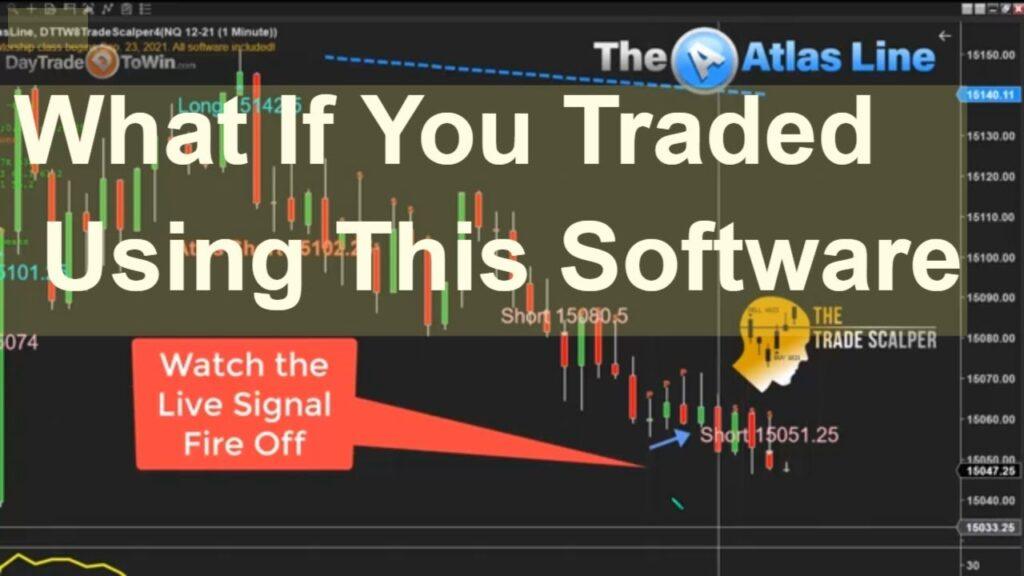
Are you prepared to embark on a thrilling journey into the realm of day trading? Whether you’re an experienced trader or just starting, the Atlas Line and Trade Scalper are potent weapons in your trading toolkit. The Atlas Line is a versatile trading tool that furnishes precise signals grounded in price action and market trends. One of its standout features is its adaptability across different time zones, granting accessibility to traders globally. Whether you’re in the Pacific, Central, Mountain, or even engaged in overnight trading during the London session, the Atlas Line can be customized to suit your trading schedule. When employing the Atlas Line for trade scalping, comprehending its signals is paramount. If the Atlas Line issues a short signal, it’s time to concentrate solely on short trades, actively seeking opportunities to sell in the market. However, it’s important to note that trading goes beyond blindly following signals. Crucial consideration should be given to market volatility, which is often represented by the Average True Range (ATR). A higher ATR suggests increased market volatility, warranting caution. Even if signals appear favorable, exercising care in executing trades is imperative under such circumstances. The Atlas Line presents both strength and pullback trades, aiding in the assessment of trend strength and the suitability of short selling. Strength trades juxtapose the current trend with previous strength trades, while pullback trades do the same for pullbacks. This analysis ensures alignment with the prevailing trend direction. Trade Scalper: Proficiency in Short-Term Price Action The Trade Scalper is a valuable tool for day traders, specialized in capturing rapid short-term price movements. When combined with the Atlas Line, it serves as an effective filter, allowing you to pinpoint trade opportunities that align with your preferred trading direction. To maximize the synergy between the Trade Scalper and Atlas Line, focus primarily on short trades when the Atlas Line signals short. This strategic alignment enables fine-tuning of your trading approach, elevating your chances of success. Maintaining an awareness of ATR is key to establishing practical profit and stop-loss targets. Tailor your trading strategy to the current market conditions, ensuring that risk remains within acceptable parameters. The Crucial Role of Risk Management While we’ve extolled the virtues of these trading tools, emphasizing robust risk management is imperative. Relying solely on rigid price-based stops is discouraged. Instead, incorporate a blend of exit strategies: Remember, successful day trading demands adeptly capturing profitable trades and astutely managing losses. Employ these exit strategies to shield your capital and maintain a balanced trading approach. Ready to Take the Plunge? Day trading offers excitement and potential rewards when equipped with the right tools and strategies. While the Atlas Line and Trade Scalper offer valuable insights and opportunities, adapting them to your risk tolerance and market conditions is paramount. If you’re a novice day trader or seeking to hone your skills, consider enrolling in a mentorship class or exploring resources centered on price action, such as daytradetowin.com. With dedication, practice, and ongoing learning, you can master the art of day trading and confidently navigate the intricate world of financial markets.

Market News

S&P 500’s Support in the Face of Bond Market Pressures

Key Insights for Today’s U.S. Trading Session While you were away, the yield on the 30-year Treasury briefly exceeded 5% earlier today, indicating ongoing turbulence in the bond market. Influential figures in the world of finance are sounding the alarm: Amidst the stock market’s erratic performance, technical analysts are closely monitoring a critical level for the S&P 500, the focal point of our discussion today. Michael Kramer, the founder of Mott Capital Management, emphasizes the importance of the 4,200 level. He points out that it not only corresponds to the 200-day moving average (DMA) but also signifies the S&P 500’s loss of a 20% gain from its October 2022 lows. The S&P 500 closed at 4,229.45 on Tuesday, reflecting a 1.37% decline. Kramer highlights the potential for investor unease if the 200-day moving average is breached, signifying the end of the bull market. The 200-DMA is a critical indicator for many technical analysts in assessing long-term trends. Despite Tuesday’s sell-off, the S&P 500 remains 21% above its October intraday low. A 20% decline from its July 31 high would be necessary to exit the bull market. Kramer underscores the significance of the 4,200 level, both from a technical and psychological perspective. He suggests that a breach could lead to further deterioration, especially if weak job data on Friday triggers a collapse in rates. Heisenberg (@Mr_Derivatives), a commentator on the stock market, has also been discussing a pivotal moment for the S&P 500. He anticipates a visit to the 4,200 level in the near future, possibly overshooting to 4,185 to 4,190, followed by a reasonably strong rally. On a different note, Keith Lerner, the Co-Chief Investment Officer and Chief Market Strategist at Truist Advisory Services, sees an opportunity as the stock market approaches its most oversold condition since autumn 2022, particularly as it nears the 4,200 support level. He expects a temporary dip below this level, given the high number of observers. The good news is that “the percentage of stocks within the S&P 500 trading above their 50-day moving average is now below the 20% threshold considered oversold and sits at 15% currently,” according to Lerner. This suggests indiscriminate selling and historically tends to precede market rebounds, especially in stronger markets. However, the outcome will hinge on yield stabilization and the upcoming earnings season. For investors below their benchmark equity targets, there may be an opportunity to “increase equity exposure and bring weightings closer to a neutral position,” Lerner suggests.

Market News

Dollar Dominance: How It’s Affecting Stock Performance

U.S. Equity Futures Swing Amid Dollar’s Rally and Fed Rate Hike Concerns On Tuesday, U.S. equity futures exhibited a see-sawing performance, influenced by the surging dollar and apprehensions surrounding potential Fed interest rate hikes, along with surging Treasury bond yields. The U.S. dollar index, which gauges the greenback against six major global currencies, recorded an overnight gain of 0.13%, reaching 107.047. It crept closer to its highest levels since November of the previous year. These fluctuations followed statements from Federal Reserve officials, including Cleveland Fed President Loretta Mester, emphasizing the necessity of raising interest rates to curb inflation in the robust U.S. economy. Mester articulated, “I suspect we may well need to raise the fed funds rate once more this year and then hold it there for some time as we accumulate more information on economic developments and assess the effects of the tightening in financial conditions that has already occurred,” during a public event in Cleveland. The CME Group’s FedWatch tool currently indicates a 25.7% likelihood of a quarter-point rate hike at the conclusion of the Fed’s upcoming two-day policy meeting on November 1. The odds of a December hike, whether a quarter or half point, stand at just under 45%. Meanwhile, Treasury bond yields continued their ascent, following the most significant one-day increase in nearly a month on Monday. Benchmark 10-year notes reached a new 2007 high of 4.702%, and 2-year notes hovered just below 5.1%. These substantial upward movements, combined with the hawkish rhetoric from Fed officials, place considerable attention on this week’s job market data. Investors are eager to discern if labor market tightness will fuel inflation pressures in the final months of the year. Key economic events this week include the Bureau of Labor Statistics’ monthly jobs openings report, scheduled for release today at 10:00 am, ADP’s monthly employment report on Wednesday at 8:15 am, weekly jobless claims on Thursday at 8:30 am, and the crucial September non-farm payrolls report ahead of the opening bell on Friday. As Wall Street prepares to commence the trading day, S&P 500 futures indicate a modest 4-point gain at the opening bell, while Dow Jones Industrial Average futures suggest a 22-point uptick. Nasdaq futures show a slight 4-point increase. In international markets, the strengthening dollar has contributed to global stock market pressures, with the MSCI World index sliding 0.3% to a four-month low. The Asia ex-Japan benchmark experienced a significant 1.4% decline. In Japan, the Nikkei 225 closed 1.64% lower as the yen reached a multi-year low of 149.87 against the dollar. Japanese Finance Minister Shunichi Suzuki discussed the possibility of currency intervention. Japan resorted to purchasing yen to stabilize the currency in international markets, marking the first intervention in 24 years since it dipped below the 145 mark in September of the previous year. In Europe, the Stoxx 600 opened 0.3% lower in Frankfurt, while the FTSE 100 saw a 0.28% rise as the pound depreciated to 1.2067 against the U.S. dollar.

DayTradeToWin Review

Strategies for Securing Profits and Setting Stops in Scalping

Hello, fellow traders! Today, we’re delving into the world of profit targets, stops, trade management, and the effective use of the Trade Scalper software, exclusively available at DayTradeToWin.com. The Trade Scalper is a powerful tool in the realm of price action trading. This course equips you with the skills to scalp virtually any market, regardless of the charting platform you prefer. But what is scalping exactly? It’s all about executing lightning-fast trades with precision, aiming for narrow profit targets while diligently managing stop losses. The goal? Consistent wins throughout your trading day. Throughout this course, you’ll become a master at identifying trade opportunities independently, without relying on software. We believe in full transparency – the entire strategy is laid out for you to grasp thoroughly. Of course, if you prefer, you can also leverage the Trade Scalper software designed specifically for NinjaTrader. This tool provides precise entry signals, guiding you to the exact moment to enter a trade, along with valuable insights into market direction. Whether you choose to navigate the markets manually or with the assistance of the Trade Scalper software, you’re well on your way to a more confident and successful trading journey. Let’s dive in and unlock the potential of scalping! Conclusion In summary, mastering trade scalping requires precision, patience, and well-defined strategies. Always consider your risk-reward ratio, use automation tools like ATM strategies, and avoid common pitfalls like overtrading. Trading is a journey, and with the right approach, you can navigate it successfully. If you have any questions or need further guidance, feel free to reach out to me at daytradetowin.com. We offer mentorship and various trading tools, including the Atlas Line and Trade Scalper. Stay tuned for more valuable insights on approaching the markets with a price action mindset. Until next time, I’m John Paul, and I’ll see you soon. Happy trading!

Market News

Q4 Stock Market Potential: What Could Set This Year Apart?

Ryan Belanger, a strategist from Claro Advisors, has expressed concerns that the fourth quarter of 2023 might not live up to historical averages. He cites macroeconomic forces indicating a potential recession as the reason behind this apprehension. While the third quarter of 2023 adhered closely to stock-market seasonality patterns, with both August and September proving to be challenging months for U.S. equities, some market experts see the possibility of a stock-market resurgence in the final quarter. Historically, the fourth quarter has been the strongest quarter for the U.S. stock market, with the S&P 500 index showing remarkable gains, nearly 80% since 1950, and an average increase of more than 4%, double the next best quarter, according to Ryan Detrick, Chief Market Strategist at Carson Group. October is renowned for its extreme volatility and historical stock-market crashes, including the Panic of 1907, the Wall Street Crash of 1929, and Black Monday in 1987, all occurring in October. However, Detrick suggests that, in general, October has been a “fairly decent month,” especially following two consecutive months of stock declines. Recent increases in Treasury yields and the strength of the U.S. dollar, along with seasonal market weakness, contributed to the stock market’s downturn in September. The Federal Reserve’s interest rate decisions and Jerome Powell’s press conference further accelerated these trends. Simultaneously, energy prices remained high in September, hovering above $90 a barrel, creating concerns about inflation and the potential need for more interest rate hikes. As a result, the S&P 500, Dow Jones Industrial Average, and Nasdaq Composite all posted losses in both August and September. Ryan Belanger, founder of Claro Advisors, anticipates that despite strong seasonal factors, the fourth quarter of 2023 may fall short of historical performance due to indicators pointing toward a recession, such as elevated bond yields and the Federal Reserve’s contemplation of raising interest rates. However, Ryan Detrick of Carson Group remains cautiously optimistic, noting that historical data indicates a potential stock-market rally in the fourth quarter, especially after weak August and September performances. Detrick points out that in the past, when stocks declined 1% or more in the preceding two months, October rebounded with gains of 10.8%, 8.3%, and 8.0%, respectively. Furthermore, the fourth quarter has shown positive returns in 12 out of 13 instances since 1950, with an average increase of more than 7.0%. Moreover, when the S&P 500 has risen between 10-20% for the year leading into the traditionally strong fourth quarter, Detrick expects even more significant gains, averaging over 5%. In 2023, the S&P 500 has already advanced over 12%, indicating a potentially promising outlook for the final quarter of the year.

Scroll to Top