DayTradeToWin Review

Discover AutoPilot Trade Setups: The Ultimate Algo Trading Guide

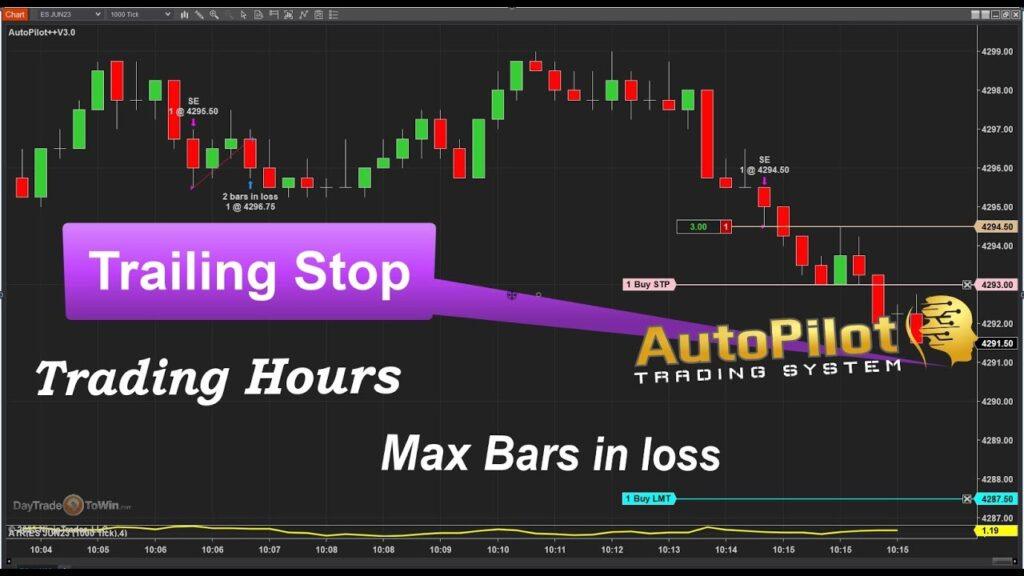
In this video, we will explore the system’s performance during the first few hours of trading, highlighting the various signals, trades, and trade management strategies that were employed. This real-time demonstration will provide you with a comprehensive understanding of how the AutoPilot trading system works and how you can benefit from its features. The AutoPilot trading system is a powerful algorithmic trading tool designed to help traders navigate the financial markets with ease. This innovative system generates entry and exit signals, allowing you to make informed trading decisions while managing your risk effectively. AutoPilot trades occur during specific periods of the day. Really, this is ideal. Yes, we have narrowed down specific time frames that work best throughout the day. This helps limit the exposure of your trading account. Other automated systems can subject your account to increased risk with around-the-clock trading. Not AutoPilot! AutoPilot is designed for (E-mini) or MES (Micro E-mini) charts. NQ (Nasdaq) and MNQ (Micro Nasdaq) charts are also compatible. We will provide you with the ES/MES and NQ/MNQ settings. Plug in the strategy, optionally adjust the settings, then let ‘er rip! By the end of this video, you will have gained valuable insights into the AutoPilot trading system’s performance during live trading conditions. You will have a better understanding of the system’s signals, trades, and trade management techniques, allowing you to make informed decisions and optimize your trading strategy. Don’t forget to like, share, and subscribe to our channel for more insightful content on trading and the financial markets. Happy trading!

lucid
Market News

Lucid’s Game-Changing Decision: Stock Surges as They Dive into China’s Fierce EV Market

Lucid, a company renowned for producing top-of-the-line electric cars, has reportedly expressed its desire to launch its automotive products in China, a country that is widely regarded as the largest market for vehicles. A Reuters report states that Lucid intends to sell foreign cars in China and also investigate setting up factories in the area, as indicated by an informed source. Lucid chose not to respond to Barron’s request for comment, which was not surprising since the company had already announced plans to enter the Chinese market in 2023. However, despite this, shares in the company increased by 2.5% in premarket trading, with investors seeing the move into new markets as a potential opportunity for growth. In China, Lucid is not yet a major competitor to EV leaders BYD and Tesla, who offer cars at a lower price point. Analysts do not expect the company to generate positive free cash flow for a few years yet, which means that Lucid may need to raise more funds to support its expansion. While Lucid intends to sell cars in China, it is not clear whether production will take place in the country. China is the largest market for new cars and EVs, and 60% of global battery-electric EVs were sold there in 2022. Lucid entered the European market later in the same year, but has faced challenges with sales, resulting in a decline of over 50% in the company’s stock since last year. According to a report, Lucid, a company that specializes in producing luxury electric cars, plans to penetrate the biggest automotive market in the world, which is China, and offer its products for sale there. A person who wishes to remain unidentified and has knowledge about the matter has informed Reuters that Lucid intends to sell imported automobiles in China and also investigate the option of building production facilities in the nation. Lucid, a company planning to enter the Chinese market in 2023, did not respond to Barron’s request for comment. Despite this, their shares increased by 2.5% in premarket trading as investors see this as an opportunity for growth. However, with projected cash use of $4 billion this year and production of only 4,300 vehicles in 2022 and 10,000 in 2023, the company is not expected to generate positive free cash flow. Their current models’ high prices also do not pose a threat to the biggest EV sellers in China, like BYD and Tesla. Lucid plans to raise more capital in the next few years and has secured $3 billion from Saudi Arabian investors to keep the company going until 2025. Despite opening design studios in Europe, the company has struggled to increase sales, causing their shares to fall by 66% over the past year. Barron’s had concerns about investing in Lucid stock in November, as they believed that boosting sales would pose a challenge. The stock has plummeted by more than 50% since that article was published. Lucid, a company renowned for producing top-of-the-line electric cars, has reportedly expressed its desire to launch its automotive products in China, a country that is widely regarded as the largest market for vehicles. A Reuters report states that Lucid intends to sell foreign cars in China and also investigate setting up factories in the area, as indicated by an informed source. Lucid chose not to respond to Barron’s request for comment, which was not surprising since the company had already announced plans to enter the Chinese market in 2023. However, despite this, shares in the company increased by 2.5% in premarket trading, with investors seeing the move into new markets as a potential opportunity for growth. In China, Lucid is not yet a major competitor to EV leaders BYD and Tesla, who offer cars at a lower price point. Analysts do not expect the company to generate positive free cash flow for a few years yet, which means that Lucid may need to raise more funds to support its expansion. While Lucid intends to sell cars in China, it is not clear whether production will take place in the country. China is the largest market for new cars and EVs, and 60% of global battery-electric EVs were sold there in 2022. Lucid entered the European market later in the same year, but has faced challenges with sales, resulting in a decline of over 50% in the company’s stock since last year. According to a report, Lucid, a company that specializes in producing luxury electric cars, plans to penetrate the biggest automotive market in the world, which is China, and offer its products for sale there. A person who wishes to remain unidentified and has knowledge about the matter has informed Reuters that Lucid intends to sell imported automobiles in China and also investigate the option of building production facilities in the nation. Lucid, a company planning to enter the Chinese market in 2023, did not respond to Barron’s request for comment. Despite this, their shares increased by 2.5% in premarket trading as investors see this as an opportunity for growth. However, with projected cash use of $4 billion this year and production of only 4,300 vehicles in 2022 and 10,000 in 2023, the company is not expected to generate positive free cash flow. Their current models’ high prices also do not pose a threat to the biggest EV sellers in China, like BYD and Tesla. Lucid plans to raise more capital in the next few years and has secured $3 billion from Saudi Arabian investors to keep the company going until 2025. Despite opening design studios in Europe, the company has struggled to increase sales, causing their shares to fall by 66% over the past year. Barron’s had concerns about investing in Lucid stock in November, as they believed that boosting sales would pose a challenge. The stock has plummeted by more than 50% since that article was published.


DayTradeToWin Review

Transform Your Day Trading Game: Explore Scalping Strategies with the Trade ScalperⓇ Software

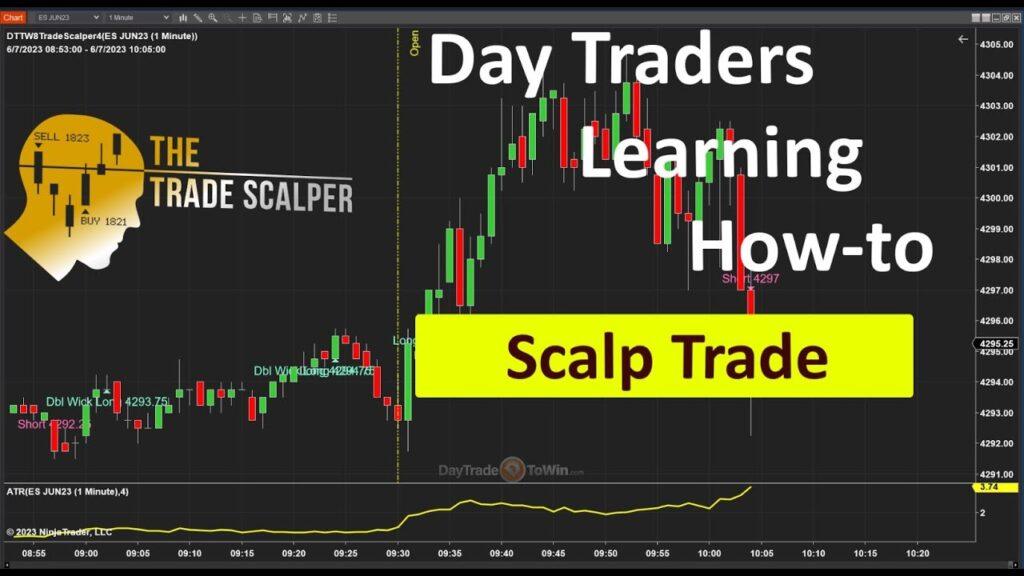
As a trader, I’ve found that implementing scalping strategies in the markets can result in significant profits and steady returns. Scalping consists of executing numerous rapid trades throughout the day, targeting modest gains while minimizing risk with narrow stop losses. The Trade Scalper software has proven to be an indispensable tool for effectively carrying out this approach. Scalping is a trading method that focuses on making swift trades with strict profit targets and stop losses, striving to achieve consistent small profits over time. Our course is designed to teach you how to pinpoint these high-probability trades without depending on any software. Nonetheless, we also provide the Trade Scalper software for NinjaTrader, which delivers accurate entry signals and market direction forecasts to elevate your trading experience. Trade around the clock and diversify your portfolio with a wide range of markets using the Trade Scalper software. Whether you’re interested in domestic or international stocks, such as NASDAQ, NYSE, or global shares, or various futures contracts, the software has you covered. Explore trading opportunities in numerous markets, including: The Trade Scalper software is versatile and can be used with different chart types, such as Range, Tick, Volume, or Minute charts. It will plot two types of signals: regular “Long” and “Short” as well as “Dbl Wick”. There’s no need to worry about optimizing the indicator software – simply install it, add it to your chart, and you’re good to go. To make the process even smoother, we offer remote support for software installation at no additional cost. With the Trade Scalper software, you’ll have the tools and flexibility to trade in various markets around the clock, maximizing your trading opportunities and diversifying your investment portfolio.

stock market
Market News

3 Stocks on the Rise: Couchbase, Casey’s General Stores, and Cue Health Worth Watching

In the second quarter, Couchbase – a top provider of NoSQL database solutions – revealed that its earnings were lower than what analysts had foreseen. Their expected revenue was not met, resulting in a substantial decline in their stock’s worth. As a result, Couchbase bore an 18% drop in shares on after-hours trading, indicating that investors were worried about the company’s overall performance. During the last quarter, Casey’s General Stores, a well-liked group of stores that offer convenience items, encountered financial difficulties. The company disclosed a decrease in both its earnings and revenue, indicating a difficult quarter for the retail behemoth. This brought about a drop of 4.6% in Casey’s General Stores’ shares in post-market trading as investors responded to unsatisfactory financial outcomes. However, a healthcare tech company called Cue Health has revealed that their Covid-19 molecular test has been granted De Novo marketing approval by the US Food and Drug Administration (FDA). This means that the test is up to the FDA’s stringent safety and effectiveness criteria. Nevertheless, Cue Health’s stock dropped by 3.7% in after-hours trading, despite this positive outcome. There could be several explanations for the decline in share prices, such as market conditions or investor outlook, but it’s important for investors to keep a close eye on how well the stock performs in the near future.

Market News

Navigating the 2023 Market: Small-Cap Stocks Trail S&P 500 and Nasdaq’s Dominance

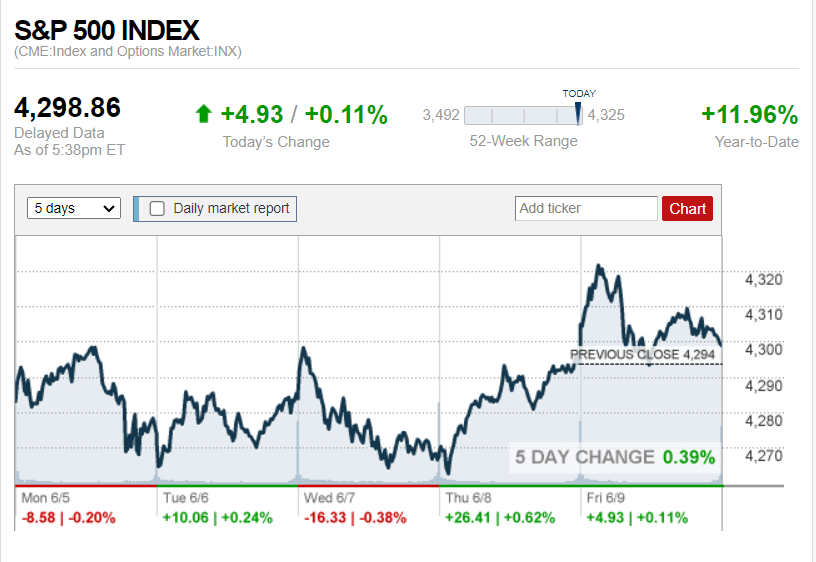
According to RBC Capital Markets, small-cap stocks in the United States are performing relatively well compared to the S&P 500 and Nasdaq Composite, despite still falling behind them this year. They are said to be putting up a strong fight and showing positive trends. Based on Monday afternoon trading levels, FactSet data shows that the Russell 2000, which monitors small-cap stocks in the United States, has experienced a slight increase of approximately 2.8% in 2023, in contrast to the S&P 500, which has risen by 11.7%, and the technology-focused Nasdaq Composite, which has surged by 26.8%. According to Calvasina, who leads U.S. equity strategy at RBC Capital Markets, Nasdaq valuations appear overpriced. However, the S&P 500 and Russell 2000 are currently lower than recent peaks, which differs from the Tech bubble. RBC Capital Markets has a preference for small-cap stocks over large-cap stocks. Calvasina stated that small-cap stocks are finally becoming involved in the earnings per share (EPS) revisions recovery. She noted that the rate of upward EPS estimate revisions has increased to 50% for the Russell 2000, with over half the sectors in the index displaying positive revisions in terms of both EPS and revenues. RBC identified several small-cap stock areas that exhibit positive revisions in both revenue and EPS. These areas include utilities, consumer goods, healthcare, industrial manufacturing, communications services, information technology, and TIMT, which stands for technology, internet, media, and telecommunications sector. As stated in the written communication, stocks with a smaller market capitalization generally reach their lowest point in value before the estimated earnings per share projections begin to increase once more, typically taking three to six months. Calvasina stated that the Russell 2000 has been struggling to reach a low in comparison to the S&P 500. Currently, the ratio between the two indexes is only slightly higher than their lowest point in March 2020. According to data from FactSet, the S&P 500, which measures the performance of U.S. large-cap stocks, is close to exiting a bear market as its current trading level sits around 4,287 as of Monday afternoon. Dow Jones Market Data suggests that the index will only officially exit its bear market status if its trading level reaches or surpasses 4,292.438. According to FactSet data, the stock market in the US showed a variety of results on Monday afternoon. At the time of the data, the S&P 500 increased by 0.1%, the Dow Jones Industrial Average decreased by 0.3%, and the Nasdaq gained 0.2%. In the context of stocks with small market capitalization, the Russell 2000 saw a 1.1% decrease during Monday afternoon trading. This came after a 3.6% increase on Friday, resulting in the largest daily percentage gain for the Russell 2000 since November 10th, as reported by Dow Jones Market Data.

Market News

Earnings Implosion Anticipated by Morgan Stanley for Wall Street’s Neglected Stock Wave

Finding optimistic investors on Monday is not an easy task, as the S&P 500 experienced a significant increase due to positive employment figures and the resolution of the debt ceiling issue, bringing the market to the edge of a bull market. Despite this, the technology sector is only slightly down, and oil prices are rising thanks to OPEC’s promise of further production reduction. Neil Wilson, the chief market analyst at Finalto, highlights that investors are not fully embracing the current rally as the SPX has surpassed 4,200 and moved beyond its 4,000 to 4,200 range. Moreover, the VIX has dropped to its lowest levels since February 2020. Friday’s events demonstrated that Big Tech’s strong performance can create a ripple effect throughout the market, possibly changing Wall Street skeptics’ sentiment. However, for now, those who did not sell their investments in May are being advised to do so in June. Despite this, concerns remain that investors may not be entirely out of danger. Morgan Stanley’s bearish strategist, “Worried” Mike Wilson, foresees a significant earnings decline (-16% year-over-year) that the market has yet to factor in. Although his S&P 500 prediction stays at 3,900, which is the low end of the Street’s expectations, Wilson believes investors are experiencing several “hotter but shorter” earnings cycles within a broader secular bull market, characterized by a boom, bust, boom pattern. Wilson attributes the bank’s predictions of a significant stock price decrease to the impressive performance of artificial intelligence players and established technology companies, the Federal Reserve’s shift in approach, and optimism that the worst of the earnings slump is over. However, Wilson notes a substantial reevaluation of lower-quality, cyclical, or small-company stocks. The strategist advises when the market will begin to consider the earnings decrease, focusing on the equity risk premium (ERP) section of the price-to-earnings (PE) ratio. The ERP represents the difference between the expected earnings return and the return on risk-free Treasurys. A higher number indicates that investors are receiving greater compensation for investing in stocks. Wilson states that the increase in 10-year Treasury yields accounted for over 100% of the PE reset last year. Historically, the market has experienced a “moment of recognition” when the forward NTM EPS forecast for the S&P 500 turns negative on a year-over-year basis. He believes the anticipated liquidity reduction due to the debt ceiling passage could speed up this process. If an investor is intrigued by Wilson’s insights, they should follow his advice to concentrate on defensive attributes, operational efficiency, and consistent earnings. Ending on a brighter note, Wilson offers a glimmer of hope. Morgan Stanley predicts a 23% increase in EPS growth in 2024 and a 10% increase in 2025, as the Fed policy becomes more accommodating in 2024 rather than in 2023. Furthermore, several factors will help drive the next recovery or bull market following the correction: Oil prices, under the symbols CL and BRN00, increased by 2% on Sunday after OPEC agreed to cut oil production by 1 million barrels per day. However, the increase has now decreased to just over 1%. To stay updated on market news and receive practical trading advice for stocks, options, and cryptocurrency, sign up here. Stay informed about all stock market events.

Scroll to Top