Market News

S&P 500 Inches Closer to Bear-Market Exit: What Investors Need to Know

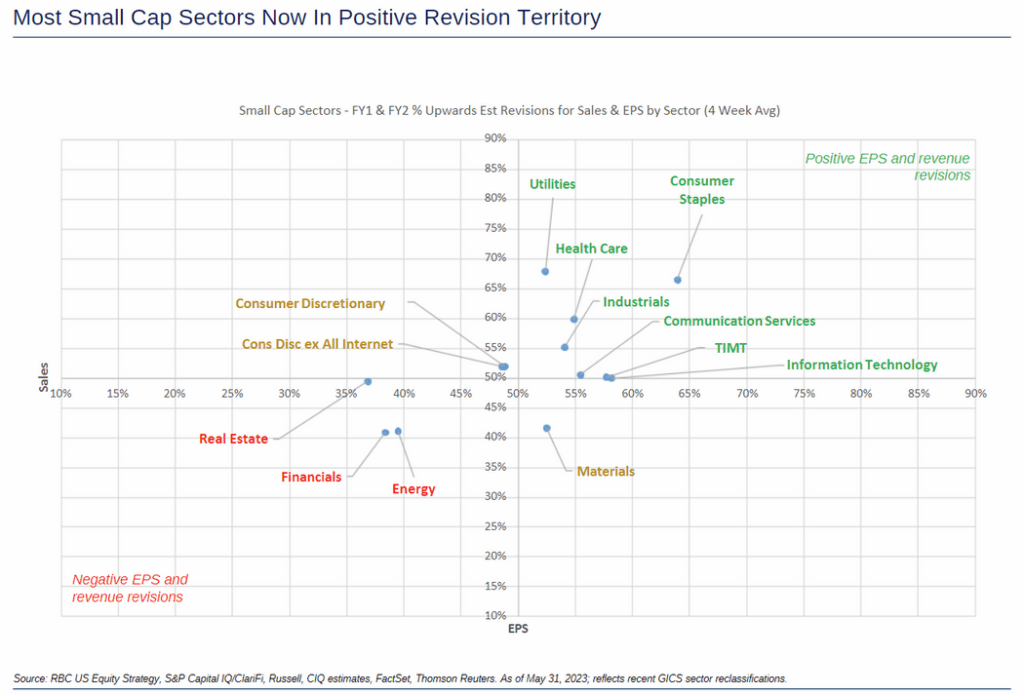
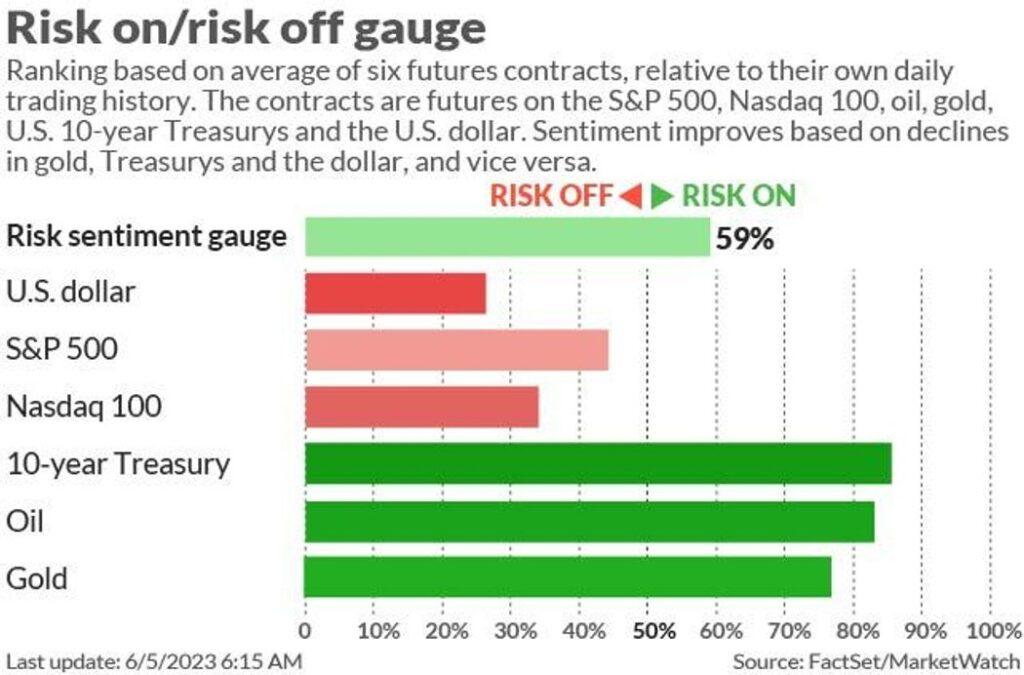
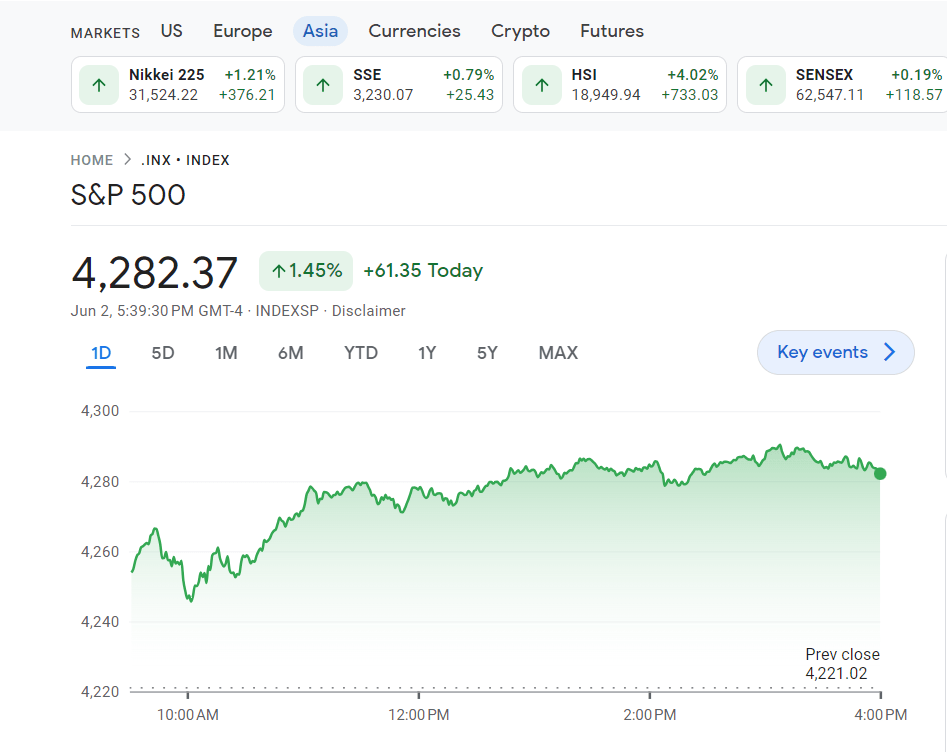
The S&P 500 is approaching its exit from bear-market territory, prompting questions about whether the rally in Big Tech stocks will finally extend to the broader market. The large-cap benchmark has been experiencing its longest stretch in bear territory since 1948. However, a wide stock-market rally on Friday brought the S&P 500 close to ending this run. Investors are eager to determine if this move is genuine or simply a false alarm. On Friday, the S&P 500 SPX increased by 1.5% to close at its highest level since August 18, 2022. A close above 4,292.48 would signify a 20% rally from the bear-market closing low of 3,577.03 set on October 12, 2022, marking the end of the bear market by a widely accepted definition. The rally was attributed to an unexpectedly strong May jobs report, a resolution of the debt-ceiling deal standoff, and expectations that the Federal Reserve will not raise interest rates at its upcoming policy meeting. Including Friday, the S&P 500 had been in bear-market territory for 244 trading days, the longest stretch since one that ended on May 15, 1948, which lasted 484 trading days. Historically, the average bear market has lasted 142 trading days. Investor optimism was fueled by the anticipated debt-ceiling deal becoming law and the increasing unemployment rate revealed in the Employment Situation Report, according to José Torres, Senior Economist at Interactive Brokers. This has led to bets on a Fed pause at its June 14 meeting, with 72% odds favoring that outcome. The S&P 500 has risen 11.5% year-to-date, with a significant portion of total returns driven by a few large-cap technology firms like NVIDIA Corp., Alphabet Inc., and Apple Inc. However, excluding these big names, the index is flat for the year. The market-cap weighted S&P 500 is outperforming its equal-weighted counterpart, which has declined by 1% year-to-date, by over 10 percentage points in 2023. This is the largest margin of outperformance year to date on record, according to Dow Jones Market Data. Quincy Krosby, chief global strategist at LPL Financial, stated that the widespread stock-market rally on Friday is precisely what the market needs, as many analysts consider a narrow market leadership to be a missing piece of the recovery puzzle. The strong surge in tech stocks that has been driving the S&P 500 and Nasdaq Composite is finally extending to the broader market on Friday, as demonstrated by the jump in the Russell 2000, the small-cap index. This indicates an overall positive underpinning for the market. Despite this, caution is advised, as not all bear exits lead to lasting bull markets. The S&P 500 has also experienced false bear-market exits, albeit less frequently than the tech-heavy Nasdaq Composite, as noted by Sam Stovall, chief investment strategist at CFRA, in a May note. The possibility of such false exits explains why there is far from a universal embrace of the 20% rule. Some analysts argue that a new bull market does not begin until the previous high is surpassed, while others use more complex criteria.

DayTradeToWin Review

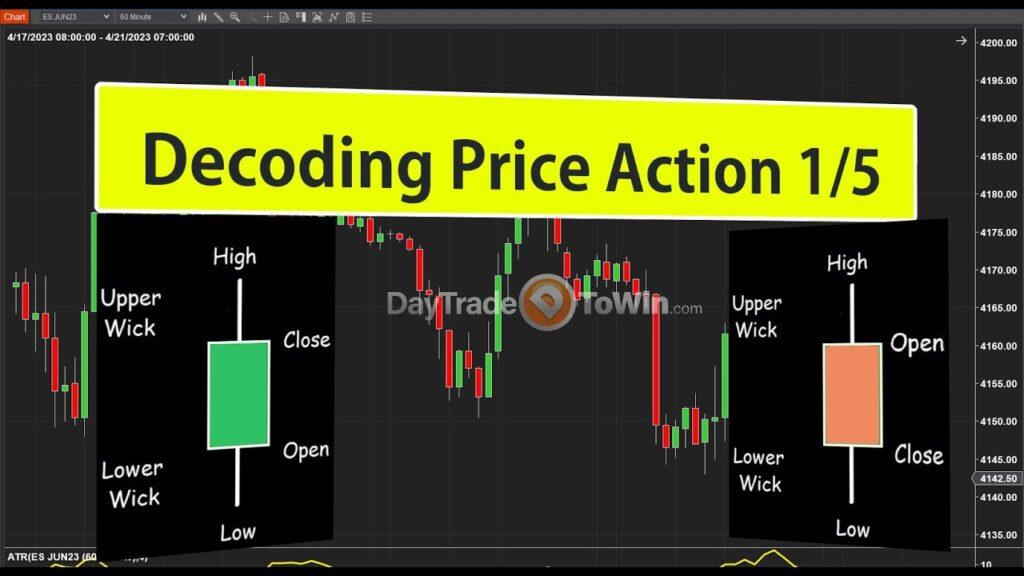
Decoding Price Action Part 1 – Candlesticks

As a trader, having a thorough comprehension of market dynamics and being able to interpret price action is both an art and a science. Among the many tools available, candlestick charts are one of the most effective ways to decode price action. In this post, we’ll cover the fundamentals of candlestick analysis, such as support and resistance, grouping bars, wicks, and crucial price points. Additionally, we’ll discuss the benefits of joining the Accelerated Mentorship program, which offers personalized coaching and access to the software for life. Support and resistance levels are critical components of candlestick analysis, as they provide key insights into the market’s supply and demand dynamics. These levels represent price points where buying or selling pressure is strong enough to prevent further price movement in a particular direction. Understanding support and resistance levels can help traders identify potential entry and exit points, as well as determine the strength of a trend. By closely monitoring these levels, traders can make more informed decisions and better manage their risk. Traders can identify support and resistance levels by examining historical price data and looking for areas where price has repeatedly failed to move beyond. These levels can be horizontal or diagonal, depending on the trend direction. Once identified, traders can use these levels to make informed decisions about when to enter or exit a trade. Discovering Market Trends through Bar Grouping. Another essential aspect of candlestick analysis is the grouping of bars, which can reveal important market patterns and trends. By examining the relationship between consecutive candlesticks, traders can identify potential trend reversals or continuations, as well as gauge the strength of a given price movement. Common Candlestick PatternsSome common candlestick patterns that traders should be aware of include: Recognizing these patterns can help traders anticipate future price movements and develop more effective trading strategies. Wicks, also known as shadows or tails, are the thin lines that extend above and below the body of a candlestick. They represent the highest and lowest price points reached during a specific time period. Wicks provide valuable information about market sentiment, as they indicate the strength of buying or selling pressure. By analyzing the length and position of wicks, traders can gain insights into the market’s underlying sentiment and better predict potential price reversals or continuations. For example, a long lower wick on a candlestick may suggest strong buying pressure, while a long upper wick could indicate strong selling pressure. In candlestick analysis, certain price points hold more significance than others. These key levels often act as turning points in the market and can provide high-probability trading opportunities. By focusing on these critical price points, traders can improve their decision-making process and increase the likelihood of successful trades. Examples of Key Price PointsSome examples of key price points to focus on include: Why Join Accelerated Mentorship? The Accelerated Mentorship program offers a comprehensive and hands-on approach to learning the art of trading. By joining the program, you’ll gain access to: By mastering the art of candlestick analysis and understanding the importance of support and resistance, grouping of bars, wicks, and key price points, you can unlock the secrets of the market and make more informed trading decisions. Joining the Accelerated Mentorship program provides you with the resources, tools, and support needed to excel in the world of trading and achieve your financial goals.

DayTradeToWin Review

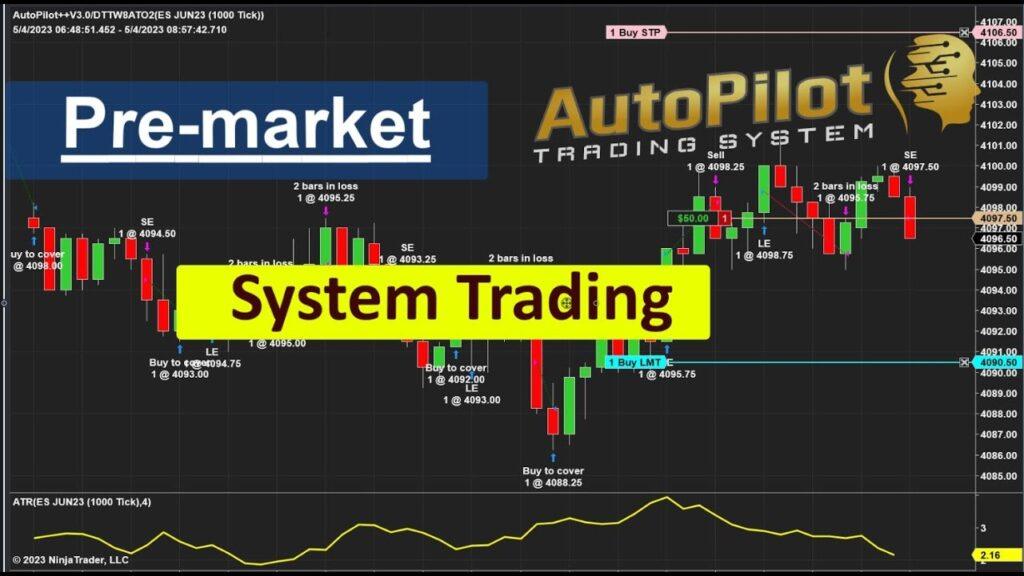
Pre-Market Algo Trading using Autopilot System: The Benefits and Challenges

Pre-market algo trading using an autopilot system can offer many benefits for investors. This automated system can quickly analyze data and execute trades, providing a faster and more efficient way to make investment decisions. One of the main advantages of pre-market algo trading is that it allows investors to react quickly to market changes and news events before the markets open. This can help them stay ahead of their competitors and take advantage of opportunities before they disappear. However, there are also several challenges associated with using an autopilot system for trading. One of these is the risk of errors or glitches in the software, which could lead to costly mistakes if not detected in time. Another challenge is the need for ongoing maintenance and updates to ensure that the system remains accurate and up-to-date with market trends and conditions. Overall, while pre-market algo trading has its benefits, investors should carefully consider the risks and challenges involved before relying solely on automated systems for their trading decisions. It’s important to have a backup plan in case something goes wrong and to constantly monitor and adjust your strategies as needed to stay ahead of the competition. In DayTradeToWin’s 13+ years in operation, AutoPilot is the first automated trading system I have ever offered. Yes, I have waited that long to deliver something of quality truly. After rigorous backtesting and live testing, I am now ready to offer it to you… No other system out there is doing what AutoPilot does. The entire methodology is based on solid price action principles.

DayTradeToWin Review

How to Minimize Losses: Tips for Cutting Losing Trades Fast

Losing trades can be a tough pill to swallow, but there are ways to minimize your losses and keep them from spiraling out of control. The key is to act fast and cut your losses as soon as you see signs that the trade is not going in your favor. Investing in the financial markets can be an exciting and potentially profitable endeavor, but it also comes with its fair share of risks. One of the most important skills any trader can learn is how to minimize losses by cutting losing trades fast. In this blog post, we will discuss several tips for doing just that. One tip for cutting losing trades fast is to set stop-loss orders. Another strategy is to avoid getting emotionally attached to your trades. Here are some tips to help you cut those losses fast and minimize the damage: The most effective way to minimize losses is to set stop-loss orders. A stop-loss order is a type of order that automatically closes a trade when the price reaches a certain level. This ensures that you don’t lose more money than you are comfortable with. It is important to set stop-loss orders at appropriate levels based on your risk tolerance and market conditions. A trailing stop is a type of stop-loss order that adjusts itself based on the price movement of the asset. As the price moves in your favor, the trailing stop will move up or down with it, locking in profits and minimizing potential losses. This allows you to stay in a winning trade longer but also ensures that you don’t lose more than you are comfortable with if the trade turns against you. Having a solid trading plan in place can help you minimize losses. Your plan should include entry and exit strategies, stop-loss levels, and profit targets. It is important to stick to your plan and not deviate from it, even if the market conditions change. This can help you avoid impulsive trading decisions that can lead to larger losses. It is important to monitor the market closely and stay up to date on any news or events that could impact your trades. If you see signs that trade is turning against you, it is important to cut your losses quickly. This may mean exiting the trade before your stop-loss order is triggered if you feel that the market conditions have changed and the trade is no longer viable. Finally, it is important to keep your emotions in check when trading. Fear and greed can cloud your judgment and lead to impulsive decisions. It is important to stay disciplined and stick to your trading plan, even when the market conditions are challenging. In conclusion, minimizing losses is an important aspect of successful trading. By using stop-loss orders, trailing stops, having a trading plan, monitoring the market closely, and keeping emotions in check, traders can effectively cut losing trades fast and minimize their losses. Remember, it’s not about avoiding losses altogether but rather about managing them effectively to ensure long-term success in the markets.

DayTradeToWin Review

3-Day Review: Exploring Price Action Trading Using At the Open2 Strategy by DayTradeToWin

Are you struggling with finding consistently good entry points? Are multiple losses eating up your account? When you enter a trade, are you nervous about when to get out? Are you drowning in a sea of trading misinformation? If you are a day trader, then you are always looking for new strategies to try out in the market. At the Open (ATO) is a popular trading strategy used by many traders to help them identify potential trades and take advantage of market volatility at the start of the trading day. DayTradeToWin, a leading provider of trading education and mentorship, offers the At the Open2 (ATO2) strategy. This strategy builds on the original ATO strategy and incorporates price action analysis to help traders make better trading decisions. The ATO strategy is based on the idea that the first few minutes of trading are often characterized by volatility and a rapid price movement as traders and investors react to news and events that have occurred overnight or in the pre-market hours. By taking a position based on this initial price movement, traders hope to capitalize on the momentum that is generated and profit from a quick move in the desired direction. To implement the ATO strategy, traders typically watch the market closely in the minutes leading up to the opening bell, looking for signs of a directional bias in the price movement. This might involve looking at pre-market data, news releases, or other factors that could influence the market. Once the market opens, the trader will take a position in the direction of the perceived bias, either buying or selling, depending on whether they believe the market will move up or down. One important consideration when using the ATO strategy is risk management. Because the strategy involves taking a position based on the initial price movement, traders must be prepared to exit the position quickly if the market moves against them. This might involve using stop-loss orders or other risk management tools to limit potential losses. Another important factor to consider when using the ATO strategy is the potential for false signals. Because the first few minutes of trading can be volatile and unpredictable, it is possible for the market to move in one direction initially, only to reverse course shortly thereafter. Traders must be prepared for these scenarios and be willing to exit a position quickly if necessary.

DayTradeToWin Review

Step-by-Step Guide: Enabling Multi-Data Feed Providers on Ninja Trader 8.1

Ninja Trader 8.1 is a popular trading platform among traders due to its customizable interface, advanced charting capabilities, and compatibility with multiple data feed providers. However, not all traders know how to enable access to multiple data feed providers on Ninja Trader 8.1. We will provide a step-by-step guide to help you turn on multi-data feed provider access on your Ninja Trader 8.1 platform. Here are the steps: Enabling multi-data feed provider access on Ninja Trader 8.1 is a simple process that can help traders access more market data and gain deeper insights into the markets they trade. By following the steps outlined in this blog post, you can easily add new data feed connections and enable multi-data feed provider access on your Ninja Trader 8.1 platform.

Scroll to Top