DayTradeToWin Review

5 Markets Traded Using Atlas Line’s Price Action

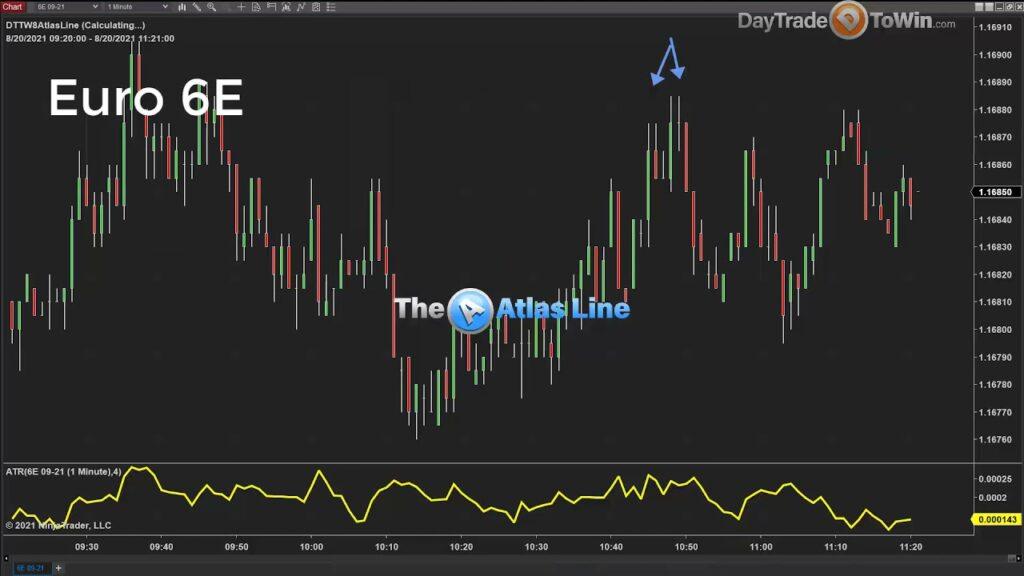
If your trading platform allows you to trade multiple markets, then why just stick to one? For many years, whether on television or on websites, you have properly heard about “diversifying your portfolio.” Well, this video isn’t about stock trading, but taking a diversified approach to futures trading can also be helpful. If one instrument begins to chop, or there are no more signals, by all means, look at the next best-performing market. This video shows several markets. The E-mini S&P 500 (ES) is the first as that is the most commonly used with the DayTradeToWin trading methods. From there, the Atlas Line is applied to the Euro (6E), Dow (YM), Nasdaq (NQ), and Micro E-mini S&P 500 (MES). A word of caution – just because futures markets are open nearly 24/7 and you have many to pick from does not mean that trading as much as possible is advised. In fact, over-trading is a thing and some traders fall into this pattern, subjecting themselves to increased risk and losing any gains they recently made. John Paul (creator of the Atlas Line) from DayTradeToWin has said to trade those markets that have the best chance of performing well while paying attention to the times that have worked the best for you. It is true that one does not know if day will be a winning day or not, so the reliance almost has to be on “what has worked in the past.” But with that comes a disclaimer that past performance does not indicate future results. That’s just the nature of trading – you can have great wins and great losses. It’s all about consistency over time to measure whether or not trading has been a worthwhile endeavor. Are you still using the same methods to day trade, day-in and day-out with low or moderate levels of success? Then it may be time to rethink how you approach trading. It doesn’t make sense to repeat the same trading patterns and hope that things will change, that a new pattern will emerge, starting tomorrow. Of course, we do wish you the greatest success.

DayTradeToWin Review

Feeling Boxed In? Scalp Your Way Out

Please be assured that the title of this article, scalping, refers to a style of trading, not the historical definition of scalping nor a surgical procedure. Though, you could well think of using a cutting device as analogical tool to “scalp,” redefine, or otherwise transform your life into one of greater freedom. In this life, it’s easy to feel like you have no options, no way of getting out of a certain situations. And I’m not just talking about finances – obligations you may no longer want to uphold, responsibilities you’ve outgrown, and other aspects of life that no longer resonate with you. So, what can you do? While there can be great freedom in knowledge and various health and/or spiritual practices, at least for now, there is a dependence on money to sustain vitality. Do you want healthy food? That will likely cost money unless you are among the fortunate who have inherited some land in a hospitable climate where various foods can be grown without much labor or materials. For most of us, we need to pursue money on a daily basis. However, a health perspective about money appears to be most essential at this point in time in which we find ourselves living, with options, distractions, schemes, and so forth, everywhere and easily accessible! At this time, the “making” of money can be done in various ways; perhaps the number of occupations that exist today, with all of their attributed titles, now are of greater number than at any point in our past. Are you a metalsmith, a millworker, miner (non-crypto), butcher, or baker? A candlestick maker? Or an administrative assistant to a legal firm whose specialty is a specific form of criminal law? Indeed, we find occupations with greater specificity, and perhaps, greater abstraction from the purpose of traditional goods or service. Day trading is a prime example of such an abstraction from the provisions of goods and services. As a day trader, who else benefits from the buying and selling of your orders? Does the nearest farm? Does some large firm who then distributes money to tiered groups of unknown individuals for unknown purposes? Presumably, this wealth is hoarded or distributed in some pyramid model, whereby those at the top accrue the largest share and those nearest the base find themselves seeking more. Does the custodial contractor who, every night, empties the wastebaskets of the executives whose offices nearly scrape the skies also aspire for more? Does this person also aspire to have greater experiences in her life? Indeed, it is likely so, though she may not be directly aware and blames the so-called “rat race.” This is why day trading presents a unique promise. Those following the “Wall Street Bets” saga have heard tales of rags to riches: donations of handheld gaming devices to youth hospitals, consolidation of debt, and other triumphs of charity and financial security. Indeed, the abstraction of day trading, however it is done, whoever receives the money, whatever happens to the money, if the money was ever truly “there” or could have been, falls to the wayside when the appeal is to resolve a state of affairs in one’s life and of those in others’. May you find great success in day trading, especially those of you who are trading futures – a most interesting style of financial exchange with many options for how one chooses to trade it. The video above, from John Paul at DayTradeToWin, focuses on a style of trading called scalping. This video focuses on the E-mini S&P 500, arguably the most popular futures market.

DayTradeToWin Review

The Global Financial System – What is It Really Based On?

Recently, the U.S. Senate passed the $1T Infrastructure Bill. With all of that money to be allocated for various projects, do you trust that U.S. infrastructure will be improved? It is conceivable that some politicians have invested in various construction companies that would receive massive contracts. When this happens, the stock associated with that company tends to rise. And in some specialty industries, it is not much of a mystery as to who will be awarded the contract. Of course, lobbying and behind-the-scenes negotiations are conceivable. Who knows what really goes on? Insider trading and special interest groups are nothing new. It is most likely that we will see a number of infrastructure improvements. But, let’s think about that kind of money – a trillion dollars. All over social media, people are asking, “Does the money actually exist to pay for such a thing?” Allegedly, the U.S. national debt exceeds $28T. See https://www.usdebtclock.org for the real-time count, though such values pretty much have to be estimates. That does not mean those numbers should be entirely discarded. What hope is there for significantly reducing that debt? Is that even a goal anymore? It would seem as if money is, essentially, an abstract control tool used to occupy the minds and lives of people, whereby people have commonly “agreed” life-essential goods and services are acquirable for specific value, as determined by various psychological manipulations (social media?), per unit of occupational labor. This means that a portion of one’s time and efforts are monetized to a specific value, to scale as a global system that can be further manipulated. Does one drop of sweat from a noble school custodian’s brow equal three potato chips? Perhaps not in some cases – there appears to be many wealthy people who can earn quite a living without much movement! Yet, as was said in that show from a number of years ago, Dirty Jobs, those occupations many don’t want to do actually provide the infrastructure for the rest of us. Therefore, that undesirable work that keeps everything running, and how enlightened those people are, what they “consent” to work for, may well underpin the value of currency. As long as people are willing to “agree” not to be disorderly and work for gasoline, bread, and entertainment for certain prices, is that the actual value currency? It’s like one of those self-tying knots – the harder one pulls, the tighter it gets – people are told their neighbors are not to be trusted, that they will take what they have, that they are diseased, etc. so all the more reason to act in self-interest, seems to be the portrayal, no? Orderly conduct and exchange of goods and services – not based on altruism, but ultimately on the belief of inevitable hardship and various other fears – would seem to drive the global system, no? Thus, does the value of currency come from how one can escape from the same situations in which they toil? It’s no wonder drug problems have been so rampant – they offer powerful escapes, often of an unhealthy kind (this is no solicitation for such things!) – at a price people many can apparently afford. Movies, video games, handheld electronics…yes, they too, can be powerful escapes and they are everywhere! This is not to say such things are bad; there is much creativity and art in these formats. But, overall, what a system! Yet, on the other, perhaps positive end, it seems more and more people have been getting into “inner work,” knowing much of the system is bogus and finding peace and connection through various types of meditation, yoga, gardening, and what is called spiritual practice. Self-sufficiency has been a strong desire over this last year and a half. That’s understandable – a person trying to live freely and as harmoniously as possible. It is in the spirit of individual financial success in the system that we hope you achieve prosperity for whatever may occur in future!

DayTradeToWin Review

What it Means to Scalp Trade Futures Every Day

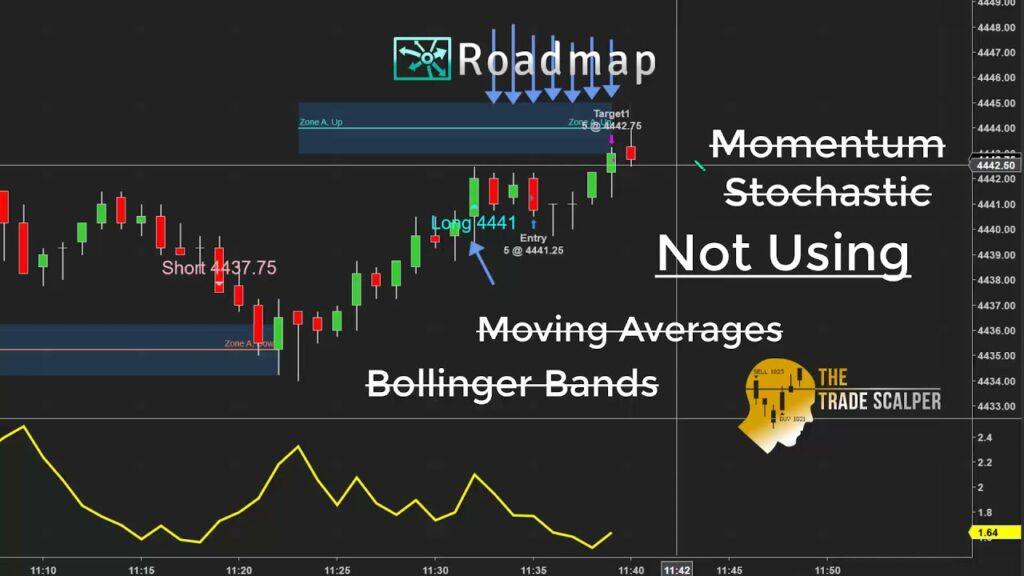
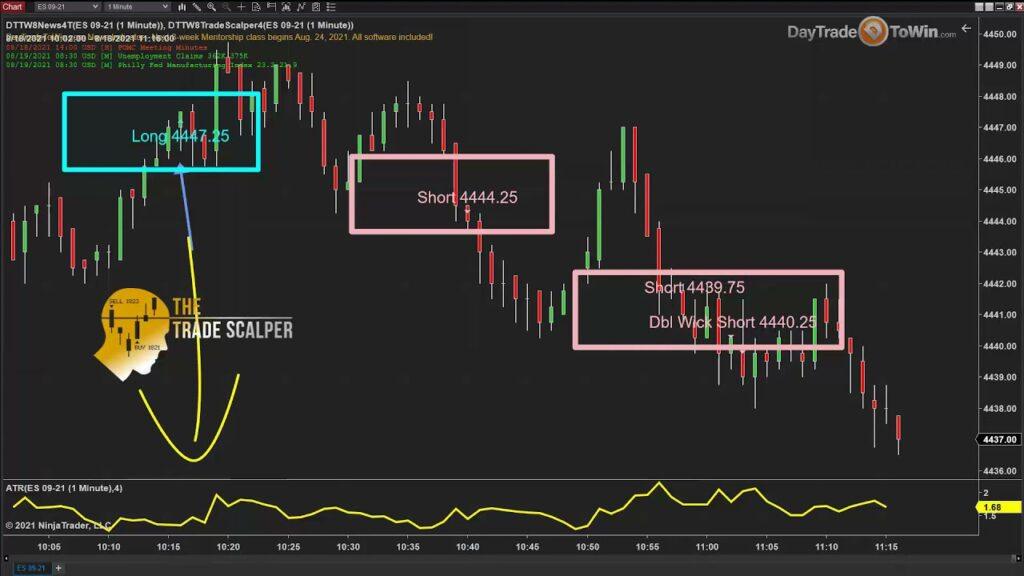
Futures trading is a unique form of day trading because it is not as though you are trading a company’s stock directly or engaging in transactions associated with a currency valuation. Futures are a derivative type market. It is quite possible that many at-home traders do not really consider or care about the future price of grain unless the cost of food becomes unaffordable. So, in that sense, the underlying asset(s) traded in futures are often an abstraction. Many traders think about the E-mini vs. the Crude Oil markets in terms of tick valuation, quirky behavior, best times of the day to trade, and what is believed to encourage the most profit. Is there a disconnect from the big picture? Perhaps. Do many people think about where their money actually comes from and how the financial systems of the world are structured? One could say there is a huge disconnect here, but perhaps that is a topic for another time. Hopefully, the point has been made – one does not need to be a financial markets expert to successfully follow a trading system. Likewise, we can view certain trading methodologies with a large lens. Various trading systems focus on various styles of trading: swing trading, scalping, intraday, and so forth; and this does not begin to describe the more technical aspects such as channels, oscillators, and other constituents of the larger “genres” of trading systems. To scalp trade futures every day, one has to trade at a fairly rapid pace. After all, scalping means taking only a portion at a point in time. DayTradeToWin’s Trade Scalper trading system does just that – it’s profit-taking goals are smaller than the other systems they provide. A more conservative approach, per trade, has its benefits. However, one should consider broker costs per trade. NinjaTrader Brokerage should be able to provide a quote or estimation of all applicable fees per market, such as the E-mini S&P 500. At the end of the day, or even better – month or months – the trading system should demonstrate an acceptable level of performance. In this video, John Paul from DayTradeToWin displays around five signals for the day. In the later portion, he shares a real-time scalping trade. He is using five contracts. These contracts act as a multiplier of profit and loss depending on which way the trade goes. He was fortunate the trade worked in his favor, resulting in over $300 for several minutes of waiting/trade management. With the E-mini, each tick is worth $12.50 and four ticks represent one point. Therefore, one point represents $50. Factor in the contract multiplier, and the profit target or stop loss and you can get a sense of the financial goal and risk per trade.

DayTradeToWin Review

Truths About Crypto & Rigged Financial Systems

One of the great things about the Atlas Line is that it doesn’t “change its mind” throughout the day. A little while after the market opens, the line the Atlas Line produces begins to grow in the same, constant direction. How price moves around the line is what’s important. That movement determines the entry opportunities. Thusly, if two closing bars close above or below the line, that justifies an entry. There’s obviously more to the strategy than is described. Perhaps now you should watch the video to get a better sense, visually, of how it works… There are Strength (S) and Pullback (P) signals, here, that provide other entry opportunities. Intrigued as to how these work? They’re explained fully after purchase. It’s a price pattern, that is, a pattern among candles that justifies the entry into a Pullback or Strength trade. Like the remainder of the Atlas Line signals, the underlying approach is price action. It can be said price action is a general methodology in which the movement of price determines the behavior of the trader and/or trading system. Cryptocurrency trading has become increasingly popular. Many people consider crypto to be a foolish long-term investment. Yes, many have made money, but the adoption and rejection of crypto by companies and organizations (who do plenty of business via traditional currency) can make or break short and long-term crypto gains. Get what I’m saying? Why rely on any financial system that has its roots in organizations that seek to manipulate using what has long been considered a controlled/manipulated system: traditional world currencies? If one can use traditional currency to acquire crypto, how soon would crypto be largely bought out by those with massively deep pockets? Thus, there is a reasonable basis for the claim that crypto, too, is a manipulated currency exchange/platform. The purity of crypto was to be the computational constraints and equalized distribution. Maybe at the onset there was some purity intact, but over time, as stated, how much of crypto was “bought out” by very wealthy players? Would those wealthy players not seek to also control/manipulated yet another market? Those who have large stakes in crypto, like Bitcoin (often traded as BTC/USD) may be long-term holders or have liquidated some of their holdings by this point, in 2021. So, the crypto market could well be segregated into individual/retail transactions of a fairly pure nature, institutionalized control/balances, and long-term stakeholders. In 2021, we have seen a crackdown on crypto mining due to environmental/power consumption concerns. Many of those concerns appear to be legitimate – mining resources from the Earth and draining further resources, such as those relied on by power grids, for example. The opportunity for a regular person to gain significant income via crypto mining – those days have long since passed. In effect, we have seen the emergence of many crypto markets, each promising varying degrees of security, stability, and prosperity. Do you believe that any crypto market worth any true value would not be “bought up” and controlled? Indeed, it is easier to make money if you have money. Common sense will probably tell you that (or anyone in real estate). Let’s not fall into illusions of prosperity – especially those of targeted and eventually rigged systems. Speaking of real estate, what happens in the game of Monopoly when all of the property is acquired? Many players get upset and are ready to turn over the entire “board” game…

DayTradeToWin Review

Multiple Trading Systems = Multiple Opinions

Every day, if you had to make costly decisions worth hundreds or thousands of dollars, wouldn’t you want a “second opinion” for each of those decisions? If we seek out the expertise of medical professionals for second opinions when facing crucial life-impacting decision-making, would we not do the same during our regular occupation if that occupation is day trading? Yes, a single trading system may be more than adequate. However, having multiple systems running at the same time allows for confirmation. It also allows for screening out (our filtering) of trades that may not be so good. This new video from DayTradeToWin discusses exactly how multiple systems can benefit day traders. As a trader, your job is to make the soundest decision possible at a given time, whether that’s action or inaction – trading or staying out – depending upon your interpretation of various conditions. Yes, it is possible to pile on enough indicators that almost prevent oneself from trading entirely due to rare “agreement.” This is why a day trader must be careful to select indicators that are known to work well together and have been tried and tested for a long period of time. That being said, there is no guarantee of future performance; a common disclaimer in this industry. The ATO 2, Trade Scalper, and Atlas Line from DayTradeToWin have been around for many years. The ATO 2 and Atlas Line primarily operate on a 5-Minute chart. The Trade Scalper can be used on a 5-Minute chart as well depending on market conditions. Primarily, the Trade Scalper is most at home on a 1-Minute chart. If conditions are too slow on a 1-Minute, a 2-Range chart may be substituted.

Scroll to Top