tech
Market News

Tech Strength Keeps the Rally Alive

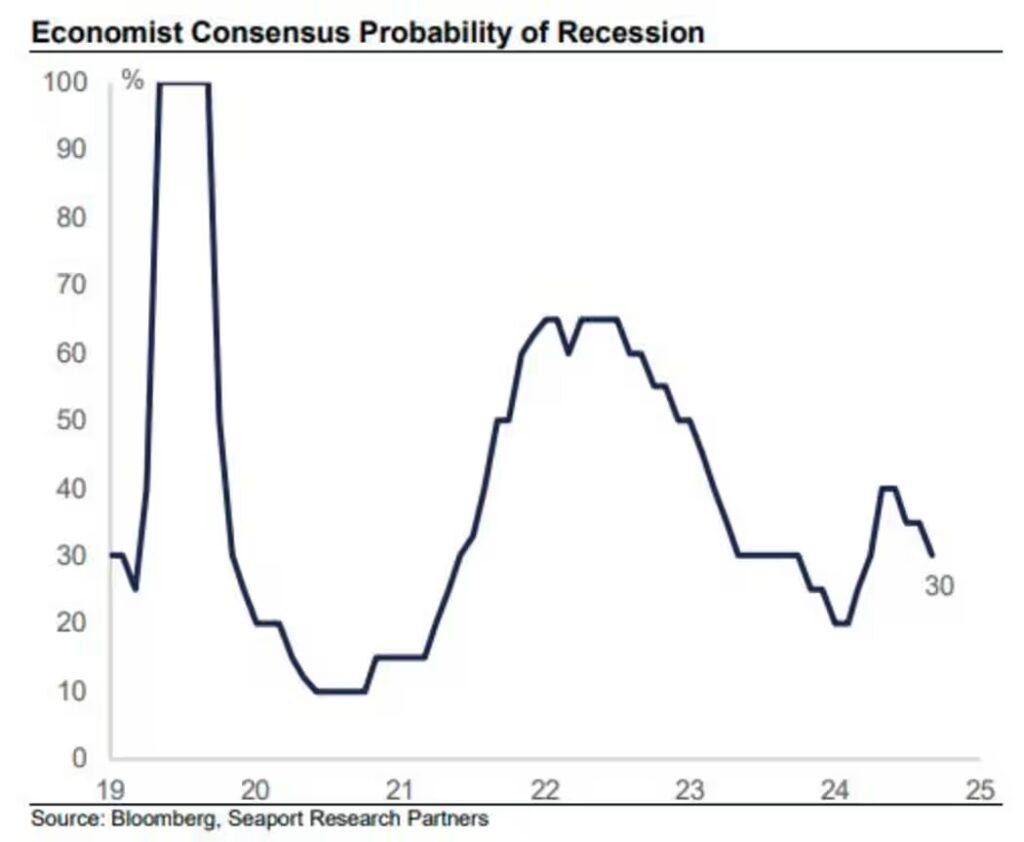
Golub: Tech Strength and Solid Economy to Keep Market Rally Alive The S&P 500 logged its 25th record close of the year Monday, shaking off pre-Fed jitters and extending its remarkable run. While some warn the rally looks stretched, Seaport Research Partners’ chief equity strategist Jonathan Golub says fundamentals—not froth—are powering stocks higher. Golub, with portfolio strategist Patrick Palfrey, expects double-digit gains ahead. Their outlook puts the S&P 500 at 6,700 by year-end and 7,300 by late 2026, among the Street’s most bullish targets. Driving the move: resilient earnings and ongoing tech leadership. “We’re not in a 1990s-style bubble,” Golub told MarketWatch. “As long as technology holds up and the economy stays reasonably healthy, valuations can keep rising.” He points to firmer fundamentals—recession odds dropping to 30%, bond yields easing, tight credit spreads, and calmer volatility. “This market isn’t running on emotion. It’s grounded in real earnings and real growth,” he said. For investors, the strategy depends on context. “Buying dips works outside recessions,” Golub noted. “But if growth flips into contraction, it turns into a dangerous play fast.” Risks remain: a slowdown in AI or tech spending, labor market weakness, or policy missteps could threaten the rally. Still, Golub’s bottom line is clear: “The economy doesn’t have to boom. It just can’t reverse—and right now, there’s no sign of recession.”

sonic
DayTradeToWin Review

Ride the Trend Fast with Sonic Strategy

Happy Monday, traders! Today, we’re diving into two essentials every futures trader needs to master: Before we get started, remember—trading is risky. Never risk money you can’t afford to lose. Futures Rollovers Made Simple Futures contracts don’t last forever. When one expires, you must roll over to the next active contract to keep your trades aligned with real market data. Here’s how I did it in NinjaTrader when the September E-mini S&P expired and the December contract took over: That’s it—the chart automatically updates to the new contract. Even better, if you’re running the Sonic System, all your signals, entries, stops, and targets instantly refresh for the December contract. Sonic System in Action Once rolled over, I added the Sonic System to my one-minute E-mini chart. A trade signal popped up at 6675.25 long. Instead of letting the ATM strategy place orders for me, I manually set my entry, stop, and target. Minutes later, the market moved in my favor—turning the setup into a winning trade worth $200–$500 per contract. That’s the Sonic System at work: clear signals, well-defined risk, and the ability to capture consistent profit opportunities throughout the day. Trade Smart: Less Is More Here’s a golden rule: don’t overtrade. Consistency comes from discipline. The Sonic System gives you the entries and exits—you just need to manage the risk. Why Traders Choose Sonic The Sonic System is built for traders who want:✅ Clear, rules-based signals✅ Automatic updates when contracts roll over✅ Consistent trade opportunities ($200–$500 per contract)✅ Strategies that rely on price action, not lagging indicators It also works seamlessly alongside other DayTradeToWin tools like the Roadmap, Atlas Line, and Trade Scalper for extra confirmation. Take the Next Step Want to experience the Sonic System for yourself? Here’s how to get started: Start trading with confidence—join our community and level up your strategy. Until next time, good trading!

dot-com
Market News

Dot-Com Flashback: Are We Headed There Again?

Henry Blodget on AI Mania: Echoes of the Dot-Com Bubble, With Key Differences Trade negotiations between the U.S. and China looked promising—until headlines hit that Beijing accused Nvidia of antitrust violations. That makes Nvidia a fitting case study for today’s hot-button market debate: is the AI-driven rally another bubble in the making? Valuations certainly raise eyebrows. The S&P 500’s cyclically adjusted P/E ratio is near 38, just shy of dot-com era extremes, Morgan Stanley notes. Enter Henry Blodget—a name synonymous with the internet boom and bust. Once a star analyst before being barred from Wall Street by the SEC, Blodget later founded Business Insider and ran it through its sale to Axel Springer. He sees familiar patterns playing out, but also crucial differences. “Like the Internet, AI is already reshaping far more than tech,” Blodget says. “This year alone, $400 billion is being poured into AI infrastructure. That kind of spending is fueling global growth and markets. If it all unravels, the fallout won’t be confined to Silicon Valley.” Still, today’s setup isn’t a carbon copy of the late ’90s. A large portion of AI investment is in private markets—sparing many retail investors if things sour. And unlike the debt-fueled frenzy of the dot-com years, much of today’s buildout is financed by the cash flows of mega-cap tech giants. That doesn’t mean the risks are small. “If AI collapses, stock markets and commercial real estate will get hammered, data centers will sell for pennies, and hundreds of startups will vanish. But the pain should be more contained,” he argues. Blodget admits his past calls were a mix of right and wrong. He correctly saw the internet’s transformative power, the bubble-like valuations of the late ’90s, and the fact that most dot-coms wouldn’t last. But he underestimated the depth of the crash—strong companies were dragged down too—and the number of eventual winners. He points to the crowded search engine wars before Google dominated as a cautionary tale for today’s AI leaders. “These models consume massive capital and energy. Their progress relative to cost is slowing, and the next big leap always feels just a year away,” he warns. Of course, some players will break through. Blodget’s most famous call was on Amazon, which left dismissive rivals like Barnes & Noble and Walmart far behind. “Executives who mocked e-commerce didn’t last. Investors who said internet stocks were ‘too expensive’ underperformed for years,” he recalls. The only real unknown? Timing. “Is this 1996 or 1999?” Blodget asks. “There’s no way to know.”

stock
Market News

Stocks Shine Now, But Cracks Are Starting to Show

Stocks at Record Highs Face Risks from Slowing Economy and Fading AI Momentum Wall Street posted a bullish trifecta on Thursday, with the Dow +1.36%, S&P 500 +0.85%, and Nasdaq +0.72% all closing at fresh record highs. But as history shows, peaks are often followed by painful pullbacks. Peter Berezin, chief global strategist at BCA Research, warns that sell-offs rarely have a single cause. “To ask what will trigger the next stock market crash is akin to asking which snowflake will trigger the avalanche,” he says. Instead, downturns tend to emerge when multiple pressures converge. The takeaway: markets can stay buoyant even in the face of risks, but once cracks spread, sentiment shifts quickly. Looking ahead, Berezin warns that today’s bull market pillars — economic resilience and AI enthusiasm — are showing strain. If equity wealth falls, consumer spending may weaken further, amplifying the downturn. “While it’s impossible to know exactly when equities will peak, enough vulnerabilities have built up to justify keeping one hand near the eject button,” Berezin concludes.

Deutsche Bank
Market News

Deutsche Bank Predicts Market Upside

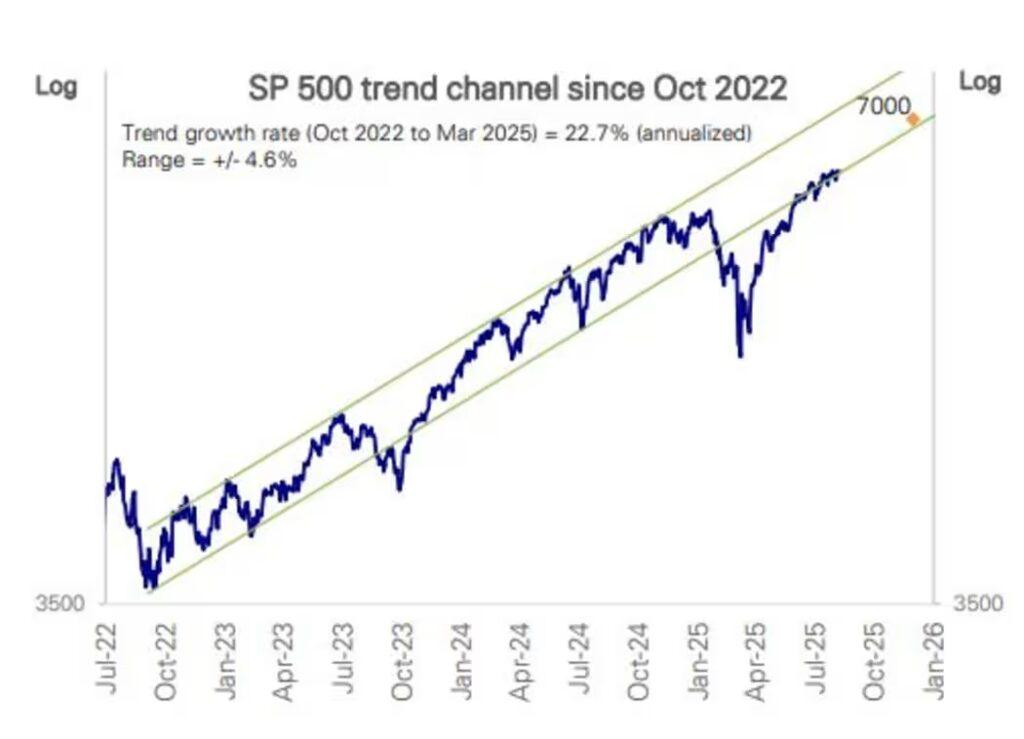
Deutsche Bank Eyes S&P 500 at 7,000, Says Trump May Soften Policies if Economy Weakens As markets head into the seasonally slower months of September and October, investors are questioning how much momentum remains. While the S&P 500 and Nasdaq notched fresh highs this week, sentiment has slipped to a five-month low. Still, Deutsche Bank remains bullish. Chief global strategist Binky Chadha and his team have reinstated their 7,000 year-end target for the S&P 500, putting them at the high end of Wall Street forecasts. The bank had previously cut its target to 6,150 in April before lifting it to 6,550 in June on easing tariff concerns. In a new note, the strategists said strong second-quarter earnings and limited tariff damage justify their outlook. Companies, they argue, have absorbed most of the impact through pricing and other measures, with inflation pressures expected to remain modest compared with 2021–2022. Deutsche Bank also raised its 2025 earnings forecast for the index to $267–$277, with 2026 projected at $315. Positioning could provide an additional boost. While systematic strategies are overweight U.S. stocks, fundamentals-based investors have stayed neutral since July. A shift from that group, Chadha’s team said, could unlock further upside. The Trump administration may also become a factor. If trade or policy risks begin to drag on growth and consumer confidence — and, in turn, presidential approval ratings — Deutsche Bank expects the White House to ease course in support of the economy and markets. Technically, the S&P 500 has been climbing within a strong uptrend channel since late 2022, one that points to 7,000 by year-end. Sector-wise, Deutsche Bank is overweight financials and consumer cyclicals, while staying neutral on technology as the rally broadens beyond megacaps.

roadmap
DayTradeToWin Review

Roadmap Software: Profit with Precision

Most traders wait until the bell rings at 9:30—but the real opportunities often happen before the market opens. With the Roadmap Software, you can spot reversals, filter out low-quality trades, and take advantage of moves that most traders overlook. Why Pre-Market Trading Works Pre-market volatility creates powerful setups. Using Roadmap, you’ll know: For example, a quick two-point move equals $100 per contract. Trade five contracts? That’s $500—all before the open. A Live Setup Example In the E-Mini S&P September 2025 contract, the market hit the Zone and reversed, creating a textbook shorting opportunity. While others were guessing, Roadmap traders saw resistance clearly and acted with confidence. Control Risk Like a Pro News events and the opening bell can cause wild swings. That’s why funded traders rely on Roadmap—to manage risk, avoid traps, and focus only on strong trades. Start Today—Trade Smarter Here’s how you can get started:✅ Create a free member account at DayTradeToWin.com✅ Test-drive the Roadmap and other software with free trials✅ Join our live trading room and learn from seasoned price action traders✅ Upgrade to the Accelerated Mentorship Program for full access to all our proprietary systems, including the Sonic System Don’t Guess—Follow the Roadmap Most traders miss key reversals. With Roadmap, you’ll have a clear guide to where the market is likely to move next. 🚀 Trade the pre-market with confidence. Trade with Roadmap. 👉 Get started now at DayTradeToWin.com with your free member account.

Scroll to Top