TradingView vs NinjaTrader_ Identical Trade Signals Using Professional Trading
Trading Software

TradingView and NinjaTrader Signal Comparison Using Rule-Based Software

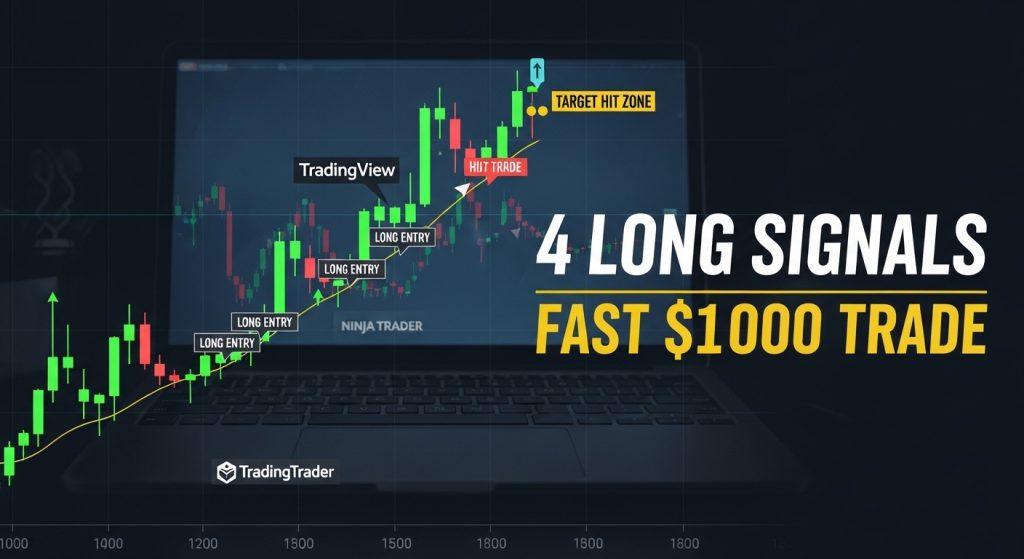
Traders frequently ask whether trading signals remain consistent when switching between platforms. Platform reliability is a major concern for futures traders, especially those managing funded accounts or preparing for prop firm evaluations. In this recent session, we ran the DayTradeToWin proprietary trading suite simultaneously on both TradingView and NinjaTrader. The objective was straightforward: determine whether structured, rule-based signals remain synchronized across platforms. The result was clear. Identical signals appeared at the same price levels in real time. This reinforces an important principle: The platform delivers the chart.The rules deliver the consistency. Real-Time Alignment Across Multiple Trading Methods During the February 18 morning session, several independent tools were applied to both charting environments: Each component of the software suite operates using predefined logic. When multiple systems confirm the same directional bias, the probability of trend continuation typically improves. In this case, every qualifying signal aligned to the long side shortly after the market opened. Most notably, the long entry triggered at the identical price on both TradingView and NinjaTrader. This type of cross-platform agreement is particularly valuable for: Why Cross-Platform Consistency Is Important Many market participants experiment with different data feeds and charting platforms. A common concern is whether signal integrity changes depending on the environment being used. The DayTradeToWin software is built on strict conditional logic. When market criteria are met, the signal is generated — regardless of platform. In situations where delayed data is used, timing of the display may shift slightly, but the qualifying price level remains the same. This structure helps eliminate: The goal is repeatable decision structure rather than prediction. Understanding Confirmation and Trend Structure During the live session, several constructive market behaviors were observed: When independent methods align without contradiction, it often reflects orderly directional movement. Professional futures traders typically emphasize: These principles apply equally to funded accounts and personal trading accounts. Psychological Resistance: The 7,000 Level Another important observation during the session was the market’s interaction with the 7,000 area, a notable psychological resistance zone. Markets frequently revisit prior ceilings and support/resistance areas. Monitoring price behavior near these zones can help traders: Combining structural signals with key price levels creates a more disciplined decision framework. Rule-Based Trading vs. Prediction Many developing traders focus heavily on trying to forecast market direction. Experienced traders typically shift their focus toward: Platform selection alone does not create consistency. Rule discipline does. DayTradeToWin Software and Member Resources The complete DayTradeToWin trading suite currently includes: The software is available for both: Members receive: You can create a free member account here: 👉 https://daytradetowin.com Final Perspective Whether participating in a prop firm evaluation or managing a personal futures account, long-term consistency typically comes from structured, rule-based confirmation. TradingView and NinjaTrader are simply delivery platforms. Alignment, discipline, and repeatable rules are what support stable execution over time. ⚠️ EDUCATIONAL DISCLAIMER All strategies, chart examples, and demonstrations are provided for educational purposes only. Futures, stocks, and other financial instruments involve substantial risk and are not suitable for all investors. Never trade with funds you cannot afford to lose. Topic Focus This article examines how DayTradeToWin proprietary trading software generates synchronized trade signals across TradingView and NinjaTrader platforms. The emphasis is on rule-based futures trading, multi-indicator confirmation, and structured execution. Platforms Covered The software maintains consistent signal generation across both environments when predefined market conditions are satisfied. Trading Systems Referenced Each system operates independently and contributes to confirmation when directional agreement occurs. Key Trading Concepts The core emphasis is on repeatable trading processes rather than predictive market calls. Educational Intent This material is intended solely for trader education. It demonstrates how professional trading tools apply consistent rule logic across multiple platforms to support disciplined decision-making.

Managing Trade Entries After Momentum Spikes
DayTradeToWin Review

Managing Trade Entries After Momentum Spikes

Rapid market expansions often create the illusion that price will continue moving in the same direction indefinitely. In reality, strong momentum bursts frequently lead to temporary exhaustion as traders begin taking profits. Understanding how to manage entries during these conditions is essential for maintaining consistent trading performance. In this MNQ NASDAQ futures example, the market produces an aggressive directional move followed by the potential for retracement. Rather than entering immediately after extended candles, a structured method focuses on planning entries at more balanced price levels. Positioning an entry between the predefined stop location and the projected target allows traders to maintain controlled exposure while still participating in the prevailing trend. Another critical factor involves the opening minutes of the trading session. Market-open activity often introduces elevated volatility that can distort short-term signals. Allowing the initial volatility phase to stabilize helps traders evaluate whether directional signals remain aligned or begin weakening. This observation period frequently improves trade selection and prevents impulsive entries. Confirmation-driven analysis further strengthens the process. When directional signals continue forming progressively higher or lower relative to previous signals, traders gain additional context for assessing whether trend continuation remains probable. Combining confirmation signals, retracement-based entries, and disciplined stop placement supports structured decision-making under changing market conditions. Consistent performance is rarely the result of reacting quickly to sudden price movement. Instead, it develops from planning entries in advance, managing risk carefully, and waiting for conditions that meet predefined rule-based criteria. Continue Learning Structured Price-Action Methods Explore structured trading education, platform setup training, and confirmation-based trading tools at:https://daytradetowin.com Educational Disclaimer Trading involves substantial risk and is not suitable for all investors. This information is provided solely for educational purposes and does not constitute financial or investment advice. This educational article explains a structured price-action trading framework focused on managing trade entries following strong market momentum. Topics include retracement-based entry planning, volatility stabilization at market open, confirmation-signal evaluation, and disciplined stop-loss positioning. Concepts are illustrated using confirmation-based analytical tools such as Sonic System, Atlas Line, and Trade Scalper within rule-based futures trading methodologies. Primary concepts covered:• Momentum exhaustion and profit-taking retracements• Midpoint entry positioning between stop and target• Market-open volatility and timing discipline• Confirmation signals and directional alignment• Risk-defined trade management using stops and targets About DayTradeToWin DayTradeToWin provides structured trading education focused on rule-based price-action trading methodologies designed to help traders improve execution discipline, confirmation-based analysis, and long-term consistency in futures markets. Educational Scope All chart examples, demonstrations, and trading discussions are presented exclusively for educational purposes and trader skill-development. Platform and Tools Referenced Educational materials may reference Sonic System, Atlas Line, Trade Scalper, Roadmap, and AutoPilot tools available for supported trading platforms including NinjaTrader and TradingView. Learning Resources Additional structured trading education, platform setup guides, and member training resources are available at:https://daytradetowin.com

Pass prop firm evaluations
Futures Trading

Identifying Market Direction at the Open: A Structured Trading Framework

An Educational Framework for Structured Futures Trading One of the most common challenges new traders face is determining trade direction during the first minutes of the session. While entry signals are important, directional bias must always come first. This article outlines a structured process used to evaluate trend health and directional probability shortly after the market opens. Directional Bias Before Trade Execution Early-session volatility often creates emotional trading decisions. However, experienced traders begin by asking one question: Is the market favoring long or short conditions? In the example reviewed: When multiple structured indicators confirm alignment, directional probability increases. Evaluating Trend Health A stable trend typically displays: • Progressive signal structure• Absence of contradictory signals• Alignment between confirmation tools When signals remain consistent without flip-flopping between long and short, the market is demonstrating structural health. Waiting for confirmation rather than reacting immediately to the first signal often improves long-term consistency. Structured Confirmation and Risk Parameters Modern price-action software assists traders by objectively defining: The purpose is not prediction. The purpose is confirmation. This framework reduces emotional decision-making and promotes disciplined execution. Educational Application for Evaluation Traders For traders attempting funded evaluations, the ability to correctly identify direction is critical. A structured methodology reduces impulsive counter-trend trades and improves performance stability. About the DayTradeToWin Tools DayTradeToWin provides structured trading tools designed to promote confirmation-based decision-making. Included tools: SonicTrade ScalperAtlas LineRoadmapAutoPilot Available for NinjaTrader and TradingView. Free member accounts are available for traders seeking additional educational resources. Visit:https://daytradetowin.com Conclusion Trading becomes clearer when structure replaces opinion. By identifying direction first, confirming trend health, and executing based on defined rules, traders can improve discipline and long-term consistency. Article Summary and Key Concepts Article Category: Futures Trading EducationCore Concept: Market direction identification at session openPrimary Method: Structured confirmation toolsRisk Principle: Defined stop-loss and target managementTools Referenced: Sonic, Trade Scalper, Atlas LineIntended Audience: Retail futures traders and evaluation candidatesPlatform: NinjaTrader, TradingViewContent Type: Educational only – no financial advice

MOST TRADERS MISS THIS
Trading Software

Trade Confirmation in Day Trading: Why Alignment Matters

In day trading, direction is more important than prediction. On Tuesday, February 10, the market repeatedly tested a major price level near 7,000. Multiple attempts at the same level often signal that participation is building. However, experienced traders do not assume continuation. They wait for confirmation. Trade confirmation reduces emotional decisions and improves consistency. Step One: Identify Direction Before Entry Before focusing on entries, traders should determine directional bias. In this session, multiple confirmation tools aligned on the higher timeframe, indicating bullish pressure. When several independent systems agree, the probability of continuation improves. This is not prediction. It is confirmation of structure already present in the market. Step Two: Refine Entries on a Lower Timeframe Once directional bias is established, traders may shift to a lower timeframe to improve precision. Using a one-minute chart can allow for: Lower timeframe entries should never contradict higher timeframe direction unless structure changes. Step Three: Avoid Counter-Trend Signals Without Evidence Many traders lose consistency by reacting to minor pullbacks. However, if multiple confirmation signals continue to align with the prevailing direction, counter-trend trades may carry unnecessary risk. A structured approach requires: If several short confirmations had appeared below the directional baseline, the bias would change. In this case, it did not. Risk and Reward Structure Professional trading emphasizes predefined risk. In this example, the stop and target were balanced, maintaining disciplined structure. Whether trading micro contracts or standard futures contracts, consistency comes from repeatable execution — not from chasing large moves. Educational Takeaway Trade confirmation in day trading is about: This structured approach helps traders reduce emotional trading and improve long-term consistency. Markets may continue higher. They may reverse later. The objective is not to predict every move, but to align with confirmed structure while maintaining risk discipline. Educational Framework This article is part of an ongoing educational series covering futures market structure, trade confirmation, and disciplined execution techniques. Each lesson focuses on rule-based decision-making rather than prediction. About DayTradeToWin DayTradeToWin is a professional trading education company specializing in rule-based, non-predictive futures trading strategies. For over a decade, the company has focused on confirmation-based systems that emphasize risk management, market structure, and trader discipline. The tools discussed in this article are designed to confirm market direction and filter out low-probability setups rather than predict reversals. All content is provided for educational purposes only and does not constitute financial, investment, or trading advice. ⚠️ Risk Disclosure Trading involves risk. Past performance does not guarantee future results. Only trade with funds you can afford to lose.

Price Action Trading at Key Levels: Double Tops, Double Bottoms & the 7,000 Breakout
Trading Strategies

Price Action Trading Around Key Levels:

Understanding Support, Resistance, and Psychological Numbers On Monday’s market session, price action provided a textbook example of how markets behave around major support and resistance levels — particularly psychological round numbers. One of the most important principles traders must understand is that markets frequently revisit areas where they have previously traded. These retests often form recognizable structures such as double tops and double bottoms, which can provide valuable clues about future direction. Double Top Resistance Example In today’s session, price rallied strongly early in the morning and reached a key resistance area near 7,000, forming a high that was later tested again. When the market revisits a previous high and struggles to move higher, traders often classify this structure as a double top, signaling that the level is being actively defended by sellers. However, repeated testing of resistance also increases the probability of a breakout. Once the market successfully breaks above a major level such as 7,000, strong continuation moves often follow due to stop orders and breakout traders entering the market. Psychological Round Numbers in Trading Round numbers like 7,000 often act as magnets for price because many traders naturally place: This clustering of orders creates increased activity around these areas, which explains why markets frequently hover near even numbers before making decisive moves. Double Bottom Support Example Earlier in the session, price also formed a double bottom, revisiting the same low twice before moving higher. This is another classic price action structure showing how markets test previously traded zones before committing to a directional move. Trading the Breakout When resistance levels are tested multiple times, the probability of a breakout increases. A sustained move above 7,000 could trigger strong upside momentum as stop orders from short positions are activated and breakout traders enter long positions. Understanding these simple price action principles — support, resistance, retests, and psychological levels — allows traders to read the market with greater clarity and confidence. learn more at daytradetowin.com

Scroll to Top