market
Market News

Market Needs 2 Keys for 7,000

Wall Street strategist Tom Lee is once again dialing up his optimism for the stock market. But his bullish call comes with conditions: two key shifts need to fall into place before he sees the rally gaining full steam. Lee, who heads research at Fundstrat, believes 2025 has unfolded in three distinct chapters so far. The first stretch, running from January through April, was dominated by tariff concerns that rattled investors and kept equities on uneven footing. Then came what he calls the “most hated” V-shaped rally—from April until now—when stocks surged despite widespread skepticism and under-invested portfolios. Now, Lee argues, markets are on the verge of entering a third and defining stage: a dovish Federal Reserve combined with a long-delayed rebound in the Institute for Supply Management’s manufacturing index. “The Fed will finally cut rates after staying on pause all year,” Lee said. “And the ISM will finally move back above 50 after more than 28 months in contraction.” While the ISM gauge briefly touched above the 50 expansion threshold in January and February, it has struggled to gain momentum, spending nearly two years stuck below 51. A durable move higher would signal that manufacturing—an area that has been a drag on the economy—is stabilizing and recovering. Lee acknowledges that the path forward may not be smooth. His colleague, Fundstrat technical strategist Mark Newton, has flagged the likelihood of a market correction in the fall. That pullback, Lee says, would be a natural reset as investors digest what the Fed’s first rate cut means for both markets and the economy. “To us, this makes sense,” he explained. “The initial reaction to a Fed cut is always uncertain. But once the rate environment reflects a more dovish central bank, the backdrop improves significantly for stocks and the broader economy.” Despite the bumps ahead, Lee remains confident in his year-end forecast: an S&P 500 target of 6,600. That implies meaningful upside from Tuesday’s close of 6,411.37, when the index slipped 0.59% after a volatile trading session. For Lee, the story of 2025 is one of transition—moving past trade worries and skepticism into a phase defined by monetary easing and economic healing. If his two conditions are met, he sees stocks finishing the year with strength, setting the stage for even bigger gains in 2026.

gold
Market News

Gold Tops 2025 — Banks See Further Upside

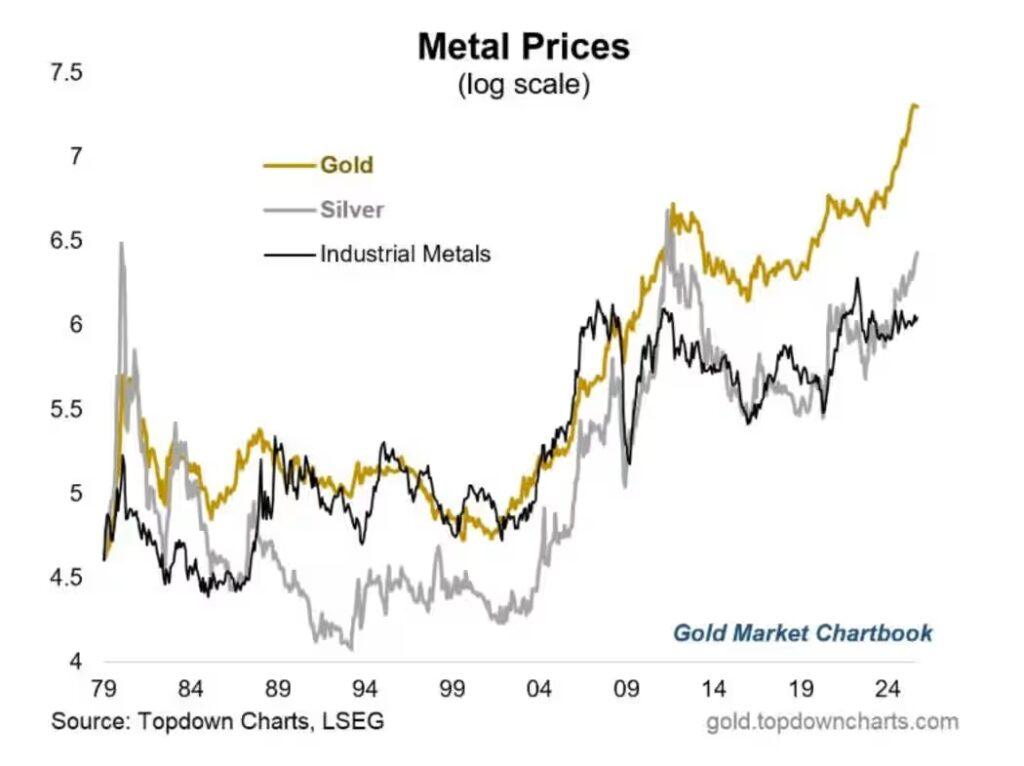
UBS: Gold Demand Set to Hit Highest Level Since 2011 Investors are bracing for Fed Chair Jerome Powell’s Jackson Hole speech on Friday, with gold traders especially alert for hints of rate cuts. Softer labor data and easing inflation have already boosted expectations for policy easing, a trend that tends to favor gold by lowering the opportunity cost of holding the metal. UBS Global Wealth Management has turned more bullish. Strategists led by Wayne Gordon now see gold rising to $3,600 an ounce by March 2026 and $3,700 by June 2026, both lifted from prior forecasts of $3,500. The end-2025 target remains $3,500. Gold has already gained 28% this year, outperforming equities, bonds, G-10 currencies, and bitcoin. UBS cites sticky U.S. inflation, below-trend growth, questions about Fed independence, fiscal risks, and continued de-dollarization as the forces likely to push prices higher. The bank now forecasts global demand climbing 3% to 4,760 metric tons in 2025, the strongest since 2011. ETF demand is expected to reach nearly 600 metric tons—up from 450 previously—while central bank purchases should remain near historic highs. Still, the team warns that if the Fed is forced to raise rates again, gold’s rally could falter. After touching a record $3,439.20 in July, prices have cooled over the summer. Yet sentiment is shifting: DoubleLine’s Jeffrey Gundlach has called gold a true asset class, while some analysts suggest industrial metals may soon play catch-up.

markets
Market News

Markets on Edge as Jackson Hole Looms

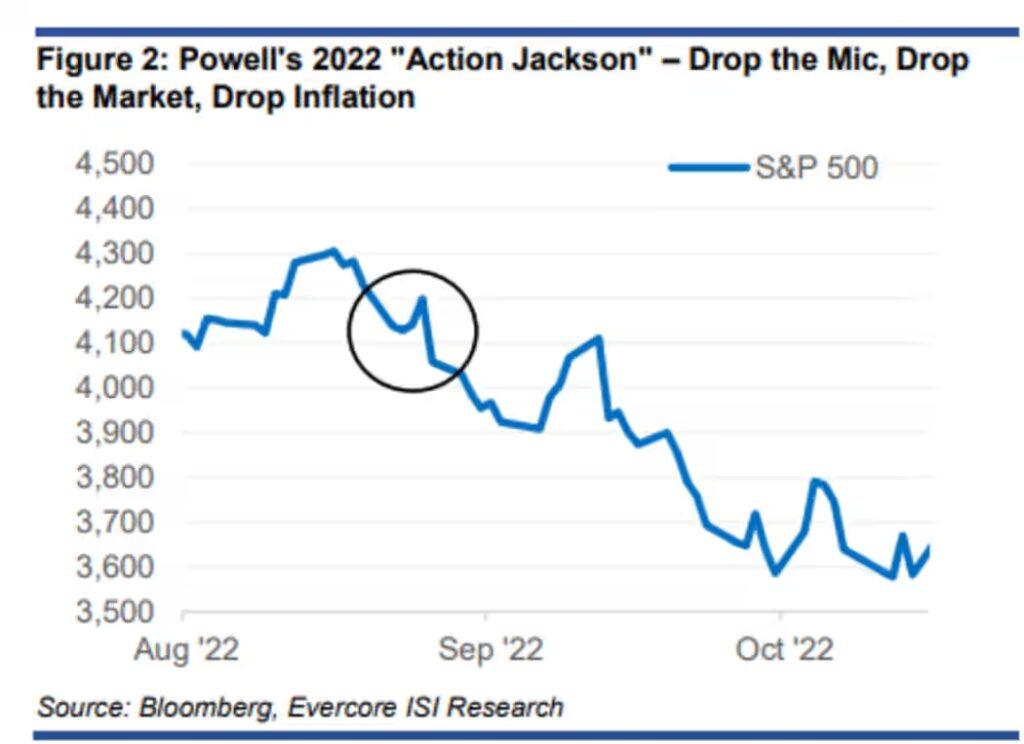
Powell’s Jackson Hole Speech Could Rattle Markets, Evercore Warns Stocks kicked off the week just shy of record highs, supported by strong earnings and hopes the Federal Reserve will soon cut rates. Investors are now focused on Fed Chair Jerome Powell’s Friday speech at Jackson Hole, looking for dovish signals. But Julian Emanuel, Evercore ISI’s chief equity and quantitative strategist, warns Powell may disappoint. In a note published Sunday, Emanuel said Powell faces a tough balancing act as inflation data has reignited concerns about price pressures, while labor market reports show weakening momentum. At the same time, stock valuations are stretched. The S&P 500 trades at 25.5 times trailing earnings—among the highest since 2000—heading into what is often a seasonally weak period for equities. Emanuel points to Powell’s 2022 Jackson Hole speech, when his tough anti-inflation stance sent markets tumbling, as a reminder of the risks. This year, disappointment could come if Powell only signals a quarter-point cut on September 17, rules out a half-point move, and emphasizes that further easing will depend on incoming data. That scenario, Emanuel argues, could trigger a 7% to 15% pullback into October, even within a longer-term AI-driven bull market. His suggested plays: hedge downside with October puts on the Nasdaq-tracking Invesco QQQ Trust (QQQ), rotate into cheaper sectors like healthcare, and lighten up on pricey names including Palantir (PLTR), Cleveland-Cliffs (CLF), and Coinbase (COIN).

goldman
Market News

Why Goldman Sees Trouble Ahead for Stocks

Goldman Warns: Calm in Equities May Be Ending The S&P 500 just notched its 18th record close of 2025, fueled by strong corporate earnings—boosted by AI spending—and softer Fed expectations, according to Goldman Sachs. Risk premiums have narrowed, credit spreads have tightened, and the VIX has fallen to its lowest since December. But Goldman strategists Christian Mueller-Glissmann and Andrea Ferrari say the setup is less friendly than past low-volatility periods. The chance of outsized rallies is slim, while the probability of a sharp pullback is climbing. High valuations, weakening labor data, and slowing business-cycle momentum have all pushed their drawdown probability index higher—similar to the spike seen after Trump’s April tariff announcement. Tariff uncertainty, sticky inflation, and lingering geopolitical risks could also limit Fed rate cuts, keeping markets vulnerable. Goldman sees U.S. growth staying weak in the second half, meaning more Fed easing is possible—but likely alongside higher equity volatility. Their stance: tactically neutral—overweight cash, neutral on equities, credit, and bonds, underweight commodities. For hedging, they favor cheap put spreads and selective downside plays on Brazil’s Bovespa, India’s Nifty 50, and China’s CSI 300. On the upside, they see potential in calls on the S&P 500 Equal Weight Index if gains spread beyond mega-cap tech.

markets
Market News

Momentum Meets Markets Skeptic

Markets have been behaving oddly over the past two days — maybe a long-awaited sector rotation, or just thin summer trading paired with optimism over how aggressively the Fed might cut rates. Andrew Left Says Palantir’s Valuation Outpaces Even Nvidia’s Small caps and homebuilders have rallied, but momentum giants have stalled. Leading that group is Palantir (PLTR -1.39%), up 144% year-to-date, making it the S&P 500’s top performer. Its surge has pushed valuations to extreme territory — 242x forward earnings and 137x sales, according to FactSet. Short-seller Andrew Left of Citron Research thinks that’s unsustainable. “I like Alex Carp, the company’s mission, and its leadership,” Left said on Fox Business. “But even if Palantir traded at Nvidia’s 2023 multiples, the stock could still drop by two-thirds — to about 35x sales. You can’t be a big data company and tell investors to ignore big data.” Left noted that no company with such lofty multiples has avoided a 50% correction. He also pointed to competition from Databricks, a rival with similar revenue and more corporate customers, rumored to be going public this year. Though he admits he could be wrong and still holds positions in Apple and Amazon, Left sees Palantir as dangerously overpriced. Separately, Left is battling SEC and DOJ charges over his short-selling markets activities. His attempt to dismiss the case was rejected in July, with trial set for March.

sonic
DayTradeToWin Review

Sonic Strategy Turns Setups into Profits

When it comes to trading futures, there’s no shortage of “perfect setups” — but knowing which ones to take and how to manage them separates seasoned traders from the rest. Today, I’m sharing how I used the Sonic Trading System to spot, enter, and manage two trades on the NASDAQ and E-Mini S&P 500. Waiting Beats Chasing Early in the session, the NASDAQ and E-Mini S&P had both produced multiple long signals. The market was already moving toward targets, but instead of jumping in late, I waited. Why? Because chasing after a move that’s already halfway done is a shortcut to frustration. Instead, I switched between charts, looking for the next clean setup. The NASDAQ Breakout Finally, a fresh long signal on the NASDAQ appeared. I didn’t hesitate — order filled. The move was quick, hitting my 20-tick target almost immediately. Here’s the catch: I was aiming for more, but the market hit my preset target before I could adjust. A reminder that in fast markets, execution speed is king. The E-Mini S&P Advantage Over on the E-Mini S&P, a similar setup unfolded — this time with a small retracement before entry, giving me a better price. The trade had plenty of potential, but after two failed attempts to push through resistance, I recognized the danger of holding on too long. I adjusted my target, took the fill, and locked in $225 per contract. That’s over $1,000 if you’re trading five contracts — without risking a pullback wiping it away. Reading the Market’s “Body Language” The key moment here wasn’t the entry — it was the decision to exit early. Price tried three times to break a level and failed each time. That’s market body language telling you to take your money and step aside. Successful trading isn’t about squeezing every tick — it’s about capturing high-probability moves and protecting your capital. The Sonic System Edge The Sonic Trading System’s clean, price-action-based signals made both setups clear. But it’s not the signals alone — it’s the trade management that turns good trades into great results. 📢 Want to see the Sonic system in action?Get a free member account and trial access to all our proprietary tools at daytradetowwin.com. Learn to trade the smart way with strategies that adapt to real market conditions. Final Thought Patience, precision, and disciplined exits — if you can nail these three, you’ll stop fighting the market and start trading in harmony with it.

Scroll to Top