tax refunds
Market News

Big Tax Refunds, Bigger Inflation Risks

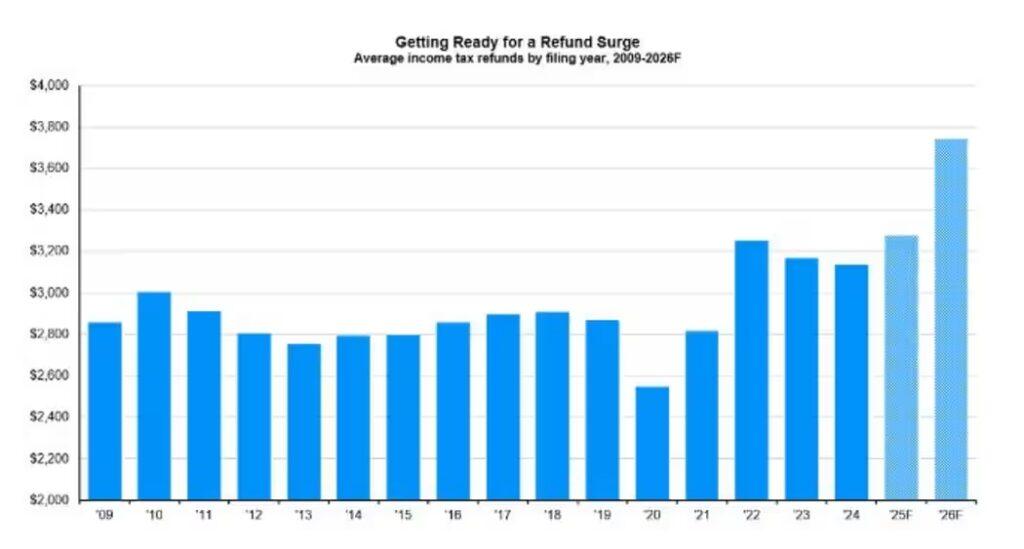
Why Tax Refunds Could Delay Fed Rate Cuts Markets are counting on the Federal Reserve to trim rates in September, but a surge of tax refunds in early 2026 could complicate that outlook, says David Kelly, chief global strategist at JPMorgan Asset Management. The IRS recently confirmed that withholding levels won’t change this year as it implements the One Big Beautiful Bill Act (OBBBA). That means taxpayers will likely see unusually large refunds when they file 2025 returns. With seven retroactive tax breaks—ranging from no tax on tips and overtime to bigger child credits and standard deductions—refunds could average $3,743 across roughly 110 million households. Kelly warns these payouts could act like “stimulus checks,” fueling spending and inflation through early next year. While upper-middle-income households will capture most of the benefit—and may save more than spend—many consumers could still bring forward spending into this holiday season, creating a short-term economic lift. But the effect may fade fast. If refunds are spent quickly, growth could slow sharply by late 2026, just as tariffs and weaker immigration weigh on the economy. That could set the stage for Washington to consider fresh stimulus before midterm elections. For the Fed, the risk is clear: cutting rates into a refund-driven “sugar rush” could stoke inflation, undermine credibility, and weigh on the dollar and equities. Kelly advises investors to diversify into international and alternative assets to hedge against these risks.

price action
DayTradeToWin Review

Price Action Made Simple: A Trader’s Secret Weapon

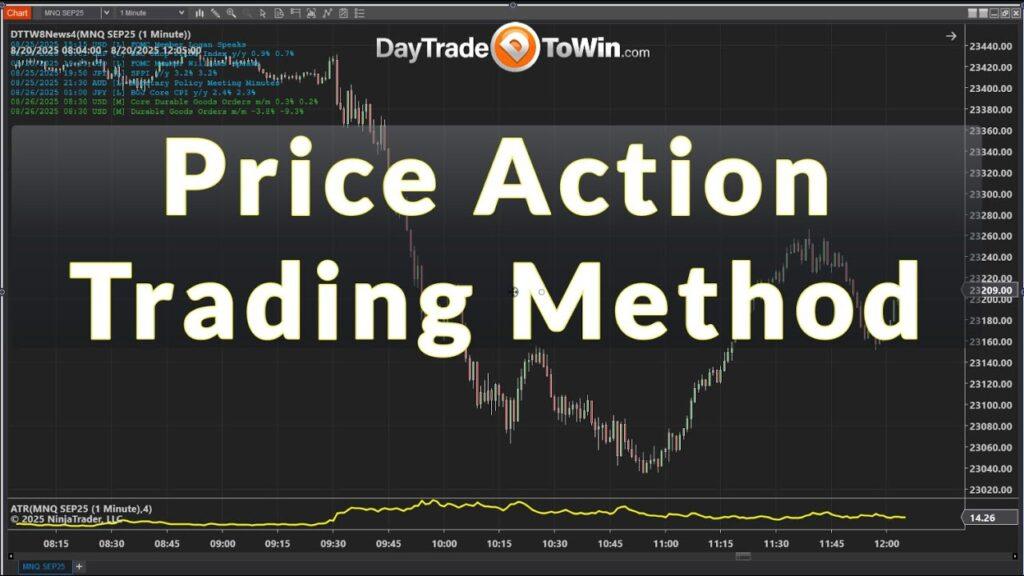
If you’ve ever felt overwhelmed by indicators and confusing chart setups, you’re not alone. Many traders chase after the latest “holy grail” tool, only to find themselves stuck with lagging signals. The truth is, some of the most powerful insights come straight from price action itself—no clutter, no guesswork. At Day Trade To Win, we focus on strategies that strip trading back to its core. One of the most effective is the ABC Method, a straightforward way to map out the day and spot high-probability trades. Why the First Two Hours Count The market open is where the action begins. Volume spikes, volatility kicks in, and big players start to show their hand. Whether you’re trading the E-mini, NASDAQ, or Russell, these first moves often set the tone for the day ahead. Using a 1-minute or 5-minute chart, simply mark the highest high and lowest low of the first 2.5 hours. These levels act as natural support and resistance zones. From here, you have a clear framework: Midday Patterns to Watch The ABC Method doesn’t stop once the morning rush settles down. The midday session (roughly 12:00 to 2:30 p.m.) often creates new setups. This is when news events, earnings, or economic reports can drive fresh momentum. By marking the highs and lows of this block, traders can prepare for late-day rallies or sell-offs. It’s all about being ready when the market shows its hand. Reading the Close The final phase of the ABC Method—the “C” session—looks at how the market closes. Breakouts here can confirm the day’s overall trend or create last-minute trading opportunities. The best part? This method works seamlessly with other tools like the Roadmap or Sonic System for even stronger confirmation. Why Traders Love It Whether the market trends or ranges, the ABC Method gives traders a clear structure to follow. Start Using It Today Here’s a quick way to put it into practice: The market will either break out or stay contained—it’s that simple. Take the Next Step Want to see this method in action? 👉 Get started with a free member account at daytradetowin.com. You’ll unlock training videos, free software trials (including the ABC Method), and access to live mentorship. Trade with clarity. Trade with confidence. Trade with price action.

small-caps
Uncategorized

Big Move in Stocks: Small-Caps Lead the Breakout

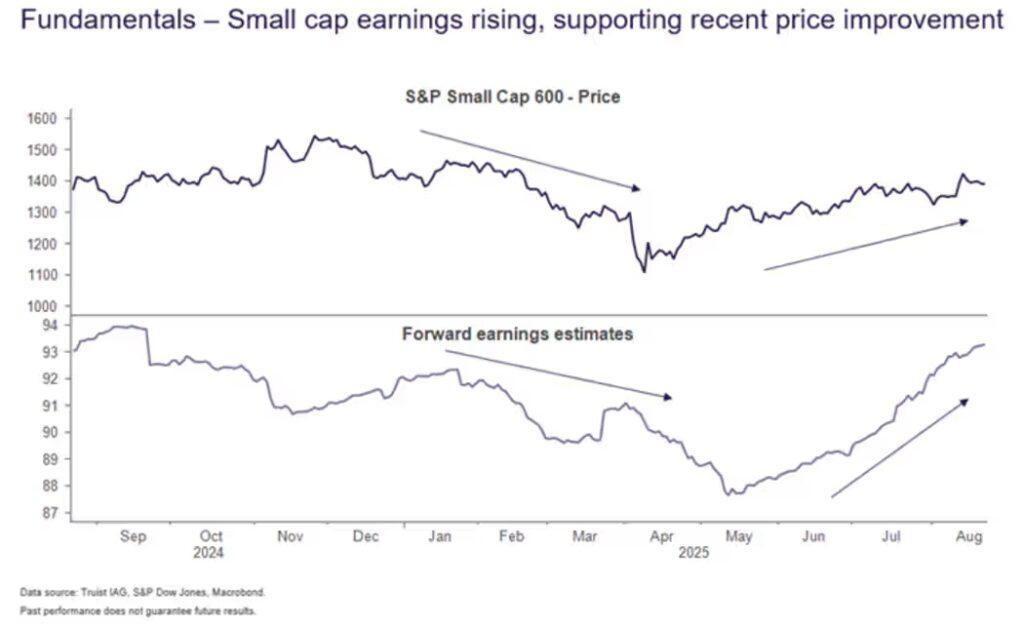
Small-Caps Break Out as Fundamentals Improve The aftershocks of Fed Chair Jerome Powell’s hint at a September rate cut were still felt after Jackson Hole, with U.S. small-caps among the biggest winners. The Russell 2000 surged nearly 4% on Friday, finally breaking free from a long stretch of stagnation versus the S&P 500. RBC Capital Markets strategist Lori Calvasina said the move was important not just for its size but for signaling a potential shift in market leadership away from the Magnificent Seven. While she warned the rally could fade as a short-covering bounce, investor positioning suggests it may have more room to run. Valuations will be key. The Russell 2000 was trading at 16.3 times earnings before Powell’s speech, with levels at 17.5, 18, and 20 marking potential ceilings if momentum continues. Keith Lerner of Truist Wealth upgraded small-caps to “neutral,” noting that, unlike in past rallies, price action now comes with improving earnings trends. He also highlighted new tax provisions that support leveraged and capital-intensive companies. Still, lasting gains depend on economic strength. Nancy Lazar of Piper Sandler argues the U.S. is only beginning to feel the effects of last year’s rate cuts, and combined with a supportive policy mix of tax relief and deregulation, growth could reaccelerate to as much as 3% by 2026.

market
Market News

Market Flashes Red as Pullback Looms

Wall Street is flashing a growing number of sell signals, according to Longview Economics. While the S&P 500 is still just 1.5% off its August 14 record high, recent weakness in tech stocks has raised doubts about the market’s momentum. Chris Watling, Longview’s CEO and chief strategist, warns that investors should be cautious as the market heads into September, historically one of the toughest months for equities. “You get warning shots before you get meaningful pullbacks,” Watling told MarketWatch, pointing to several red flags: His models also show equities overbought relative to bonds, sector divergences building, and market liquidity set to tighten further as Treasury issuance increasingly drains capital with the Fed’s reverse repo facility nearly depleted. Despite the warnings, Watling isn’t calling for investors to short stocks. He says a bear market is unlikely while the Fed holds steady, and aggressive rate cuts would likely fuel another rally, at least temporarily. For now, he remains “tactically neutral” on U.S. equities, with a preference for healthcare and staples. If the Fed cuts more aggressively, he would turn toward cyclical sectors.

stocks
Market News

Are Bonds Quietly Setting Up a Storm for Stocks?

The S&P 500 is struggling ahead of Jackson Hole, dragged down by tech stocks for a fourth straight session. Another loss on Thursday would mark its longest skid since January, though the index remains up 28% from its April low and has only slipped just over 1% in recent days. Still, Societe Generale strategist Albert Edwards warns investors are ignoring a “slow-motion crisis” in government bond markets. Long bond yields have climbed relentlessly—U.S. 30-year Treasurys now near 4.9%, the U.K. above 5.5%, and Japan close to 3.2%—while shorter-term rates have eased. The result, Edwards says, is a rapid swing from equities looking cheap to looking “shockingly expensive,” ending the post-crisis TINA era where stocks rivalled bond yields. Edwards, who called the dot-com crash, has been warning about a tech bubble since 2024. He notes tech now makes up 37% of U.S. market value, with the top seven companies boosting capital spending by 60% in a year, crushing cashflows. At the same time, doubts are mounting—MIT among them—about AI’s profit potential for end users. He cautions that while bubbles usually burst under Fed tightening, today’s combination of weak cashflows, stretched valuations, and soaring bond yields may be enough to crack investor confidence in equities.

trading
DayTradeToWin Review

Trading Made Simple: Zones and Signals Explained

In trading, success comes down to two things: reading the market and managing risk. The right tools can make the difference between random guesswork and consistent results. Today, I’ll share two proven methods—the RoadMap Indicator and the Sonic Trading System—that give traders clarity and confidence when navigating the E-Mini S&P. The RoadMap Indicator: Market Zones That Matter The RoadMap plots powerful price zones directly on your chart—areas where the market tends to pause, reverse, or explode in a new direction. Here’s why traders rely on it: In one recent trade, the market touched the edge of a RoadMap zone and immediately reversed—a picture-perfect setup that highlights the strength of this method. The Sonic Trading System: Precision in Price Action While the RoadMap gives zones, the Sonic Trading System provides actionable trade signals with exact entries, stops, and profit targets. Why traders love Sonic: In a live trade example, Sonic signaled a long entry at 6467. Using a limit order, the trade filled at the right price and quickly moved into profit—proof that sticking to the rules pays off. Why Risk Management Is Everything Both methods reinforce one crucial lesson: risk-to-reward defines success. Smart traders start small—using micro contracts or a couple of lots—and scale up as their confidence and consistency grow. Most find the sweet spot at 5–10 contracts, enough to capture meaningful gains without overexposing their account. The Bottom Line Trading isn’t about luck—it’s about using proven tools and following a disciplined plan. The RoadMap Indicator shows you where the market is likely to turn.The Sonic Trading System tells you how to trade it with precision. Together, they create a powerful framework for tackling the E-Mini S&P and other markets with confidence. 👉 Want to learn more? Start with a free member account at DayTradeToWin.com and explore the strategies, software, and mentorship that have helped traders worldwide. Until next time—trade smart, stay disciplined, and always respect risk.

Scroll to Top