price action
Market News

Price Action Trading – Trade with Confidence

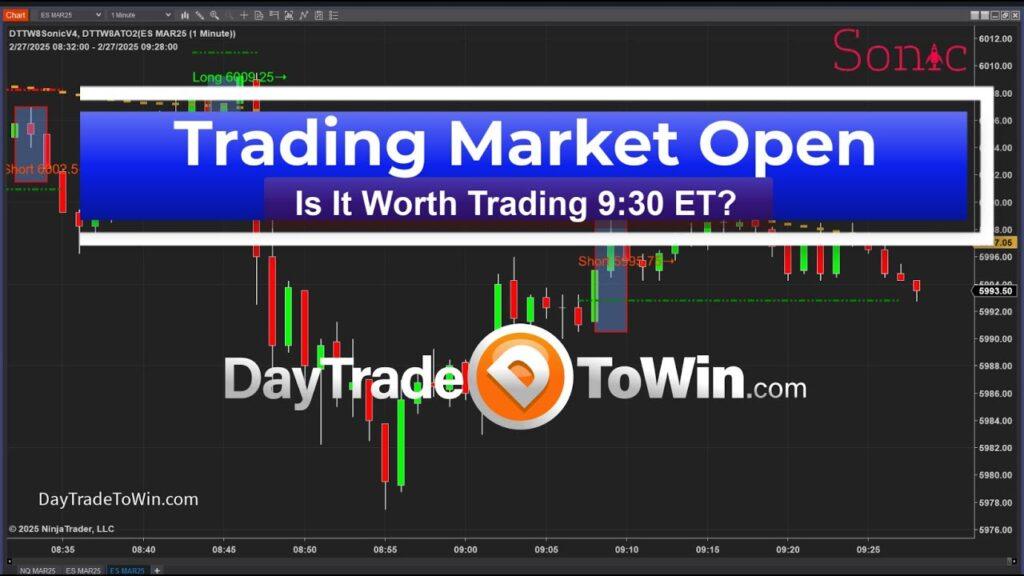
Are you tired of relying on outdated indicators that lag behind the market? At daytradetowin.com, we teach traders how to use price action—the most effective way to understand market movement and make informed decisions in real time. Why Choose Price Action Trading? Instead of relying on complex indicators, price action trading focuses on the pure movement of the market, helping you:✅ Identify key price levels and trends✅ Execute trades with greater confidence✅ Avoid misleading signals from traditional indicators✅ Gain a real edge using our proprietary Sonic System Get Started with a Free Membership We make it easy for you to learn! Sign up for a free member account at daytradetowin.com and get access to our ABC Software trial along with essential training materials. Accelerate Your Learning with Mentorship For those who want to fast-track their success, our Accelerated Mentorship Program provides:🚀 Instant access to all of our proprietary trading tools📈 A structured learning path with expert guidance🔍 A proven strategy for navigating today’s markets Take Control of Your Trading Future Don’t let outdated methods hold you back. Start trading the right way today! Visit daytradetowin.com and take the first step toward mastering the markets. Your journey to smarter, more confident trading starts now! 🚀

nvidia
Market News

Nvidia Earnings on Deck: Will It Spark a Breakout or More Uncertainty?

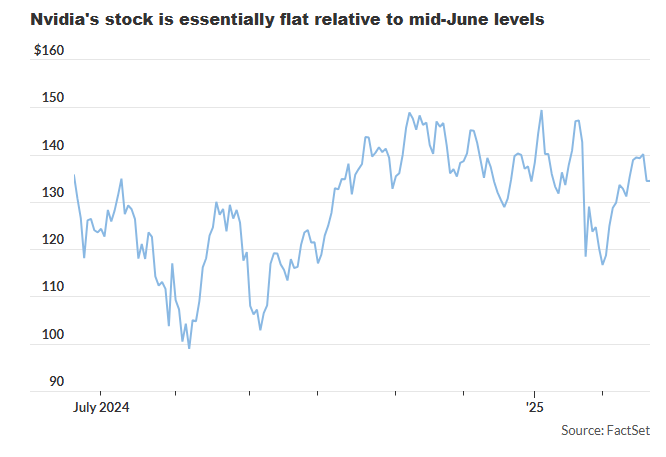
Nvidia Corp. is set to report earnings on Wednesday, and investors are eagerly watching for signs of momentum. The stock has been mostly flat since June, despite bouts of volatility. Will this report be the catalyst for a breakout, or will lingering concerns keep investors on edge? Bullish Sentiment: A Rally Waiting to Happen? Mizuho analyst Jordan Klein sees a potential surge ahead, noting that “a lot of money on the sidelines” could rush in if Nvidia (NVDA -3.09%) delivers strong results. He expects the stock to move “higher before lower” following its recent stagnation. A key reason for his optimism? Demand for Nvidia’s new Blackwell lineup is significantly outpacing supply. With production ramping up in the second half of the year, Klein believes Nvidia is well-positioned for continued growth. Concerns Loom: DeepSeek and Microsoft Uncertainty Despite the bullish outlook, some investors remain cautious. One source of concern is Chinese AI firm DeepSeek, which has sparked debate over whether future AI development will require less hardware—potentially impacting Nvidia’s long-term dominance. Another worry stems from Microsoft (MSFT -1.03%), which reportedly canceled some data-center leases. While this has added to market jitters, Mizuho’s Vikram Malhotra suggests it may simply be a “course correction” rather than a sign of reduced AI infrastructure investment. Skepticism Persists: No Immediate Catalyst? Stifel analyst Ruben Roy believes Nvidia’s earnings may not be the game-changer some investors hope for. With market uncertainty still lingering post-DeepSeek, he doubts earnings alone will drive a strong upside move. The Bigger AI Picture: A Long-Term Win for Nvidia? Melius Research’s Ben Reitzes takes a broader view, arguing that demand for AI chips is already being validated. Tech giants are in an arms race to dominate AI, and Nvidia stands to benefit from this relentless spending. Reitzes likens Nvidia’s hardware to Ferraris—elite, high-performance chips that companies like Elon Musk’s xAI highly value. Despite the short-term noise, he believes Nvidia will remain the go-to choice as AI workloads continue to grow. Bottom Line: Make-or-Break Moment for Nvidia? With earnings approaching, Nvidia finds itself at a crossroads. Will strong demand fuel a stock rally, or will lingering concerns weigh on investor sentiment? Either way, Nvidia’s role in the AI revolution is far from over.

markets
Market News

Markets Moved On from Rate Fears—Are They Back?

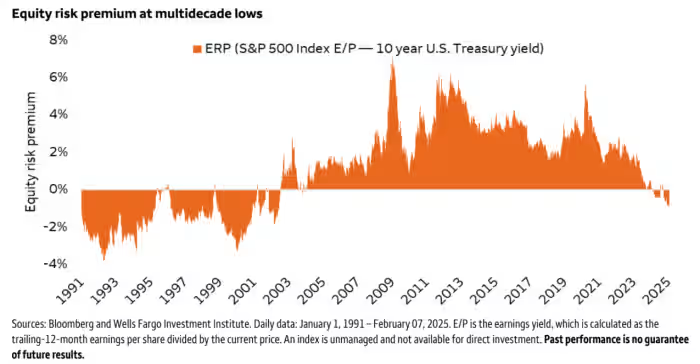
Interest-Rate Volatility Normalizing, Says J.P. Morgan’s Phil Camporeale Investors are showing less concern about rising interest rates, though key market risks remain. “The biggest risk is inflation making a comeback in the second half of this year,” said Phil Camporeale, portfolio manager for J.P. Morgan Asset Management’s global allocation strategy. He warned that inflation could not only remain persistent but also accelerate due to wage growth or rising prices in sectors like lodging and dining. On Friday, U.S. stocks fell sharply, with the Dow Jones Industrial Average experiencing its worst week since October. Investors analyzed economic data, including a consumer survey indicating heightened inflation expectations driven by tariff concerns. The upcoming week brings fresh inflation data from the Federal Reserve’s preferred measure, the personal-consumption expenditures (PCE) price index. Recently, stock markets have found relief as rate volatility has eased to levels last seen in early 2022—before the Fed’s aggressive rate hikes began. “Nothing worries equity investors more than interest-rate volatility,” Camporeale noted. However, with inflation slowing, prompting the Fed to adjust its monetary policy with rate cuts last year, rate volatility appears to be stabilizing. So far in 2025, the Fed has maintained its benchmark rate, pausing rate cuts in January. “The Fed is on the back burner now,” said Camporeale. “Nobody is calling for immediate action.” Investor focus has shifted from the Fed’s next move to fundamental drivers of the equity markets. Markets seem to accept inflation running slightly above the Fed’s 2% target, but investors remain cautious. The University of Michigan’s latest survey indicated that tariff-related developments have heightened inflation concerns. “Consumers are bracing for a resurgence in inflation,” said Joanne Hsu, director of the survey. “If these concerns persist, they could pose challenges for policymakers.” Investors will closely watch the Fed’s favored PCE gauge, due on February 28. Some analysts believe the Fed may now opt for an extended wait-and-see approach. “Bond-market volatility is no longer the key issue,” said Sameer Samana, head of global equities and real assets at Wells Fargo Investment Institute. He pointed to the ICE BofAML MOVE Index, a measure of bond-market volatility, which has dropped to its lowest level in three years despite a brief uptick on Friday. Over the past six months, the MOVE Index has declined nearly 18%. Despite last week’s market decline, the S&P 500 remains close to its all-time high from February 19, closing Friday at 6,013.13—just 2.1% below its record. The current bull market has broadened beyond technology stocks, with financials playing a key role. While the S&P 500’s technology sector has dipped 0.3% year-to-date, financials have gained 4.8%, according to FactSet data. Investors will also watch Nvidia’s quarterly earnings report on February 26. “It’s a significant shift from a market dominated by tech to one where financials and other sectors are driving gains,” said Samana. Equity Risk Premium at Historic Lows The U.S. stock market’s equity risk premium has fallen to multidecade lows, according to a Wells Fargo Investment Institute report. “Stocks aren’t as attractive as they were last year,” said Samana. However, he still sees the S&P 500 as more appealing than bonds, especially with the 10-year Treasury yield hovering around 4.5%. On Friday, the yield on the 10-year Treasury note fell 8 basis points to 4.419%, its lowest level since mid-December. “There’s little incentive to buy a 10-year Treasury when a money-markets fund offers a similar yield without duration risk,” said Camporeale. Camporeale remains overweight on equities, favoring U.S. stocks. He has reduced exposure to core bonds, including Treasurys, in favor of high-yield corporate credit and equities. Following the U.S. presidential election in November, he added value and midcap stocks to his portfolio. Looking ahead, he anticipates “low-double-digit returns” for the S&P 500 this year.

risk-to-reward
Market News

Master Risk-to-Reward with NinjaTrader

Successful trading hinges on effective risk-to-reward trade management. At Day Trade to Win, we emphasize price action strategies that empower traders to make informed decisions without relying on conventional indicators like moving averages or MACDs. In this post, we’ll explore essential aspects of risk management, trade entries, profit target multiples, and common mistakes to avoid. Understanding Risk-to-Reward Ratio Before placing a trade, it’s vital to assess potential risk versus reward. The goal is to ensure that the potential reward is equal to or greater than the risk. This principle, often referred to as the 50/50 rule, suggests placing stop-loss and target levels equidistant from the entry point. Some traders adopt a 60/40 approach, where they accept slightly higher risk for lower rewards. The key is finding a balance that suits your strategy and market conditions. Optimizing Trade Entries Entering a trade at the right time is crucial. Instead of rushing in at the market price, traders should analyze price action for a better entry, reducing slippage and improving trade outcomes. Taking a few extra seconds to assess the market can significantly enhance profitability. Dynamic Targets and Stop-Loss Adjustments Since markets constantly change, using fixed stop-loss and target levels for every trade is not always effective. Instead, traders should adjust their stop-losses and targets based on market volatility. High volatility may warrant wider targets, while low volatility conditions may favor smaller targets. Setting Profit Target Multiples Instead of arbitrarily setting profit targets, traders should use structured approaches like the Sonic system to identify realistic price targets. Utilizing price action indicators ensures traders are making calculated decisions rather than guessing market movements. Scalp vs. Swing Trading Traders may adopt different styles based on their goals: Merging Strategies for Higher Probability Trades Combining different trading techniques can enhance success rates. When multiple strategies align, confirming trade direction, the likelihood of a favorable outcome increases. Conversely, conflicting signals serve as a warning to avoid a trade. Avoiding Common Trading Mistakes Traders should steer clear of these pitfalls: Leveraging Price Action for Trade Decisions Traditional indicators often fail to adapt to market shifts because they rely on historical data. In contrast, price action strategies, such as the Roadmap software, track real-time price movements, helping traders spot entry opportunities and avoid false signals. Precision in Entry and Exit Points A single tick variation in entry price can cover commissions and boost profitability. Entering a tick or two better than the provided signal minimizes stop-loss size and enhances potential profits. Live Trading & Market Adjustments Live trading sessions on YouTube and the Day Trade to Win blog allow traders to see real-time market fluctuations. Entry positions should be adjusted based on retracement expectations. While predicting exact retracements is difficult, improving entry price by a few ticks can significantly improve risk management. Managing Risk and Avoiding Overtrading With the Sonic system, traders must recognize when to stop. A general rule of thumb: ATR-Based Profit Targets Average True Range (ATR) dynamically adjusts profit targets based on market conditions. A four-period ATR offers the most up-to-date market volatility insights to: Traders can tailor ATR settings to match their trading styles: Trade Timing & Management Utilizing the Roadmap Software The Roadmap software helps traders avoid false signals by pinpointing profit-taking levels. If a market shows signs of profit-taking, it’s best to avoid entering trades in that direction. The software also identifies critical zones where large traders exit positions, preventing unnecessary risks. Recognizing and Preventing Overtrading One of the biggest trading mistakes is overtrading. Traders should limit themselves to three to five trades per session to maintain profitability and avoid unnecessary risks. Understanding Market Retracements If the market moves sharply without retracing, it’s better to let the trade go rather than chasing it. The Sonic system is designed to offer better price entries. If a retracement doesn’t occur, waiting for the next opportunity is the smarter approach. Conclusion Applying these risk-to-reward trade management principles, such as optimal entry points, ATR-based trade strategies, profit-taking awareness, and disciplined trade frequency, can significantly improve trading performance. The combination of the Sonic system and Roadmap software equips traders with the tools needed to navigate the markets effectively. For more expert insights, visit Day Trade to Win and sign up for a free membership to access valuable trading resources.

market
Market News

Market Rally Stalls – What Now?

A team of strategists at Ned Davis Research has been analyzing market trends, and their findings suggest U.S. stocks are pausing for breath after two blockbuster years—much to investors’ frustration. For the past two and a half months, the S&P 500 (SPX) has been stuck in a tight trading range, signaling a period of “consolidation,” according to the Ned Davis team. Despite this, the index has still managed to reach new record highs, most recently on Wednesday, per FactSet data. However, the pace of gains has slowed considerably compared to 2024, while European and Chinese stocks have surged ahead. Given ongoing concerns over tariffs, widespread federal layoffs, and high stock valuations, the market’s resilience has been notable. “So far, markets have largely brushed off the tariff threats and [President Donald] Trump’s geopolitical drama this year,” said Burns McKinney, portfolio manager at NFJ Investments, in an email to MarketWatch on Thursday. Still, investor sentiment is beginning to show signs of strain. Vanguard’s investor confidence metrics recently saw their steepest drop since 2022, according to Andy Reed, head of investor-behavior research at the firm. He noted that concerns over record-high egg prices are overshadowing enthusiasm for the stock market. However, history suggests that indecisive trading periods like this often resolve quickly—typically followed by stronger gains. The Ned Davis team analyzed the S&P 500’s performance since early December, comparing it to past episodes of sideways trading. While historical patterns show some variability, they suggest that choppy trading could persist in the short term before stocks resume their upward momentum. “Whether the past 2.5 months mark a consolidation phase within an ongoing bull market or the start of a downturn depends on factors like inflation and earnings,” said Ed Clissold, chief U.S. strategist at Ned Davis, in a report shared with MarketWatch. “Right now, the data still supports the bull market case—until proven otherwise.” Investors’ concerns were evident in Thursday’s market action, as disappointing earnings guidance from Walmart Inc. (WMT) rattled confidence in consumer strength. The S&P 500, Nasdaq Composite (COMP), and Dow Jones Industrial Average (DJIA) all ended the day lower.

Market News

Boost Your Trading Success with This Proven Strategy

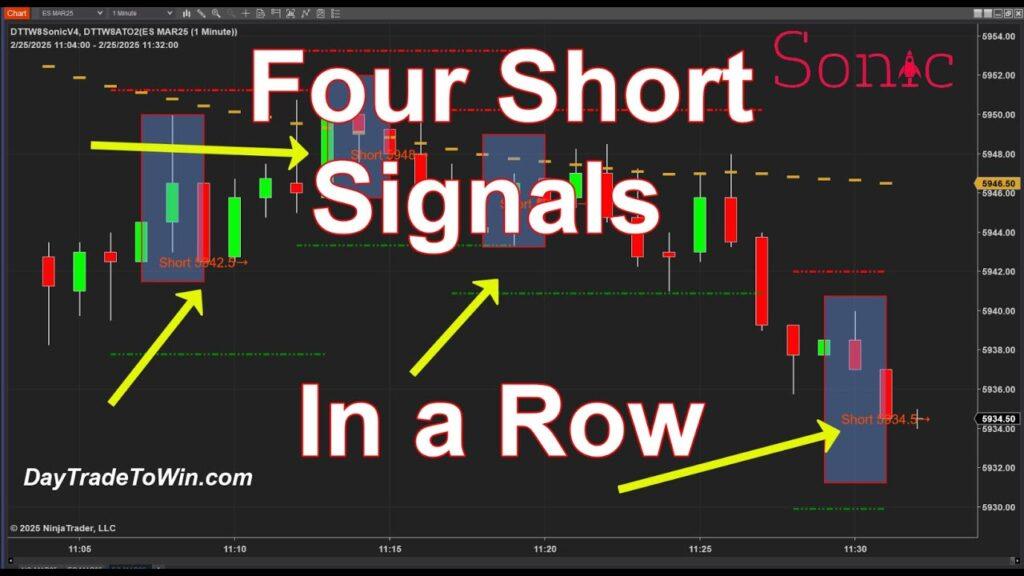
Today, February 20th, I’m excited to share my hands-on experience using the Sonic Trading System by Day Trade to Win. I will walk you through four to five consecutive trade signals, demonstrating the system’s effectiveness and how it can enhance your daytrading precision. Trading carries risks, so only use funds you can afford to lose. Proper risk management is crucial to long-term success. How the Sonic Trading System Works I am utilizing the Sonic System with a 1-minute chart to track trade signals in real time. The system provides audible alerts, guiding me through the best possible trade entries. My approach involves: Real-Time Trading Breakdown Trade 1: Short Position Trade 2: Long Position Trade 3: Another Long Setup Trade 4: Short Signal Execution Performance Review With four to five successful trades in a row, the Sonic System proves to be an excellent trading tool. Traders using one contract could earn a few hundred dollars, while those using multiple contracts could see $1,000+ gains. Join the Day Trade to Win Community If you want to refine your skills with the Sonic System, visit daytradetowin.com to create a free member account. Benefits include: Final Thoughts The Sonic System is a game-changer for traders looking for structured, rule-based trading. Whether you’re new or experienced, this system can help you navigate the markets with confidence. Join the Day Trade to Win Family today and elevate your trading journey! See you at the next webinar! Stay focused, trade smart, and happy trading!

Scroll to Top