stocks
Market News

Defense Stocks Surge After EU’s Zelensky Meeting Shock

JPMorgan Boosts European Defense Companies’ Price Targets by 25% Amid Rising Military Budgets European defense stocks experienced a significant rally as JPMorgan raised price targets for key companies by an average of 25%, driven by escalating defense spending across the continent. The market surge followed a diplomatic confrontation between President Donald Trump, Vice President J.D. Vance, and Ukrainian President Volodymyr Zelensky. The tense exchange, coupled with growing fears of reduced U.S. security support, spurred European governments to accelerate defense spending commitments. On Monday, several European defense companies posted double-digit gains. Germany’s Rheinmetall jumped 10.3%, the U.K.’s BAE Systems climbed 14.1%, Italy’s Leonardo advanced 9.1%, France’s Dassault Aviation surged 14.9%, and German radar systems maker Hensoldt soared 19.3%. The Stoxx aerospace and defense index rose by 7%, marking its best day in years. In Germany, media reports suggest that centrist parties are discussing the creation of two special fiscal funds, totaling at least €200 billion ($208 billion), to bypass constitutional debt limits and bolster defense capabilities. Estimates indicate that Germany may require €400 billion in defense investment and €500 billion in public infrastructure spending. A summit in London, attended by U.K. Prime Minister Keir Starmer and French President Emmanuel Macron, further reinforced commitments to increased defense spending among European nations. Robin Winkler, Deutsche Bank’s chief German economist, highlighted that the upper range of the proposed German funds could equate to 2% of GDP — similar to the investments made in East Germany following reunification. JPMorgan analysts predict that by 2026, leading European defense companies — BAE, Thales, Leonardo, and Rheinmetall — could be trading at 20 times earnings, up from the current 16 times. They anticipate NATO’s European members will raise defense spending to at least 2.5% of GDP, with approximately 40% directed towards equipment development, procurement, and maintenance. “As budgets expand, the proportion allocated to equipment typically rises,” the analysts noted, adding that European defense stocks companies are likely to secure a larger share of contracts. Despite the positive outlook, the analysts cautioned that immediate revenue and earnings upgrades might be delayed as budget approvals and contract negotiations take time.

sonic
DayTradeToWin Review

Master Market Open Trades with the Sonic System

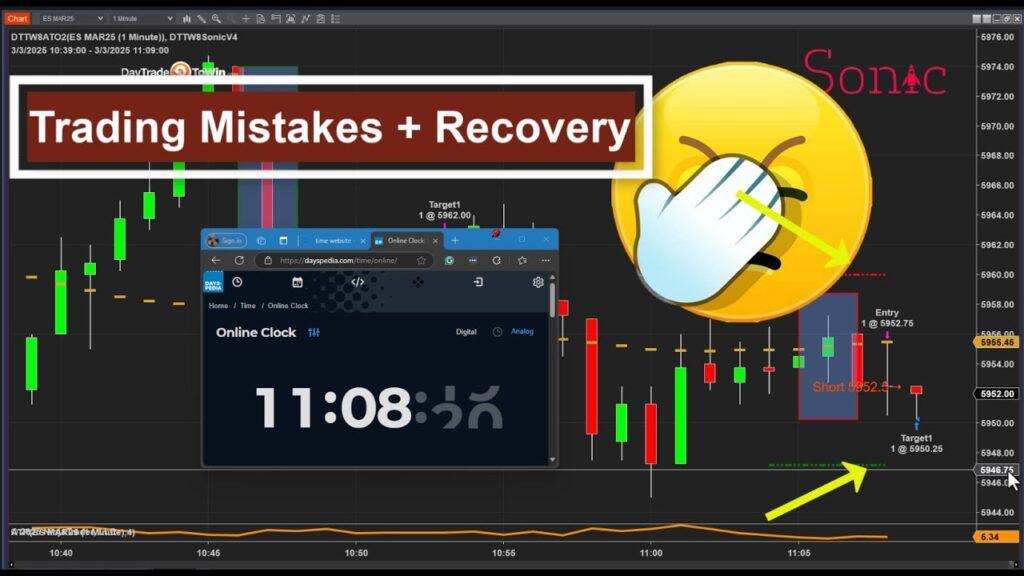
Unlock the potential of price action trading with Day Trade to Win. In this post, we’ll explore how to capitalize on market moves immediately after the market opens using the Sonic System and At The Open Method. Why Wait 15-20 Minutes After Market Open? Patience is key in trading. Waiting 15-20 minutes after the market opens allows the initial volatility to subside, providing clearer and more reliable signals. This approach minimizes unnecessary risks and increases the likelihood of successful trades. The Sonic System Explained The Sonic System leverages price action to generate both long and short signals. Today’s session highlighted: Both trades adhered to the 50/50 Risk-Reward Rule, which means the potential profit equaled the risk, a vital component of consistent trading success. Combining Sonic with At The Open Method The At The Open Method is an Opening Range Breakout strategy that generates signals shortly after the market opens. When the Sonic System and At The Open signals align, the probability of a winning trade significantly increases. In today’s session: This alignment created a high-probability short opportunity that traders capitalized on. Managing Volatility with ATR Volatility management is essential in day trading. The Average True Range (ATR) indicator helps gauge market volatility. Today’s session showed an ATR of 6-8 points, signaling a highly volatile environment. Importance of Risk-Reward Ratio Adhering to the 50/50 Rule ensures that the profit target is approximately equal to the stop loss. In volatile markets, if the stop loss exceeds the target, it’s best to avoid the trade altogether. Today’s Profitable Results Today’s session yielded: With just a few trades, the Sonic System software can pay for itself quickly! Join Our Live Sessions Take your trading to the next level with our Accelerated Mentorship Program. Enjoy: 👉 Visit daytradetowin.com to sign up and claim your free member account! Trade smarter, not harder—master price action and leave unreliable indicators behind. Stay profitable, and see you in the next session!

market
Market News

Will Trump Step In to Stop the Market Selloff?

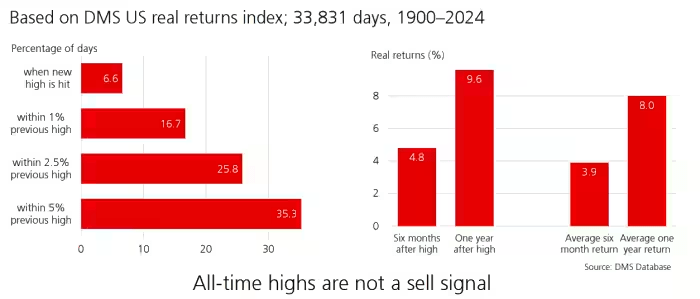
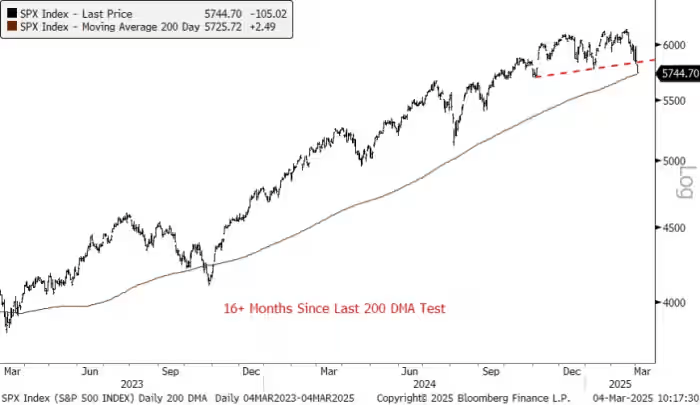
Market analysts suggest that the S&P 500 would need to experience a decline of at least 10% to activate the so-called ‘Trump put.’ The recent downturn in the U.S. stock market has been modest, with the S&P 500 still only 3% below its record closing high from the previous week. Nevertheless, speculation persists on Wall Street about whether the Trump administration would intervene if the selloff were to intensify. Michael Hartnett, a strategist at Bank of America, shared his perspective on Bloomberg TV, suggesting that intervention would likely occur “if things go haywire.” He estimated that action might be triggered if the S&P 500 drops to around 5,600 or 5,700, possibly through fiscal policy adjustments or relaxing the Department of Government Efficiency (DOGE) spending cuts. The concept of the ‘Trump put’ originates from the belief that Trump perceives the stock markets as a barometer of his administration’s success. This notion is similar to the earlier ‘Fed put,’ where investors anticipated the Federal Reserve would intervene to mitigate market volatility. During Trump’s first term, he frequently touted stock market gains as evidence of his policies’ effectiveness. However, the administration’s responses to market volatility were mixed. In late 2018, amid a nearly 20% market drop driven by the trade war with China and Federal Reserve rate hikes, Trump’s efforts to reassure investors had limited success. Conversely, the aggressive fiscal stimulus and Federal Reserve actions during the COVID-19 market crash in 2020 helped stocks recover quickly. Whether the administration would take similar action this time remains uncertain. Some analysts believe Trump’s current focus on spending cuts and trade tariffs might make him more accepting of market fluctuations. Recent statements from Trump and his team suggest that any economic pain from tariffs and budget reductions could be seen as necessary sacrifices. There is also speculation that Trump’s new ‘put’ might prioritize the bond market over stocks. Treasury Secretary Scott Bessent and Elon Musk, a special government employee, have emphasized the administration’s commitment to reducing the U.S. budget deficit—a strategy that could boost demand for bonds. Musk recently remarked that betting against bonds could be an unwise move. While the notion of a ‘Trump put’ remains speculative, some experts argue that any substantial market downturn might attract buyers without requiring government intervention. If the S&P 500 were to decline by 10% or more, investors will closely monitor both market developments and the administration’s response.

market open
DayTradeToWin Review

Market Open: Hidden Opportunities

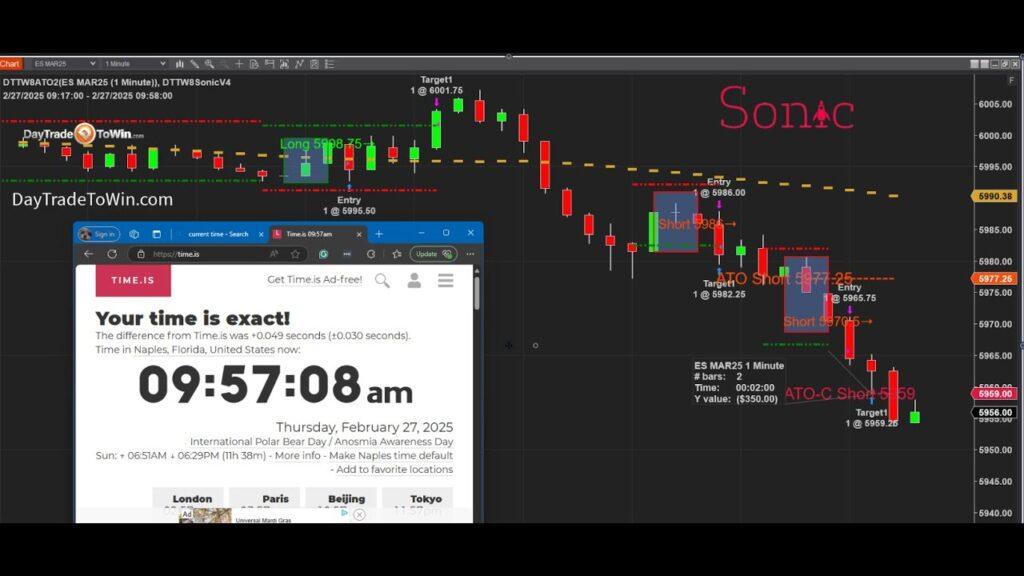
Welcome to today’s market open analysis for February 27th. As always, please remember that trading carries significant risk—only trade with funds you can afford to lose. Pre-Market Observations Utilizing the Sonic Trading System, we detected a short signal during the pre-market session that yielded positive results. While the market open attracts many traders, the heightened volatility during this time makes it a risky window for entry. Market Open Signal Breakdown At the market open, a long signal was generated at 59 9875. Instead of taking this entry immediately, I applied the 50/50 rule, waiting for a more favorable price that improved the risk-to-reward ratio. This strategic patience ensures the reward potential surpasses the associated risk, a key principle for consistent trading. Had I entered at the initial price, the profit target would have remained constant, but the downside risk would have increased. By holding out, I secured a more balanced trade setup. Important Factors to Consider When trading the market open, always assess: With the Sonic System, I set my profit target at 1x ATR, tailoring the target to current market conditions. Blending Strategies Alongside the Sonic System, I implement the At the Open Method, a tried-and-true strategy we’ve refined for over 20 years. When signals from both methods align within a few minutes, they create higher probability trade opportunities. Discover More Interested in mastering these strategies? Sign up for a free member account at daytradetowin.com. Members gain access to: Learn to trade the right way by prioritizing price action and steering clear of conventional indicators. Join today to elevate your trading journey! Happy Trading, daytradetowin.com Team

bitcoin
Market News

Bitcoin, XRP Rise – Will This Trigger a Crypto Surge?

Bitcoin, XRP, and other cryptocurrencies showed signs of recovery early Thursday following a sharp selloff that rattled the digital asset market. Bitcoin (BTC) extended its losing streak to four days on Wednesday, briefly plunging to $82,200 after an earlier attempt at a rebound failed to hold. By Thursday morning, Bitcoin climbed 2.3% to $86,164, according to CoinDesk, though the cryptocurrency remains down 17% from its recent high of $99,000 last Friday. XRP also faced significant losses, dropping 17% from $2.71 on Friday to $2.24. However, the popular altcoin edged up 1.5% Thursday, hinting that selling pressure could be easing. The recent selloff was triggered by a $1.5 billion hack on Dubai-based crypto exchange Bybit, which shook investor confidence. Broader market uncertainty, fueled by a tech stock selloff in the U.S., further weighed on sentiment. Cryptocurrencies had surged in the wake of Donald Trump’s Nov. 5 election victory, as traders bet on a more crypto-friendly administration. However, most of those gains have evaporated, with Bitcoin now trading at levels last seen on Nov. 11. “The rapid selloff leaves a steep climb ahead, despite a modest recovery,” said Susannah Streeter, an analyst at Hargreaves Lansdown. “Without clear signals of support from Trump, market nervousness is likely to persist.” While a statement from Trump could bolster sentiment, the market is still searching for a catalyst to spark a broader recovery.

Wall Street
Market News

Wall Street Bullish Run Fades—6 Charts Explain

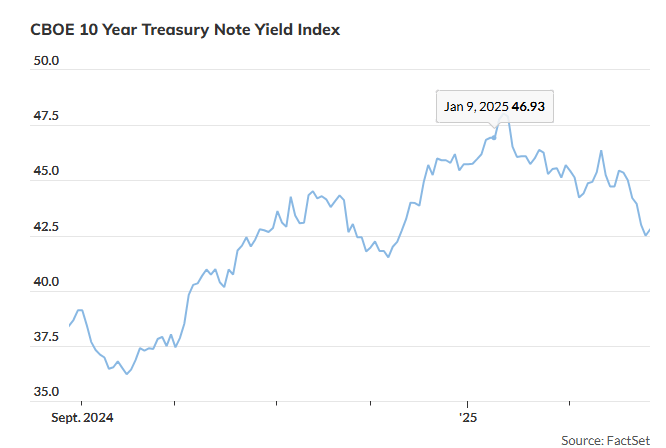
Investor Sentiment Shifts from Euphoria to Uncertainty on Wall Street Investor sentiment on Wall Street is shifting from optimism to uncertainty. Once buoyed by enthusiasm following President Donald Trump’s election victory, market confidence is now waning as concerns over the U.S. economic outlook mount. Declining Market Sentiment Since early 2025, signs of a more cautious market environment have emerged. On Tuesday, the S&P 500 (SPX) fell for the fourth consecutive day, potentially marking its longest losing streak since January, according to FactSet data. High-growth momentum stocks, such as Palantir Technologies Inc. (PLTR), have suffered significant declines, raising concerns about stretched valuations and their impact on investor confidence. Lori Calvasina, head of U.S. equity strategy at RBC Capital Markets, recently observed a weakening market sentiment, a view supported by other analysts. “I think the market’s mood is slipping, and there are many valid reasons why,” said Callie Cox, chief market strategist at Ritholtz Wealth Management, in an interview with MarketWatch. Factors Contributing to Market Uncertainty Several factors are fueling investor apprehension. Initial optimism over Trump’s deregulation and tax cuts has given way to concerns about tariffs and stricter immigration policies, which could slow economic growth while driving up inflation. Stagflation fears are re-emerging. Even prominent investors, such as Steve Cohen, founder of Point72 Asset Management and owner of the New York Mets, have reportedly warned of a potential market correction. Meanwhile, the Conference Board’s consumer-confidence survey dropped to an eight-month low on Tuesday, exacerbating investor anxiety. Key Indicators Reflect Growing Caution 1. Bull-Bear Sentiment Weakens The American Association of Individual Investors’ weekly sentiment survey shows a sharp increase in bearish outlooks. Earlier this month, bearish responses outnumbered bullish ones by nearly 19 percentage points—the widest gap since November 2023. Some analysts, including Fundstrat’s Tom Lee, argue that extreme bearish sentiment could paradoxically be a bullish signal. Historically, markets tend to rally after passing through periods of extreme pessimism. However, unlike in November 2023—when stocks were recovering from a 10% correction—the S&P 500 remains near record highs, suggesting a different market dynamic this time. 2. Defensive Stocks Take the Lead Investors are shifting toward defensive stocks. Healthcare and consumer staples have been the top-performing sectors in 2025, according to FactSet data. Meanwhile, the Roundhill Magnificent Seven ETF (MAGS), which tracks major megacap tech stocks, is on track to enter correction territory. “I think it’s important to point out that defensive stocks are leading the S&P 500 higher this year, which probably tells you something about how positioning is changing,” Cox noted. 3. Rising Demand for Hedging The options market indicates traders are increasingly hedging against downside risks. The Cboe Skew Index, which measures demand for out-of-the-money put options, surged above 183 last week—its highest level since at least 2005, according to Cboe data. 4. Bond Market Signals Economic Concerns Bonds are rallying, but for troubling reasons. Instead of signaling confidence that inflation will ease, the decline in the 10-year Treasury yield to its lowest level of 2025 suggests growing fears of economic stagnation. The Trump administration’s layoffs of thousands of government employees have intensified these concerns. “Yields in the bond market are tumbling as they smell recession in the air,” said Chris Rupkey, chief economist at FwdBonds. 5. Economic Reports Disappoint The Citi U.S. Economic Surprise Index has been consistently negative for the first time since September. A weaker-than-expected services-sector report and declining consumer confidence have deepened investor unease. Charlie McElligott, a cross-asset strategist at Nomura, warned that markets remain highly sensitive to economic surprises. If current trends persist, stocks could face another sharp downturn similar to the August 5 selloff, when a U.S. growth scare triggered a global market rout. 6. Bitcoin and Gold Show Diverging Trends Bitcoin’s role as “digital gold” is under scrutiny as it moves in the opposite direction of the physical commodity. While gold futures recently approached record highs near $3,000 per ounce, Bitcoin has fallen below $87,000, its lowest level since November. Wall Street analysts, including Stifel’s Barry Bannister, have observed that Bitcoin behaves more like a speculative growth asset than a defensive safe haven, further highlighting the shift in risk appetite. Market Protection Strategies on the Rise Despite the growing caution, some indicators remain relatively stable. The Conference Board’s CEO Confidence Survey showed improvement, suggesting corporate executives remain optimistic. Additionally, futures traders appear to be reducing their bets against the S&P 500, according to Commodity Futures Trading Commission data. However, the Cboe Volatility Index (VIX), often referred to as Wall Street “fear gauge,” briefly topped 20 on Tuesday. Although still below its January peak, the increase signals rising market anxiety. “People are adding protection, and I think it makes sense,” said Danny Kirsch, head of options trading at Piper Sandler. Conclusion As uncertainty grows, investors are adjusting their strategies, shifting away from riskier assets and increasing exposure to defensive stocks and hedging instruments. While some believe this cautious sentiment could set the stage for a future rally, others warn that the market may be entering a more prolonged period of volatility. The coming weeks will be crucial in determining whether this shift represents a temporary pullback or the start of a deeper market correction.

Scroll to Top