market
Market News

Policy Uncertainty Shadows Market Relief

Stock Market Surge After Trump’s 2024 Election Victory, But Uncertainty Looms The stock market soared following Donald Trump’s victory in the 2024 U.S. presidential election. Investors cheered the result, pushing major indices to record highs. The Dow Jones Industrial Average climbed 4.6% during election week, the S&P 500 gained 4.7%, and the Nasdaq Composite surged 5.7%. However, the momentum faded quickly. By the following week, markets gave back a portion of their gains as investors began scrutinizing what Trump’s presidency could mean for the economy and corporate America. A Year of Election-Driven Volatility Election-related uncertainty dominated 2024, with investors weighing potential outcomes and their market implications. Speculative “Trump trades” and “Harris trades” reflected contrasting expectations for the candidates’ economic policies. Polling suggested a tight race, keeping anxiety high. This contributed to a 1% drop in the S&P 500 in October, extending a 20-year trend of weak performance during election years. “Market jitters during election seasons are common,” said Steven Wieting, Chief Economist at Citi Wealth. “When uncertainty clears, markets often bounce back—but this year’s rally was particularly strong.” Sectors React to Trump’s Policies Trump’s victory ignited sector-specific rallies. Cryptocurrencies exploded, with Bitcoin reaching a record $90,000 and Dogecoin doubling, fueled by Trump’s pro-crypto platform. The U.S. dollar strengthened to a one-year high, as investors anticipated protectionist trade policies like tariffs. Financial and tech stocks also climbed on hopes of deregulation and the extension of Trump’s 2017 corporate tax cuts. “The financial sector is poised to benefit the most,” said Marco Pirondini, Chief Investment Officer at Amundi. “Even partial policy implementation could significantly boost earnings.” Lingering Concerns Despite initial optimism, investors are now grappling with fresh uncertainties. Key questions surround Trump’s policies on trade, immigration, and geopolitical conflicts, including wars in Ukraine and the Middle East. “We’re in a period of adjustment,” Wieting explained, noting that markets are awaiting clarity on Trump’s early moves, including tariff policies that could affect inflation and global trade dynamics. Geopolitical tensions and fiscal challenges, such as the $1.8 trillion deficit and ballooning national debt, add to the unease. Trump has proposed a “Department of Government Efficiency,” led by Elon Musk and Vivek Ramaswamy, to address the deficit, but details remain scarce. “The debt and deficit are significant headwinds,” said Robert Conzo, CEO of The Wealth Alliance. “Wall Street is watching closely.” What’s Next? Investors are now turning their attention to key indicators, including earnings reports from Walmart, Nvidia, and Target, as well as Federal Reserve updates on inflation and interest rates. While Trump’s election initially boosted market confidence, the sustainability of the rally remains uncertain. “Markets thrive on clarity, and while some uncertainties have been resolved, many more remain,” Conzo noted. “The question now is whether this market has the legs to keep running.” For now, investors are left balancing cautious optimism with the complexities of navigating a new political and economic landscape.

stocks
Market News

Why Powell Comments Hit Stocks Today

Fed Chair Powell: Economic Strength Lets Fed Take Cautious Approach on Rate Cuts Federal Reserve Chair Jerome Powell said Thursday that the strong U.S. economy allows the central bank to proceed cautiously in any potential interest rate cuts. Speaking to business leaders in Dallas, Powell noted, “The economy is not signaling any urgency to lower rates.” This economic resilience, Powell said, gives the Fed room to make careful, data-driven decisions on interest rate policy. After his remarks, traders in the federal-funds futures market scaled back their expectations for a December rate cut, dropping the odds of a quarter-point cut from 72.2% to 58.9%. The probability of a January cut is also low, at 23%. U.S. stocks saw losses accelerate following Powell’s comments, with the Dow, S&P 500, and Nasdaq slipping further from their record highs earlier in the week. Krishna Guha, vice chairman of Evercore ISI, described Powell’s tone as “cautious and slightly hawkish,” adding that the Fed is not committed to a December cut and will rely on incoming economic data to shape its next moves. Despite recent cuts that brought the Fed’s benchmark rate to a range of 4.5% to 4.75%, Powell clarified that while the central bank remains open to further easing, the path forward will not be pre-determined. The economic outlook remains uncertain, he said, and for that reason, the Fed is hesitant to give strong forward guidance. Powell reiterated the Fed’s commitment to sustaining economic growth and supporting the job market to stave off a potential recession. Carl Weinberg, chief economist at High Frequency Economics, said Powell’s gradual approach to rate cuts aims to strike a balance between these goals. The Fed ultimately aims to reach a “neutral” rate—neither boosting nor restricting demand—although there is some debate among Fed officials on where that rate should be, with a median projection currently around 2.9%. Powell also noted that inflation appears to be on track to reach the Fed’s 2% target, though he acknowledged the process may have “bumpy” periods. Additionally, he highlighted that the labor market has largely returned to levels consistent with the Fed’s goal of maximum employment. Though some analysts question whether the current rate remains restrictive given economic strength, Powell believes it is slightly dampening growth—a view that will continue to guide the Fed’s careful approach.

sonic
DayTradeToWin Review

Boost Your Trading: Live Sonic Webinar

When it comes to achieving consistent success in day trading, understanding the nuances of entry, risk management, and profit-taking is crucial. Here’s a guide based on key insights from a detailed training session on the Sonic trading system. 1. Handling Entries with Precision With the Sonic system, trades are initiated based on a combination of sound signals and visual indicators. These are represented by “shooting sounds” that signal potential entry points. For each trade setup, it’s essential to assess risk-reward and prioritize trades that offer manageable retracements. Remember: if a trade setup doesn’t feel right, it’s better to skip it and wait for clearer opportunities. 2. Understanding the Software’s Backend Settings Familiarity with the Sonic software’s settings can enhance your decision-making. The system leverages multiple indicators, including the ATR (Average True Range), to set targets. This setting calculates the average of the previous four candles, helping traders gauge probable market movements and adjust their targets accordingly. In more volatile markets with large candles, targets adjust to capture more substantial profits, while in slower markets, they remain conservative. 3. Adjusting Stop-Loss and Take-Profit Levels Sonic system users can customize their stop-loss and take-profit parameters. Instead of fixed stop-loss values, the system calculates the stop above a shaded “box” that serves as a buffer for price action. For a balanced approach, many traders prefer a five-tick stop above this box, but the settings allow adjustments down to three ticks. The ATR-based take-profit can be set at 1, 1.5, or even 2 times the ATR, depending on risk tolerance. For shorter trades, 1x ATR can keep trades concise, while aiming for 2-3x ATR is better suited for longer holds and requires more confidence in market trends. 4. Minimizing Missed Targets with a Front-Run Strategy For those who prefer a higher hit rate, adjusting profit targets to 75% or 90% of the ATR can help “front-run” the target. This approach means you’re aiming to exit slightly before the target, avoiding the frustration of near misses and securing profits more consistently. 5. System Flexibility Across Markets and Timeframes The Sonic system’s core advantage lies in its adaptability across various markets, from the E-Mini to currencies and beyond. Although day trading typically uses one-minute charts, the system’s principles also work on larger timeframes for swing trading stocks, currencies, and commodities. A one-minute chart is perfect for active trades, but for swing trades, a daily or hourly chart is more suitable. 6. Balancing Your Day with Realistic Goals While it’s tempting to trade continuously, setting daily goals and knowing when to stop can lead to better outcomes. If you’re consistently profitable within a few trades, it’s wise to close the day in profit and avoid risking gains in additional trades. Taking breaks and revisiting the market with fresh eyes is crucial for maintaining discipline. Getting Started with Sonic Ready to take control of your trading? Visit DayTradeToWin.com to learn more about Sonic and other proprietary strategies. Sign up for a free member account to access trial software, including the ABC method, and start learning price action fundamentals. Whether you’re interested in Sonic or our comprehensive mentorship programs, you’ll find the tools you need to trade confidently and consistently.

Dow
Market News

Dow Up, Yields Warn: Inflation Still in Focus for 2025

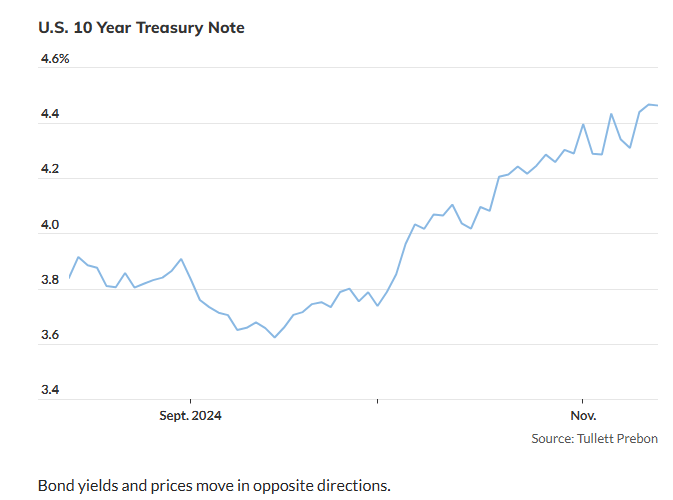
Investors are increasingly focused on the future of inflation, even as today’s consumer price index (CPI) report met expectations and didn’t cause major market jitters. The CPI release garnered attention, particularly as investors weigh the potential inflationary impact of policies anticipated under Donald Trump’s bid for a second term. “While today’s inflation data was largely shrugged off, concerns over the longer-term inflation outlook are growing,” said Diana Iovanel, senior markets economist at Capital Economics, on Wednesday. She pointed out that while current inflation isn’t sparking much anxiety, the post-election environment has brought longer-term inflation risks to the forefront of investors’ minds. Major U.S. indices finished Wednesday mixed: the S&P 500 held steady, the Dow rose by 0.1%, and the Nasdaq slipped by 0.3%. Keith Lerner, co-chief investment officer at Truist Advisory Services, noted that the CPI report wasn’t a major disruptor, stating, “Today’s data didn’t surprise the market.” Since Election Day on November 5, the Dow has climbed by 4.1%, the S&P 500 by 3.5%, and the Nasdaq by 4.3%, according to Dow Jones Market Data. This post-election rally reflects optimism surrounding potential growth-oriented policies in a Trump administration, though Lerner highlighted that investors are also factoring in inflation risks, like potential tariff hikes. Rick Rieder, BlackRock’s chief investment officer for global fixed income, commented that Wednesday’s CPI release sparked heightened interest given the inflationary potential of economic growth combined with policy shifts. Although inflation has eased significantly from its peak in 2022, it remains above the Fed’s 2% target. Core CPI, excluding food and energy, rose 0.3% in October, up 3.3% year-over-year. Rieder suggested the Fed may reduce interest rates in December, contingent on the inflation trend. In the bond market, the 10-year Treasury yield rose slightly to 4.448%. Lerner noted that inflation risks under a Trump administration might lead to increased day-to-day volatility in long-term yields. The recent increase in yields has also impacted bond ETFs, with the iShares Core U.S. Aggregate Bond ETF and Vanguard Total Bond Market ETF seeing pressure. Rieder concluded, “Given new fiscal priorities potentially emerging, inflation risks are understandably in focus,” but acknowledged that much will depend on policy clarity in the months ahead.

stocks
Market News

Why Stick with Stocks Despite ‘Lost Decade’ Warnings

Though stocks have recently enjoyed a strong run, Deutsche Bank strategists have highlighted that stock-market returns over the past 25 years haven’t been as impressive as they might seem. Their recent report notes that, since 2000, global markets have navigated rising debt levels, slower demographic growth, and a slowdown in globalization. For context, in 2000, the U.S. Congressional Budget Office projected that federal debt could be paid off by 2013; instead, the debt-to-GDP ratio has surpassed 100%, a level not seen since just after World War II. From the perspective of stock performance, the S&P 500’s returns since December 31, 1999, tell a story shaped by setbacks, including the dot-com crash, the 2008 financial crisis, and the inflation surge in 2022. These factors have left this 25-year stretch with the second-lowest annualized returns out of nine periods dating back to 1800—only the early 20th century fared worse. This serves as a reality check for those expecting uninterrupted stock market growth, especially as some analysts, including those at Goldman Sachs and Vanguard, warn of single-digit returns in the years ahead. Adding to this perspective, Deutsche Bank’s analysis shows that stocks haven’t just delivered lower returns in absolute terms; they’ve also lagged behind other assets like gold. Since 1999, gold has achieved annualized returns of 6.8%, surpassing the S&P 500’s 4.9%. Even in 2024, gold slightly outperformed stocks, with a year-to-date gain of 25.6%. Despite these challenges, Deutsche Bank maintains that equities remain a solid choice for long-term investors. Historically, stock underperformance doesn’t tend to last more than a decade, and with global debt rising, there’s an increased likelihood of future inflation. In such periods, stocks have historically outperformed bonds, which suffered significantly in 2022.

sonic trading system
DayTradeToWin Review

Sonic Trading System: Real-Time Strategies for Success

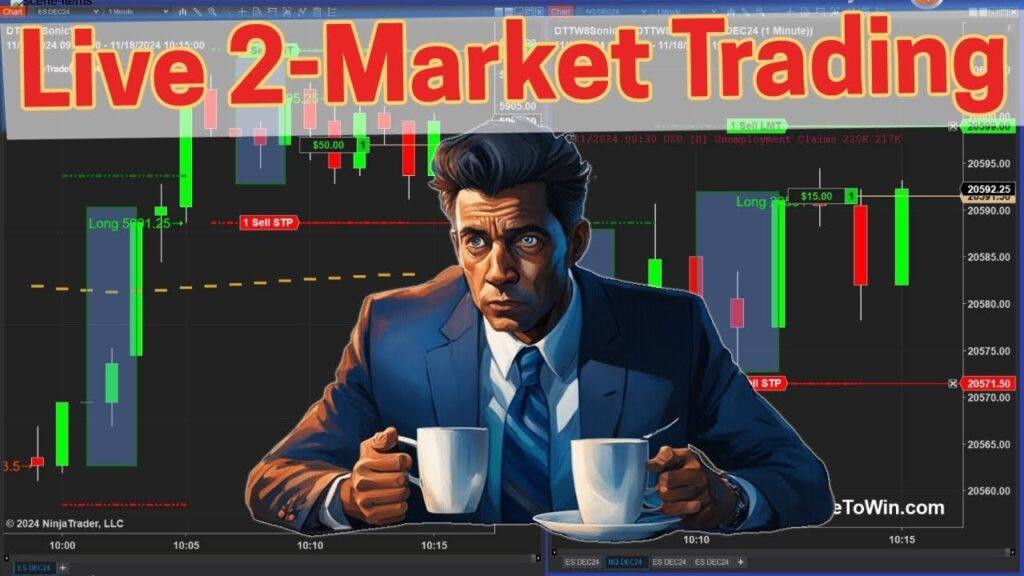
Today, we’re going to examine the Sonic Trading System in action. With multiple signals already flashing this morning, this live breakdown will help you understand the precision and flexibility of Sonic – whether you’re trading for a prop firm or managing your own account. Let’s dive into today’s setups and what makes the Sonic system a powerful tool for price-action traders. Introduction to the Sonic Trading System The Sonic Trading System is a streamlined approach focused solely on price action, providing clear entries, stops, and targets without relying on traditional indicators like moving averages or stochastics. Traders using this system can enjoy a high win-to-loss ratio when managing trades carefully. Today, I’ll walk you through some live examples to show how Sonic guides trade decisions. Today’s Key Trade Signals and Insights This morning, the Sonic system has already generated several promising signals. Here’s how to approach them: Who Benefits Most from the Sonic System? The Sonic Trading System is particularly suited for traders who: Example Trade Breakdown: A Sonic Short Position In today’s example trade: If a trade isn’t moving favorably within a few minutes, it’s often wise to exit early to preserve capital. Sonic makes it easy to adjust stops and targets on the go, keeping you agile. Avoiding the Trap of Overtrading With so many signals, it’s easy to overtrade. The goal is to trade selectively, aiming for 5-10 high-quality trades per day. This approach not only avoids the risk of burnout but also prevents poor decision-making due to fatigue. Keep it simple and structured; that’s how you make the most of the Sonic system. Get Started with DayTradeToWin’s Free Membership Interested in trying Sonic yourself? DayTradeToWin offers a free membership where you can access introductory tools and resources. Here’s what you’ll get: Conclusion Today’s breakdown showcases the power of the Sonic Trading System for those looking to master price action with a clear, rules-based approach. Remember, trading is risky, and it’s crucial to manage each trade with a steady hand. The Sonic system is ideal for traders who prioritize balanced setups and precise entries. If you’d like more in-depth tutorials, subscribe to DayTradeToWin on YouTube for daily insights. Visit DayTradeToWin.com to join our community, explore the Sonic system, and take your first steps with a free membership. Trade smart, stay disciplined, and enjoy the journey!

Scroll to Top