sonic
DayTradeToWin Review

Sonic Scalping: The 15-Second Chart Trick

On Tuesday, January 6, we took a closer look at something a little different inside the Sonic Trading System—and it’s a game-changer for scalpers. While most traders are familiar with using the Sonic system on one-minute or three-minute charts, recent feedback from our community revealed something powerful: many traders are successfully applying Sonic to ultra-fast timeframes, including 15-second and 20-second charts. Let’s break down how this approach works, who it’s best for, and why it can be especially effective right after the market opens. Why Use the Sonic Trading System on a 15-Second Chart? The Sonic Trading System is built on pure price action, not lagging indicators. That’s why it works across any market and any timeframe—from indices to oil and gold. When you drop down to a 15-second chart, a few important things change: This setup is especially effective during the first 20–30 minutes after the market opens, when volatility and momentum are strongest. 15-Second vs. 1-Minute Charts: What’s the Difference? On a 1-minute chart, signals are cleaner—but fewer. On a 15-second chart: 👉 Key takeaway: Quality over quantity still matters. Even if 12 setups appear, you may only need 5–6 high-quality trades to be done for the day. Risk-Reward Still Comes First One of the most important lessons from this session: You do NOT need to take every signal. Some Sonic entries offer better balance between risk and reward than others. The strongest trades are the ones where: For example, on this session: This discipline alone can dramatically improve consistency. Best Markets to Trade With the Sonic System Because Sonic is price-action based, it works across multiple instruments, including: Choose the market that fits your personality, risk tolerance, and funded account rules. Perfect for Funded & Prop Traders If you’re trading a funded account, scalping with smaller stops and faster exits can be a major advantage. We’ve also partnered with Upchart, a platform designed for prop and funded traders.👉 Visit upchart.com to see if it fits your trading goals. Learn the Sonic System the Right Way If you want full access to: You can join Accelerated Mentorship and get instant access to all our tools. 🎯 Limited-time offer:Get 20% OFF Accelerated Mentorship Start Free and Learn Risk-First Trading New traders can begin with a free member account at daytradetowin.com, which includes: Avoid the noise. Learn to trade the market the way professionals do. Final Reminder Trading is risky. Never trade with money you cannot afford to lose.Focus on discipline, risk-reward balance, and consistency—not overtrading. Until next time—good trading.

nvidia
Market News

Nvidia Just Dropped 6 Words That Shocked Wall Street

Six Words That Lit Up Wall Street: “Vera Rubin Is in Full Production” Nvidia CEO Jensen Huang spent much of his CES keynote focused on real-world artificial intelligence, highlighting breakthroughs in self-driving cars and robotics. But it was one short sentence — delivered about an hour into the presentation — that grabbed Wall Street’s attention: “Vera Rubin is in full production.” Nvidia is currently rolling out its Blackwell Ultra lineup, but the company is already preparing its next major platform as demand for computing power continues to surge. The chipmaker is expected to begin shipping Vera Rubin later this year, keeping pace with its rapid annual product cycle. Huang said the biggest challenge facing AI today is the explosive growth in computing demand — and the fierce race among companies to run larger, faster, and more complex models. “The race is so intense,” Huang said, as customers push to accelerate both training and inference workloads. “Rubin arrives at exactly the right moment, as AI computing demand for both training and inference is going through the roof,” he added. The Vera Rubin platform consists of six chips, anchored by the Vera CPU, which Huang said delivers twice the performance per watt of the world’s most advanced processors. The platform also includes the Rubin GPU, optimized for inference tasks, and a Spectrum-6 Ethernet switch, forming the networking backbone of what Huang described as future “AI factories.” The Vera CPU and Rubin GPU were co-designed to move data faster and reduce latency — a critical advantage as AI models grow ever larger and more complex. Nvidia’s announcement drew praise from major industry leaders. Tesla CEO Elon Musk called Rubin “a rocket engine for AI” and said it is “the infrastructure you use” to deploy models at scale. Anthropic CEO Dario Amodei said the platform’s efficiency gains will enable “longer memory, better reasoning, and more reliable outputs.” While product launches remain a key focus for investors, Huang also used much of his keynote to outline Nvidia’s broader vision — especially around physical AI, where machines operate autonomously in the real world. “The ChatGPT moment for physical AI is here — when machines begin to understand, reason, and act in the real world,” Huang said. Developing physical AI has been more challenging because it requires massive real-world simulation data, but it represents a huge opportunity for Nvidia as it pushes deeper into factory automation, autonomous vehicles, and humanoid robots. Huang showcased new advances in self-driving cars, humanlike robots, and AI agents that can help design chips. He also unveiled a new lineup of open-source autonomous driving models called Alpamayo, which he said will help move the industry toward a future where “every single car” is AI-powered. “There’s no question in my mind now that this is going to be one of the largest robotics industries,” Huang said. True self-driving, he added, depends on reasoning, because it’s impossible to preprogram every possible situation on the road. Instead, those situations can be broken down into smaller problems that AI systems can learn to solve.

sonic
DayTradeToWin Review

Why Sonic Signals Give Day Traders a Consistent Edge

Monday, January 5, 2026 wasn’t just another session on the calendar—it marked the real beginning of the trading year. As traders returned from the holidays, volume normalized, volatility expanded, and clean opportunities began to appear. For traders focused on price action and consistency, this session highlighted why the Sonic Trading System is designed for real-world market conditions—not hindsight analysis. The First Week of 2026 Sets the Tone for the Year The opening week of the year is critical because: Instead of chasing random moves, experienced traders wait for structured signals. That’s exactly what the Sonic system delivers. The Sonic Trading System: Trading What Price Is Actually Doing Many traders still rely on traditional indicators that lag behind price. By the time those signals appear, the opportunity is often gone. The Sonic Trading System is built entirely around price action, allowing traders to: On the first trading day of 2026, the Sonic system produced multiple winning opportunities—but the real lesson wasn’t to take every trade. A Core Sonic Principle: Each Signal Must Be Higher Than the Last One of the most important rules taught inside the Sonic methodology is signal progression. When considering long trades: During this session, Sonic signals continued to print at progressively higher price levels—an ideal example of bullish market structure. You don’t need every signal. You only need the best ones. Why Sonic Traders Stop Trading While They’re Ahead Overtrading is one of the fastest ways to give profits back. The Sonic mindset emphasizes: Consistency comes from discipline—not from trading nonstop. Once you’re green on the day, the smartest decision is often to step away. Free News Indicator Included for All Traders Sonic traders also benefit from a free news indicator, displayed directly on the chart. This tool helps traders: The news indicator is included with a free member account at daytradetowin.com. Lifetime Access Through Accelerated Mentorship For traders serious about long-term development, Accelerated Mentorship provides lifetime access to the complete Sonic ecosystem, including: This is not a temporary program—it’s a complete trading framework designed for growth. New Year Trading Edge: Limited-Time 20% Discount To start 2026 strong, DayTradeToWin is offering a New Year promotion: 20% off Accelerated Mentorship This limited-time offer is already being used by traders looking to gain an edge early in the year. Once the promotion ends, standard pricing returns. Learn Price Action the Right Way in 2026 New traders—or those transitioning away from indicator-heavy strategies—can begin with a free member account, which includes: Price action is how professional traders read the market. The Sonic system shows you how to apply it step by step. Final Takeaway: Start 2026 With Structure and Discipline The first trading day of 2026 delivered a clear message: Traders who follow price action, manage risk, and trade with discipline have a lasting edge. If your goal this year is consistency—not guesswork—then now is the time to take action. 👉 Visit daytradetowin.com 👉 Explore the Sonic Trading System 👉 Join Accelerated Mentorship 👉 Trade with confidence in 2026

stocks
Market News

U.S. Energy Stocks Climb on Venezuela News

Energy stocks rallied sharply on Monday, from oil producers to service companies, as investors rushed to assess the implications of fast-moving events in Venezuela. Shares surged even as crude prices edged lower and U.S. stock futures were little changed, signaling a decisive shift into risk-on mode for the sector. Chevron and ConocoPhillips led the gains, jumping 8% and 7% respectively, while Exxon Mobil climbed 4%. Oilfield services stocks also soared. SLB rose 8% and Halliburton advanced 7%, while refiners Marathon Petroleum and Valero Energy posted solid gains. The rally followed reports that Venezuelan President Nicolás Maduro had been captured by the U.S. military, raising expectations that the country’s long-stalled oil industry could be reopened to foreign investment. Oil services firms stand to benefit first, as any restart would require extensive rebuilding of damaged fields, pipelines, and facilities. Refiners could also gain from increased supplies of Venezuelan heavy crude. “Restarting Venezuela would be highly service-intensive,” said Matthew Tuttle, chief executive of Tuttle Capital Management. “That’s why the initial trade favors oil services and infrastructure companies, even if long-term oil prices remain under pressure.” Analysts at TD Cowen said Chevron appears best positioned among major oil producers due to its ongoing presence in Venezuela. The company has maintained a U.S. Treasury license since late 2022 allowing it to produce and export crude from existing assets. “Chevron’s established footprint gives it a clear advantage if new opportunities emerge,” the analysts wrote, noting the company produces roughly 200,000 barrels per day through its joint ventures in the country. ConocoPhillips also drew attention from Citi analysts, who estimate the stock could see about 8% upside if Venezuela begins settling long-standing debts. The company was awarded $10.5 billion plus interest following the 2007 nationalization of Venezuela’s oil industry, but has recovered only about $800 million so far. Legal actions in 2025 could add another $1 billion, while the remaining balance has been valued near zero due to uncertainty around repayment. Still, analysts urged caution. Given the oil industry’s turbulent history in Venezuela, Citi said meaningful re-entry would require major political and fiscal reforms. President Donald Trump added fuel to speculation over the weekend, saying U.S. oil companies would move into Venezuela, invest billions to repair its “badly broken” oil infrastructure, and ultimately generate revenue for the country. He said oil companies were contacted both before and after the operation. Despite Monday’s surge, energy stocks have lagged broader markets in recent years as oil prices have struggled since 2022. The Energy Select Sector SPDR ETF gained just over 7% in 2025, far behind the explosive rally in precious metals, where the iShares MSCI Global Silver and Metals Miner ETF surged more than 200%.

stocks
Market News

Are Tech Stocks Losing Their Market Edge?

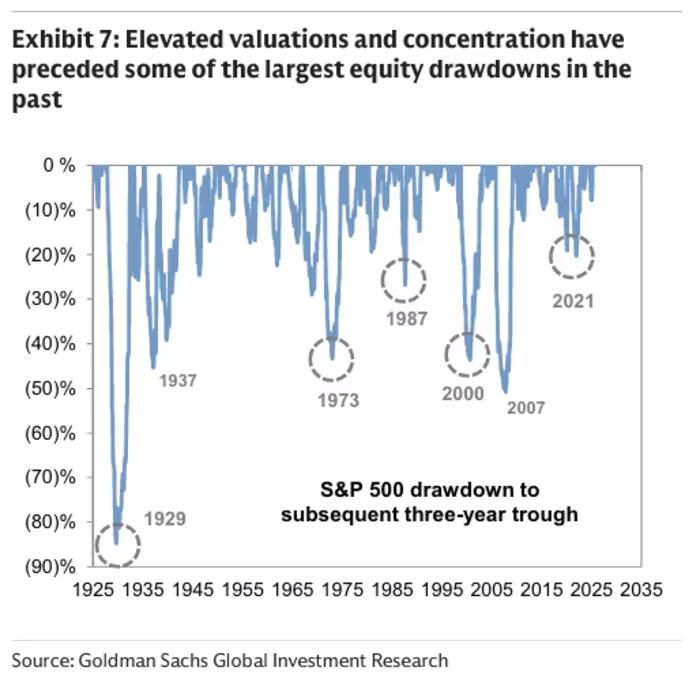
Wall Street veteran warns tech stocks are crowded and at risk of losing leadership U.S. stock futures point to a strong start to the year, with artificial-intelligence names once again driving early gains. But Jim Paulsen argues that technology stocks — what he calls “new era investments” — could lag the broader market in 2026. His concern isn’t just the familiar Big Tech story. While investors remain heavily overweight technology and valuations are stretched, those factors alone have led to only modest pullbacks in exposure so far. Writing in his Paulsen Perspectives blog, Paulsen highlights several lesser-known warning signals that could undermine tech’s dominance. One key risk is that tech stocks may stop outperforming growth in new era spending. Using GDP data, Paulsen tracks investment in information-processing equipment and intellectual property. Historically, tech stock prices have risen faster than this type of economic spending. But three times over the past decade that relationship stalled or reversed — and each instance was followed by a period of significant tech underperformance. Since late September, S&P 500 technology stocks have only kept pace with new era economic spending. “If tech stocks are no longer leading spending growth,” Paulsen asks, “does this point to another stretch of underperformance?” Corporate liquidity is another red flag. Paulsen shows that tech bull markets have been fueled by rising corporate cash levels, measured against nominal GDP. The powerful tech rallies of the 1990s and the post-2014 period both coincided with expanding cash balances. That tailwind may now be fading. The corporate cash-to-GDP ratio peaked at the end of 2024 and has since turned lower. Paulsen expects it to decline further in 2026 as short-term interest rates fall. “When excess cash dries up,” he warns, “the technology boom tends to pause.” Paulsen also sees a connection between tech performance and research-and-development spending. When R&D slipped relative to real GDP in 2022, technology stocks began trailing the broader S&P 500. While that link has weakened since late 2022, he questions whether a renewed slowdown in R&D could again pressure tech shares. Finally, Paulsen cautions that any sustained stumble in tech could trigger a psychological shift among investors, turning yesterday’s winners into tomorrow’s “losers.” Given how crowded the trade has become, such a shift could be painful — and may open the door for value stocks, small and mid-caps, and international markets to outperform. Paulsen stresses he is not calling for a crash. Rather, he believes a growing set of warning signs suggests technology stocks may soon surrender their long-held leadership role.

gold
Market News

Gold Dominates 2025 While Crypto Struggles

Gold and silver outperformed bitcoin in 2025 as global stocks beat the U.S. For investors around the world, 2025 proved to be anything but predictable. President Donald Trump’s return to the White House rattled global markets, with his aggressive tariff agenda quickly becoming one of the defining market themes of the year. At the same time, the artificial-intelligence boom pushed ahead, with gains spreading far beyond the familiar “Magnificent Seven.” Yet despite the spotlight on crypto and next-generation technology, some of the strongest returns came from assets that have served as stores of value for centuries. “This was supposed to be a year dominated by crypto and a continuation of the AI-driven bull market,” said Steve Sosnick, chief strategist at Interactive Brokers. “Instead, two of the biggest winners were gold — and especially silver — both of which crushed a weak year for crypto and even outpaced double-digit gains in major equity indexes.” Precious metals stole the show The metals market surged in 2025, with sharp swings in silver forcing the Chicago Mercantile Exchange to raise margin requirements twice in one week. Gold, after setting new records, finished the year up 64.4%, while silver skyrocketed 141.4% — their largest annual percentage gains since 1979. Copper also delivered a standout performance, climbing 41.2% for its strongest yearly advance since 2009, according to Dow Jones Market Data. With China’s silver export controls set to begin Jan. 1 and industrial demand for silver and copper expected to remain strong amid the data-center boom, supply constraints are likely to remain a key theme heading into 2026. U.S. stocks staged a historic rebound Trump’s “liberation day” tariffs, announced after the close on April 2, sent the S&P 500 sliding toward bear-market territory as investors feared the tariffs could choke off global growth. Markets reversed course after Trump announced a 90-day pause to allow time for negotiations. By June 27, the S&P 500 reached a new closing high — its first since Feb. 19 — completing the fastest recovery on record following a drop of 15% or more. The index needed just 89 days to reclaim its peak, surpassing the previous record set in 1998. From its April 8 closing low — when it was down 18.9% from its February high — the rally was powerful. By year-end, the Dow Jones Industrial Average was up 27.7% from its low, the Nasdaq Composite had surged 52.2%, and the S&P 500 had climbed 37.4%, marking their strongest recoveries from a yearly low since 2020. Bitcoin failed to live up to expectations 2025 was widely expected to be bitcoin’s breakout year. Trump campaigned as a crypto ally, pushed pro-crypto policies after taking office, and oversaw broader institutional adoption of digital assets. Instead, bitcoin disappointed. After trading above $100,000 early in the year, it plunged during April’s tariff-driven market selloff, falling below $75,000 at its low. Although it later rebounded and hit a record high of $126,184 in early October, those gains quickly faded. Heavy selling by large holders pushed bitcoin into a bear market late in the year. It ended 2025 near $88,000 — roughly 30% below its peak and about 6% lower than where it began the year. The dollar had a rough year Trump’s tariffs and “America First” agenda weighed heavily on the U.S. dollar. The ICE U.S. Dollar Index fell 9.4% in 2025, its worst annual performance since 2017 and one of its weakest years on record. While some analysts argue the dollar could stabilize after the U.S. economy avoided recession, Robin Brooks of the Brookings Institution warned risks remain. “One of the great puzzles of 2025 is that markets largely ignored President Trump’s pressure on the Fed,” Brooks wrote. “As we move closer to 2026, that issue may come back into focus — making me more cautious on the dollar despite growing bullish sentiment.” International stocks outpaced U.S. markets Equities outside the U.S. delivered an exceptional year. Although American markets posted solid gains — with the S&P 500 notching its third straight year of double-digit returns — international stocks outperformed by their widest margin since 2009. The MSCI All Country World ex-USA Index gained 29.3% in 2025, compared with a 16.4% increase for the S&P 500, an outperformance of nearly 13 percentage points. The index is also on track for its best annual performance since 2009. Standout performers included technology shares in Hong Kong, Japan and South Korea, along with European defense contractors and banks. In the end, 2025 delivered a clear takeaway for investors: while crypto and AI dominated headlines, precious metals and international markets ultimately delivered the strongest results.

Scroll to Top