sonic
Market News

Master Intraday Trading with Sonic Trading System

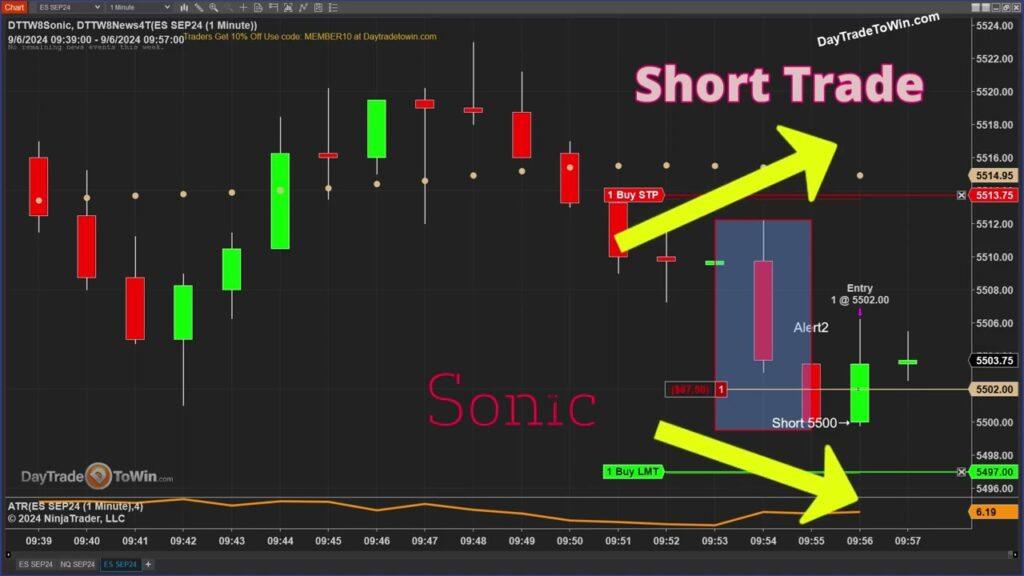
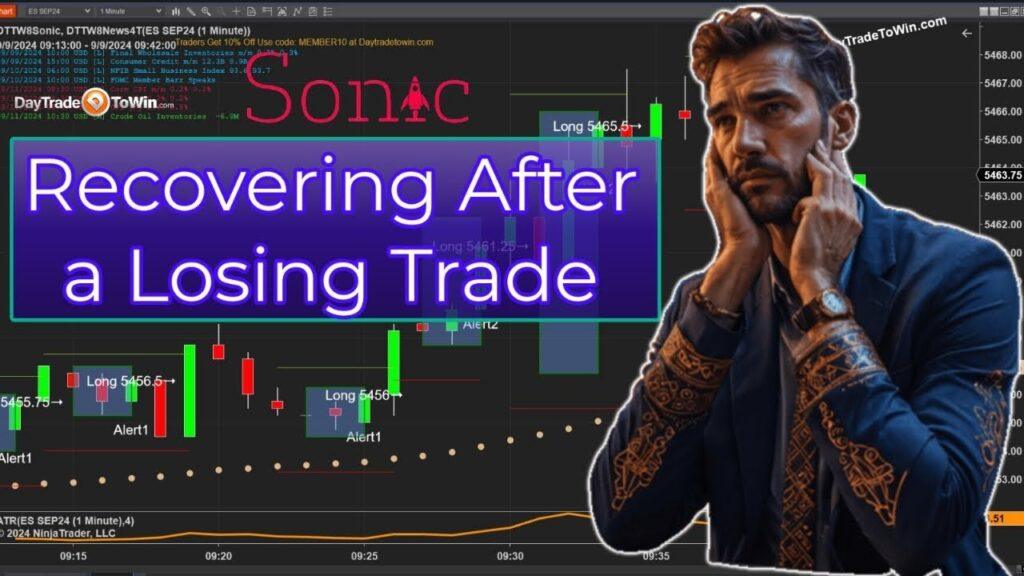
In today’s post, we’re diving into a real-time trading session using the Sonic Trading System, a powerful method for traders who focus on price action. During this live session, we’ll explore how the system works, key strategies for success, and why keeping things simple is the best approach to profitable trading. A Look at the Sonic Trading System The Sonic Trading System is designed for traders who rely on price patterns and market behavior rather than traditional indicators. It offers a structured yet flexible approach to trading, with built-in filters that help guide decisions on whether to go long or short. This system is a favorite for those looking to keep things straightforward while capitalizing on price action. Before jumping in, remember that trading involves risk. You can make or lose money, and it’s essential to understand the risks involved before taking trades. Kicking Off the Trade At 9:54 AM on a Friday morning, our trader looks for their first trade using the Sonic Trading System. The market is healthy, and the trader sets a target and stop-loss based on current conditions. The system suggests a short trade, triggered when the price falls below a key dotted line that serves as a filter, indicating bearish momentum. The initial entry point is around $5,500, with the system automatically adjusting the target to $54.97 and the stop-loss based on nearby market levels. This setup allows the trader to make decisions with confidence, knowing that the system provides precise entry and exit points. Price Action and Market Conditions One of the Sonic system’s core principles is price action. The trader highlights that a healthy move in the market typically amounts to about five or six points, translating into roughly $300 profit per trade. With this in mind, they are not looking to over-trade or chase the market, but rather to capture quality opportunities. A key point of focus is entering trades at the best possible price. In this session, the market moved in favor of the trader, allowing them to get a slightly better price than the initial setup. The lesson here? Use limit orders and avoid chasing trades, even if the market seems to be moving quickly. Multi-Timeframe Approach While the trader is using a one-minute chart for this particular trade, they also keep an eye on a 30-second chart on another screen. This multi-timeframe approach allows them to identify the earliest opportunities while staying in tune with short-term market fluctuations. However, for those just starting out, the trader recommends sticking with one chart to avoid overcomplicating things. The Sonic Trading System works across different markets and timeframes, offering flexibility for traders who might be working with various setups, like ASQ or E-mini contracts. Avoiding Over-Trading A critical takeaway from this session is the importance of not over-trading. The trader plans to take just one or two trades for the day, aiming to finish the week on a positive note and enjoy the weekend. By focusing on quality trades rather than quantity, the trader avoids the temptation to keep trading unnecessarily, which often leads to over-exposure and risk. This approach not only reduces stress but also helps traders maintain a consistent mindset, crucial for long-term success. News Events and Caution The trader also checks for any upcoming news events using a built-in news indicator. Although nothing significant is on the horizon, they caution that major news can cause unexpected volatility, making it wise to avoid trading during these times. Being aware of the news helps traders avoid entering the market when large, unpredictable moves might occur. Wrapping Up the Trade As the session progresses, the market moves in the trader’s favor, and by the end of the trade, they secure a profit of around $200–$225. The session is a success, but the trader emphasizes that this type of consistent performance comes from following the signals and staying disciplined. The goal is to keep things simple and avoid over-complicating the process. Final Thoughts: Learn More About Sonic Trading For traders interested in mastering the Sonic Trading System or exploring other advanced trading strategies, daytradetowin.com offers extensive resources, including the Sonic system, proprietary software, and mentorship programs. Whether you’re new to trading or experienced, their accelerated mentorship will equip you with the tools needed to trade confidently and profitably. This live trading session demonstrates the power of simplicity in trading. By following the Sonic Trading System, traders can focus on price action, avoid over-trading, and achieve consistent results. Ready to take the next step in your trading journey? Visit daytradetowin.com and get started today!

Election
Market News

Election Jitters: Why the Market Dips Before Election Day

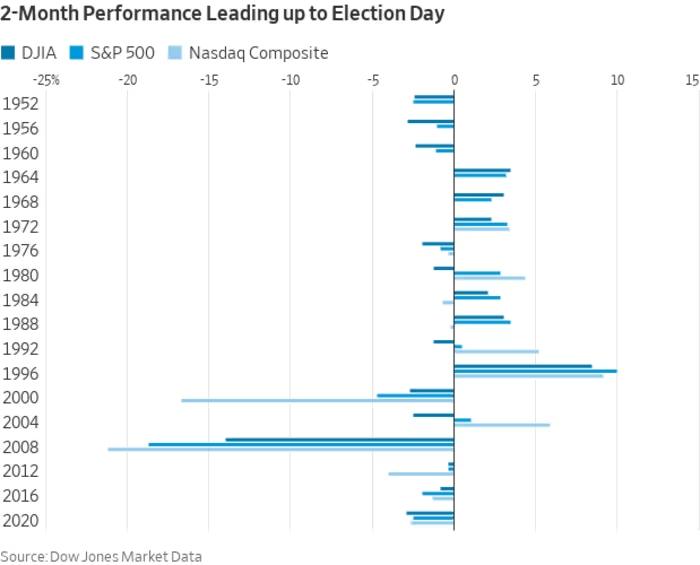
Since 2008, the S&P 500 has declined during the two months leading up to every U.S. presidential election, with an average drop of 5.8%, according to Dow Jones Market Data. Looking further back to 1952, the index has averaged a slight decline of 0.2% in this period, though the median result shows a 0.1% gain, with a 50-50 split between positive and negative outcomes. While historical trends can be insightful, market experts warn against viewing them as predictive. Both the Dow Jones Industrial Average and Nasdaq Composite have also typically declined in this two-month window. The Dow has risen only one-third of the time, and the Nasdaq just 38.5% of the time since 1972. September is historically the weakest month, with an average decline of 0.78% since 1944. In presidential election years, this weakness often extends into October. Normally a positive month with a 1.04% average gain, October has instead seen an average drop of 0.45% in election years.

investors
Market News

Did Retail Investors Pass Tuesday’s Dip-Buying Test?

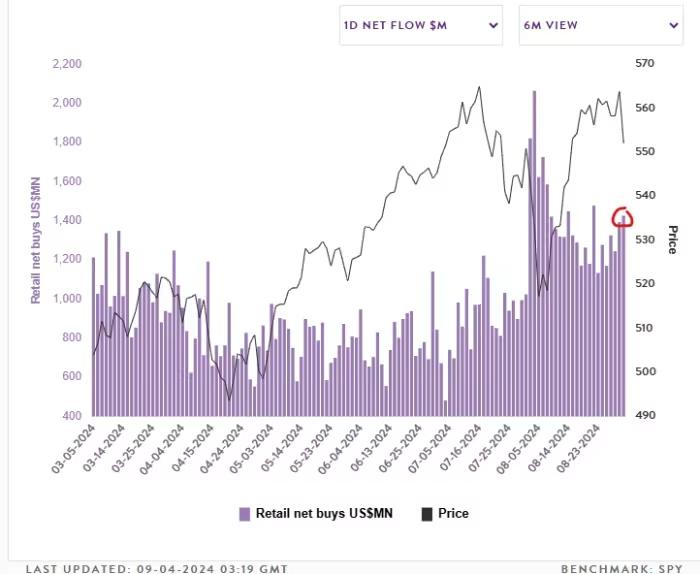
When markets dip, it often see it as a buying opportunity. However, Tuesday’s selloff felt different. Following an ISM report indicating a slowdown in manufacturing, the S&P 500 plunged 2.1% and the Nasdaq Composite dropped 3.3%, marking the largest decline since August 5. Retail investors did step in to buy the dip, but their response wasn’t as strong as in August. Marco Iachini of Vanda Research noted that while buying increased, it didn’t reach the high levels seen during the earlier selloff. September 3 saw net buying that was higher than most recent days but still below August’s levels. Retail traders usually buy more aggressively after a few dips rather than the first one. Many investors had already been purchasing stocks recently, which might have depleted their available funds. Additionally, with pandemic-era savings largely gone, investors might be less prepared to buy the dip. Iachini wonders how long retail investors can keep up their buying if the market continues to fall. Despite recent volatility, data shows retail investors are still optimistic. Analysts like Bret Kenwell from eToro believe the market’s fundamentals remain solid, but upcoming events like the Fed’s policy meeting and the U.S. election could lead to increased volatility.

sonic
DayTradeToWin Review

Stay Ahead with News Alerts and Sonic Signals

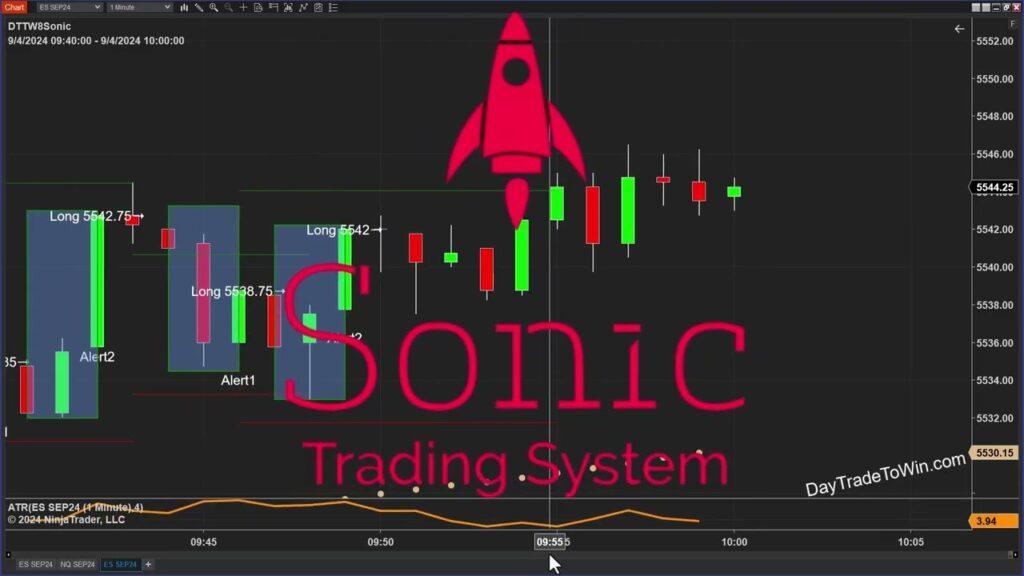
Hello, traders! Today, we’re taking a closer look at the Sonic Trading System, a powerful tool designed to help you navigate the market with precision. We’ll break down how to interpret its signals, and I’ll share key tips on handling trades during major news events like a pro. The Sonic Trading System at Work The Sonic Trading System identifies high-probability entry points across various timeframes. Recently, it triggered a long signal at 55.4550, coinciding with a major news event at 10:00 AM New York time. As expected, the market reacted with volatility—a common occurrence during news releases. If you’re new to trading, this kind of volatility can feel overwhelming, making it important to remain patient when a signal aligns with a news event. Why Timing Matters During News Releases Market-moving news often results in sharp, unpredictable movements, which can be risky for traders. A good rule of thumb is to wait a few minutes after a news event before entering a trade, allowing the market to stabilize. For example, after the 10:00 AM news release, waiting seven minutes brought the market to a more predictable state. The Sonic Trading System issued another long signal at 55.444, but even then, it’s crucial to monitor the market conditions. If the average true range (ATR) remains high (around 8), it signals that volatility is still elevated. Conservative traders may prefer waiting for the ATR to drop to more normal levels (around 5 or 6) before entering a trade. Staying Informed: News Indicators and Economic Calendars Keeping ahead of market-moving news is essential for making informed trading decisions. Using reliable economic calendars and news indicators is key. The Day Trade to Win economic calendar provides a comprehensive list of upcoming news events that could affect the markets. Additionally, the Day Trade to Win news indicator provides an audible alert before major news hits, giving you time to either prepare or hold off on trades. You can access these tools during their free trial, or use the economic calendar available online. Choosing the Right Chart and Timeframe The Sonic Trading System is versatile, working effectively across various chart types and timeframes. Whether you’re using 1-minute charts, 15-second charts, or tick charts, the system adapts seamlessly. For instance, on a recent 15-second chart, the ATR was around 2.5, indicating a more controlled trading environment. This setup allowed for gains of $125 to $150 on the E-mini S&P—a solid return for short-term trades. Whether you prefer minute charts, tick charts, or range charts, the Sonic Trading System’s flexibility allows you to find trades throughout the day. Within just 10 minutes, multiple winning trades were signaled, each with clear entries and exits. Don’t Overtrade: Quality Over Quantity While the Sonic Trading System provides ample opportunities, it’s essential to trade smart, not often. If you achieve three or four winning trades, that may be enough to hit your daily profit target. Overtrading, especially in volatile markets, can lead to unnecessary losses. As we saw with a signal at 55.546, if the market moves away from your limit order, it’s okay to let the trade pass. Another setup is always around the corner. Final Thoughts Successful trading is about finding balance—knowing when to take action and when to wait. The Sonic Trading System is a powerful tool for spotting high-probability trades, but staying informed and patient, especially during news events, is crucial. Using tools like the Day Trade to Win news indicator and economic calendar can help you manage risk and improve your trading performance. Remember, trading involves risks, and it’s important to trade with capital you can afford to lose. Always approach the market with caution and a solid plan. Until next time, happy trading! For more information on the Sonic Trading System and to try it for free, visit daytradetowin.com and start trading with confidence.

nvidia
Market News

Nvidia Ascent: Risks of S&P 500 Dominance

In June 2024, Nvidia briefly overtook Microsoft to become the largest company by market capitalization on the S&P 500. While this achievement marks a significant milestone, history shows that holding the top spot often precedes a decline. According to JPMorgan Asset Management, many past leaders, including General Motors, IBM, Altria, Cisco, General Electric, and Exxon Mobil, eventually experienced sharp drops in market value after reaching this position. To date, only Microsoft and Apple have managed to avoid significant declines after becoming the most valuable companies on the S&P 500. Nvidia’s rapid ascent, fueled by excitement over AI technologies, has made it the fastest company to reach the index’s top spot in the post-war era. The key question now is whether Nvidia will follow the pattern of past market leaders, encountering a downturn, or continue its upward momentum. JPMorgan’s analysts believe that the next 12 to 18 months will be crucial in determining this, depending on whether AI investments yield substantial returns from corporate adoption. They warn that AI adoption must significantly increase to justify the current levels of investment, drawing comparisons to previous tech booms like the mainframe era and the dot-com bubble. Despite Nvidia’s strong financial performance, the company faces potential risks from geopolitical tensions and rising competition from rivals like Intel, AMD, and ARM. Additionally, Taiwan Semiconductor Manufacturing Co., Nvidia’s primary chip supplier, could be a critical factor in its future, especially if tensions between the U.S. and China escalate.

Market News

4 Money Moves to Consider Before the Fed Rate Cuts

With Federal Reserve Chair Jerome Powell indicating that “the time has come” for rate cuts, it’s crucial to reassess your financial strategies. The expected rate reductions could create opportunities for borrowers, savers, and spenders, but they also come with potential challenges. Powell’s recent comments have fueled speculation that the Fed could begin lowering rates as soon as their next meeting, with more cuts likely over the next year. Currently, the federal funds rate stands between 5.25% and 5.5%. The series of rate hikes since March 2022 was aimed at curbing inflation, but it also made borrowing more expensive, impacting mortgages, credit cards, and loans. However, these high rates have benefited savers with attractive returns on savings accounts and CDs. As rates decrease, borrowing costs may drop, offering relief to some, while savers might see lower returns on their cash. “It’s all about optimizing,” says Mark Hamrick, a senior economic analyst at Bankrate. Here are four key financial strategies to help you make the most of your money in this changing environment: 1. Lock in a CD at Current Rates Consider locking in a Certificate of Deposit (CD) to secure today’s higher rates before they drop. While high-yield savings account rates will decrease following rate cuts, a CD allows you to earn a fixed interest rate for a set period. Currently, one-year CDs offer competitive rates around 5% or higher. If you’re planning a significant purchase within the next year, matching a CD term to your spending timeline can be a smart move, according to Jaime Eckels, a wealth-management partner at Plante Moran Financial Advisors. 2. Prioritize Liquidity if You’re Saving If you don’t have a specific spending goal, keep your savings in a high-yield account. Unlike CDs, these accounts provide easy access to your funds, which is essential for emergencies. Withdrawing from a CD early can result in penalties, particularly for longer-term CDs. Hamrick stresses the importance of liquidity to avoid costly debt, such as credit cards or personal loans, when unexpected expenses arise. 3. Manage Credit Card Debt: Negotiate or Transfer Balances Credit card interest rates aren’t expected to drop significantly, even after the Fed cuts rates. With the average U.S. credit card rate at 24.92%, it’s crucial to manage your debt effectively. Financial planner Bobbi Rebell suggests negotiating a lower interest rate with your credit card company. Alternatively, consider transferring your balance to a card with a 0% introductory rate, a strategy recommended by Eckels. 4. Don’t Wait on Big Purchases: Timing the Market is Tricky If you’re planning a major purchase like a home or an expensive appliance, don’t wait for rates to drop. While lower rates might seem appealing, other factors, like demand and home prices, also play a significant role. Although mortgage rates tend to follow the federal funds rate, they’ve recently declined. However, when rates decrease, increased buyer demand could drive up home prices. Remember, you can always refinance your mortgage later if rates fall further. The Bottom Line: Don’t let the anticipation of rate cuts dictate your financial decisions. “Stay informed, but don’t let it prevent you from making the right choice for your situation,” advises Rebell.

Scroll to Top