trading
DayTradeToWin Review

Spotting Trading Opportunities with Day Trade to Win Software

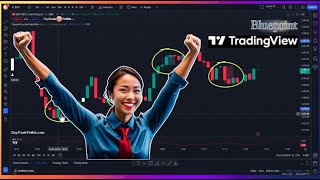
Hey traders! It’s around 1:00 PM Eastern New York time, and a promising trading opportunity has emerged. The market is heading towards the roadmap zone, a key area identified by our proprietary Day Trade to Win software, which is available for both Ninja Trader and TradingView. Before we dive into the details, remember that trading carries significant risk. Only trade with money you can afford to lose. Real-Time Alerts Our software has just triggered both an audible and a text alert at the 55.2275 mark, signaling a long position entry. Let me explain why this is significant. Understanding the Blueprint Signal The blueprint signal indicates that the market is likely moving towards the roadmap zone. This signal is vital for timing our entries, regardless of whether you’re using Ninja Trader or TradingView. Let’s expand the chart for a closer look. For trade management, you have two options: use the ATM (Automatic Trade Management) strategy or manually adjust your targets and stops. I prefer the ATM strategy, setting the target to one times the ATR (Average True Range). The number of contracts you use—be it one, two, or three—depends on your risk tolerance and preference. Some traders might opt for micro contracts to manage risk more effectively. The key to successful trading is managing the trade using the techniques we teach. Ensure there are no conflicting signals and stick to your plan. Target hit! The trade reached the target, and we’re done. It’s important not to re-enter the trade immediately. The market might present another opportunity, such as a reversal at the roadmap zone, but that requires a different strategy. Accelerated Mentorship Program Our Accelerated Mentorship Program includes all the software and courses you need to excel in trading. Visit daytradetowin.com for more information and to start your trading journey. Join Our Trading Community We offer free member account access for all traders. Join our live training room and get the videos and training you need to succeed in the markets, whether you use TradingView or Ninja Trader. Happy trading, and see you in the next session!

market
Market News

Rate Cuts and Market Reactions: Decoding the Disconnect

Sometimes, central-bank rate cuts can alarm rather than reassure investors, as shown by recent actions from the People’s Bank of China (PBOC) and comments from former New York Fed President William Dudley. On Thursday, the PBOC surprised markets by cutting its medium-term lending facility (MLF) rate to 2.3% from 2.5%, following an unexpected reduction in the seven-day reverse-repo rate earlier in the week. These moves have sparked concerns about the strength of China’s economy. “This is the second cut this week, indicating Chinese authorities’ worry about their economy, which is troubling for stock markets and investors,” said Kathleen Brooks, research director at XTB. Context is key. Rate cuts can boost stocks and risky assets if seen as measures to prevent an economic downturn. This expectation has fueled U.S. stock rallies since last fall, with investors anticipating Fed rate cuts that have yet to happen. However, when a central bank cuts rates due to economic troubles, investors can become unsettled. This was evident on Wednesday, when U.S. stocks had their worst day since 2022. Poor earnings from Alphabet Inc. and Tesla Inc. contributed, but Dudley’s reversal on rate policy also caused concern. After advocating for prolonged high rates, Dudley cited weakening economic data as a reason to support immediate rate cuts in his Bloomberg column. This shift, coupled with other factors, led the tech-heavy Nasdaq Composite to fall 3.6%, the S&P 500 to drop 2.3%, and the Dow Jones Industrial Average to lose over 500 points. These events, combined with poor European purchasing-manager index readings and Dudley’s comments, prompted investors to offload risky assets. Despite the tumult, bullish investors argue that the selloff was primarily driven by weak tech earnings and an adjustment from overly optimistic positions. Expectations for a July rate cut by the Fed remained relatively stable, with Fed-funds futures traders pricing in a roughly 9% probability, according to the CME FedWatch Tool. Tom Essaye, founder of Sevens Report Research, emphasized the need to monitor growth closely: “None of this pullback includes growth worries. I am still concerned about growth, and Dudley’s comments make me more nervous. We need to watch growth very closely.” In summary, recent market reactions highlight that rate cuts aren’t always reassuring, especially when they signal underlying economic weaknesses. Investors remain cautious, closely monitoring economic indicators and central bank actions.

morgan stanley
Market News

The Factor Undermining Stock Buybacks: Morgan Stanley

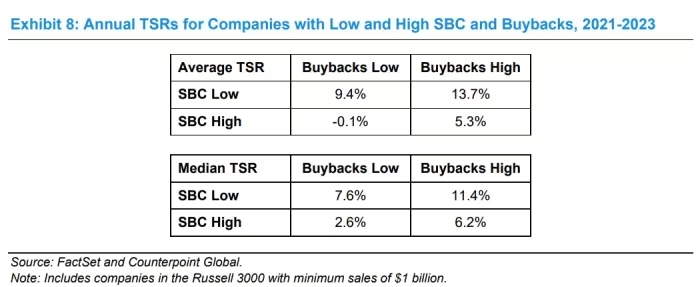
Technology stocks just had their worst day in nearly two years, and hedge-fund manager Bill Ackman received more bad news. But first, let’s focus on an important analysis by Michael Mauboussin, head of consilient research at Morgan Stanley Investment Management’s Counterpoint Global and adjunct professor at Columbia Business School, and his colleague Dan Callahan. Mauboussin and Callahan explored the dynamics of equity issuance and retirement, revealing that companies often simultaneously buy and sell their own stock. They engage in stock buybacks while issuing shares to acquire other companies, make investments, or compensate employees with stock-based compensation. Their research concentrated on Russell 3000 companies with at least $1 billion in sales, analyzing data from 1,350 stocks between 2021 and 2023. They discovered that companies aggressively buying back their stock while sparingly using stock-based compensation outperformed the market. Even companies that were not aggressive with buybacks kept pace as long as they didn’t heavily compensate employees with stock. They acknowledge that other factors, like company fundamentals and interest rates, also influence returns. However, they emphasize the importance of understanding the impact of equity issuance on returns to make informed capital allocation decisions.

Alphabet
Market News

Alphabet’s Earnings Beat: What’s Holding Back the Stock?

Alphabet Inc., the parent company of Google, has shown cost discipline in various areas, yet several factors could impede margin expansion in the third quarter. Despite surpassing earnings and revenue expectations on Tuesday afternoon, Alphabet’s stock still declined by the end of the extended session. Several points in the latest figures drew investor scrutiny. For instance, YouTube’s revenue was lower than expected and decelerated compared to the first quarter. Management explained that YouTube faced easier comparisons in the first quarter, which was up against a period of negative growth, while the second-quarter results were compared to the beginning of ramping advertising revenue from Asian e-commerce players like Temu. A more significant issue for investors was highlighted during the company’s earnings call. Alphabet’s executives pointed out trends that could impact margin expansion in the third quarter. President Ruth Porat mentioned that headcount could rise as the company hires college graduates and that Alphabet faces higher “depreciation and expenses associated with higher levels of our investment in technical infrastructure.” Wall Street analysts, such as Ben Reitzes from Melius Research, indicate that the market might be concerned about the pace at which Alphabet can widen its margins in the near future. Reitzes noted that while Alphabet’s 32.4% overall operating margin in the June quarter exceeded expectations, any comments suggesting a slower pace of margin expansion attract attention given the current emphasis on efficiency. Significant investments in technical infrastructure, driven by Alphabet’s ambitious artificial intelligence goals, are key factors influencing spending. Rivals like Meta Platforms Inc., Amazon.com Inc., and Microsoft Corp. are making similar investments. Porat’s comments indicate that third-quarter operating margins will reflect increased depreciation and expenses from these investments. Reitzes emphasized the importance of monitoring depreciation trends on earnings per share and gross margins, especially for leading tech firms known as the Magnificent 7, which include Microsoft, Amazon, and Meta. Alphabet’s shares fell 2% in Tuesday’s extended session, reversing an earlier upward trend. If this movement continues into Wednesday’s regular session, it would mark Alphabet’s most subdued stock-price reaction to earnings since shares fell 0.1% following the March-quarter report last year.

roadmap
DayTradeToWin Review

Mastering Roadmap Signals for Successful Trading

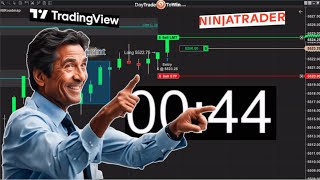
Navigating the trading world requires effective tools and strategies. Today, we’ll explore roadmap signals on two popular charting platforms: TradingView and NinjaTrader. By comparing these platforms, you can decide which one suits your trading style best. Platform Overview On the left, we have TradingView charts, and on the right, NinjaTrader charts. Both platforms are favored by traders worldwide, and understanding their signals is key to making informed trading decisions. Roadmap Signals Explained TradingView Chart Roadmap Signals The principles for interpreting roadmap signals remain consistent across both platforms, as discussed in our live trading room sessions. The roadmap zone indicates potential market movements, presenting two possible scenarios: For instance, if the price bounces off the roadmap zone and reverses, we set a target using one times the Average True Range (ATR). On the TradingView chart, a purple line indicates the entry point if the price continues through the zone. This target calculation is customizable, allowing users to adjust styles, colors, and alerts. NinjaTrader Chart Roadmap Signals NinjaTrader charts operate on similar principles. The roadmap zone highlights potential reversals or trend continuations. Despite minor data feed differences, the signals on NinjaTrader closely align with those on TradingView. For example, if the market hits the roadmap zone and reverses, a signal is generated, similar to TradingView. In sideways markets, it’s advisable not to hold trades for too long. A 10-15 minute window is recommended for exit decisions in such scenarios. Comparing Signals Both platforms provide consistent signals, but entering trades closer to the roadmap zone increases accuracy. Avoid chasing trades if you miss the initial entry point; it’s better to wait for the next signal. On TradingView, when the price breaks through the roadmap zone, a yellow candle signals a potential short trade. The same logic applies to NinjaTrader, where a line shows the entry point for short trades. The ABC Indicator for TradingView For TradingView users, we offer the ABC indicator for free. Visit DayTradeToWin.com to sign up for a free member account and access the ABC indicator. We also provide comprehensive training programs, including an accelerated mentorship class that covers all our software at a discounted rate. Conclusion TradingView and NinjaTrader both offer powerful roadmap signals to help traders make informed decisions. By understanding and utilizing these signals effectively, you can improve your trading strategy. For more information, free software trials, and detailed training programs, visit DayTradeToWin.com and take your trading skills to the next level.

stock market
Market News

Tracking the Stock-Market Shift from Big Tech: Important Levels to Observe

BofA strategists highlight that historically, a lower Treasury yield and an improving manufacturing PMI have driven the outperformance of the equal-weighted S&P 500 index. Recently, a surge in U.S. small-cap stocks has led investors to speculate whether this marks a shift away from this year’s Big Tech frontrunners. According to BofA Global Research strategists, a lasting stock-market rotation depends on the 10-year Treasury yield remaining below 4% and the ISM manufacturing PMI index staying above 50%. Historically, the equal-weighted S&P 500 index has outperformed the market-cap-weighted S&P 500 90% of the time when the 10-year Treasury yield dropped by more than 1 percentage point from its 12-month peak, and the ISM manufacturing PMI improved by over 4 percentage points from its 12-month low, as noted by BofA strategists led by Ohsung Kwon. For this rotation to continue, the 10-year yield needs to be around 3.99%, below its 52-week high of 4.99% recorded on October 19, and the ISM manufacturing PMI index should be above 50%, indicating expansion in the manufacturing sector. “The manufacturing economy is experiencing its second-longest downturn in history, with 21 months without two consecutive months of PMI above 50%,” Kwon and his team wrote, attributing this mainly to the destocking cycle, which they expect to moderate in the second half of 2024. The Institute for Supply Management’s manufacturing index fell to 48.5% in June from 48.7% in the previous month, with the lowest level in the past 12 months being 46.5% in July 2023. A PMI below 50% indicates contraction in the sector. On Monday, the 10-year Treasury yield increased by 2.1 basis points to 4.259%, influenced by speculation that Vice President Kamala Harris might become the Democratic Party’s presidential nominee. This year, the 10-year rate has risen by nearly 40 basis points due to persistent inflation concerns, keeping the Federal Reserve cautious about cutting interest rates, according to FactSet data. Despite this, traders in the federal-funds futures market on Monday saw a 93.6% probability that the Fed will start cutting its benchmark rate in September, based on the CME FedWatch Tool. However, policymakers will review upcoming inflation data before making a decision. U.S. stocks closed higher on Monday, led by the “Magnificent Seven” and chip stocks like Nvidia, which rose by 4.76% after a challenging week. The Nasdaq Composite increased by 1.6%, the S&P 500 by 1.1%, and the Dow Jones Industrial Average edged up by 0.3%, according to FactSet data.

Scroll to Top