
daytradetowin.com courses

price action
DayTradeToWin Review

How Market Manipulation Impacts Price Action

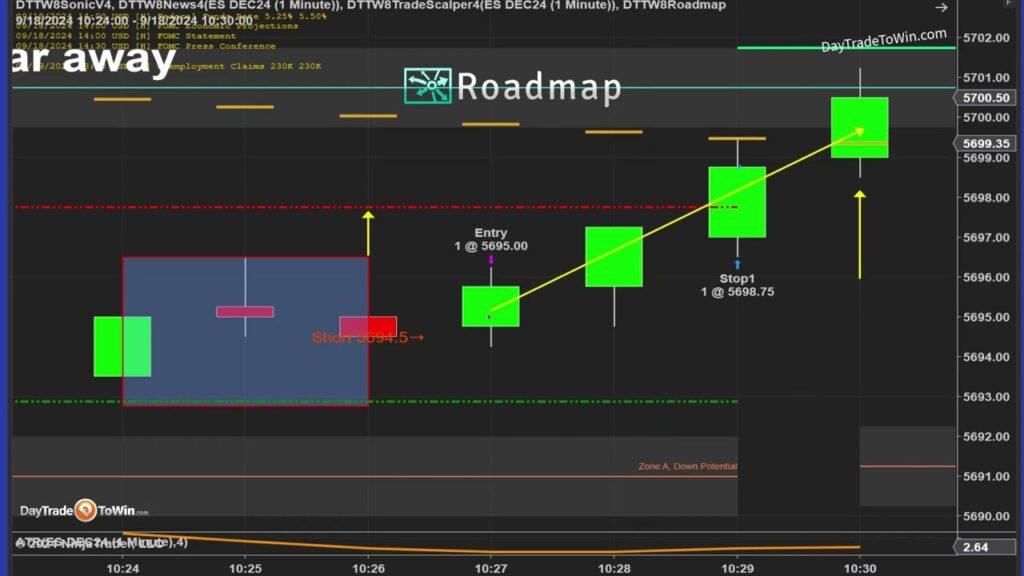
In the world of trading, no two scenarios are identical. Each market event presents unique challenges and subtle differences. Seasoned traders recognize the impact of market manipulation on price action, often misleading less experienced participants. When a large price move occurs—such as a significant candle—it typically results from a surge of orders hitting the market simultaneously, overwhelming either buyers or sellers. The Trap of Traditional Indicators Many traders heavily rely on traditional indicators like moving averages or MACD (Moving Average Convergence Divergence). These tools often signal “buy” when a trend appears favorable, drawing traders into positions. However, even when all indicators point to a bullish scenario, unforeseen events can lead to sudden reversals. This can catch traders off guard, as many rush to exit long positions, or professional traders take profits at key price levels. These sudden moves are often orchestrated by experienced market players who have been quietly accumulating positions and are now selling off. This classic form of manipulation can leave the majority of traders blindsided. The Value of Price Action and Volatility To navigate these market traps, traders need to focus on price action. Unlike traditional indicators, price action reflects real-time market behavior. One effective approach is using a “roadmap” based on key price zones and market volatility. For example, in a highly volatile market, the initial reaction zone (the first price movement after volatility spikes) might not be reliable. When the Average True Range (ATR) is elevated—five or eight points, for instance—traders should concentrate on further-out zones to find more dependable trading opportunities. These distant price levels offer a clearer picture of market direction and highlight where professional traders may be making their moves. Position Yourself for the Right Opportunity Understanding accumulation and distribution phases is crucial for traders aiming to stay ahead. By identifying how markets tend to behave, you can position yourself to take advantage of optimal trade entries. The greater the volatility, the more important it is to focus on the right zones and avoid getting caught up in the initial frenzy. This patient approach allows you to avoid the noise and capitalize on significant market movements. Take Control of Your Trading To succeed in trading, relying solely on conventional indicators isn’t enough. Mastering price action and recognizing market manipulation will give you an edge. If you’re interested in exploring this approach further, DayTradetowin.com provides valuable resources, including a free membership and access to trial software like the ABC system. Start trading with a focus on price action, and avoid falling into the common traps of traditional indicators. Take control of your trading strategy today. John PaulJohn Paul is the founder of DayTradeToWin, a trading education and software company established in 2008, supporting traders worldwide. His expertise focuses on price action-based futures trading strategies and structured market analysis. DayTradeToWin delivers trading education, indicators, and software tools designed to help traders apply disciplined, rule-based decision-making across global futures markets. He is the creator of multiple trading methodologies, including the Sonic System, Atlas Line, and Trade Scalper, which help traders identify structured opportunities in markets such as the E-mini S&P 500 (ES), Nasdaq (NQ), crude oil (CL), and gold (GC). Official website: https://daytradetowin.com daytradetowin.com
over-trading
DayTradeToWin Review

Stop Over-Trading: Boost Your Profits with Discipline

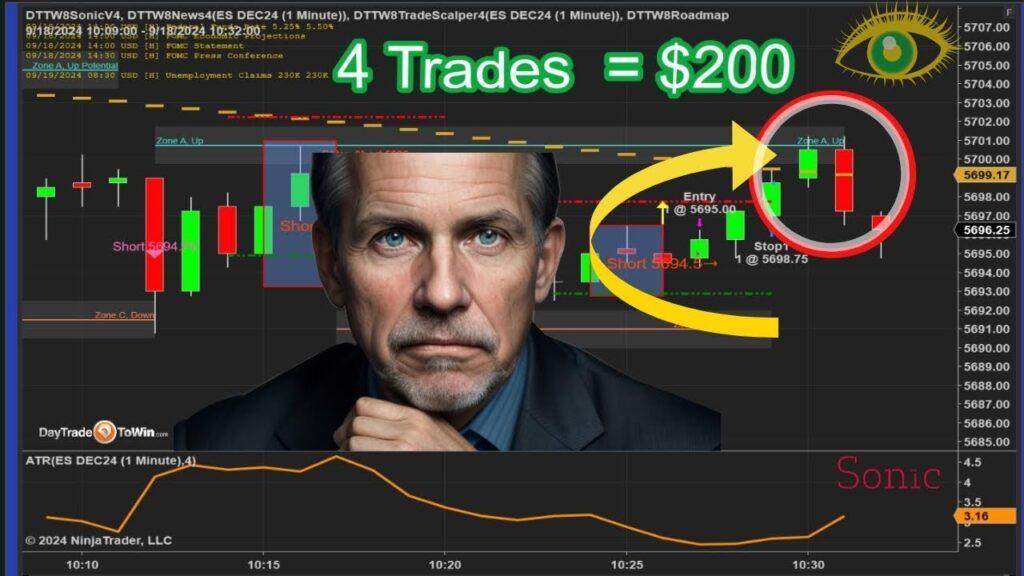
Over-trading is a common pitfall in day trading, leading to excessive risk and diminishing returns. Many traders, fueled by the excitement of the market, make numerous trades without a solid strategy. By the end of the day, they may find they’ve gained little—or worse, lost ground. In fact, trading excessively can erode your profits and take a toll on your mental well-being. Why Over-Trading Can Hurt Your Success As highlighted in the transcript, trading constantly throughout the day without clear gains is a recipe for failure. Making frequent trades doesn’t guarantee better results and often leads to a loss of focus. The key lesson here is to prioritize quality over quantity. For instance, if you make five to ten trades in a day and end up profitable, that’s great! That’s a signal to stop. One of the biggest mistakes traders make is continuing to trade after reaching their goal, driven by overconfidence or greed. At that point, you risk not just your profits but also your emotional discipline. The secret is to make fewer trades with clear intent. Breaking your day into manageable sessions—such as taking a few trades in the morning and again in the afternoon when market volatility is higher—helps maintain focus and balance. Set Clear Targets and Stop Once You Achieve Them Let’s say each point on a trade is worth $50, and after four trades, you’ve made $200—that’s a solid stopping point. From there, consider scaling up your contracts as your confidence and account size grow. The goal is not to take more trades but to trade more strategically. This also means recognizing when the market has moved past an ideal entry point and resisting the urge to chase. Jumping in after missing the optimal entry often results in poor outcomes. For example, if the market hits a key roadmap zone and reverses immediately, you may be too late to benefit. Entering after a move can put you at a disadvantage, especially if seasoned traders have already profited from the shift. Timing Is Critical: Strategic Entries Matter Discipline is key when entering trades. Spotting a roadmap zone and placing a limit order just a few ticks higher can help you secure a better price. This approach not only minimizes risk by keeping you closer to your stop but also ensures you’re entering at a favorable point. Of course, not all trades will work out perfectly. The transcript reminds us that sometimes the market moves unexpectedly. If it “runs away” from you, don’t chase it. Accept that you missed the trade and move on. The market offers countless opportunities, so there’s no need to rush or force a bad trade. Final Thoughts: Patience Over Prediction Nobody can predict the market with certainty. The best approach is to make informed, well-timed decisions. Forcing trades or over-trading leads to burnout and potential losses. By sticking to a clear plan and focusing on quality trades, you’ll be in greater control of both your strategy and your results. Day trading isn’t about sitting in front of a screen all day, clicking buy and sell. It’s about observing the market, exercising patience, and entering trades when the risk-to-reward ratio is in your favor. Want to learn more advanced trading techniques? Join our community at DayTradetowin.com to access free trials, expert educational resources, and our powerful ABC software. Start trading smarter and master price action strategies today! John PaulJohn Paul is the founder of DayTradeToWin, a trading education and software company established in 2008, supporting traders worldwide. His expertise focuses on price action-based futures trading strategies and structured market analysis. DayTradeToWin delivers trading education, indicators, and software tools designed to help traders apply disciplined, rule-based decision-making across global futures markets. He is the creator of multiple trading methodologies, including the Sonic System, Atlas Line, and Trade Scalper, which help traders identify structured opportunities in markets such as the E-mini S&P 500 (ES), Nasdaq (NQ), crude oil (CL), and gold (GC). Official website: https://daytradetowin.com daytradetowin.com
ATR
DayTradeToWin Review

Maximize Trades with ATR and News Insights

In today’s trading session, we’re diving into critical market factors, including news events, the Average True Range (ATR), and practical trading strategies. Let’s explore how to interpret these elements for a successful trading day. 1. Monitoring News Events: The Backbone of Market Movements When entering a trading session, it’s essential to check for upcoming news events. Market-shifting announcements, particularly those from the U.S., often drive significant price movements. By focusing on high-impact news, such as those released by the Federal Open Market Committee (FOMC), you can anticipate periods of increased volatility and plan your trades accordingly. For example, during today’s session, a 2:00 PM FOMC event was highlighted as a key moment to watch for market movement. Pro Tip: Adjust your news calendar to filter for only high-impact U.S. events. Medium- or low-impact events tend to clutter your charts without offering much trading value. 2. Understanding the ATR: A Guide to Market Speed The Average True Range (ATR) is a vital indicator that tells you whether the market is moving quickly, slowly, or somewhere in between. This information is especially useful when planning your trades for the day. The market often moves in cycles, with days of high volatility followed by quieter periods. Typically, after three to four days of fast or slow movement, the market shifts gears. For instance, if yesterday’s market was slow, you can expect a similarly slow environment today. Conversely, if the previous day was chaotic, brace yourself for more volatility. The ATR helps you quantify this pace, enabling you to set realistic trade targets based on current conditions. Key Takeaway: When the ATR is around 2.5, it indicates that each candle (on a 1-minute chart) is moving by about 2.5 points from high to low. Understanding this can help you set achievable trade targets. If the ATR increases to 5 or 6, expect sharper, quicker movements that require faster decision-making. 3. Setting Trade Targets: The Power of ATR-Based Planning Now that we understand how to read the ATR, let’s apply it to trade targeting. If the market’s ATR is 2.5 points, you can expect the market to move approximately 2.5 points in either direction within the next few bars. This information is crucial when setting your profit targets. For day traders, hitting a target just under the ATR (e.g., 2 points when the ATR is 2.5) is often more achievable than aiming for 5 points in a slower market. If the ATR rises to 3 points, adjust your strategy accordingly, recognizing that it’s easier to achieve a target of 2 points than to push for larger profits when the market may not have the momentum to sustain that. Pro Tip: To maximize profits while minimizing risk, set trade targets slightly below the ATR, as this allows for quicker, more consistent exits. 4. Upgrading Your Tools: Maximizing Version 4 of Sonic For those using Sonic, it’s important to ensure you’re using the latest version. Version 4 includes essential upgrades, including customizable ATR-based trade targets, making it easier to adapt your strategy based on real-time market conditions. When setting your target, adjusting it to half of the ATR (0.5) allows for faster exits with smaller targets. Conversely, setting it at 1x ATR offers a larger target but takes longer to achieve and comes with increased risk. Key Insight: Whether you’re using Sonic, Trade Scalper, or your own strategy, leveraging ATR-based targets can help you exit trades at the optimal moment. 5. Refining Your Entry: Using Limit Orders for Better Prices In fast-moving markets, precision is key. Avoid chasing trades with market orders, which can lead to bad fills, especially in volatile conditions. Instead, use limit orders to secure a better entry price. For example, if a signal is triggered and the market moves up a few ticks, using a limit order allows you to enter at a better price and improves your potential return. When looking at signals from tools like Trade Scalper, waiting for the price to move up a few ticks before entering a short trade gives you a more favorable entry point. This small adjustment can significantly impact your overall profit, especially when dealing with tight ATR-based targets. Pro Tip: Always strive for better entries by using limit orders and avoiding slippage, which can cost you valuable ticks in fast-moving markets. 6. The Road Map: Aligning Your Strategy with Market Conditions The Road Map tool is another essential resource for traders. It offers a clear visual of market direction and helps you anticipate reversals or continuations. For those using the Sonic system, coupling it with the Roadmap provides an extra layer of confidence in your trades. For example, when you receive a Sonic signal to short the market, wait for a slight price uptick before entering your trade. This approach increases your odds of a favorable entry and allows you to align your strategy with market momentum as shown by the Road Map. Final Thoughts: Trading is a game of precision and patience. By using tools like news event calendars, ATR indicators, and the Roadmap, you can create a comprehensive strategy that maximizes your chances of success. Stay disciplined, and always adjust your targets and entries based on the real-time conditions of the market. By understanding how news events impact market movements, leveraging ATR for better target-setting, and refining your entry points, you’ll be well-equipped to make smarter, more profitable trades. Happy trading! John PaulJohn Paul is the founder of DayTradeToWin, a trading education and software company established in 2008, supporting traders worldwide. His expertise focuses on price action-based futures trading strategies and structured market analysis. DayTradeToWin delivers trading education, indicators, and software tools designed to help traders apply disciplined, rule-based decision-making across global futures markets. He is the creator of multiple trading methodologies, including the Sonic System, Atlas Line, and Trade Scalper, which help traders identify structured opportunities in markets such as the E-mini S&P 500 (ES), Nasdaq (NQ), crude oil (CL), and gold (GC). Official website: https://daytradetowin.com daytradetowin.com
Ninjatrader
DayTradeToWin Review

Master NinjaTrader: Remove, Restart, and Import Indicators

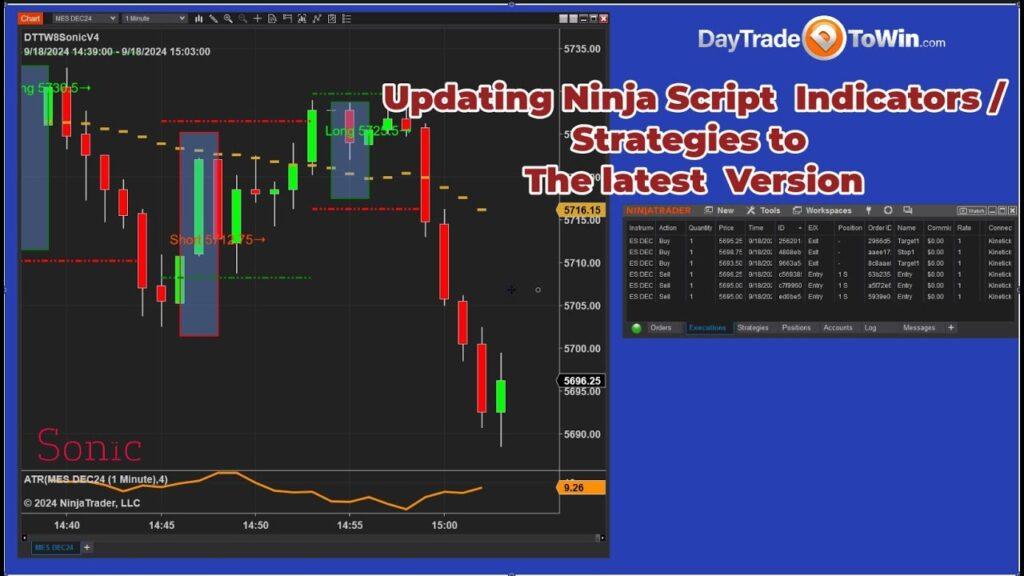
Keeping your NinjaTrader indicators and strategies up to date is crucial for efficient trading. In this guide, we’ll walk you through how to upgrade an indicator or strategy, such as the Sonic indicator, in just a few simple steps. Step 1: Remove the Old Indicator Before installing the new version, you need to remove the old one from both your charts and NinjaTrader’s system. Step 2: Import the Latest Version Now that the old version is gone, you can install the latest one. Step 3: Verify the Installation After importing the new version, double-check that everything is working correctly. Final Steps Once your licensing is confirmed and the new version is in place, you’re ready to start using the upgraded indicator or strategy. Remember, the only time you’ll need to update your Machine ID is if you’re using a different computer or if there’s been a major system update on your PC. By following these straightforward steps, you can easily upgrade any indicator or strategy in NinjaTrader. Should you run into any difficulties, reach out to support for help. Keep your tools up to date, and trade confidently with the latest versions! Happy trading! John PaulJohn Paul is the founder of DayTradeToWin, a trading education and software company established in 2008, supporting traders worldwide. His expertise focuses on price action-based futures trading strategies and structured market analysis. DayTradeToWin delivers trading education, indicators, and software tools designed to help traders apply disciplined, rule-based decision-making across global futures markets. He is the creator of multiple trading methodologies, including the Sonic System, Atlas Line, and Trade Scalper, which help traders identify structured opportunities in markets such as the E-mini S&P 500 (ES), Nasdaq (NQ), crude oil (CL), and gold (GC). Official website: https://daytradetowin.com daytradetowin.com
sonic trading
DayTradeToWin Review

Day Trading NASDAQ & E-mini S&P: Sonic Strategy

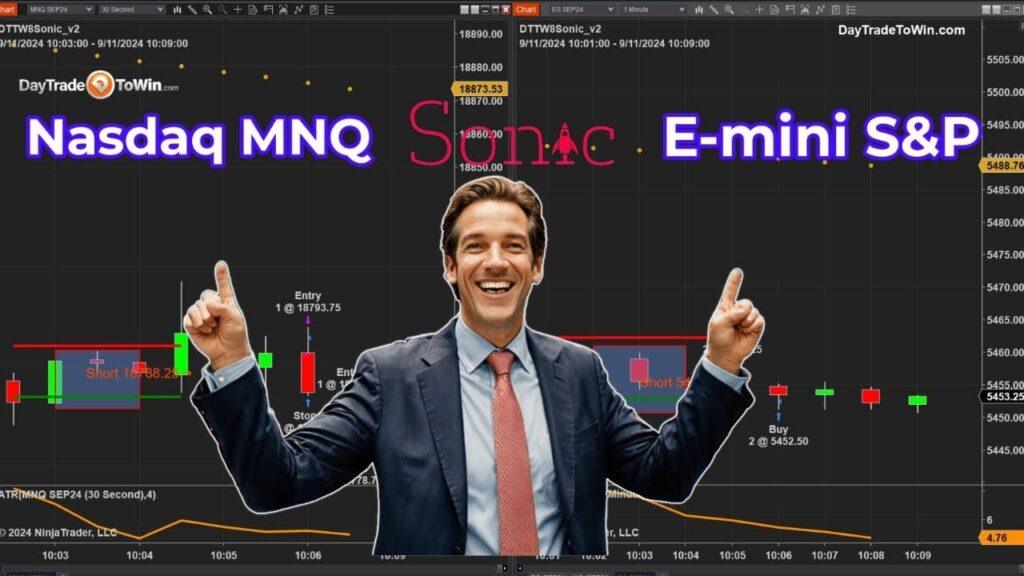
Hello traders! In today’s session, we’ll explore how to effectively trade both the NASDAQ and E-mini S&P 500 simultaneously using the Sonic Trading System. Whether you’re new to trading or an experienced pro, this guide will help you leverage price action strategies for success in fast-moving markets. What’s New with the Sonic Trading System? For those already using the Sonic Trading System, exciting updates are on the way! You’ll soon be able to customize the color of your targets, stops, and line thickness, based on the latest feedback from traders. This will improve your chart’s visual clarity and make it easier to execute trades swiftly. Expect this update by the end of the week! Risk Disclaimer: Trade Wisely Before we dive in, a quick reminder: trading involves risk. Only trade with money you can afford to lose, and ensure you understand the potential risks before entering the market. Why Use a 30-Second Chart for the NASDAQ? The NASDAQ is known for its volatility and speed, making it ideal for shorter timeframes like a 30-second chart. This allows you to capture quick price movements without holding positions for long periods. Many traders prefer the Sonic system for this market because it helps them make fast, decisive trades. Today, I’ll walk you through how to trade the NASDAQ and E-mini S&P side by side, giving you a clear view of how price action works in both markets. Executing a Short Trade on the Micro E-mini NASDAQ Let’s start with a short trade at 1877.25 in the Micro E-mini NASDAQ. Once you receive the entry signal, it’s crucial to adjust your targets and stops according to the Sonic system’s rules. You’ll see green and red lines on your chart representing your target and stop positions. In the upcoming system update, you can change these colors to suit your preference—for example, using yellow instead of green for targets. This flexibility helps you visually track your trades, especially in a fast-paced market like NASDAQ. Short Trade on the E-mini S&P 500 Next, we’ll look at a short trade on the E-mini S&P 500. While the S&P tends to move at a slower pace compared to the NASDAQ, the principles of the Sonic system still apply. Using a 1-minute chart for the E-mini, you’ll find that trades take a bit longer to generate, but they’re just as effective. Always aim for a better price when placing your trade. This is something we emphasize in the Sonic system training. A small improvement in entry price can make a big difference in your trade’s success. Managing Your Trades with the Sonic System A key aspect of trading with the Sonic system is time management. You should avoid staying in a trade for too long. The Sonic system’s time-based stops are designed to help you get out of unproductive trades quickly. Ideally, trades using short timeframes like the 30-second chart should last no more than 10-15 minutes. If the market isn’t moving in your favor by then, it’s better to exit and avoid unnecessary risk. Start Small and Scale Up Gradually If you’re new to the Sonic system, start with just one contract—whether it’s a micro or mini. This allows you to get comfortable with the process without exposing too much capital. As you gain confidence, you can scale up to two, three, or more contracts, depending on the market conditions. Starting small and gradually increasing your trade size is key to long-term success. Explore the Accelerated Mentorship Program If you want to take your trading to the next level, consider enrolling in our Accelerated Mentorship Program. This comprehensive package includes all our trading courses, proprietary software, and live training sessions, where we showcase the Sonic system in action. You’ll also get access to our live trading room, where you can see real-time examples of trades using the Sonic system and other strategies. The Sonic system, when combined with disciplined time management and a focus on price action, is a powerful tool for day traders. Whether you’re trading the NASDAQ, E-mini S&P, or another market, the key is to stay patient, follow your strategy, and avoid overtrading. Conclusion: Ready to Level Up Your Trading? If you’re interested in learning more about the Sonic Trading System, visit DayTradeToWin. You can sign up for a free membership and get access to our proprietary tools, including the Sonic system. Until next time, trade smart and happy trading! John PaulJohn Paul is the founder of DayTradeToWin, a trading education and software company established in 2008, supporting traders worldwide. His expertise focuses on price action-based futures trading strategies and structured market analysis. DayTradeToWin delivers trading education, indicators, and software tools designed to help traders apply disciplined, rule-based decision-making across global futures markets. He is the creator of multiple trading methodologies, including the Sonic System, Atlas Line, and Trade Scalper, which help traders identify structured opportunities in markets such as the E-mini S&P 500 (ES), Nasdaq (NQ), crude oil (CL), and gold (GC). Official website: https://daytradetowin.com daytradetowin.com

sonic
DayTradeToWin Review

Sonic System: Strategies to Recover from Trading Losses

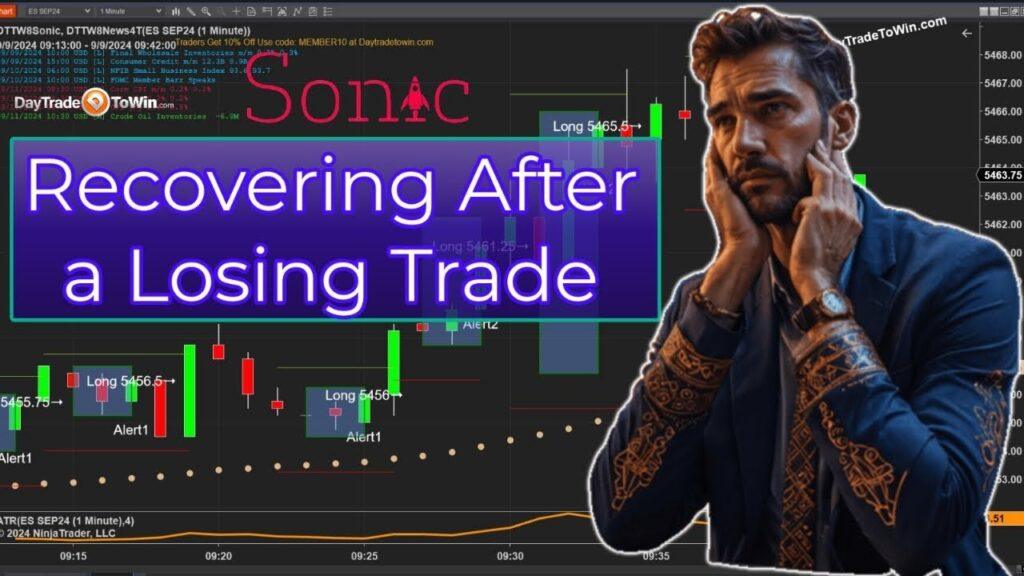
Today, we’re going to discuss an inevitable part of trading—losing trades—and more importantly, how to recover from them using the Sonic Trading System. Whether you’re a beginner or an experienced trader, losses are part of the process. However, how you manage these losses and recover is key to long-term success. Let’s break down a real trading scenario and learn from it. Facing a Losing Trade This morning, before the market opened, we had five successful trade signals between 9:15 and 9:35. These were winning trades based on Sonic’s signals. Yet, many traders fall into a common trap—they try to jump back into a trade they’ve missed. Don’t chase a trade after it’s gone. If you miss it, be patient and wait for the next signal. Now, here’s an example of a losing trade: I received a signal to go long at 5466, but instead of following the system’s suggested target, I aimed higher out of greed. This mistake cost me, as my target wasn’t hit, and I eventually got stopped out. The lesson here is simple—stick to the system. Deviating from the recommended target rarely ends well. The Danger of Overtrading One of the most common mistakes traders make is re-entering a trade after a loss. You may think you can make back your money by trying the same trade again, but this often leads to further losses. If you get stopped out, accept the loss and move on to the next trade without trying to force it. Recovering from a Loss Here’s where the Sonic Trading System really shines. After that initial loss, I refocused and followed the system exactly. The next trade was a winner, and by sticking to the plan, I began to recover. When recovering from a loss: This approach helped me recover after a single loss by following the system faithfully. Consistency is Key Another important point: If you’ve had a streak of 3, 4, or more winning trades in a row, consider stopping for the day. It’s tempting to keep trading, but more trades don’t necessarily mean more profits. Sometimes, the best move is to lock in your gains and return the next day. The Importance of Sticking to the Plan When you’re recovering from a losing trade, the temptation to adjust targets or stops is strong, but resist it. Stick to the system and trust the process. The Sonic Trading System is designed to avoid the kind of emotional flip-flop many traders struggle with. By sticking to the system, you can avoid unnecessary losses. Final Thoughts: Turn Losses into Lessons Losing trades are part of the journey, but how you respond is what matters. Stick to a solid strategy like the Sonic Trading System, and you’ll find that recovery is possible—even after a tough loss. It’s not about perfection; it’s about persistence and discipline. If you’re ready to elevate your trading game, consider joining the Accelerated Mentorship Program. You’ll get access to the Sonic Trading System and all of our exclusive tools designed to help you trade with confidence. Start your trading journey today! Visit daytradetowin.com for a free membership and get access to proven trading methods and software. John PaulJohn Paul is the founder of DayTradeToWin, a trading education and software company established in 2008, supporting traders worldwide. His expertise focuses on price action-based futures trading strategies and structured market analysis. DayTradeToWin delivers trading education, indicators, and software tools designed to help traders apply disciplined, rule-based decision-making across global futures markets. He is the creator of multiple trading methodologies, including the Sonic System, Atlas Line, and Trade Scalper, which help traders identify structured opportunities in markets such as the E-mini S&P 500 (ES), Nasdaq (NQ), crude oil (CL), and gold (GC). Official website: https://daytradetowin.com daytradetowin.com

Scroll to Top