
daytradetowin.com courses

Live Trade Breakdown: How $300 Was Made in Minutes Using Price Action Confirmation
DayTradeToWin Review

Live Trade Breakdown: How $300 Was Made in Minutes Using Price Action Confirmation

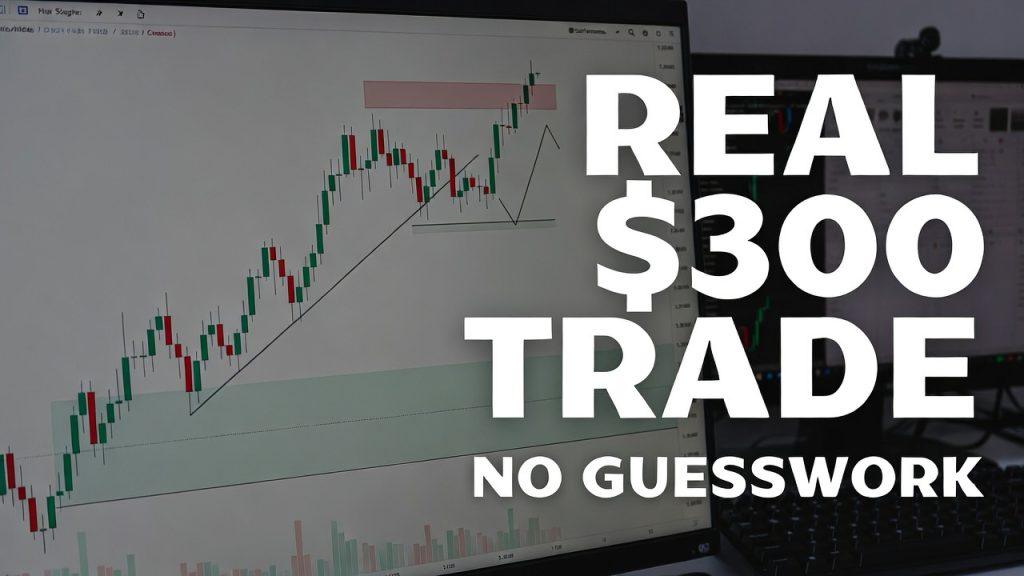
Live Trade Breakdown: How $300 Was Made in Minutes Using Price Action Confirmation In this article, I’m breaking down a real live trade where a $300 profit was achieved in just minutes by following price action, confirmation, and strict risk management rules. This was not a replay.This was not hindsight.This was a live execution, recorded in real time, using micro contracts on a one-minute chart. The purpose of this breakdown is not to impress — it’s to show how structured trading decisions work when rules are followed correctly. A Real-Time Trade — From Analysis to Exit Below, you’ll find the full live trade video that captures the entire process step by step — from identifying direction, confirming conditions, executing the entry, and managing the exit. Everything shown was done live using micro contracts on a one-minute timeframe. This approach focuses on clarity, alignment, and speed, not prediction. The Objective: A Fast, Controlled $300 Trade Before entering the market, the goal was clearly defined: There was no intention to overtrade or stay involved for an extended session. The focus was on precision execution, limited exposure, and fast feedback. Why Most Traders Get Stuck Many traders believe they lose because they don’t use enough indicators. In reality, most losses happen because indicators are misaligned or conflicting. Common problems include: More indicators don’t create better trades.Aligned indicators do. Reading Direction Before Taking Risk Before any position was entered, directional bias was evaluated. The Sonic system was producing long-only signals, with no short opportunities appearing. That information alone is critical. When the market is consistently pushing higher and attempting to test prior highs, it provides context. Direction becomes clear, and decision-making becomes simpler. Fighting that type of structure usually leads to unnecessary losses. The Confirmation Stack Used The confirmation process for this trade was intentionally simple: The purpose of confirmation is not to generate more trades — it’s to filter out bad ones. In this case, every tool was aligned to the long side with no conflict. That’s the environment where high-quality trades tend to appear. Executing the Entry Once confirmation was in place, a long position was entered using micro contracts on a one-minute chart. 🎥 Watch the live trade here:https://youtu.be/qElrTRd_HKU The execution rules were straightforward: The rules were followed exactly as designed. Risk Management and Time Exposure For this type of setup, the goal is minimal time in the market — typically five minutes or less. Shorter exposure offers several advantages: In this trade, price moved in the intended direction almost immediately, which is often a sign of strong alignment with trend and momentum. Evaluating Signal Quality One important detail in this setup was signal progression. Each Sonic and Trade Scalper signal was: That progression matters. Early, aligned signals tend to offer better follow-through than late-stage signals deep into a move. If the market had already produced numerous consecutive long signals, caution would have been higher. In this case, the trend was still healthy. The Outcome: $300 Secured Before 10 AM The profit target was reached cleanly. The position was closed before 10:00 AM New York time, illustrating how structured trading can produce results without spending all day in front of the screen. Tools Used in the Trade The primary tools used were: Everything shown on the chart is included inside Accelerated Mentorship, available with both monthly and lifetime access options. Final Thoughts Trading offers unique opportunities — profits can happen quickly, but so can losses. That’s why structure, confirmation, and risk control matter far more than excitement, prediction, or impulse. If you want to learn how to trade using the same rules-based approach demonstrated in this live example, start by creating a free DayTradeToWin member account and learning price action the right way. I’ll see you in class. Accelerated Mentorship+ — All-Inclusive Trading ProgramComplete instruction. Live training. Proven structure. To learn how DayTradeToWin traders approach market structure using price-based logic: 👉 Visit https://daytradetowin.com/👉 Create a free member account👉 Access trials and proprietary tools👉 Explore Accelerated Mentorship for full access to all software and training We don’t rely on lagging indicators.We focus on reading the market itself. John PaulJohn Paul is the founder of DayTradeToWin, a trading education and software company established in 2008, supporting traders worldwide. His expertise focuses on price action-based futures trading strategies and structured market analysis. DayTradeToWin delivers trading education, indicators, and software tools designed to help traders apply disciplined, rule-based decision-making across global futures markets. He is the creator of multiple trading methodologies, including the Sonic System, Atlas Line, and Trade Scalper, which help traders identify structured opportunities in markets such as the E-mini S&P 500 (ES), Nasdaq (NQ), crude oil (CL), and gold (GC). Official website: https://daytradetowin.com daytradetowin.com
Learn how to trade sideways and range-based markets using price action, structure, and confirmation instead of lagging indicators or guesswork.
DayTradeToWin Review

How to Navigate Sideways Markets Using Price Action and Structure

Sideways market conditions are where many traders struggle — not because trades don’t exist, but because expectations are misaligned. When the market stops trending and begins rotating, traditional breakout strategies lose effectiveness. Instead of clean follow-through, traders encounter hesitation, reversals, and false moves. The answer isn’t more tools — it’s learning how to read structure and context. In this article, we’ll explain how to trade range-based market environments using price action, support and resistance, and confirmation tools such as Sonic, Atlas Line, and Trade Scalper — without relying on lagging indicators or prediction. Why Rotational Markets Are Often Misread Sideways markets aren’t random — they operate within defined boundaries. Typical signs include: When traders fail to recognize these conditions, they often: Consistency begins with recognizing when price is rotating rather than expanding. Step One: Establish the Market Boundaries Before considering any trade, step back and define the range. Ask:Is price moving directionally — or cycling between levels? A rotational market usually shows: Once these areas are identified, they become the framework for decision-making. Two Effective Ways to Trade a Range When price is rotating, there are only two logical trade approaches. 1️⃣ Wait for Confirmed Expansion Occasionally, a range transitions into a directional move — but only with confirmation. A valid expansion requires: If price briefly moves beyond a level and then stalls, it’s a test — not a breakout. Entering without confirmation increases risk. 2️⃣ Trade the Rotation Between Levels Most opportunities in sideways markets occur inside the range, not at the extremes. Instead of guessing reversals: Markets naturally revisit previously traded areas. Trading toward these zones often provides higher probability than reacting directly at the boundary. Using the Atlas Line to Evaluate Structure The Atlas Line helps traders assess how price is behaving within the range. It assists in evaluating: When Atlas Line signals align with downward rotation, expectations shift toward movement into support — not necessarily a breakdown. This keeps trade objectives realistic and controlled. Trade Management: Let Time Guide Decisions Time is one of the most underutilized decision-making tools in trading. On lower timeframes: Exiting early during choppy conditions isn’t a mistake — it’s disciplined execution. Small gains and controlled exits prevent unnecessary losses. Why Confirmation Improves Decision-Making Sideways markets demand confirmation, not assumptions. Combining tools helps traders: A structured approach may include: The goal isn’t more signals — it’s alignment. Common Errors in Range-Based Conditions 🚫 Trading every signal🚫 Entering directly at support or resistance🚫 Chasing failed breakouts🚫 Holding trades that lose momentum🚫 Averaging into losing positions Instead: Final Takeaway Not every market session supports trending strategies. Some days are: Consistency comes from adapting to market conditions, not forcing trades. By learning to read price action, define structure, and use confirmation, traders can either participate effectively — or confidently step aside. Both are professional choices. Learn More To learn how DayTradeToWin traders approach market structure using price-based logic: 👉 Visit https://daytradetowin.com/👉 Create a free member account👉 Access trials and proprietary tools👉 Explore Accelerated Mentorship for full access to all software and training We don’t rely on lagging indicators.We focus on reading the market itself. John PaulJohn Paul is the founder of DayTradeToWin, a trading education and software company established in 2008, supporting traders worldwide. His expertise focuses on price action-based futures trading strategies and structured market analysis. DayTradeToWin delivers trading education, indicators, and software tools designed to help traders apply disciplined, rule-based decision-making across global futures markets. He is the creator of multiple trading methodologies, including the Sonic System, Atlas Line, and Trade Scalper, which help traders identify structured opportunities in markets such as the E-mini S&P 500 (ES), Nasdaq (NQ), crude oil (CL), and gold (GC). Official website: https://daytradetowin.com daytradetowin.com
How to Identify Trade Direction with Price Action and Confirmation
DayTradeToWin Review

How to Identify Trade Direction with Price Action and Confirmation

One of the defining traits of consistent traders is their ability to correctly identify market direction before committing to a trade. The real question isn’t which indicator is signaling — it’s who currently controls price movement. Are buyers driving the market, or are sellers applying pressure? In this article, we’ll break down how traders determine whether to enter long or short positions using price behavior, confirmation tools, and structured decision-making — without relying on prediction or lagging indicators. Why Direction Is the Foundation of Every Trade Every trading decision begins with bias. Entering trades against the dominant side of the market creates unnecessary risk. Many losses occur not because entries are poorly timed, but because trades are taken in the wrong direction. Clear decision-making requires alignment between: When these elements work together, trade execution becomes more controlled and repeatable. Interpreting Market Bias Through Price Behavior Price action reveals how the market is behaving in real time. Instead of reacting to delayed signals, traders focus on: In the example discussed, price behavior clearly favored sellers: When price behavior supports a specific direction, aligning trades with that bias becomes the logical choice. Defining Direction with the Sonic System The Sonic system removes ambiguity by clearly defining trade direction. It is designed to: In this scenario, Sonic consistently signaled downside bias, effectively eliminating long trade opportunities and simplifying the decision-making process. Strengthening Trades with Atlas Line Confirmation Confirmation plays an important role in improving trade quality. The Atlas Line acts as a secondary validation tool by: When Sonic and Atlas Line align in the same direction, confidence in the setup increases. While confirmation isn’t required for every trade, it can significantly improve consistency — particularly in fast-moving or volatile conditions. Risk Management and Trade Duration Successful trades are defined by structure, not optimism. Structured Risk Planning Before entering any position: In this example, trade expectations were balanced and clearly defined before entry. Evaluating Time in the Trade Time provides valuable feedback. If a trade: Those conditions alone may justify an exit — especially in short-term trading environments. In this case, price moved efficiently toward its target, confirming strong directional follow-through. Practical Rules for Directional Trading Traders can improve consistency by following a few simple guidelines: Final Perspective Deciding whether to trade long or short doesn’t require forecasting — it requires clarity and structure. By emphasizing: Traders can approach the market with greater confidence, discipline, and consistency. Learn More To learn how traders apply price action and confirmation in real trading environments: 👉 Visit https://daytradetowin.com👉 Create a free member account👉 Access trials, including the ABC software👉 Explore proprietary tools like the Sonic system For traders looking for an all-in-one solution, Accelerated Mentorship provides complete access to software and training in a structured program. John PaulJohn Paul is the founder of DayTradeToWin, a trading education and software company established in 2008, supporting traders worldwide. His expertise focuses on price action-based futures trading strategies and structured market analysis. DayTradeToWin delivers trading education, indicators, and software tools designed to help traders apply disciplined, rule-based decision-making across global futures markets. He is the creator of multiple trading methodologies, including the Sonic System, Atlas Line, and Trade Scalper, which help traders identify structured opportunities in markets such as the E-mini S&P 500 (ES), Nasdaq (NQ), crude oil (CL), and gold (GC). Official website: https://daytradetowin.com daytradetowin.com
How to Build High-Probability Trades Using Indicator Confluence
DayTradeToWin Review

Building High-Probability Trades Through Indicator Confluence

Many traders assume that adding more indicators automatically improves results. In reality, the opposite often happens. Without structure, additional indicators create conflicting signals, hesitation, and uncertainty. The issue isn’t the number of tools on the chart — it’s how those tools are organized and how they relate to price action. In this article, I’ll explain how I layer multiple indicators in a structured way to create confirmation-based trades that are clear, disciplined, and repeatable. Why More Indicators Often Make Trading Harder Most traders apply indicators without assigning them specific roles. When every tool is treated as equally important, charts become cluttered and signals begin to contradict one another. This commonly results in: Indicators should enhance clarity — not compete for attention. Price Action Is the Starting Point Before any indicator is evaluated, price behavior must make sense. Indicators do not lead the market. They respond to it. If price structure is unclear: Every trade must begin with: Indicators only become useful after these elements are defined. Understanding Indicator Roles: Leading vs Confirming Not all indicators are designed to do the same job. Assigning clear roles prevents signal conflict and confusion. Leading Indicators Leading tools help anticipate potential price behavior by: They answer:“Where might price react?” Confirming Indicators Confirming tools validate what price is already expressing: They answer:“Is price behavior supported?” When traders mix these functions, signals overlap and clarity disappears. How I Layer Indicators Without Creating Noise The objective is confluence, not complexity. Instead of stacking indicators endlessly, I focus on: Every indicator on the chart must: If a tool doesn’t improve decision-making, it’s removed. Why Confluence Improves Trade Execution When multiple tools independently confirm the same idea, execution becomes easier. Traders typically experience: Confidence doesn’t come from certainty — it comes from agreement between tools and price. A Framework Built for Price-Action Traders This approach is best suited for traders who: Indicators are not shortcuts — they are filters that refine decisions. Final Perspective Most traders don’t need additional indicators.They need better organization, clearer roles, and stronger alignment. When indicators are combined with intent: If you choose to use indicators, use them deliberately — not decoratively. John PaulJohn Paul is the founder of DayTradeToWin, a trading education and software company established in 2008, supporting traders worldwide. His expertise focuses on price action-based futures trading strategies and structured market analysis. DayTradeToWin delivers trading education, indicators, and software tools designed to help traders apply disciplined, rule-based decision-making across global futures markets. He is the creator of multiple trading methodologies, including the Sonic System, Atlas Line, and Trade Scalper, which help traders identify structured opportunities in markets such as the E-mini S&P 500 (ES), Nasdaq (NQ), crude oil (CL), and gold (GC). Official website: https://daytradetowin.com daytradetowin.com

autopilot
DayTradeToWin Review

AutoPilot System: Stops, Targets & Risk Control

What if your trading system could enter, manage, and exit trades for you — automatically? No emotional decisions.No overtrading.No staring at charts all day. In a live market session, our Autopilot Trading System did exactly that — hitting a $500 daily profit target trading just one E-mini S&P contract, then shutting itself off for the day. Here’s exactly how it works — and why this approach is changing how our traders operate. What Is the Autopilot Trading System? The Autopilot Trading System is a fully automated futures trading solution designed for: Once activated, the system automatically: It trades 100% rules-based and emotion-free. A Live Example: $500 and Done In this live session: The system: No overtrading. No second-guessing. No stress. Why This System Works So Well Fully Automated Execution The Autopilot: If the market moves up, it looks for buys.If the market moves down, it looks for sells. Built-In Risk Control You control: This prevents the most common trader mistake: Making money early — then giving it all back later. Once your goal is reached, the system closes all trades and shuts down automatically. Customizable for Any Trader Whether you are: The system can be tuned to match your style. We even provide optimized presets for: Start With Micros (Strongly Recommended) New traders should start with Micro contracts: Then scale up as confidence and consistency grow. Why Automation Beats Emotional Trading Humans: The Autopilot: That’s how real consistency is built. How To Get the Autopilot Trading System The Autopilot Trading System is included with: ✅ Accelerated Mentorship (Monthly or Lifetime)✅ Full access to all proprietary software✅ Sonic System✅ ABC Software✅ Professional training and support Start Free Today Create a FREE member account and get access to: We focus on price action, not lagging indicators. Final Thoughts In one short live session: That’s how modern trading should work: Structured. Disciplined. Automated. 👉 Get Started Now John PaulJohn Paul is the founder of DayTradeToWin, a trading education and software company established in 2008, supporting traders worldwide. His expertise focuses on price action-based futures trading strategies and structured market analysis. DayTradeToWin delivers trading education, indicators, and software tools designed to help traders apply disciplined, rule-based decision-making across global futures markets. He is the creator of multiple trading methodologies, including the Sonic System, Atlas Line, and Trade Scalper, which help traders identify structured opportunities in markets such as the E-mini S&P 500 (ES), Nasdaq (NQ), crude oil (CL), and gold (GC). Official website: https://daytradetowin.com daytradetowin.com

sonic
DayTradeToWin Review

Sonic Trading Strategy: How to Profit in Slow Markets

Even in a slow, half-day holiday session, disciplined price action trading continues to deliver results. On Monday’s shortened trading day, the Sonic System generated six trade signals, producing five completed winning trades before the market closed early for the federal holiday. With liquidity reduced and volatility muted, the session provided a textbook example of how professional traders adapt strategy and timeframe to changing market conditions — and why structure-based systems outperform indicator-driven approaches. Trading a Holiday Session: Why Timeframe Matters Holiday sessions are known for: To adjust, traders using the Sonic System shifted to a 5-minute chart rather than the 1-minute chart typically used in higher-volatility conditions. The longer timeframe allows price more room to develop and creates more realistic profit targets when the market is moving slowly. Despite the quiet conditions, the system delivered: Market Structure: Why a Gap Fill Is Likely Comparing Friday’s close to Monday’s open reveals a clear price gap. From a technical perspective: The current structure suggests the market may attempt to fill the gap as early as Tuesday or Wednesday. As a result, the trading plan remains focused on long opportunities, guided by the Sonic System, Atlas Line, and Roadmap tools. Why the Sonic System Performs in All Market Conditions Whether markets are: The Sonic System is built around: This allows traders to stay synchronized with the market rather than reacting to lagging indicators. Part of the DayTradeToWin Professional Trading Suite The Sonic System integrates with the full DayTradeToWin ecosystem, including: Together, these tools help traders: Learning the Professional Approach Traders looking to move beyond indicator-based strategies can now access the Accelerated Mentorship Program, which includes: New traders can also start with a free member account at daytradetowin.com, which includes trial access to select tools, including the ABC software. Outlook Monday’s session reinforced a simple principle: Even in low-volume markets, structure and discipline create opportunity. With the market showing a bullish structure and a gap likely to be filled, attention now turns to the next sessions, where the Sonic System will continue to guide trade decisions through price action and market structure. John PaulJohn Paul is the founder of DayTradeToWin, a trading education and software company established in 2008, supporting traders worldwide. His expertise focuses on price action-based futures trading strategies and structured market analysis. DayTradeToWin delivers trading education, indicators, and software tools designed to help traders apply disciplined, rule-based decision-making across global futures markets. He is the creator of multiple trading methodologies, including the Sonic System, Atlas Line, and Trade Scalper, which help traders identify structured opportunities in markets such as the E-mini S&P 500 (ES), Nasdaq (NQ), crude oil (CL), and gold (GC). Official website: https://daytradetowin.com daytradetowin.com

Scroll to Top