
daytrading

barclays
Market News

Barclays: Fed Rate Hikes Unlikely, But Risks Remain

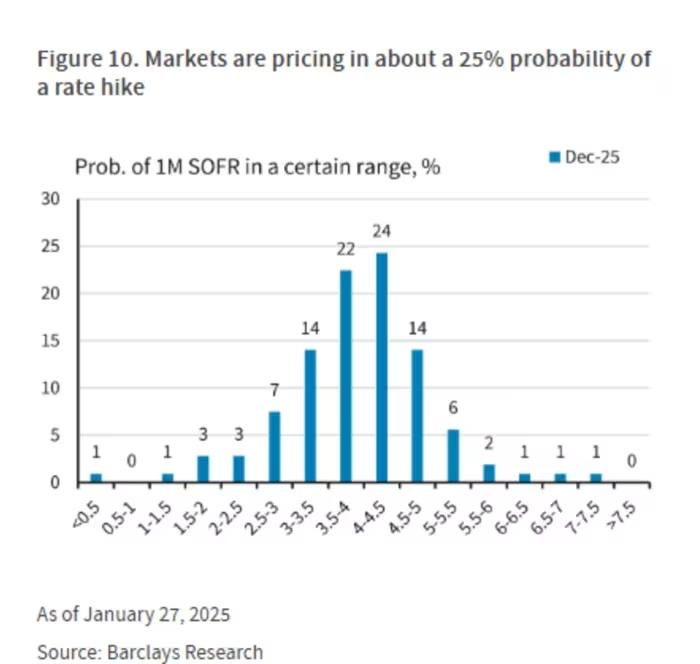
While the Federal Reserve is expected to keep interest rates steady on Wednesday, speculation about potential hikes has resurfaced. Analysts at Barclays still anticipate a gradual decline in rates through 2025 but acknowledge that a rate hike isn’t entirely off the table. Options markets currently price in a 25% chance of an increase. “The threshold for the Fed to reverse its rate-cutting course is high,” Barclays’ macro research team noted in a client report Tuesday. “Such a move could damage the Fed’s credibility.” However, they warned that a shift in economic conditions—such as a renewed surge in inflation, rising inflation expectations, or a sharp drop in unemployment—could prompt policymakers to reconsider. Lessons from Past Fed Reversals Barclays examined three historical cases where the Fed reversed course and raised rates: In all instances, labor market strength and a steepening yield curve were major drivers. Market Implications The 10-year Treasury yield (4.52%) has already climbed above the 3-month yield (4.29%), reflecting confidence in economic resilience but also concerns over potential inflationary pressures under a second Trump administration. Short-term yields initially declined when the Fed began cutting rates in September and December, bringing its policy rate to 4.25%–4.50%—a full percentage point below its peak. If the Fed signals a possible hike, Barclays expects the 2-year and 10-year Treasury yields to exceed 5%, which could weigh on equities. The bank previously warned that a 10-year yield at 5% could be problematic for stocks. Treasury Market & Liquidity Shifts A shift toward rate hikes could trigger a repricing in short-term Treasury rates, further expanding the $7 trillion money-market fund industry while pressuring bank deposits. The Road Ahead Despite the uncertainty, market sentiment still leans toward additional rate cuts in 2025. As of Tuesday, Fed-funds futures traders were pricing in a 50-basis-point cut this year, up from 25 basis points the prior week, per the CME FedWatch Tool. Investors will be closely watching Fed Chair Jerome Powell’s press conference on Wednesday and Friday’s release of the December personal consumption expenditures (PCE) index, the Fed’s preferred inflation gauge. John PaulJohn Paul is the founder of DayTradeToWin, a trading education and software company established in 2008, supporting traders worldwide. His expertise focuses on price action-based futures trading strategies and structured market analysis. DayTradeToWin delivers trading education, indicators, and software tools designed to help traders apply disciplined, rule-based decision-making across global futures markets. He is the creator of multiple trading methodologies, including the Sonic System, Atlas Line, and Trade Scalper, which help traders identify structured opportunities in markets such as the E-mini S&P 500 (ES), Nasdaq (NQ), crude oil (CL), and gold (GC). Official website: https://daytradetowin.com daytradetowin.com

stocks
Market News

Skip Expensive Stocks: Bet on These Sectors

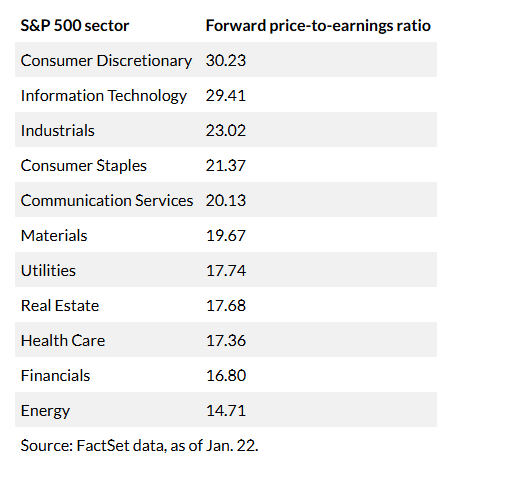
The start of President Donald Trump’s second term has sparked a robust rally, driving the S&P 500 stocks to record highs and stretching market valuations to historic levels. Investors are now exploring alternatives to megacap technology stocks, seeking more affordable opportunities that could still benefit from the administration’s early policy actions. This week, the forward price-to-earnings (P/E) ratio of the S&P 500 rose above 22, nearing its highest point in nearly four years. The last time it exceeded this level was in November, when the ratio reached 22.34, the highest since December 2020, according to Dow Jones Market Data. The P/E ratio—a key metric that compares a stock’s price to its earnings per share—can signal overvaluation. A high ratio suggests that stock prices may have outpaced their underlying earnings, raising concerns about sustainability. Elevated Valuations Raise Questions Jamie Dimon, CEO of JPMorgan Chase, expressed caution about current market conditions. In an interview with CNBC during the World Economic Forum in Davos, Switzerland, he remarked that asset prices are “in the top 10% or 15%” of historical valuations, describing them as “kind of inflated, by any measure.” Given these lofty valuations, analysts suggest turning to less speculative, fundamentally strong sectors that could thrive under a Trump-led economy. With a resilient U.S. economy and optimism surrounding advancements in artificial intelligence, certain areas of the market may offer attractive opportunities. Promising Market Sectors Financials Financial stocks, though no longer as inexpensive as earlier in 2024, still hold appeal. With solid economic prospects, analysts anticipate increased bank loan activity, mergers and acquisitions, and IPOs. These trends, combined with Trump’s deregulation agenda, create a favorable environment for the financial sector, which was one of 2024’s top performers. Industrials Industrial stocks are gaining momentum, with Wall Street forecasting double-digit earnings growth in 2025. Additionally, economic stimulus measures in China are expected to boost demand within this cyclical sector. Utilities The utilities sector also looks compelling, driven by the administration’s $500 billion Stargate initiative aimed at supporting AI infrastructure. This project is expected to drive significant electricity demand, providing a tailwind for utility companies. The Role of Big Tech in 2025 Despite their elevated valuations, megacap technology stocks remain a focal point for investors. The so-called “Magnificent Seven” are projected to continue delivering strong earnings growth, albeit at a slower pace compared to recent years. According to Mark Luschini, chief investment strategist at Janney Montgomery Scott, these tech giants will likely remain the primary drivers of market performance in 2025. However, for the broader S&P 500 to advance, the market must rely on actual earnings growth rather than further expansion of already high valuations. Katie Nixon, CIO at Northern Trust, noted that while robust earnings growth is expected in 2025, high interest rates could act as a headwind, potentially offsetting some of the market’s gains. Market Snapshot On Thursday, U.S. stocks delivered mixed results. The S&P 500 edged up 0.2% to another record high, while the Dow Jones Industrial Average gained 0.8%. Meanwhile, the Nasdaq Composite dipped 0.2%, according to FactSet data. President Trump’s calls for lower interest rates and reduced oil prices continue to influence market sentiment. John PaulJohn Paul is the founder of DayTradeToWin, a trading education and software company established in 2008, supporting traders worldwide. His expertise focuses on price action-based futures trading strategies and structured market analysis. DayTradeToWin delivers trading education, indicators, and software tools designed to help traders apply disciplined, rule-based decision-making across global futures markets. He is the creator of multiple trading methodologies, including the Sonic System, Atlas Line, and Trade Scalper, which help traders identify structured opportunities in markets such as the E-mini S&P 500 (ES), Nasdaq (NQ), crude oil (CL), and gold (GC). Official website: https://daytradetowin.com daytradetowin.com
markets
Market News

A Monster Vibe Shift in Markets: Insights from a Top Strategist

Demand for Bullish Equity Options Signals Renewed Optimism in Markets The S&P 500 (SPX) narrowly missed hitting a new all-time high on Wednesday, though Thursday’s early indicators point to a softer start. In a bullish turn, Nomura strategist Charlie McElligott suggests a potential “melt-up” could be underway. Known for his accurate market calls—including the post-election rally and recent reversals in crowded trades on the U.S. dollar and bonds—McElligott sees a notable shift in investor sentiment. He highlights a transition from bearish put options used for downside hedging to increased interest in bullish call options on stocks. This shift in options trading could signal the early stages of another rally. Another factor adding fuel to the bullish case is the activity of volatility-controlled funds. McElligott estimates these funds could deploy roughly $40 billion into S&P 500 futures, thanks to the recent calming of market swings. These funds, designed to reduce portfolio volatility, tend to increase equity exposure as market conditions stabilize. The S&P 500’s five-day realized volatility has fallen significantly, from 22.2 to 8.7, reflecting this trend. This changing landscape has sparked renewed interest in growth sectors, including Big Tech, AI, semiconductors, small-cap stocks (IWM), and gold (GC00). Despite the optimism, McElligott offers a word of caution. The aggressive buying by volatility-controlled funds and other investors may lead to market instability, potentially disrupting a steady upward trajectory and introducing more erratic price movements. In summary, growing demand for equity call options and a decline in market volatility are driving a more bullish sentiment, but investors should remain vigilant for signs of volatility returning to the markets. John PaulJohn Paul is the founder of DayTradeToWin, a trading education and software company established in 2008, supporting traders worldwide. His expertise focuses on price action-based futures trading strategies and structured market analysis. DayTradeToWin delivers trading education, indicators, and software tools designed to help traders apply disciplined, rule-based decision-making across global futures markets. He is the creator of multiple trading methodologies, including the Sonic System, Atlas Line, and Trade Scalper, which help traders identify structured opportunities in markets such as the E-mini S&P 500 (ES), Nasdaq (NQ), crude oil (CL), and gold (GC). Official website: https://daytradetowin.com daytradetowin.com

Stock Buybacks
Market News

Trump’s Economic Agenda: Cutting Back on Stock Buybacks

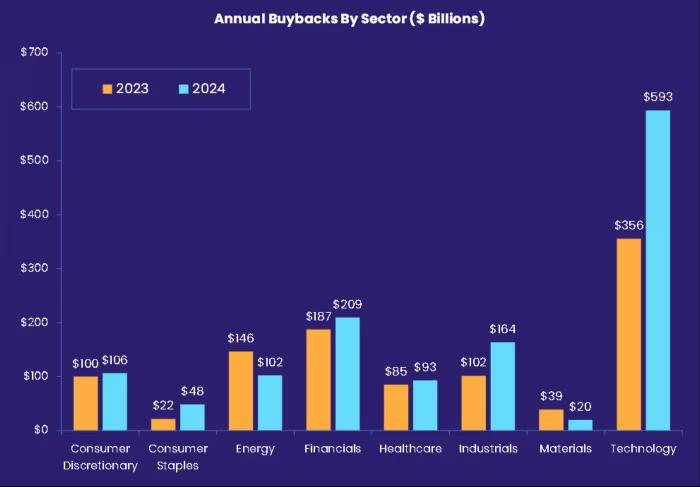
Tech Companies Ramp Up Stock Buybacks Despite Energy-Intensive Operations Tech companies have significantly increased their stock buybacks programs in recent years, prioritizing shareholder returns even as the industry’s energy demands continue to soar. Innovations like artificial intelligence (AI) and cloud computing require enormous amounts of energy to power data centers and support technological advancements, adding to the sector’s operational challenges. During Donald Trump’s second term, the administration’s “America First” policies focused on energy deregulation and revitalizing domestic industries. These priorities aimed to reduce costs and boost economic growth by leveraging abundant energy resources. However, experts from TS Lombard emphasized that achieving these goals would require U.S. companies to redirect more capital into infrastructure, equipment, and technology development rather than prioritizing stock buybacks and dividends. Steven Blitz, chief U.S. economist at TS Lombard, pointed out the dilemma: “Buybacks improve short-term returns on equity, which supports stock prices, but they divert funds from long-term investments crucial for growth.” In 2023, companies in the S&P 500 announced a record $1.34 trillion in buybacks, with nearly 70% of their internal funds going toward rewarding shareholders instead of reinvesting in growth-oriented initiatives. While tech firms have led buyback programs, they are also at the forefront of energy consumption due to their push to dominate AI and other high-demand technologies. Blitz noted that expanding energy infrastructure could indirectly benefit these companies by supporting the data-center growth necessary for the U.S. to maintain its leadership in emerging technologies. The challenge lies in finding a balance. While buybacks can enhance stock valuations in the short term, the tech sector’s reliance on energy underscores the importance of investing in sustainable infrastructure and innovation to secure long-term growth and competitiveness. John PaulJohn Paul is the founder of DayTradeToWin, a trading education and software company established in 2008, supporting traders worldwide. His expertise focuses on price action-based futures trading strategies and structured market analysis. DayTradeToWin delivers trading education, indicators, and software tools designed to help traders apply disciplined, rule-based decision-making across global futures markets. He is the creator of multiple trading methodologies, including the Sonic System, Atlas Line, and Trade Scalper, which help traders identify structured opportunities in markets such as the E-mini S&P 500 (ES), Nasdaq (NQ), crude oil (CL), and gold (GC). Official website: https://daytradetowin.com daytradetowin.com
Stock Investors
Market News

The Trump Effect 2.0: What Stock Investors Have Yet to Price In

Trump’s Second Term Begins: Markets Brace for Turbulence As Donald Trump officially begins his second term as president on January 20, the nation is watching how his administration will approach the ambitious economic and policy promises made during his campaign. Trump’s pledges on issues like immigration, trade, and even cryptocurrency captured headlines, but his economic agenda remains the cornerstone of his support base and a focal point for Wall Street. Investors are anticipating a period of uncertainty as Trump’s policies begin to take shape. Many experts suggest that the market has not yet fully accounted for the potential impacts of his initiatives. “I don’t think it’s priced in,” said Craig Sterling, head of U.S. equity research at Amundi U.S. “The market is going to pay for what it can see.” Market Reactions Ahead of Inauguration In the week leading up to Trump’s inauguration, the Dow Jones Industrial Average rose 3.7%, while the S&P 500 gained 2.9% and the Nasdaq Composite climbed 2.5%, according to Dow Jones market data. However, these figures represent the weakest post-election rally between Election Day and Inauguration Day since Barack Obama’s 2009 presidency during the global financial crisis. With reports suggesting that Trump plans to issue roughly 100 executive orders shortly after taking office, three key policy areas are dominating investor attention: tariffs, deregulation, and corporate tax reform. Tariffs: A Double-Edged Sword Trade policy, particularly tariffs, has been a hallmark of Trump’s platform. He has floated the idea of imposing 25% tariffs on imports from Mexico and Canada and 10% tariffs on Chinese goods, signaling potential tension with key trading partners. A report by Boston Consulting Group estimates that such tariffs could add $640 billion in costs to imports from major trade partners, significantly impacting industries reliant on global supply chains. Sectors like automotive manufacturing, apparel, and consumer electronics are particularly vulnerable to these cost increases. The ripple effects could extend beyond businesses reliant on imports. Investors are concerned that steep tariffs might drive inflation, undoing recent Federal Reserve efforts to stabilize price levels. “Some of the tariff fears have contributed to inflation risk and upward pressure on interest rates,” noted Mike Dickson, head of research at Horizon Investments. Deregulation: Boosting Business Confidence Trump’s push for deregulation aims to unleash economic growth by reducing government oversight. His stated goal of eliminating ten regulations for every new one introduced has generated optimism, particularly in the financial and energy sectors. Financial institutions stand to benefit significantly from less regulatory scrutiny. The S&P 500 Financials Sector Index surged 6.2% following Trump’s 2024 election win, with financial stocks continuing to rally in anticipation of regulatory rollbacks. Additionally, looser environmental regulations could provide a boost to the energy, materials, and industrial sectors. Corporate Tax Reform: Lower Rates on the Horizon Trump’s administration is also expected to focus on extending and deepening the tax cuts introduced in 2017, which lowered the corporate tax rate to 21%. Trump has proposed further reducing the rate to 15%, a move that could improve corporate profitability and investor sentiment. Jonathan Coleman, a portfolio manager at Janus Henderson Investors, emphasized the potential upside for smaller companies. “We expect small-cap earnings growth could exceed that of large caps in 2025, aided by easier earnings comparisons,” he said, highlighting the sensitivity of smaller firms to domestic policy changes. Looking Ahead While Trump’s policy announcements may bring clarity to some areas, their economic impacts will take time to materialize. “The U.S. economy isn’t a speedboat—it’s a massive supertanker,” said Adrian Helfert, chief investment officer at Westwood Holdings Group. “Even with the most aggressive policy changes, turning this ship takes time.” Although markets are closed on Inauguration Day for Martin Luther King Jr. Day, investors are bracing for volatility during the shortened trading week. Whether Trump’s second-term agenda will lead to sustained economic growth or market disruptions remains uncertain, but one thing is clear: the next few months will be critical in shaping the trajectory of both policy and market performance. John PaulJohn Paul is the founder of DayTradeToWin, a trading education and software company established in 2008, supporting traders worldwide. His expertise focuses on price action-based futures trading strategies and structured market analysis. DayTradeToWin delivers trading education, indicators, and software tools designed to help traders apply disciplined, rule-based decision-making across global futures markets. He is the creator of multiple trading methodologies, including the Sonic System, Atlas Line, and Trade Scalper, which help traders identify structured opportunities in markets such as the E-mini S&P 500 (ES), Nasdaq (NQ), crude oil (CL), and gold (GC). Official website: https://daytradetowin.com daytradetowin.com

S&P 500
Market News

Broad Market Rally Pushes S&P 500 Higher Pre-Inauguration

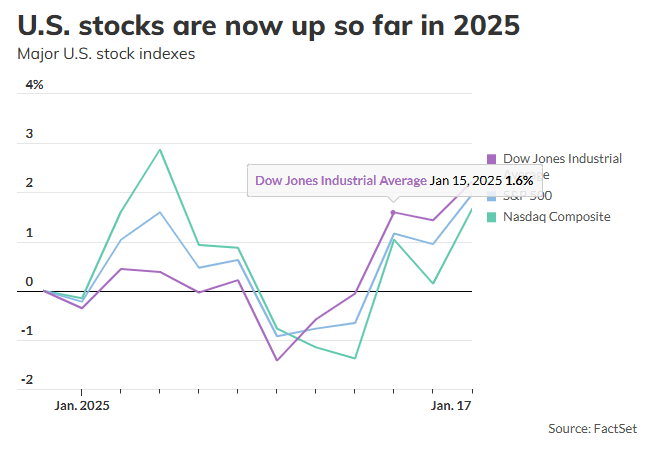
The U.S. stock market extended its rally this week, with all S&P 500 sectors closing higher as a decline in bond yields eased concerns about recent sharp increases in interest rates. The S&P 500, Dow Jones Industrial Average, and Nasdaq Composite each posted weekly gains, lifting all three indexes into positive territory for January, according to FactSet data. The S&P 500 and Dow achieved their largest weekly rallies since the week of Donald Trump’s 2016 election victory. “What’s encouraging is that the equal-weighted S&P is leading,” said Louis Navellier, Chief Investment Officer at Navellier, in a Friday email. This reflects a broadening market rally, bolstered by a significant drop in interest rates. The Invesco S&P 500 Equal Weight ETF, which gives each stock in the index an equal allocation, outpaced the traditional market-cap-weighted S&P 500, signaling broader participation in the rally. After a rocky start to 2025 fueled by rising Treasury yields, the market appears to be gaining momentum ahead of Donald Trump’s upcoming inauguration. Financials, energy, and materials were the top-performing sectors in the S&P 500 this week, each rising around 6%, according to FactSet. Financial stocks rallied on strong earnings reports from major banks, including Citigroup, Goldman Sachs, and Morgan Stanley, which each climbed about 12% for the week. “The banking sector continues to trade at a substantial discount to the broader S&P 500, despite this week’s gains,” said Chris Davis, chairman of Davis Advisors, in an interview. Davis, who manages the Davis Select Financial ETF, noted optimism among investors about potential deregulation under the new administration, which could simplify regulatory requirements for banks. Friday marked the final trading session of President Joe Biden’s term, with Trump’s inauguration set for Monday. Markets will be closed in observance of Martin Luther King Jr. Day. The major indexes ended Friday with gains: the Dow rose 0.8%, the S&P 500 climbed 1%, and the Nasdaq Composite advanced 1.5%. Treasury yields retreated, with the 10-year yield posting its largest weekly decline since November, after cooler-than-expected inflation data for December. For the week, it rose 2.9%, bringing its year-to-date gain to 2%, while the Invesco S&P 500 Equal Weight ETF surged 3.9% for a year-to-date increase of 2.7%. The Russell 2000 index of small-cap stocks jumped 4% for the week, now up more than 2% in 2025. The drop in bond yields has provided relief to the market, particularly for highly leveraged small-cap companies, said Navellier. “The retreat in interest rates has removed significant pressure, supporting a broader recovery across the U.S. stock market,” he said. John PaulJohn Paul is the founder of DayTradeToWin, a trading education and software company established in 2008, supporting traders worldwide. His expertise focuses on price action-based futures trading strategies and structured market analysis. DayTradeToWin delivers trading education, indicators, and software tools designed to help traders apply disciplined, rule-based decision-making across global futures markets. He is the creator of multiple trading methodologies, including the Sonic System, Atlas Line, and Trade Scalper, which help traders identify structured opportunities in markets such as the E-mini S&P 500 (ES), Nasdaq (NQ), crude oil (CL), and gold (GC). Official website: https://daytradetowin.com daytradetowin.com

Scroll to Top