
stock market

central bank
Market News

The Central Bank Stealing the Fed’s Spotlight

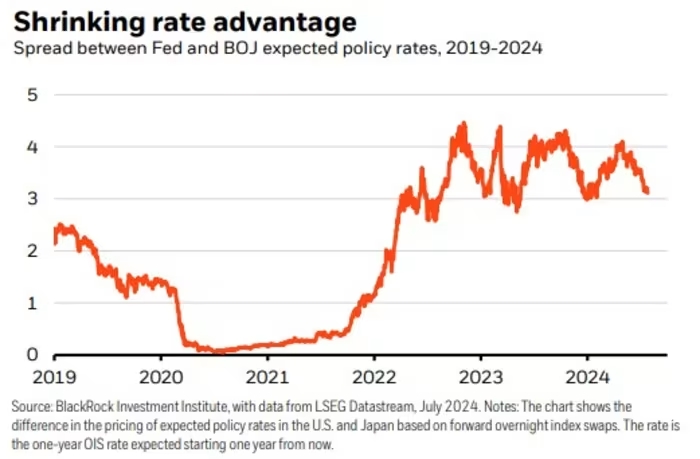
This week, three of the world’s most influential central banks will reveal their monetary policy updates within about 32 hours. On Thursday, the Bank of England might reduce borrowing costs, while the Federal Reserve is expected to hold rates steady on Wednesday but may hint at a potential rate cut in September. The most critical decision, however, may come from the Bank of Japan (BOJ). Recently, a stock market downturn, particularly in large technology stocks, coincided with a rally in the Japanese yen. A theory emerged suggesting that if the BOJ raises interest rates and the Fed cuts rates (following recent soft inflation data), the yield gap between the U.S. and Japan would narrow, making the yen more attractive. Investors who had borrowed yen to buy U.S. mega-cap stocks had to reduce their positions as the yen strengthened. While this theory might be valid, no concrete data supports it. The stronger-yen/weaker-U.S.-tech trend could be coincidental. Alternatively, the yen, still holding some safe-haven status despite hitting a 38-year low, may have gained buyers due to the stock market downturn. Regardless, the correlation was evident. Given the uncertainty around the BOJ’s policy tightening early Wednesday, the meeting in Tokyo might initially move the markets midweek. Markets expect the interest rate gap favoring the dollar to narrow. Charu Chanana, Saxo’s head of FX strategy, notes that the BOJ has a history of disappointing hawkish expectations. The BOJ will likely tighten policy by reducing its bond-buying program. Chanana predicts it will cut purchases of 5 to 10-year notes from ¥6 trillion ($32 billion) to ¥5 trillion ($27 billion) monthly, with a further reduction to ¥3 trillion ($19.5 billion) within two years. Traders are less certain about a rate hike from the current 0.1%. The market anticipates a 15 basis point hike with a 50% probability, implying a 7-8 basis point rise. Chanana doubts the BOJ will hike rates and significantly reduce bond buying simultaneously, noting, “Two hawkish moves at one policy meeting may be a bit of a stretch for a central bank that is inherently dovish by nature.” Thus, the market impact of the meeting may be less severe than some expect. With the yen having rallied last week, much of the policy shift is likely priced in. Chanana believes sustained yen appreciation, with USDJPY moving below 150, is unlikely unless U.S. recession risks rise significantly or the Fed takes a sharp dovish turn. If the BOJ does not meet hawkish expectations and signals caution, USDJPY could rise back above 155, and yen-funded carry trades could return. This would benefit Japan’s Nikkei 225 stock index, which typically moves inversely to the yen. The prospect of continued cheap money in Japan would likely support global stock market sentiment as well. John PaulJohn Paul is the founder of DayTradeToWin, a trading education and software company established in 2008, supporting traders worldwide. His expertise focuses on price action-based futures trading strategies and structured market analysis. DayTradeToWin delivers trading education, indicators, and software tools designed to help traders apply disciplined, rule-based decision-making across global futures markets. He is the creator of multiple trading methodologies, including the Sonic System, Atlas Line, and Trade Scalper, which help traders identify structured opportunities in markets such as the E-mini S&P 500 (ES), Nasdaq (NQ), crude oil (CL), and gold (GC). Official website: https://daytradetowin.com daytradetowin.com

market
Market News

Rate Cuts and Market Reactions: Decoding the Disconnect

Sometimes, central-bank rate cuts can alarm rather than reassure investors, as shown by recent actions from the People’s Bank of China (PBOC) and comments from former New York Fed President William Dudley. On Thursday, the PBOC surprised markets by cutting its medium-term lending facility (MLF) rate to 2.3% from 2.5%, following an unexpected reduction in the seven-day reverse-repo rate earlier in the week. These moves have sparked concerns about the strength of China’s economy. “This is the second cut this week, indicating Chinese authorities’ worry about their economy, which is troubling for stock markets and investors,” said Kathleen Brooks, research director at XTB. Context is key. Rate cuts can boost stocks and risky assets if seen as measures to prevent an economic downturn. This expectation has fueled U.S. stock rallies since last fall, with investors anticipating Fed rate cuts that have yet to happen. However, when a central bank cuts rates due to economic troubles, investors can become unsettled. This was evident on Wednesday, when U.S. stocks had their worst day since 2022. Poor earnings from Alphabet Inc. and Tesla Inc. contributed, but Dudley’s reversal on rate policy also caused concern. After advocating for prolonged high rates, Dudley cited weakening economic data as a reason to support immediate rate cuts in his Bloomberg column. This shift, coupled with other factors, led the tech-heavy Nasdaq Composite to fall 3.6%, the S&P 500 to drop 2.3%, and the Dow Jones Industrial Average to lose over 500 points. These events, combined with poor European purchasing-manager index readings and Dudley’s comments, prompted investors to offload risky assets. Despite the tumult, bullish investors argue that the selloff was primarily driven by weak tech earnings and an adjustment from overly optimistic positions. Expectations for a July rate cut by the Fed remained relatively stable, with Fed-funds futures traders pricing in a roughly 9% probability, according to the CME FedWatch Tool. Tom Essaye, founder of Sevens Report Research, emphasized the need to monitor growth closely: “None of this pullback includes growth worries. I am still concerned about growth, and Dudley’s comments make me more nervous. We need to watch growth very closely.” In summary, recent market reactions highlight that rate cuts aren’t always reassuring, especially when they signal underlying economic weaknesses. Investors remain cautious, closely monitoring economic indicators and central bank actions. John PaulJohn Paul is the founder of DayTradeToWin, a trading education and software company established in 2008, supporting traders worldwide. His expertise focuses on price action-based futures trading strategies and structured market analysis. DayTradeToWin delivers trading education, indicators, and software tools designed to help traders apply disciplined, rule-based decision-making across global futures markets. He is the creator of multiple trading methodologies, including the Sonic System, Atlas Line, and Trade Scalper, which help traders identify structured opportunities in markets such as the E-mini S&P 500 (ES), Nasdaq (NQ), crude oil (CL), and gold (GC). Official website: https://daytradetowin.com daytradetowin.com

morgan stanley
Market News

The Factor Undermining Stock Buybacks: Morgan Stanley

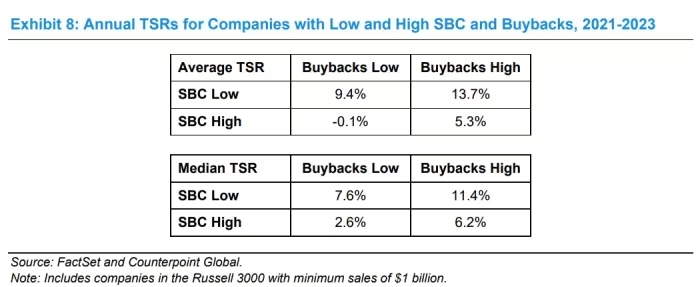
Technology stocks just had their worst day in nearly two years, and hedge-fund manager Bill Ackman received more bad news. But first, let’s focus on an important analysis by Michael Mauboussin, head of consilient research at Morgan Stanley Investment Management’s Counterpoint Global and adjunct professor at Columbia Business School, and his colleague Dan Callahan. Mauboussin and Callahan explored the dynamics of equity issuance and retirement, revealing that companies often simultaneously buy and sell their own stock. They engage in stock buybacks while issuing shares to acquire other companies, make investments, or compensate employees with stock-based compensation. Their research concentrated on Russell 3000 companies with at least $1 billion in sales, analyzing data from 1,350 stocks between 2021 and 2023. They discovered that companies aggressively buying back their stock while sparingly using stock-based compensation outperformed the market. Even companies that were not aggressive with buybacks kept pace as long as they didn’t heavily compensate employees with stock. They acknowledge that other factors, like company fundamentals and interest rates, also influence returns. However, they emphasize the importance of understanding the impact of equity issuance on returns to make informed capital allocation decisions. John PaulJohn Paul is the founder of DayTradeToWin, a trading education and software company established in 2008, supporting traders worldwide. His expertise focuses on price action-based futures trading strategies and structured market analysis. DayTradeToWin delivers trading education, indicators, and software tools designed to help traders apply disciplined, rule-based decision-making across global futures markets. He is the creator of multiple trading methodologies, including the Sonic System, Atlas Line, and Trade Scalper, which help traders identify structured opportunities in markets such as the E-mini S&P 500 (ES), Nasdaq (NQ), crude oil (CL), and gold (GC). Official website: https://daytradetowin.com daytradetowin.com
Alphabet
Market News

Alphabet’s Earnings Beat: What’s Holding Back the Stock?

Alphabet Inc., the parent company of Google, has shown cost discipline in various areas, yet several factors could impede margin expansion in the third quarter. Despite surpassing earnings and revenue expectations on Tuesday afternoon, Alphabet’s stock still declined by the end of the extended session. Several points in the latest figures drew investor scrutiny. For instance, YouTube’s revenue was lower than expected and decelerated compared to the first quarter. Management explained that YouTube faced easier comparisons in the first quarter, which was up against a period of negative growth, while the second-quarter results were compared to the beginning of ramping advertising revenue from Asian e-commerce players like Temu. A more significant issue for investors was highlighted during the company’s earnings call. Alphabet’s executives pointed out trends that could impact margin expansion in the third quarter. President Ruth Porat mentioned that headcount could rise as the company hires college graduates and that Alphabet faces higher “depreciation and expenses associated with higher levels of our investment in technical infrastructure.” Wall Street analysts, such as Ben Reitzes from Melius Research, indicate that the market might be concerned about the pace at which Alphabet can widen its margins in the near future. Reitzes noted that while Alphabet’s 32.4% overall operating margin in the June quarter exceeded expectations, any comments suggesting a slower pace of margin expansion attract attention given the current emphasis on efficiency. Significant investments in technical infrastructure, driven by Alphabet’s ambitious artificial intelligence goals, are key factors influencing spending. Rivals like Meta Platforms Inc., Amazon.com Inc., and Microsoft Corp. are making similar investments. Porat’s comments indicate that third-quarter operating margins will reflect increased depreciation and expenses from these investments. Reitzes emphasized the importance of monitoring depreciation trends on earnings per share and gross margins, especially for leading tech firms known as the Magnificent 7, which include Microsoft, Amazon, and Meta. Alphabet’s shares fell 2% in Tuesday’s extended session, reversing an earlier upward trend. If this movement continues into Wednesday’s regular session, it would mark Alphabet’s most subdued stock-price reaction to earnings since shares fell 0.1% following the March-quarter report last year. John PaulJohn Paul is the founder of DayTradeToWin, a trading education and software company established in 2008, supporting traders worldwide. His expertise focuses on price action-based futures trading strategies and structured market analysis. DayTradeToWin delivers trading education, indicators, and software tools designed to help traders apply disciplined, rule-based decision-making across global futures markets. He is the creator of multiple trading methodologies, including the Sonic System, Atlas Line, and Trade Scalper, which help traders identify structured opportunities in markets such as the E-mini S&P 500 (ES), Nasdaq (NQ), crude oil (CL), and gold (GC). Official website: https://daytradetowin.com daytradetowin.com
stock market
Market News

Tracking the Stock-Market Shift from Big Tech: Important Levels to Observe

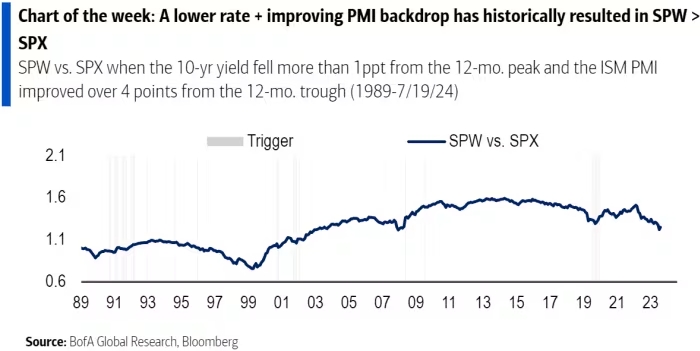
BofA strategists highlight that historically, a lower Treasury yield and an improving manufacturing PMI have driven the outperformance of the equal-weighted S&P 500 index. Recently, a surge in U.S. small-cap stocks has led investors to speculate whether this marks a shift away from this year’s Big Tech frontrunners. According to BofA Global Research strategists, a lasting stock-market rotation depends on the 10-year Treasury yield remaining below 4% and the ISM manufacturing PMI index staying above 50%. Historically, the equal-weighted S&P 500 index has outperformed the market-cap-weighted S&P 500 90% of the time when the 10-year Treasury yield dropped by more than 1 percentage point from its 12-month peak, and the ISM manufacturing PMI improved by over 4 percentage points from its 12-month low, as noted by BofA strategists led by Ohsung Kwon. For this rotation to continue, the 10-year yield needs to be around 3.99%, below its 52-week high of 4.99% recorded on October 19, and the ISM manufacturing PMI index should be above 50%, indicating expansion in the manufacturing sector. “The manufacturing economy is experiencing its second-longest downturn in history, with 21 months without two consecutive months of PMI above 50%,” Kwon and his team wrote, attributing this mainly to the destocking cycle, which they expect to moderate in the second half of 2024. The Institute for Supply Management’s manufacturing index fell to 48.5% in June from 48.7% in the previous month, with the lowest level in the past 12 months being 46.5% in July 2023. A PMI below 50% indicates contraction in the sector. On Monday, the 10-year Treasury yield increased by 2.1 basis points to 4.259%, influenced by speculation that Vice President Kamala Harris might become the Democratic Party’s presidential nominee. This year, the 10-year rate has risen by nearly 40 basis points due to persistent inflation concerns, keeping the Federal Reserve cautious about cutting interest rates, according to FactSet data. Despite this, traders in the federal-funds futures market on Monday saw a 93.6% probability that the Fed will start cutting its benchmark rate in September, based on the CME FedWatch Tool. However, policymakers will review upcoming inflation data before making a decision. U.S. stocks closed higher on Monday, led by the “Magnificent Seven” and chip stocks like Nvidia, which rose by 4.76% after a challenging week. The Nasdaq Composite increased by 1.6%, the S&P 500 by 1.1%, and the Dow Jones Industrial Average edged up by 0.3%, according to FactSet data. John PaulJohn Paul is the founder of DayTradeToWin, a trading education and software company established in 2008, supporting traders worldwide. His expertise focuses on price action-based futures trading strategies and structured market analysis. DayTradeToWin delivers trading education, indicators, and software tools designed to help traders apply disciplined, rule-based decision-making across global futures markets. He is the creator of multiple trading methodologies, including the Sonic System, Atlas Line, and Trade Scalper, which help traders identify structured opportunities in markets such as the E-mini S&P 500 (ES), Nasdaq (NQ), crude oil (CL), and gold (GC). Official website: https://daytradetowin.com daytradetowin.com

stocks
Market News

From Ugly Ducklings to Golden Geese: Finding Potential in Undervalued Stocks

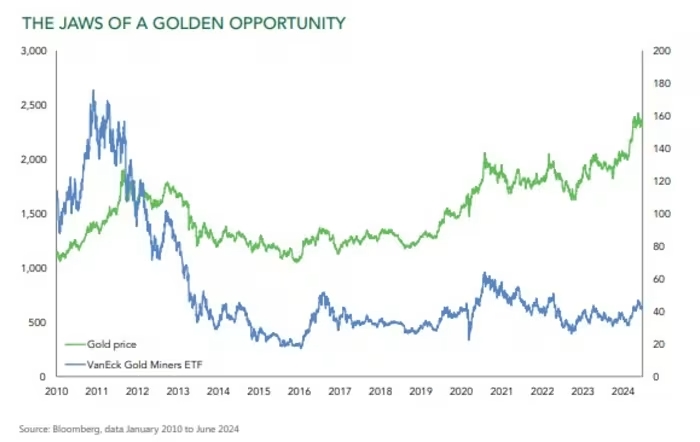
Not long ago, investors were confident in the continuation of the big-tech trade and expected former President Donald Trump to win the upcoming election. Now, the landscape has shifted. The market is rotating from tech-based momentum trades to the previously unpopular small caps. Investors who were banking on a “Trump-trade” now face the higher probability of a Democratic victory after President Joe Biden exited the race. This environment of increased volatility and uncertainty is exactly what Ruffer Investment Company has positioned its portfolio for. The London-based fund is wary of equity market valuations, especially in the U.S., and expects global inflationary pressures and growing fiscal deficits to negatively impact bond prices, driving yields higher. “The risks of a correction in equity and credit markets are high given the level of real interest rates alongside the uncertainty driven by elections, central bank policy decisions, liquidity risks, and a softening U.S. economy,” says Ruffer in its fiscal year-end review. Ruffer’s portfolio includes what it calls deeply unloved “ugly ducklings.” These assets, often overlooked by investors, have the potential to transform into valuable investments. Among the ugliest ducklings are Chinese shares, which are under-owned due to reputational risks. Ruffer finds these equities attractive because they are among the cheapest globally, despite bad news being priced in. Ruffer allocates only a quarter of its funds to stocks, with Chinese equities comprising around 4% of its portfolio. U.K. equities account for 11.2%, benefiting from low valuations and the potential for a re-rating driven by a stable new Labour government, increased pension fund stock holdings, and foreign takeover interests. Precious metals miners are also part of Ruffer’s portfolio, with 4% in gold mining equities and another 3% in silver and platinum. Ruffer sees value in this sector due to geopolitical concerns, inflation worries, and tax avoidance strategies. They believe earnings revisions in the sector could be spectacular if gold prices rise significantly. Ruffer also holds a long position in the Japanese yen, viewing its current valuation as a “historic opportunity” and expecting the yen to benefit from its haven status during market volatility. Finally, U.S. treasury inflation-protected securities (TIPS) and UK inflation-linked gilts make up 19% of Ruffer’s portfolio, reflecting the fund manager’s concerns about persistent inflation. Investors can currently secure a return of inflation plus 2% by lending to the U.S. for the next 10 years, which Ruffer considers a sensible core holding for capital preservation. John PaulJohn Paul is the founder of DayTradeToWin, a trading education and software company established in 2008, supporting traders worldwide. His expertise focuses on price action-based futures trading strategies and structured market analysis. DayTradeToWin delivers trading education, indicators, and software tools designed to help traders apply disciplined, rule-based decision-making across global futures markets. He is the creator of multiple trading methodologies, including the Sonic System, Atlas Line, and Trade Scalper, which help traders identify structured opportunities in markets such as the E-mini S&P 500 (ES), Nasdaq (NQ), crude oil (CL), and gold (GC). Official website: https://daytradetowin.com daytradetowin.com

Scroll to Top