

stock news

dow
Market News

500-Point Dow Decline: Rethinking Economic News and Stocks

Strategist: Dow Selloff Reflects ‘Buy the Rumor, Sell the Fact’ on Fed Rate-Cut Signal Thursday’s selloff, which saw the Dow Jones Industrial Average on track for its largest one-day drop since May, was partly attributed to a series of weaker-than-expected economic data. The relationship between economic news and the stock market seems to be shifting. Traditionally, bad economic news was seen as good for stocks because it reinforced the case for Federal Reserve interest rate cuts. However, Thursday’s reaction indicates a change, with disappointing data now negatively impacting stocks. What’s behind this shift? Despite a generally strong labor market, signs of weakness are emerging. Several consumer-focused companies report increasing stress among lower-income consumers. Federal Reserve Chair Jerome Powell hinted on Wednesday that a rate cut might come in September if economic data supports it. However, some analysts believe the Fed has waited too long to ease. Neil Dutta, head of economics at Renaissance Macro Research, commented, “The Fed’s delay, combined with today’s rising jobless claims, low unit labor costs, and slowing global manufacturing, suggests we are at a point where bad economic news is bad for markets.” Thursday’s economic data painted a gloomy picture. First-time jobless claims reached their highest level in nearly a year, possibly due to seasonal auto-plant closures. The stock selloff intensified after the Institute for Supply Management’s July manufacturing index fell for the fourth consecutive month to 46.8%, signaling a contracting manufacturing sector. Ian Lyngen, rates strategist at BMO Capital Markets, remarked, “Bad news is bad again. Claims increased, ISM disappointed, unit labor costs underperformed, and stocks sold off. The macro narrative is shifting, and the data hasn’t reached a deeply worrying point yet.” Treasury yields fell in response, with the 10-year note dropping below 4% for the first time since February. Yields move inversely to price. The Dow ended the day with a loss of around 495 points, or 1.2%, after dropping as much as 744 points. Initially, cyclical stocks led the decline, followed by tech stocks. The tech-heavy Nasdaq Composite slumped 2.3%, the S&P 500 fell 1.4%, and the small-cap Russell 2000 dropped 2.3%. Not everyone sees this as a growth scare. Kent Engelke, chief economic strategist at Capitol Securities Management, noted that the market’s downturn appeared to be a “buy on the rumor, sell on the fact” response to Powell’s hint at a future rate cut. Additionally, tech stocks remain highly priced, and disappointing results from companies like Amazon and Apple could lead to further declines. John PaulJohn Paul is the founder of DayTradeToWin, a trading education and software company established in 2008, supporting traders worldwide. His expertise focuses on price action-based futures trading strategies and structured market analysis. DayTradeToWin delivers trading education, indicators, and software tools designed to help traders apply disciplined, rule-based decision-making across global futures markets. He is the creator of multiple trading methodologies, including the Sonic System, Atlas Line, and Trade Scalper, which help traders identify structured opportunities in markets such as the E-mini S&P 500 (ES), Nasdaq (NQ), crude oil (CL), and gold (GC). Official website: https://daytradetowin.com daytradetowin.com

S&P 500
Market News

Unpacking July’s S&P 500 Drops Amid the Great Rotation

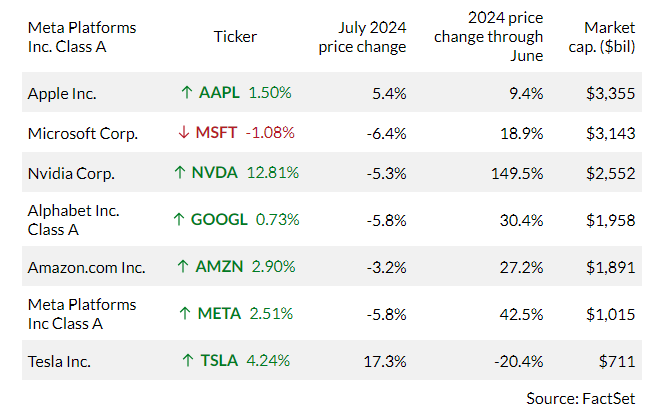
Seven months into 2024, the stock market has shown robust performance, but July marked a significant shift. A “Great Rotation” began, moving investor funds away from Big Tech and toward value stocks and small-caps. On Wednesday, MarketWatch’s Joseph Adinolfi summarized July’s stock-market dynamics, highlighting how expectations of a change in Federal Reserve policy prompted investors to shift away from the largest technology stocks. He also explored the potential for continued rallies in value stocks and small-caps. A look at the performance of broad stock indexes underscores investors’ renewed interest in market segments that had underperformed for several years through the first half of 2024, while Big Tech names had soared. Index Performance in July Here’s a summary of how several indexes performed during July, alongside their price changes for the first half of the year to illustrate the rotation. All price changes exclude dividends. Sector Performance in July Here’s how the 11 sectors of the S&P 500 performed during July, sorted by their performance: Worst Performers in July Here are the 10 S&P 500 stocks that fell the most in July: These tech stocks soared in the first half of the year but pulled back in July. CrowdStrike (CRWD -0.72%) faced a unique challenge with a worldwide computer outage caused by a software update on July 19, which weighed heavily on its share price. The Magnificent Seven’s Performance These seven companies constitute 30.6% of the SPY portfolio and dominated technology stock action, especially last year. Here’s their performance in July and during the first half of 2024, sorted by market capitalization as calculated by FactSet: This shift in investor behavior indicates a potential long-term trend as the market adjusts to new economic conditions and expectations. John PaulJohn Paul is the founder of DayTradeToWin, a trading education and software company established in 2008, supporting traders worldwide. His expertise focuses on price action-based futures trading strategies and structured market analysis. DayTradeToWin delivers trading education, indicators, and software tools designed to help traders apply disciplined, rule-based decision-making across global futures markets. He is the creator of multiple trading methodologies, including the Sonic System, Atlas Line, and Trade Scalper, which help traders identify structured opportunities in markets such as the E-mini S&P 500 (ES), Nasdaq (NQ), crude oil (CL), and gold (GC). Official website: https://daytradetowin.com daytradetowin.com
wall street
Market News

Treasury’s Market Role: New Research Ignites Discussion

A newly published white paper has ignited controversy on Wall Street and in Washington by accusing the Treasury Department of using short-term Treasury bills to manipulate the economy for political gain, potentially reigniting inflation. The paper, released last week, contends that the Treasury’s strategy of financing a substantial portion of the U.S. debt with short-term Treasury bills is a deliberate attempt to influence the economy. Authors Stephen Miran and Nouriel Roubini have termed this approach “activist Treasury issuance.” “By adjusting the maturity profile of its debt issuance, Treasury is dynamically managing financial conditions and, through them, the economy, usurping core functions of the Federal Reserve,” wrote Miran and Roubini. The Treasury Department has robustly denied these allegations, and numerous bond-market experts have also questioned the paper’s conclusions. Lou Crandall, chief economist at Wrightson ICAP, stated in a report to MarketWatch, “Treasury issuance over the past year has evolved in ways consistent both with its historical behavior and recent Treasury guidance. The Treasury is simply following its stated plans.” Treasury Secretary Janet Yellen also refuted the claims, telling MarketWatch, “There is absolutely no such strategy. We have never discussed anything of the sort.” Her statement first appeared in a Bloomberg News report. Miran and Roubini argue that the Treasury’s excess issuance of bills over the past nine months has had an impact equivalent to roughly $800 billion in quantitative easing, akin to reducing the 10-year yield by 25 basis points or the federal-funds rate by a full percentage point. They assert this has countered the Federal Reserve’s efforts to tighten monetary policy and cool the economy. Senator Bill Hagerty, a Tennessee Republican, echoed these concerns, suggesting that the Treasury’s reliance on bills is politically motivated. In a statement to MarketWatch, he said, “Politics has no place in Treasury debt issuance. Secretary [Janet] Yellen’s Treasury has manipulated long-term interest rates by dramatically shifting the maturities of U.S. debt to boost the economy before November. This back-door quantitative easing undermines public trust in our nation’s debt and risks our government’s ability to respond to future crises.” A Treasury official, speaking anonymously, criticized the paper for misrepresenting the guidance issued by the Treasury Borrowing Advisory Committee (TBAC). The official emphasized that the 15% to 20% range recommended by TBAC is a guideline, not a rule, allowing for flexibility. They noted that the shift toward more bill issuance was more modest than the paper suggests and that the Treasury has been gradually reducing its issuance of bills as a share of net new debt issued. Despite these denials, some experts see merit in the paper’s arguments. Bob Elliott, CEO of Unlimited and former chief of foreign-exchange policy at Bridgewater Associates, questioned why the Treasury hasn’t reduced the share of bills more quickly, noting that current economic conditions do not require significant easing. The idea that the Treasury might be working against the Fed’s efforts first gained traction after the department’s quarterly refunding announcement for the fourth quarter on November 1. The bond market was experiencing turmoil, with the yield on the 10-year Treasury note hitting its highest level in over 15 years. Guy LeBas, chief fixed-income strategist at Janney Montgomery Scott, pointed out that while the Treasury’s actions might influence financial conditions, other factors, such as the Federal Reserve’s stance on interest rates, also play a significant role. Miran defended the use of TBAC guidance as a benchmark, stating it was the only suitable reference provided by the Treasury. He argued that the Treasury has not provided a convincing reason for its continued reliance on bills. Details from the next quarterly Treasury refunding announcement are expected on Wednesday, while the Federal Reserve will announce its latest decision on interest rates later in the day. John PaulJohn Paul is the founder of DayTradeToWin, a trading education and software company established in 2008, supporting traders worldwide. His expertise focuses on price action-based futures trading strategies and structured market analysis. DayTradeToWin delivers trading education, indicators, and software tools designed to help traders apply disciplined, rule-based decision-making across global futures markets. He is the creator of multiple trading methodologies, including the Sonic System, Atlas Line, and Trade Scalper, which help traders identify structured opportunities in markets such as the E-mini S&P 500 (ES), Nasdaq (NQ), crude oil (CL), and gold (GC). Official website: https://daytradetowin.com daytradetowin.com
central bank
Market News

The Central Bank Stealing the Fed’s Spotlight

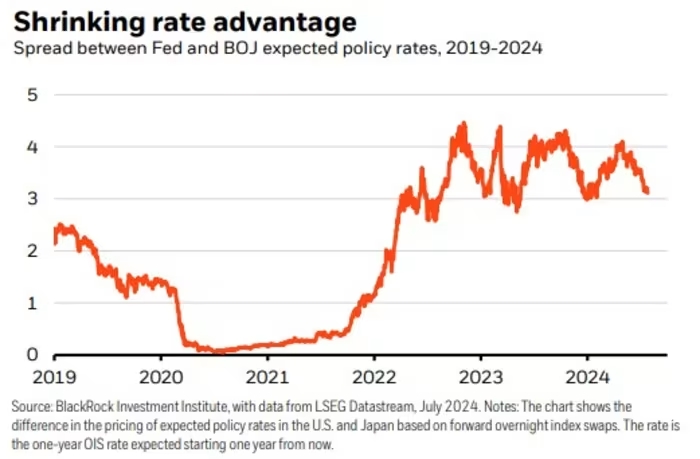
This week, three of the world’s most influential central banks will reveal their monetary policy updates within about 32 hours. On Thursday, the Bank of England might reduce borrowing costs, while the Federal Reserve is expected to hold rates steady on Wednesday but may hint at a potential rate cut in September. The most critical decision, however, may come from the Bank of Japan (BOJ). Recently, a stock market downturn, particularly in large technology stocks, coincided with a rally in the Japanese yen. A theory emerged suggesting that if the BOJ raises interest rates and the Fed cuts rates (following recent soft inflation data), the yield gap between the U.S. and Japan would narrow, making the yen more attractive. Investors who had borrowed yen to buy U.S. mega-cap stocks had to reduce their positions as the yen strengthened. While this theory might be valid, no concrete data supports it. The stronger-yen/weaker-U.S.-tech trend could be coincidental. Alternatively, the yen, still holding some safe-haven status despite hitting a 38-year low, may have gained buyers due to the stock market downturn. Regardless, the correlation was evident. Given the uncertainty around the BOJ’s policy tightening early Wednesday, the meeting in Tokyo might initially move the markets midweek. Markets expect the interest rate gap favoring the dollar to narrow. Charu Chanana, Saxo’s head of FX strategy, notes that the BOJ has a history of disappointing hawkish expectations. The BOJ will likely tighten policy by reducing its bond-buying program. Chanana predicts it will cut purchases of 5 to 10-year notes from ¥6 trillion ($32 billion) to ¥5 trillion ($27 billion) monthly, with a further reduction to ¥3 trillion ($19.5 billion) within two years. Traders are less certain about a rate hike from the current 0.1%. The market anticipates a 15 basis point hike with a 50% probability, implying a 7-8 basis point rise. Chanana doubts the BOJ will hike rates and significantly reduce bond buying simultaneously, noting, “Two hawkish moves at one policy meeting may be a bit of a stretch for a central bank that is inherently dovish by nature.” Thus, the market impact of the meeting may be less severe than some expect. With the yen having rallied last week, much of the policy shift is likely priced in. Chanana believes sustained yen appreciation, with USDJPY moving below 150, is unlikely unless U.S. recession risks rise significantly or the Fed takes a sharp dovish turn. If the BOJ does not meet hawkish expectations and signals caution, USDJPY could rise back above 155, and yen-funded carry trades could return. This would benefit Japan’s Nikkei 225 stock index, which typically moves inversely to the yen. The prospect of continued cheap money in Japan would likely support global stock market sentiment as well. John PaulJohn Paul is the founder of DayTradeToWin, a trading education and software company established in 2008, supporting traders worldwide. His expertise focuses on price action-based futures trading strategies and structured market analysis. DayTradeToWin delivers trading education, indicators, and software tools designed to help traders apply disciplined, rule-based decision-making across global futures markets. He is the creator of multiple trading methodologies, including the Sonic System, Atlas Line, and Trade Scalper, which help traders identify structured opportunities in markets such as the E-mini S&P 500 (ES), Nasdaq (NQ), crude oil (CL), and gold (GC). Official website: https://daytradetowin.com daytradetowin.com

morgan stanley
Market News

The Factor Undermining Stock Buybacks: Morgan Stanley

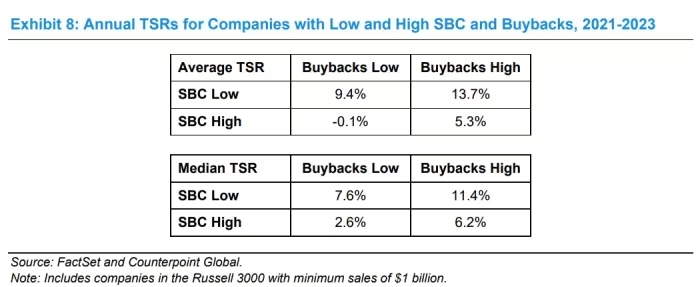
Technology stocks just had their worst day in nearly two years, and hedge-fund manager Bill Ackman received more bad news. But first, let’s focus on an important analysis by Michael Mauboussin, head of consilient research at Morgan Stanley Investment Management’s Counterpoint Global and adjunct professor at Columbia Business School, and his colleague Dan Callahan. Mauboussin and Callahan explored the dynamics of equity issuance and retirement, revealing that companies often simultaneously buy and sell their own stock. They engage in stock buybacks while issuing shares to acquire other companies, make investments, or compensate employees with stock-based compensation. Their research concentrated on Russell 3000 companies with at least $1 billion in sales, analyzing data from 1,350 stocks between 2021 and 2023. They discovered that companies aggressively buying back their stock while sparingly using stock-based compensation outperformed the market. Even companies that were not aggressive with buybacks kept pace as long as they didn’t heavily compensate employees with stock. They acknowledge that other factors, like company fundamentals and interest rates, also influence returns. However, they emphasize the importance of understanding the impact of equity issuance on returns to make informed capital allocation decisions. John PaulJohn Paul is the founder of DayTradeToWin, a trading education and software company established in 2008, supporting traders worldwide. His expertise focuses on price action-based futures trading strategies and structured market analysis. DayTradeToWin delivers trading education, indicators, and software tools designed to help traders apply disciplined, rule-based decision-making across global futures markets. He is the creator of multiple trading methodologies, including the Sonic System, Atlas Line, and Trade Scalper, which help traders identify structured opportunities in markets such as the E-mini S&P 500 (ES), Nasdaq (NQ), crude oil (CL), and gold (GC). Official website: https://daytradetowin.com daytradetowin.com

Alphabet
Market News

Alphabet’s Earnings Beat: What’s Holding Back the Stock?

Alphabet Inc., the parent company of Google, has shown cost discipline in various areas, yet several factors could impede margin expansion in the third quarter. Despite surpassing earnings and revenue expectations on Tuesday afternoon, Alphabet’s stock still declined by the end of the extended session. Several points in the latest figures drew investor scrutiny. For instance, YouTube’s revenue was lower than expected and decelerated compared to the first quarter. Management explained that YouTube faced easier comparisons in the first quarter, which was up against a period of negative growth, while the second-quarter results were compared to the beginning of ramping advertising revenue from Asian e-commerce players like Temu. A more significant issue for investors was highlighted during the company’s earnings call. Alphabet’s executives pointed out trends that could impact margin expansion in the third quarter. President Ruth Porat mentioned that headcount could rise as the company hires college graduates and that Alphabet faces higher “depreciation and expenses associated with higher levels of our investment in technical infrastructure.” Wall Street analysts, such as Ben Reitzes from Melius Research, indicate that the market might be concerned about the pace at which Alphabet can widen its margins in the near future. Reitzes noted that while Alphabet’s 32.4% overall operating margin in the June quarter exceeded expectations, any comments suggesting a slower pace of margin expansion attract attention given the current emphasis on efficiency. Significant investments in technical infrastructure, driven by Alphabet’s ambitious artificial intelligence goals, are key factors influencing spending. Rivals like Meta Platforms Inc., Amazon.com Inc., and Microsoft Corp. are making similar investments. Porat’s comments indicate that third-quarter operating margins will reflect increased depreciation and expenses from these investments. Reitzes emphasized the importance of monitoring depreciation trends on earnings per share and gross margins, especially for leading tech firms known as the Magnificent 7, which include Microsoft, Amazon, and Meta. Alphabet’s shares fell 2% in Tuesday’s extended session, reversing an earlier upward trend. If this movement continues into Wednesday’s regular session, it would mark Alphabet’s most subdued stock-price reaction to earnings since shares fell 0.1% following the March-quarter report last year. John PaulJohn Paul is the founder of DayTradeToWin, a trading education and software company established in 2008, supporting traders worldwide. His expertise focuses on price action-based futures trading strategies and structured market analysis. DayTradeToWin delivers trading education, indicators, and software tools designed to help traders apply disciplined, rule-based decision-making across global futures markets. He is the creator of multiple trading methodologies, including the Sonic System, Atlas Line, and Trade Scalper, which help traders identify structured opportunities in markets such as the E-mini S&P 500 (ES), Nasdaq (NQ), crude oil (CL), and gold (GC). Official website: https://daytradetowin.com daytradetowin.com

Scroll to Top