

Market News

Investor
Market News

GE, Microsoft & the Investor Behind the Moves

Alphabet Is TCI’s Riskiest Bet, Says Chris Hohn Alphabet is “maybe our most risky investment,” according to Chris Hohn, founder of The Children’s Investment Fund (TCI). Despite its strengths in YouTube and cloud services, Hohn cautioned that Alphabet faces significant risks — particularly the potential fragmentation of its core search business. It’s also the smallest U.S.-listed holding in TCI’s latest 13-F filing. Hohn, who was knighted in the U.K. and recently hailed as “Europe’s best investor” by Norway’s sovereign wealth fund chief Nicolai Tangen, shared his views during an interview and a conference hosted by the fund. TCI’s top U.S. holding is GE Aerospace, a business Hohn favors for its exceptionally high barriers to entry. The firm also holds a stake in Safran, GE’s French partner in jet engine manufacturing, which doesn’t appear in the U.S. filing due to its foreign listing. “We like that space because it’s extremely hard to enter,” Hohn said. “It’s so complex that there have been no new competitors for 50 years. And the real profits come from spare parts, not the engines themselves.” Hohn also pointed to Visa and Meta Platforms as companies benefiting from strong network effects, calling them key holdings. TCI also increased its position in Microsoft, its second-largest U.S. investment, by 24% in the first quarter. Hohn noted Microsoft’s ability to bundle services, such as Teams, gave it an edge over competitors like Zoom, even if the rival’s product was technically better. Long-term holding is another core part of TCI’s strategy. The average investment remains in the portfolio for eight years — far longer than most institutional funds. Hohn cited Moody’s, which he has owned off and on since the financial crisis, as a prime example of a company that compounds value over time. “If you have a great company, it will grow intrinsic value,” he said. “Multiples matter less than growth over the long run.” TCI also holds both Moody’s and S&P Global, citing their stable, recurring revenue from credit ratings — a critical financial service. Despite his focus on strong, growing businesses, Hohn isn’t afraid to avoid sectors he sees as flawed. The airline industry, he noted, has suffered from “profitless growth” for over a century due to low barriers to entry. John PaulJohn Paul is the founder of DayTradeToWin, a trading education and software company established in 2008, supporting traders worldwide. His expertise focuses on price action-based futures trading strategies and structured market analysis. DayTradeToWin delivers trading education, indicators, and software tools designed to help traders apply disciplined, rule-based decision-making across global futures markets. He is the creator of multiple trading methodologies, including the Sonic System, Atlas Line, and Trade Scalper, which help traders identify structured opportunities in markets such as the E-mini S&P 500 (ES), Nasdaq (NQ), crude oil (CL), and gold (GC). Official website: https://daytradetowin.com daytradetowin.com

market
Market News

How Far Must Market Fall for a ‘Trump Put’?

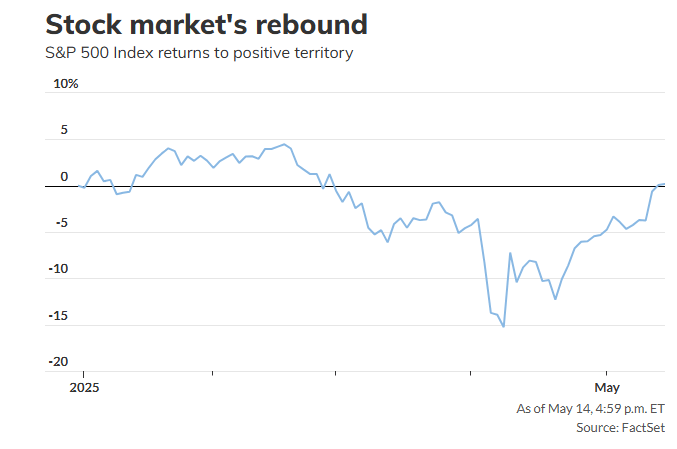
Trump’s Tariff Pause May Signal Market Floor—but Investors Should Stay Alert President Trump’s recent decision to partially pause tariffs may indicate where equities need to fall before prompting a White House policy reversal. But investors shouldn’t assume this marks a reliable safety net. The stock market’s sharp rebound—following steep losses tied to trade tensions—suggests a new threshold for how far Wall Street can drop before Trump steps in. The S&P 500 turned positive for the year on Tuesday after the U.S. and China agreed to pause certain tariffs. That recovery from the April 8 low of 4,982.77 suggests an informal “Trump put” may kick in after a drop of around 18.5%. Trump’s re-election in November triggered a surge in U.S. equities, with indexes hitting new highs through February. Wharton finance professor Jeremy Siegel even called Trump the most “pro-stock-market president” in U.S. history, as noted by MarketWatch’s Joseph Adinolfi. But by January, optimism had faded. Trump’s aggressive trade stance toward China rattled markets and raised recession fears. The turbulence eased only after reciprocal tariffs (excluding China) were paused on April 9, followed by a suspension of tit-for-tat measures with Beijing on May 12. “The ‘Trump put’ is alive and well,” said Tom Lee, head of research at Fundstrat, in a recent podcast. “The White House doesn’t want the stock market to go down.” Still, Trump offered little indication this spring that he was concerned about falling markets, casting doubt on the immediacy of any protective pivot. Meanwhile, Fed Chair Jerome Powell dismissed the idea that monetary policy would be used as a market backstop. “Investors were spooked in early April because they feared the Trump put wouldn’t activate until the S&P 500 dropped deep into the 4,000s,” noted Tom Essaye, president of Sevens Report Research. Now, he says, the threshold appears closer to the mid-to-low 5,000s. As of Tuesday, the S&P 500 sat 4.2% below its record close of 6,144.15 on February 19, according to Dow Jones Market Data. Stocks gained further ground on Wednesday, pushing closer to those highs. Steven Blitz, chief U.S. economist at GlobalData TS Lombard, said he wasn’t surprised by Trump’s 90-day tariff pause on China, given the severity of the recent selloff. But he remains cautious about future reversals. “I’m skeptical of how Trump’s trade rhetoric evolves after the budget is passed,” Blitz told MarketWatch, referring to the GOP’s proposed budget bill. “It’s unclear whether market volatility or political strategy drove the tariff pause. He needs congressional votes to move the bill forward.” As of Wednesday, the S&P 500 was up 0.2% for the year. The Dow was down 1%, while the Nasdaq had slipped 0.9%, according to FactSet. John PaulJohn Paul is the founder of DayTradeToWin, a trading education and software company established in 2008, supporting traders worldwide. His expertise focuses on price action-based futures trading strategies and structured market analysis. DayTradeToWin delivers trading education, indicators, and software tools designed to help traders apply disciplined, rule-based decision-making across global futures markets. He is the creator of multiple trading methodologies, including the Sonic System, Atlas Line, and Trade Scalper, which help traders identify structured opportunities in markets such as the E-mini S&P 500 (ES), Nasdaq (NQ), crude oil (CL), and gold (GC). Official website: https://daytradetowin.com daytradetowin.com
Wells Fargo
Market News

Wells Fargo Eyes S&P 500 at 7,007

Wells Fargo Top Strategist Stands by Bold S&P 500 Target of 7,007 Despite a year marked by volatility and market uncertainty, Christopher Harvey, head of equity strategy at Wells Fargo Securities, is holding firm on his aggressive S&P 500 target of 7,007. In a recent interview with MarketWatch, Harvey said he never wavered in his forecast, even as the index flirted with bear-market territory. “I was asked many times if I was going to change [the target], and the answer was always, ‘No change,’” Harvey said. Harvey’s conviction is rooted in a view that the latter half of 2025 will bring stronger market conditions. He believes the economic backdrop — particularly consumer resilience and easing trade tensions — supports further gains. “The economy and consumer strength weren’t stellar, but they were solid,” he said. “And we viewed the tariff threats as mostly a negotiating tactic, which has largely been the case.” Although the S&P 500 has bounced back into positive territory for the year, it still needs a nearly 19% rally to reach Harvey’s 7,007 target. But he has a track record of accurate calls, including a near-perfect prediction of the S&P’s 2024 close (5,881 versus his 5,830 forecast) and successful forecasts for both the 2021 rally and the 2022 selloff. “It’s still a strong target,” Harvey said. “We continue to see double-digit upside.” A key factor in reaching that target, he believes, will be interest rate cuts from the Federal Reserve — something Wells Fargo has consistently projected for later this year. “Inflation expectations are falling,” he said. “Our research also suggests that companies aren’t pushing prices as aggressively as headlines suggest. Price hikes have been relatively modest.” Consumers, Harvey added, remain highly price-sensitive, often opting for cheaper alternatives or adjusting their spending habits — limiting companies’ ability to pass on higher costs. Progress on trade has also helped shore up his bullish outlook. With recent deals involving the U.K. and China, Harvey believes there’s growing momentum for broader agreements. “The 90-day pause on U.S.-China tariffs puts pressure on other nations to engage more seriously in trade negotiations,” he said. “And greater clarity on trade gives the Fed more flexibility to ease.” With macroeconomic headwinds easing, Harvey expects investors to shift their focus back to fundamentals. Over the next 6 to 18 months, he sees promising opportunities tied to secular growth in artificial intelligence, regulatory shifts, and increased merger and acquisition activity. Harvey is particularly bullish on AI, which he says is proving more resilient than many anticipated at the start of 2025. Unlike the dot-com era — when heavily indebted telecom companies drove infrastructure spending — today’s AI build-out is being led by well-capitalized tech giants with the resources to scale rapidly. Earlier this month, his team released a list of AI-related “picks and shovels” stocks — companies providing the infrastructure behind the boom. The list spans sectors and includes names like Nvidia, Broadcom, NextEra Energy, Arista Networks, and Marvell Technology. Harvey also drew comparisons between this year’s market turbulence and the early days of the pandemic, noting that both were driven by external shocks rather than systemic economic weakness. “The underlying economy and corporate balance sheets were — and are — in decent shape. Not perfect, but stable,” he said. That stability is part of why Wells Fargo is sticking with its bullish target. Still, Harvey acknowledges the road ahead isn’t risk-free. “We’re not completely in the clear,” he said. “There are still concerns about interest rates moving higher, which could present short-term headwinds. But overall, the backdrop remains supportive of further gains.” John PaulJohn Paul is the founder of DayTradeToWin, a trading education and software company established in 2008, supporting traders worldwide. His expertise focuses on price action-based futures trading strategies and structured market analysis. DayTradeToWin delivers trading education, indicators, and software tools designed to help traders apply disciplined, rule-based decision-making across global futures markets. He is the creator of multiple trading methodologies, including the Sonic System, Atlas Line, and Trade Scalper, which help traders identify structured opportunities in markets such as the E-mini S&P 500 (ES), Nasdaq (NQ), crude oil (CL), and gold (GC). Official website: https://daytradetowin.com daytradetowin.com

S&P 500
Market News

S&P 500 Gets a Boost on Trade Optimism

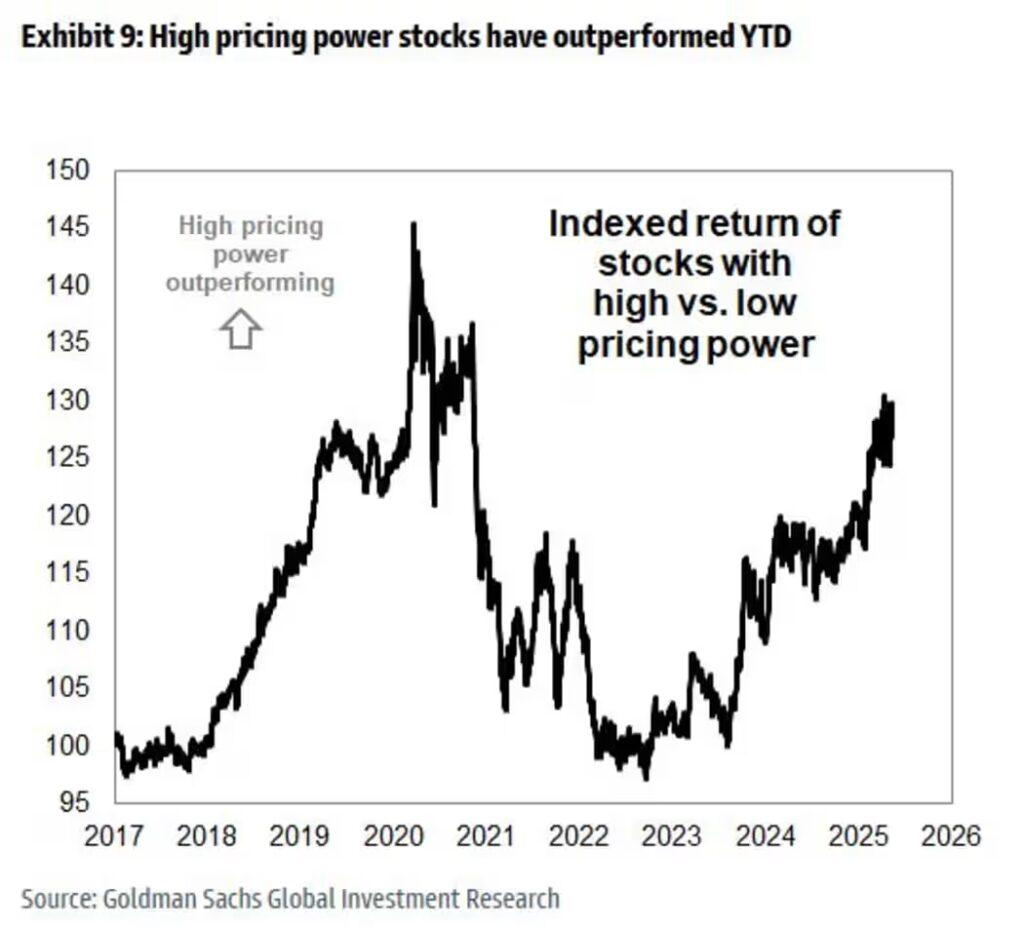
Goldman Sachs: Focus on High-Pricing-Power Stocks Like Meta Amid Upgraded S&P 500 Outlook While markets pause after recent gains fueled by a U.S.-China tariff deal, Wall Street strategists are turning more bullish—led by Goldman Sachs. The investment bank has raised its six-month S&P 500 forecast to 6,100, up from 5,900, citing lower tariff risks, stronger economic growth, and reduced recession odds. On Monday, the index closed at 5,844, inching closer to breakeven for the year. “We’re adjusting our expectations based on improved macro conditions,” said David Kostin, Goldman’s chief U.S. equity strategist. His team is now forecasting earnings per share of $262 for 2025, a 7% annual increase, up from 3% previously. For 2026, earnings are expected to hit $280, also a 7% rise. Goldman also bumped its 12-month forward price-to-earnings multiple to 20.4x, from 19.5x, reflecting “reduced uncertainty, stronger earnings growth, lower inflation, and growing investor confidence in large-cap fundamentals.” Still, Kostin cautioned that ongoing macro risks could affect both valuations and earnings. In a separate update, Goldman’s chief economist Jan Hatzius lowered the firm’s recession odds to 35%, down from 45%, citing a smaller drag on GDP, fewer production delays from tariffs, and a more stable trade outlook. So where should investors look? Kostin recommends stocks with high pricing power—companies that can defend their profit margins even as input costs rise and tariffs remain higher than last year. These firms significantly outperformed during the 2018–2019 trade tensions. Goldman isn’t alone in its optimism. Ed Yardeni of Yardeni Research raised his S&P 500 target to 6,500, cutting his recession probability to 25%. Christopher Harvey at Wells Fargo remains the most bullish strategist on the Street, projecting a year-end 2025 S&P 500 level of 7,007. John PaulJohn Paul is the founder of DayTradeToWin, a trading education and software company established in 2008, supporting traders worldwide. His expertise focuses on price action-based futures trading strategies and structured market analysis. DayTradeToWin delivers trading education, indicators, and software tools designed to help traders apply disciplined, rule-based decision-making across global futures markets. He is the creator of multiple trading methodologies, including the Sonic System, Atlas Line, and Trade Scalper, which help traders identify structured opportunities in markets such as the E-mini S&P 500 (ES), Nasdaq (NQ), crude oil (CL), and gold (GC). Official website: https://daytradetowin.com daytradetowin.com

trade
Market News

Trade Deals Boost This Overlooked Strategy

UBS Highlights 29 “Growth at a Reasonable Price” Stocks Amid Shifting Market Uncertainty Roughly a month after “Liberation Day” and the subsequent flurry of trade tariff announcements, much of the initial drama has subsided. With U.S.–China tariffs largely rolled back, the market’s focus is now shifting from policy uncertainty to uncertainty around the actual outcomes of these changes. In a fresh note, UBS strategists led by Sean Simonds suggest that while tariff details are now clearer, the bigger question is how these policies will impact the economy going forward. “We may have moved past the peak of uncertainty,” they write, “but what lies ahead is policy outcome uncertainty.” UBS based its economic outlook on a hypothetical scenario involving a 10% across-the-board tariff and a 60% tariff on Chinese goods—though the real rates are about half that. Still, with industry-specific tariffs, UBS sees its assumptions as a realistic baseline. Under this model, the firm expects U.S. economic growth to slow from 2% year-over-year in Q1 to just 0.7% by Q4. This uncertain backdrop leads UBS to favor a balanced investment approach: avoid overpaying for overhyped stocks, but don’t shy away from select cyclical growth opportunities. “Elevated but unclear risks support a value tilt, but continued economic momentum into 2026 means maintaining exposure to cyclical growth makes sense,” the team advises. The recommended strategy? Growth at a reasonable price, or GARP. Though GARP strategies like the Invesco S&P 500 GARP ETF have trailed the broader S&P 500 in recent years, UBS believes the environment may now favor a revival of this approach. “Valuations expanded over the last decade while fewer companies consistently delivered growth, making GARP harder. But after the recent valuation reset and ongoing economic transitions, GARP could be due for a comeback.” UBS identified 29 stocks that meet its GARP criteria. These companies, with market caps above $10 billion, trade at an average of 30 times projected 2025 earnings and carry a 19% upside potential according to UBS analysts. The list, generated using the HOLT valuation tool inherited from Credit Suisse, screens for high operational quality (top 50% of the market), strong growth (top 25%), and excludes names that are either value traps or overly expensive. The roster includes familiar names like Broadcom (AVGO) and lesser-known plays like Swiss footwear brand On Holdings (ONON), backed by tennis icon Roger Federer. John PaulJohn Paul is the founder of DayTradeToWin, a trading education and software company established in 2008, supporting traders worldwide. His expertise focuses on price action-based futures trading strategies and structured market analysis. DayTradeToWin delivers trading education, indicators, and software tools designed to help traders apply disciplined, rule-based decision-making across global futures markets. He is the creator of multiple trading methodologies, including the Sonic System, Atlas Line, and Trade Scalper, which help traders identify structured opportunities in markets such as the E-mini S&P 500 (ES), Nasdaq (NQ), crude oil (CL), and gold (GC). Official website: https://daytradetowin.com daytradetowin.com

goldman
Market News

Goldman Sees Trigger for Market Drop

Goldman Sachs: Recession Still a Serious Threat Despite Market Rally The S&P 500 futures have climbed about 18% since hitting a low on April 7, edging closer to a bull market once again. Investors appear to believe the market overreacted to fears surrounding the Trump administration’s trade war, especially after the president paused his proposed “reciprocal” tariffs for 90 days. But Goldman Sachs isn’t convinced the danger has passed. Alec Phillips, Goldman’s chief political economist, cautions that President Trump’s recent remarks on a U.K. trade deal indicate higher tariffs could still be coming for many countries. This, he warns, could pose a lasting economic threat. In a recent podcast titled “On the Precipice of Another Dip?”, Goldman’s chief economist Jan Hatzius and chief global equity strategist Peter Oppenheimer shared a more cautious outlook. Hatzius estimates a 45% chance of a U.S. recession within the next 12 months. While hard data like payrolls remains strong, soft indicators such as consumer and business sentiment have weakened. He explains that hard data often lags behind, especially when trade activity has been pulled forward to avoid tariffs. “There is a very significant risk of a recession,” Hatzius said. He also warned that the Federal Reserve may not respond in time. If the Fed waits for clear signs of inflation or labor market weakness, it may be forced into aggressive rate cuts—possibly up to 200 basis points—once a recession is underway. Oppenheimer added that the recent stock rally was driven by Trump’s easing of tariff threats, solid (though early) corporate earnings, and strong buying from retail investors. But he noted that Q1 earnings don’t yet reflect the impact of recent trade tensions. “If hard data starts to weaken, particularly in the labor market, markets could quickly refocus on recession risks and pull back,” he said. He also highlighted concerns about U.S. equity valuations. With the S&P 500 trading at a price-to-earnings ratio of 20, it isn’t cheap. A 10% drop in earnings, typical during a recession, could drive the market lower—possibly toward 4,600. Adding to the pressure, foreign investors may reduce exposure to U.S. equities as the dominance of large American tech firms declines and the global valuation gap narrows. U.S. stocks currently make up 70% of global market capitalization—a level Goldman believes is unsustainable. On a more positive note, Oppenheimer doesn’t expect a long-lasting structural bear market, which usually follows asset bubbles or deep financial imbalances. Still, he emphasized that in the short term, stocks face a clear downside risk. John PaulJohn Paul is the founder of DayTradeToWin, a trading education and software company established in 2008, supporting traders worldwide. His expertise focuses on price action-based futures trading strategies and structured market analysis. DayTradeToWin delivers trading education, indicators, and software tools designed to help traders apply disciplined, rule-based decision-making across global futures markets. He is the creator of multiple trading methodologies, including the Sonic System, Atlas Line, and Trade Scalper, which help traders identify structured opportunities in markets such as the E-mini S&P 500 (ES), Nasdaq (NQ), crude oil (CL), and gold (GC). Official website: https://daytradetowin.com daytradetowin.com

Scroll to Top