

Uncategorized

dollar
Uncategorized

Dollar on Edge as Stagflation Fears Grow

Savouri Warns: The Dollar Is Headed for a Wile E. Coyote Moment The U.S. economy is barreling toward stagflation, and the dollar is about to take a dramatic fall — that’s the stark warning from Savvas Savouri, chief economist and managing director at London-based advisory firm QuantMetriks. “If you look through the front windshield instead of the rearview mirror,” Savouri says, “it’s clear stagflation is on the horizon.” With a career that spans academia, investment banking, and his role as a long-time economist at Tosca Capital, Savouri has developed a reputation for sharp economic commentary. His current outlook is no exception: rising inflation, a weakening dollar, and a steepening U.S. Treasury yield curve. What’s Driving U.S. Inflation? According to Savouri, inflationary pressure is building on three fronts: He argues that recent tariffs — and Trump’s broader economic agenda, including reshoring and new fiscal spending — are contributing to inflationary momentum. He even refers to a recent legislative package, the “One Big Beautiful Bill Act,” as a form of money-printing. Powell’s Position in Jeopardy? In a note titled “The Inflationator vs. The Powell,” Savouri speculates that Jerome Powell might not remain Federal Reserve chair until his scheduled 2026 exit. Drawing parallels with Japan’s and Turkey’s former central bankers — ousted after resisting political pressure — Savouri suggests Powell may face similar risks if he doesn’t align with the White House. He warns that if inflation rises while the Fed cuts rates, the U.S. yield curve will steepen further — with long-term yields climbing faster than short-term ones — signaling trouble for the bond market. Dollar Drop Incoming Savouri sees the dollar on the edge of what he calls a “Wile E. Coyote moment” — seemingly suspended in midair before crashing. He believes this dollar decline could align with Trump’s goals and speculates that a meeting with China’s President Xi could result in a deal to let the renminbi appreciate, potentially removing its peg to the Hong Kong dollar. This could, in theory, improve U.S. export competitiveness — but also destabilize the dollar further. “Who’s going to buy long-term U.S. debt,” Savouri asks, “when a trade war is underway with traditional buyers?” How Investors Should Prepare To guard against rising inflation and a weakening dollar, Savouri advises buying TIPS (Treasury Inflation-Protected Securities), which adjust interest payments in line with inflation. He also believes inflation could benefit select equities — particularly large-cap or tech firms with strong balance sheets and international earnings that can withstand higher rates and pass on increased costs. On the other hand, smaller U.S.-focused companies, especially those loaded with short-term debt, may struggle in a high-rate environment. As for hedges, Savouri rejects cryptocurrencies, calling them a systemic risk to the U.S. financial system. Instead, he favors gold as a traditional hedge and is bullish on the Australian dollar, citing the country’s strong demographics and economic resilience. John PaulJohn Paul is the founder of DayTradeToWin, a trading education and software company established in 2008, supporting traders worldwide. His expertise focuses on price action-based futures trading strategies and structured market analysis. DayTradeToWin delivers trading education, indicators, and software tools designed to help traders apply disciplined, rule-based decision-making across global futures markets. He is the creator of multiple trading methodologies, including the Sonic System, Atlas Line, and Trade Scalper, which help traders identify structured opportunities in markets such as the E-mini S&P 500 (ES), Nasdaq (NQ), crude oil (CL), and gold (GC). Official website: https://daytradetowin.com daytradetowin.com

bond market
Uncategorized

How Bonds Are Pricing a Trump Comeback

Stick with Short-Term Bonds, but Growth Concerns Persist President Trump’s trade-war policies continue to pose challenges for investors, as market volatility underscores uncertainty alongside mixed signals from the bond market. On Tuesday, 2-year Treasury yields hovered around 4.21%, just below their 200-day moving average, according to FactSet data. Meanwhile, 10-year yields stood at approximately 4.51%, significantly above their average over the same period. Tracking yield trends over time offers key insights, yet both short- and long-term yields remain elevated compared to late August—when Federal Reserve Chair Jerome Powell signaled an impending shift toward rate cuts. This pattern persists despite previous Wall Street warnings to lock in yields before anticipated rate reductions. Since September, the Fed has lowered its short-term policy rate by 1 percentage point. “There are two narratives the bond market is grappling with,” said Lawrence Gillum, chief income strategist at LPL Research, in a phone interview on Tuesday. Short-term Treasury yields reflect inflation concerns and the Fed’s cautious approach to rate cuts, Gillum noted. Another key factor is tariffs—while they elevate prices, they also dampen economic growth. Gillum expects Trump’s tariffs to put downward pressure on 10-year yields, likely bringing them into the low 4% range later this year as investors react to slowing growth. Investment Strategy: Where to Focus For fixed-income investors, Gillum recommends focusing on shorter-duration bonds. “The biggest ‘bang for your buck’ in terms of yield per duration is in the short end of the Bloomberg Corporate Index,” he said. Examining different bond maturity segments within the index helps assess how a portfolio might respond to interest rate fluctuations over time. “Right now, the economy is in good shape, but it probably won’t be toward the end of the year,” Gillum told MarketWatch. He advises those managing fixed-income portfolios against taking excessive rate risk until economic data weakens. “There’s still a lot of value in the front-end,” Gillum added, noting that shorter-duration bonds continue to offer yields around 4.5%—higher than most of the past decade. Trump’s unpredictable tariff policies introduce additional risks. BofA analysts estimate that the S&P 500 could face an 8% hit to earnings per share if 25% tariffs on Mexico and China, along with incremental 10% tariffs on China, are implemented. While concerns over market volatility strengthen the case for bond investments, waiting too long for aggressive Fed rate cuts amid economic downturns carries its own risks. “The key takeaway,” Gillum emphasized, “is that volatility in fixed-income markets isn’t going away.” On Tuesday, the S&P 500 rose 0.8%, the Dow Jones Industrial Average gained 0.4%, and the Nasdaq Composite increased 1.2%, according to FactSet data. John PaulJohn Paul is the founder of DayTradeToWin, a trading education and software company established in 2008, supporting traders worldwide. His expertise focuses on price action-based futures trading strategies and structured market analysis. DayTradeToWin delivers trading education, indicators, and software tools designed to help traders apply disciplined, rule-based decision-making across global futures markets. He is the creator of multiple trading methodologies, including the Sonic System, Atlas Line, and Trade Scalper, which help traders identify structured opportunities in markets such as the E-mini S&P 500 (ES), Nasdaq (NQ), crude oil (CL), and gold (GC). Official website: https://daytradetowin.com daytradetowin.com
bitcoin
Uncategorized

Bitcoin Breaks $100K: A New Era Begins

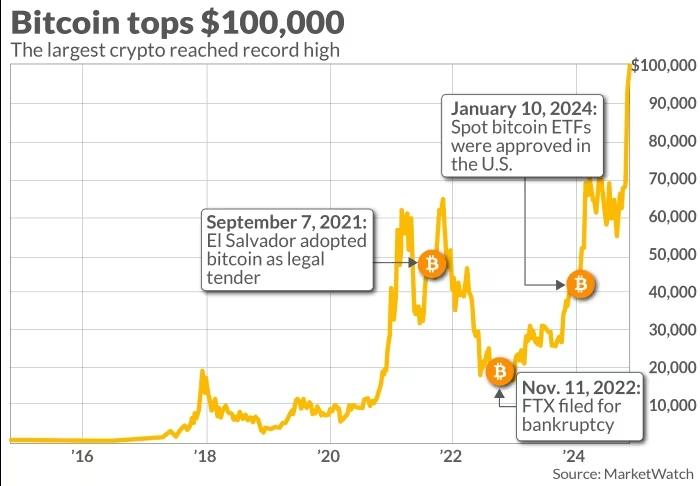
Bitcoin Surges Past $100,000: A Stunning Comeback Fueled by Wall Street and Regulatory Shifts Bitcoin reached a historic milestone on Wednesday night, surpassing $100,000 for the first time. This marks a dramatic recovery for the cryptocurrency industry just two years after the collapse of major players like FTX in 2022. The world’s largest cryptocurrency peaked at $103,853, representing a more than 520% surge from its cycle low of under $16,000 in November 2022. Year-to-date, Bitcoin has climbed approximately 146%, according to CoinDesk data, underscoring a renewed wave of confidence in the digital asset market. A Turning Point in Regulation Driving part of this momentum is a changing regulatory landscape. Earlier Wednesday, President-elect Donald Trump announced his intention to nominate Paul Atkins to head the Securities and Exchange Commission (SEC). Known for his crypto-friendly stance, Atkins is expected to replace outgoing SEC Chair Gary Gensler, who has been criticized by industry leaders for an enforcement-heavy approach. While Gensler’s tenure expanded regulated access to crypto investments, it also saw significant legal action against digital asset firms. The prospect of a more supportive regulatory environment under Atkins has fueled optimism across the industry, potentially paving the way for broader adoption. Institutional Investors Enter the Fray Institutional interest has played a key role in Bitcoin’s ascent. In January, the SEC approved several exchange-traded funds (ETFs) directly tied to Bitcoin, attracting global asset managers like BlackRock and expanding the cryptocurrency’s reach to mainstream investors. Federico Brokate, head of U.S. operations at crypto asset manager 21Shares, called the $100,000 milestone “a sign of legitimacy” for Bitcoin. “For many, this mark represents the maturing of the asset class,” he said. Peter Chung, head of research at algorithmic trading firm Presto, highlighted the psychological impact of crossing this threshold. “People are drawn to round numbers like $100,000. It generates media attention and public interest, which can drive further growth,” Chung explained. Challenges Amid the Celebration Despite its meteoric rise, Bitcoin’s journey to $100,000 has been marked by intense volatility, a reminder of the market’s speculative nature. Concerns about the sustainability of the rally linger, with analysts warning that the cryptocurrency’s long-term trajectory will depend on factors like regulatory clarity and adoption beyond speculative trading. “The driving factors behind Bitcoin’s price surge matter more than the milestone itself,” Brokate noted, emphasizing the importance of sustained industry growth and favorable policies. The Future of Crypto As Bitcoin solidifies its comeback, the cryptocurrency market faces a critical inflection point. The path forward hinges on balancing investor enthusiasm with pragmatic steps toward widespread adoption and regulatory acceptance. One thing is clear: Bitcoin’s rise above $100,000 signals a new chapter in its evolution as a global financial asset. John PaulJohn Paul is the founder of DayTradeToWin, a trading education and software company established in 2008, supporting traders worldwide. His expertise focuses on price action-based futures trading strategies and structured market analysis. DayTradeToWin delivers trading education, indicators, and software tools designed to help traders apply disciplined, rule-based decision-making across global futures markets. He is the creator of multiple trading methodologies, including the Sonic System, Atlas Line, and Trade Scalper, which help traders identify structured opportunities in markets such as the E-mini S&P 500 (ES), Nasdaq (NQ), crude oil (CL), and gold (GC). Official website: https://daytradetowin.com daytradetowin.com

S&P 500
Uncategorized

Why the S&P 500 Is 25% Overvalued

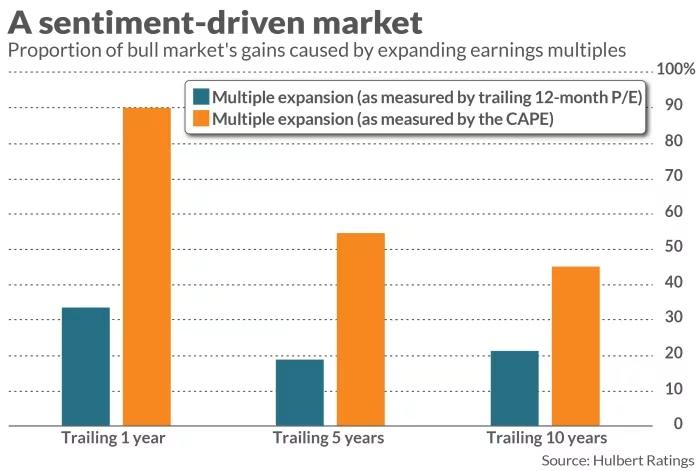
Currently, the market appears to be sentiment-driven, leaving the bulls on shaky ground. The S&P 500 performance over the past five years provides a telling example. A Bull Market Backed by Earnings is Stronger Than One Fueled by Emotion A bull market rooted in earnings growth offers a far sturdier foundation than one driven by investor sentiment. Recent market volatility underscores this point. For instance, on Nov. 19, the Dow Jones Industrial Average (DJIA) plunged over 400 points shortly after the opening bell, only to recover and end the day nearly unchanged. Such erratic swings defy fundamental analysis and instead highlight the unpredictable nature of investor emotions. If the index had risen in line with earnings per share, it would be below 4,500—around 25% lower than its current level. Instead, the S&P 500 sits above 5,900, a climb largely attributable to a significant expansion in price-to-earnings (P/E) ratios rather than proportional earnings growth. Earnings Growth vs. Sentiment The driving force behind market gains—earnings or sentiment—often depends on the time frame of analysis. David Rosenberg, founder of Rosenberg Research, highlights this dynamic, noting that U.S. stocks have climbed 41% over the past year despite earnings growing by just 4%. Without the expansion of P/E multiples during this period, Rosenberg estimates the S&P 500 would be closer to 4,600. Different methods of calculating earnings can yield slightly varied perspectives, whether focusing on trailing 12 months, forward 12 months, or the inflation-adjusted 10-year averages used in Robert Shiller’s Cyclically Adjusted Price/Earnings (CAPE) ratio. However, the conclusion remains consistent: the recent bull market has leaned heavily on expanding P/E multiples. The Interest Rate Factor This reliance on inflated P/E ratios is even riskier in today’s rising interest rate environment. Historically, P/E multiples tend to shrink when interest rates rise due to discounted cash flow models, which lower the present value of future earnings. Yet, despite the 10-year U.S. Treasury yield more than doubling over the past five years, P/E ratios have expanded significantly. If interest rates had steadily declined over this period, the increase in P/E multiples might seem more sustainable. Instead, the current market dynamic heightens vulnerability, as higher interest rates and an over-reliance on sentiment create a precarious situation. The Takeaway Investor sentiment is inherently volatile, leaving the stock market prone to sharp fluctuations like those seen earlier this week—or worse. A bull market grounded in robust earnings growth would offer far greater stability than one propped up by the unpredictable whims of investor emotions. John PaulJohn Paul is the founder of DayTradeToWin, a trading education and software company established in 2008, supporting traders worldwide. His expertise focuses on price action-based futures trading strategies and structured market analysis. DayTradeToWin delivers trading education, indicators, and software tools designed to help traders apply disciplined, rule-based decision-making across global futures markets. He is the creator of multiple trading methodologies, including the Sonic System, Atlas Line, and Trade Scalper, which help traders identify structured opportunities in markets such as the E-mini S&P 500 (ES), Nasdaq (NQ), crude oil (CL), and gold (GC). Official website: https://daytradetowin.com daytradetowin.com
market
Uncategorized

Ken Griffin: Market Rally Expected Post-Election

Citadel CEO Ken Griffin anticipates that the market will likely rally once the uncertainty surrounding the U.S. election fades. Speaking at Saudi Arabia’s Future Investment Initiative (FII), Griffin remarked, “The reduction in uncertainty is almost always positive for asset prices.” With the current tight race, in which Trump holds a slight edge but remains unpredictable, Griffin believes the resolution will lead to a “risk-on environment” as investors adjust to the incoming administration, be it under Trump or Harris. The FII, hosted by Saudi Arabia’s Public Investment Fund (PIF), managing $925 billion in assets, also featured BlackRock CEO Larry Fink, who discussed the vast capital needed for advancements in digitization and decarbonization. Highlighting Walmart’s use of AI in managing retail operations, Fink emphasized the long-term potential for equity markets, citing a “$9 trillion” reserve in money market ready for deployment into critical infrastructure growth. Fink also challenged conventional economic wisdom, suggesting that current high interest rates may no longer hamper economic growth as expected, due in part to an aging population that tends to save more. Additionally, the prevalence of 30-year fixed-rate mortgages among American homeowners may mean that rate hikes take years to impact the broader economy. Amid current global challenges, Saudi Arabia’s FII continues to attract major financial leaders, underscoring the region’s emerging role as a focal point for international investment. John PaulJohn Paul is the founder of DayTradeToWin, a trading education and software company established in 2008, supporting traders worldwide. His expertise focuses on price action-based futures trading strategies and structured market analysis. DayTradeToWin delivers trading education, indicators, and software tools designed to help traders apply disciplined, rule-based decision-making across global futures markets. He is the creator of multiple trading methodologies, including the Sonic System, Atlas Line, and Trade Scalper, which help traders identify structured opportunities in markets such as the E-mini S&P 500 (ES), Nasdaq (NQ), crude oil (CL), and gold (GC). Official website: https://daytradetowin.com daytradetowin.com

market
Uncategorized

Can Higher Yields Trigger a Quick Market Rebound?

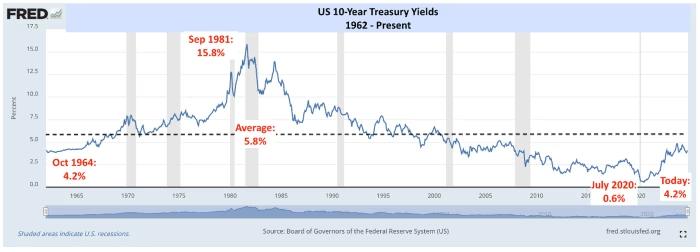
Despite rising bond yields putting pressure on U.S. stocks, many analysts remain optimistic about the market future. Nicholas Colas, co-founder of DataTrek Research, expressed confidence in a recent note, saying, “While higher yields are pressuring stocks, we remain bullish.” Colas views the increase in the 10-year Treasury yield as a sign of continued economic strength, expecting corporate earnings growth to persist in the coming quarters. Although the S&P 500 fell 1.2% this week, it’s still up 21.5% in 2024, supported by strong earnings and a resilient economy. Andrew Slimmon, senior portfolio manager at Morgan Stanley Investment Management, shared a similar sentiment, acknowledging that the market rally could pause due to higher Treasury yields but will likely pick up again. He believes that while next year’s returns may be more subdued, the strong economic backdrop will keep the momentum going. The 10-year Treasury yield climbed to 4.24% on Wednesday, its highest level since July. Colas pointed out that, from a long-term perspective, today’s yields align with historical trends, suggesting the recent rise is not unusual. Slimmon remains focused on cyclical sectors like financials and industrials, expecting the rally to continue into 2025, even with more moderate gains. While short-term headwinds exist, the overall outlook for U.S. stocks remains positive. John PaulJohn Paul is the founder of DayTradeToWin, a trading education and software company established in 2008, supporting traders worldwide. His expertise focuses on price action-based futures trading strategies and structured market analysis. DayTradeToWin delivers trading education, indicators, and software tools designed to help traders apply disciplined, rule-based decision-making across global futures markets. He is the creator of multiple trading methodologies, including the Sonic System, Atlas Line, and Trade Scalper, which help traders identify structured opportunities in markets such as the E-mini S&P 500 (ES), Nasdaq (NQ), crude oil (CL), and gold (GC). Official website: https://daytradetowin.com daytradetowin.com

Scroll to Top