Uncategorized

Mastering Choppy Markets: Navigating with Confidence Through the Roadmap Trading Approach

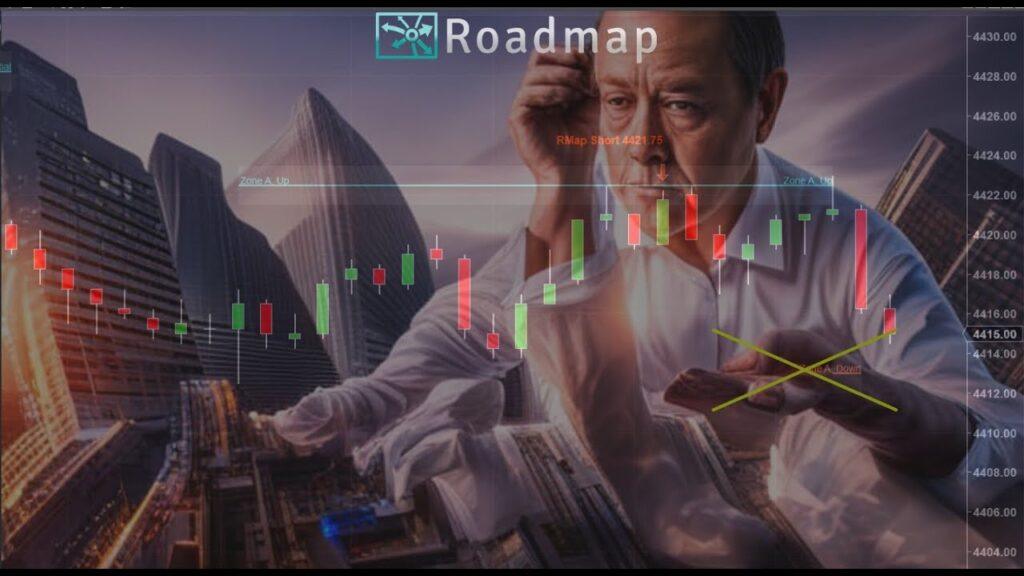
In trading, maneuvering through choppy markets can present a formidable challenge. The erratic price fluctuations, abrupt reversals, and concealed manipulations create an intricate puzzle that traders must solve to secure steady profits. However, there exists a method that has garnered considerable attention due to its prowess in predicting zones to evade and shielding traders from market manipulation – it’s known as the Roadmap trading system. In this article, we will explore the Roadmap system – its mechanics and how it can help you navigate volatile markets. Decoding the Roadmap Approach The Roadmap system transcends the realm of mere trading techniques; it embodies a holistic methodology that offers traders a clear trajectory amidst the chaos of volatile and uncertain market scenarios. Forged by experienced traders and serving as a cornerstone of the DayTradeToWin Accelerated Mentorship Program, the Roadmap system has cemented its reputation as a dependable conduit for effectively entering and sieving trades while deftly sidestepping potential pitfalls. At its essence, the Roadmap system is rooted in the analysis of price action. This methodology prioritizes uncluttered charts and established rules, rendering comprehension and implementation more seamless for traders. In stark contrast to conventional methods reliant on average indicators – often found wanting in choppy markets – the Roadmap system offers a distinctive perspective that transcends diverse asset classes, encompassing Forex, Futures, and Stocks. Navigating the Terrain: Predicting Zones and Eluding Manipulation Choppy markets possess a penchant for ensnaring traders in deceptive maneuvers and orchestrated price fluctuations. The Roadmap system, however, arms traders with the arsenal to preempt these realms of uncertainty and manipulation. By dissecting price action patterns and historical data, this method empowers traders to pinpoint potential danger zones and tactfully steer clear of them. The hallmark of the Roadmap system lies in its capacity to predict areas to avoid, setting it apart from conventional trading strategies. It’s akin to having a market GPS, steering you away from treacherous terrains and guiding you towards opportunities that brim with profitability. A Holistic Path to Mastery Traditionally confined to the enclave of the DayTradeToWin Accelerated Mentorship Program, access to the Roadmap system was a privilege reserved for the enrolled few. Yet, with an understanding of its transformative potential for traders, the Roadmap system now emerges as an autonomous entity. Whether you’re a seasoned trader looking to amplify your existing approach or a neophyte in search of a steadfast methodology to navigate markets, the Roadmap system emerges as your catalyst for transformation. This system encompasses live training sessions, software access, and an exhaustive course that steers you through every facet of the Roadmap system. From grasping the bedrock principles to executing trades with unwavering conviction, every resource necessary for triumph rests at your disposal. Practical Prowess: A Glimpse into Reality To illuminate the pragmatic facets of the Roadmap system, consider the embedded video showcasing signals and trade instances through the lens of the ES-mini S&P on a 1-minute chart. This visual exposé underscores how the Roadmap system adeptly navigates trading decisions in real-time, even when ensnared within the labyrinth of turbulent market conditions. In Conclusion Taming choppy markets necessitates a strategic blueprint that amalgamates price action analysis, prescient insights, and a profound grasp of market dynamics. The Roadmap system encapsulates these constituents, furnishing traders with an exceptional edge in navigating tempestuous market waters. Whether your focus is on Forex, Futures, or Stocks, the Roadmap system’s comprehensive architecture is poised to unlock consistent profits within even the most formidable market climates. The era of reliance on subpar indicators during volatile times has faded. Embrace the Roadmap system and seize command of your trading odyssey in unprecedented ways. Guided by this roadmap, navigate through choppy markets with unwavering confidence and emerge triumphant.

Market News

Anticipating a U.S. Stock Rebound This Week Amidst Ongoing Summer Selloff, Analysts Caution

While there’s a possibility of a short-lived rebound in U.S. stocks this week, experts caution against viewing it as the end of the ongoing late-summer selloff. Instead, analysts suggest that any potential bounce would likely act as a brief reprieve before the S&P 500 SPX resumes its downward trajectory towards the key support level of 4,200, according to technical analysts. Various technical strategists have shared research insights with MarketWatch, pointing out that multiple indicators indicate that both the S&P 500 and Nasdaq-100 have entered the territory of being “oversold.” For instance, recent data indicates that only 15% of S&P 500 stocks were trading above their 20-day moving average, a metric highlighted by experts such as Jonathan Krinsky of BTIG and Jeffrey deGraaf from Renaissance Macro. The chart below, courtesy of deGraaf and his team, illustrates this point: Both Krinsky and deGraaf have pointed to the 10-day U.S. equity put-call ratio, which recently surged to its highest level in 2023. This uptick signifies a heightened preference for put options, which typically yield returns when stock prices decline. However, Krinsky advised his clients to keep their focus on the bigger picture, suggesting that the ongoing selloff might only be halfway through. Krinsky projected that any potential rebound might taper off around the 4,450 level, while technical analysts have identified 4,200 on the S&P 500 as a strong long-term support level. Notably, 4,200 had served as a notable resistance point for stocks for over half a year. “While there are factors suggesting short-term relief, we believe the selloff is only about halfway through,” noted Krinsky. Others in the market share a similar viewpoint, including Katie Stockton, founder and managing partner of Fairlead Strategies. She predicts that the S&P 500 might stabilize just below 4,200, potentially erasing a significant portion of the year-to-date gains. Data from FactSet reveals that the S&P 500 had risen by nearly 20% for the year at its peak last month. Another noteworthy development is the limited spread between Treasury yields and corporate bond yields. This distinctive aspect distinguishes the current selloff from previous instances when stocks plummeted to their yearly lows, such as in October. Nick Colas of DataTrek highlighted in a recent research note that the spreads for corporate bonds, at 1.26 percentage points over Treasurys for investment-grade corporates and 3.95 points for high-yield bonds, remain “remarkably low.” This suggests that investors are potentially reassessing equity valuations that many deem to be overextended, based on expectations for corporate earnings. As of late July, the forward 12-month price-to-earnings ratio for the S&P 500 stood at 19.4, surpassing the five-year average of 18.6 and the 10-year average of 17.4, according to FactSet data. The index’s recent decline has brought it to a more reasonable level of 18.6, aligning with its five-year average. “The disparity this month must be attributed to something unique to stocks, which is equity valuations,” observed Colas. While investors remain watchful of corporate bond spreads, concerns are amplified alongside the rise of long-dated Treasury yields. Any sign of their upward movement could indicate bond investors’ apprehensions about rising borrowing costs impacting corporate cash flows and profits. Despite these uncertainties, U.S. stocks concluded Monday with mostly positive results. The Nasdaq Composite COMP snapped a four-day losing streak, surging by 1.6% to 13,497.59 points. The S&P 500 registered a 0.7% increase to 4,399.77 points. On the other hand, the Dow Jones Industrial Average DJIA experienced a slight decline of 0.1% to 34,463.69 points. Both the S&P 500 and Nasdaq endured three consecutive weeks of decline. The upcoming week presents an array of potential risks for stocks, including Federal Reserve Chairman Jerome Powell’s speech and an earnings report from market standout Nvidia Corp. NVDA, +8.47%.

DayTradeToWin Review

Unlocking the Potential of Intraday Trading: Navigating the Fast-Paced World of Day Trading

In the ever-evolving landscape of finance, new strategies continuously emerge, reshaping the way we approach markets. Among these strategies, Intraday Trading has gained prominence as a dynamic and fast-paced approach that captures short-term market moves. In this comprehensive guide, we delve into the core concepts, strategies, and benefits of intraday trading. Intraday trading, commonly referred to as day trading, involves the purchase and sale of financial assets within a single trading day. Unlike traditional investing, where positions are held for prolonged periods, intraday traders capitalize on rapid price fluctuations. Their goal is to seize short-term opportunities and leverage market movements for potential profit. Why Opt for Intraday Trading? Leveraging Short-Term Price Movements: Intraday traders closely analyze price charts and employ technical analysis tools to pinpoint optimal entry and exit points. This strategy enables them to capitalize on both upward and downward price swings, making the most of market volatility. Actionable Insights: Constant monitoring of price movements offers valuable insights into market trends and patterns. This continuous observation empowers traders to better comprehend how securities behave within a single trading session, enhancing decision-making and refining trading strategies. Increased Liquidity: Intraday trading adds liquidity to the market as traders actively buy and sell throughout the day. This heightened trading volume fosters a more dynamic market environment, facilitating seamless trade execution and mitigating transaction costs. ⚖️ Effective Risk Management: By closing positions before the trading day ends, intraday traders evade the risks associated with overnight news or events that might impact security prices. Tight stop-loss orders further protect their capital from potential losses. Mastering the Basics of Intraday Trading For newcomers to the stock trading universe, intraday trading may appear intricate at first glance. However, at its core, it involves buying and selling stocks within the same trading day. Intraday traders strive to exploit short-term price movements, seeking profits through rapid and calculated trades. Buying and Selling Stocks in One Day: Intraday trading entails executing trades within the span of a single trading day. Traders meticulously analyze stock prices, historical performance, and indicators to make well-informed decisions. They establish long positions (anticipating price rise) or short positions (anticipating price drop) and place orders accordingly. Technical Analysis and Indicators: Technical analysis plays a pivotal role in intraday trading. Traders leverage various indicators and chart patterns to assess price movements and identify potential entry and exit points. Moving averages, Bollinger Bands, and the Relative Strength Index (RSI) are commonly used tools to evaluate trends and volatility. Strategies for Success: Intraday traders adopt diverse strategies to navigate the market: Pros and Cons of Intraday Trading Pros: ✔️ High Profit Potential: Successful strategies can lead to substantial gains. ✔️ Mitigated Overnight Risk: Positions are closed before market closure, reducing exposure to overnight events. ✔️ Higher Intraday Leverage: Traders can access more leverage for intraday trading, increasing potential returns. Cons: ❌ Inherent Risk: Trading involves risk, and not all traders achieve success. ❌ High Capital Requirements: Complying with regulations necessitates a substantial account balance. Embarking on Your Intraday Trading Journey Intraday trading offers exciting opportunities for those who master its techniques and strategies. As you venture into this fast-paced world, it’s crucial to build a solid foundation of knowledge, refine your strategies, and practice prudent risk management. Seek guidance from seasoned traders and financial advisors to navigate the complexities and maximize your chances of success. Remember, intraday trading is a journey that demands patience, perseverance, and continuous learning. By harnessing the power of short-term market movements, you can potentially unlock a pathway to financial growth and empowerment.

stock market
Market News

S&P 500’s Monthly Slide: 2023’s Deepest Loss Looms as Yields Continue to Rise

Investors may be confronted with the scenario where the Federal Reserve decides to keep interest rates elevated for an extended duration. As a result, there has been a notable increase in Treasury yields, leading to the S&P 500 index enduring its most substantial monthly drop in 2023. During a phone interview, Scott Chronert, an equity strategist at Citigroup, clarified that the yield on the 10-year Treasury note exceeded the trading range of 3.5% – 4% in August. This rise had a negative impact on stock market valuations, as it went against the established pattern that had been observed throughout the year. This month, investors in the American stock market are witnessing a downturn in their investments as they anxiously await Federal Reserve Chair Jerome Powell’s speech at the Jackson Hole Economic Symposium in Wyoming, which is planned for Friday. Furthermore, they are dealing with a rise in yields throughout August and monitoring the possible consequences of China’s economic difficulties, as it is the second largest economy globally. Investors were taken aback this month when the return on the 10-year treasury note BX:TMUBMUSD10Y, which had been increasing, reached its highest point since 2007 despite the Federal Reserve’s efforts to gradually raise interest rates due to the decreasing inflation in the United States. During a phone interview, Rick Rieder, the chief investment officer of global fixed income at BlackRock and head of the firm’s global allocation investment team, pointed out the irony of interest rates going up while inflation decreased considerably in the last three and six months, as indicated by the moving averages of the consumer-price index. Based on data from Dow Jones Market Data, the U.S. stock market ended the week with mostly negative results. The S&P 500 index reported its third consecutive week of losses and is currently down by 4.8% in the month of August. This represents the largest monthly decline for the index since December, according to data provided by FactSet. Both the Nasdaq Composite COMP and Dow Jones Industrial Average DJIA concluded the week on a negative note on Friday. Similar to the S&P 500, the Nasdaq, famous for its emphasis on technology stocks, saw three consecutive weeks of decline. Rieder pointed out that investors in the stock market are concerned that the strong condition of the American economy could prompt the Federal Reserve to tighten its monetary policy even more. This worry, combined with an increase in the amount of U.S. Treasurys being circulated, appears to be adversely affecting the stock market. Rieder stated that there is a significant issuance of Treasury bills, causing a decrease in available funds, which he believes is starting to show some effects. These Treasury bills are short-term U.S. government debt that matures within a few months and have been yielding more than 5% recently. Scott Wren, a senior global market strategist at Wells Fargo Investment Institute, mentioned in a telephone conversation that his company made the decision to withdraw a portion of their funds from the stock market earlier this year. Specifically, they decreased their investments in technology stocks and chose to invest in Treasury bills instead. This strategic move allows them to take advantage of opportunities when the stock market undergoes declines. Wells Fargo has a projection that the S&P 500 index will achieve a value of 4,100 by the conclusion of 2023. Dow Jones Market Data reports that the S&P 500 closed on Friday at 4,369.71, which indicates a decline of 8.9% from its peak closing level in January 2022. Wren stated that the Federal Reserve has yet to complete its efforts to increase interest rates in order to manage ongoing core inflation. During the Jackson Hole meeting, Chair Jerome Powell may take this chance to convey to the market that the central bank is presently not contemplating reducing rates. Wren suggests that Powell might continue to emphasize a firm position by repeating the idea that the Federal Reserve has the ability to raise its benchmark rate as a means to combat inflation and achieve its goal of 2%. Chair Powell has been scheduled to deliver a speech at the Jackson Hole meeting on August 25. In a telephone interview, David Kelly, J.P. Morgan Asset Management’s chief global strategist, remarked that the current state of the U.S. economy is very strong. He also conveyed his confidence that a significant reduction in inflation can occur without causing a recession. Investors are worried that the Federal Reserve’s continuous increase in interest rates, which were previously raised to curb high inflation, could possibly cause a decline in the economy. Kelly states that in the absence of notable economic issues, it is improbable for interest rates to diminish by the end of this year. But Kelly is anticipating that the Federal Reserve could potentially begin a gradual reduction of interest rates in the spring of 2024, given that inflation continues to decrease and eventually reaches 2%. He pointed out that if the labor market starts exhibiting indications of an imminent economic decline, such as consistent monthly decreases in nonfarm payroll employment reports, the central bank would probably accelerate the pace at which they lower interest rates. Currently, 10-year Treasury yields have been consistently rising for five consecutive weeks, marking the longest streak since March. According to Dow Jones Market Data, the yields closed at 4.251% on Friday. However, they slightly decreased on Friday after reaching their highest level since November 2007 on August 17, as reported at 3 p.m. Eastern Time. Rieder from BlackRock explains that the rise in interest rates can be credited to various reasons. These encompass the greater accessibility of U.S. government debt, the impact of the Bank of Japan modifying its yield-curve control to permit its own 10-year yields to increase, and the appeal of Treasury bills which offer a favorable rate of approximately 5.5% with no credit or duration risks. Kelly mentioned that while the economy of the United States is flourishing, China’s economy is facing challenges. The property sector in China is currently encountering

stock market
Market News

Bull Market Update: Brace for Potential 10% Correction

Hayes Martin, a stock market strategist, has both encouraging and discouraging news for individuals with a positive outlook on the stock market. Starting with the downside, Martin anticipates that the continuous decline in the market will ultimately lead to a decrease of 8% to 13% in the market averages. (As of August, the S&P 500 index has already gone through a drop.) On the bright side, Martin assures that this upcoming decline will not mark the end of the positive market trend or the start of a negative market trend. I often count on Martin, the head of advisory company Market Extremes, for valuable information. I always make sure to give his emails my complete attention. It is important to mention that there is no professional agreement between his advisory service and my auditing firm when it comes to calculating the performance of his services. Martin sent an email in the afternoon of August 1st. In contrast to his previous emails, where he showed belief in the market’s expansion, this time he noted that the market’s internal elements were deteriorating. He acknowledged that although he doesn’t foresee a major drop, we should be prepared for a more significant temporary setback. Consequently, he recommended adopting a defensive approach in such situations. From August 1st to August 15th, there was a 3% drop in the S&P 500 SPX, whereas the Nasdaq Composite COMP experienced a decline of 4.6%. In a later email, Martin mentioned that his research shows there is still potential for further improvement in addressing this issue, with a range of 8% to 13%. However, he observed that the market’s internal factors have only slightly worsened, in contrast to the significant decline seen in previous bull-market highs. He also predicted that once this correction comes to an end, the progress is expected to continue. Considering Martin’s analysis, it is crucial to remember his previous statements from the past year and a half. For example, during the pessimistic market period in late May and early June 2022, he correctly foresaw a market rally, particularly in the technology industry, along with a possible growth ranging from 15% to 25%. The subsequent three months saw the Nasdaq Composite increase by 16.5%, proving the accuracy of his prediction. Following the conclusion of the rally, the bear market made a strong resurgence. By early October 2022, the Nasdaq erased the entire 16.5% gain it had experienced during the rally. At this point, Martin predicted a significant “reflex bounce” in the market, although he did not foresee a new bull market. This bounce would cause the market averages to rise by 10%-15%, with the technology-dominated indexes potentially seeing gains of 15-20%. The market reached its lowest point on October 12. While Martin initially did not expect a new bull market in early October and became more optimistic later on, he should be recognized for accurately predicting a powerful rally. If you trust Martin’s analysis, it would be advisable to make changes to your stock portfolios in order to adopt a more defensive approach.

Market News

Analyzing August’s Stock-Market Trends: Will the Stumble Transform into a Rout?

The drop in the American stock-market rally in August 2023 was anticipated. In a note on Friday morning, Tom Lee from Fundstrat stated that the S&P 500’s recent decrease of 5.6% over a 15-day period is a usual situation for August. Despite this, Lee, who is well-known for his positive outlook on the stock market, expects this decline to be temporary and connected to the month of August. In August, there are usually difficulties in the financial market, with high levels of unpredictability seen in the VIX reaching its highest point. Moreover, trading conditions tend to have low activity, particularly towards the end of the month, as the holiday season ends. The speaker states that stocks are being sold off due to several reasonable factors. These factors consist of a 50 basis point rise in the 10-year Treasury yield, causing it to reach its highest level in 15 years, the strengthening of the US dollar, and a long-awaited increase in the Cboe Volatility Index. Both the S&P 500 index and Nasdaq Composite suffered losses for the third week in a row on Friday. Additionally, the Dow Jones Industrial Average experienced a decline of 2.2% for the week. According to Lee’s definition, what conditions must be met in order for the slide to be classified as a significant decline, which is a 10% decrease leading to the S&P 500 reaching the level of 4,150? In order for the increase in yields to have a notable effect, Lee states that it would either have to present a risk of causing significant harm or require some other external disruption. Lee stated that he is not claiming that this is an impossible scenario. He gave an example to support his point, stating that if there is a sudden 10% rise in oil prices along with indications of increasing wages, it could potentially result in a larger decline in market value. The reason for this is that such factors might raise doubts among investors about the consistency of inflation reduction. Lee states that at present, inflation is not the primary worry for investors as their attention is primarily directed towards the rising bond yields, which have a detrimental impact on price-to-earnings ratios. They are also apprehensive about the prospect of a stronger U.S. economy, which could lead to the Federal Reserve implementing further interest rate hikes. Furthermore, Lee highlights the slight concerns among U.S. investors regarding weak economic data and property matters in China. Lee mentioned that there are signs in the market suggesting that stability may soon return. Firstly, he stated that the acceleration in the rate at which the 10-year yield is increasing is having a negative effect on stocks. However, it is not unusual for such abrupt increments to occur towards the end of a period when equities are being sold. He highlighted that the recent 50 basis point rise in the Treasury 10-year yield, which happened in just 21 days, is comparable to the increases in yield that were observed on September 23rd and March 2nd in the previous year. It is important to note that during those occasions, stocks reached their lowest point between 8 and 16 days later. Furthermore, the McClellan Oscillator reveals that there is currently an excess number of stocks, with a value of -50. This particular situation has only happened on 39 occasions since 1990. Lee’s analysis suggests that in 51% of these occurrences, stocks reached their lowest level within five days, while in 72% of cases, stocks reached their lowest level within 15 days. Lee proposed some dates that could hold importance for the future of the market. One of these dates is August 24th, which comes after Nvidia, a company that manufactures chips, discloses its financial performance for the second quarter. The outstanding outcomes that Nvidia achieved earlier in the year were understood to have sparked enthusiasm around artificial intelligence, ultimately causing a rise in the stocks of major technology companies. On Friday, August 25th, investors will be paying attention to Federal Reserve Chair Jerome Powell, who is scheduled to deliver a speech at the annual symposium of the Kansas City Fed in Jackson Hole, Wyoming. Lee remembered that Powell’s speech in Jackson Hole last year indicated the conclusion of a recovery for the S&P 500, resulting in a subsequent drop of 19% in stock prices over the ensuing eight weeks. He was unsure if stocks would see a 20% increase after this year’s Jackson Hole conference, but he admitted that unforeseen events could still happen.

Scroll to Top