markets
Market News

4 Years of Fed Misses: Will Markets Ever Learn?

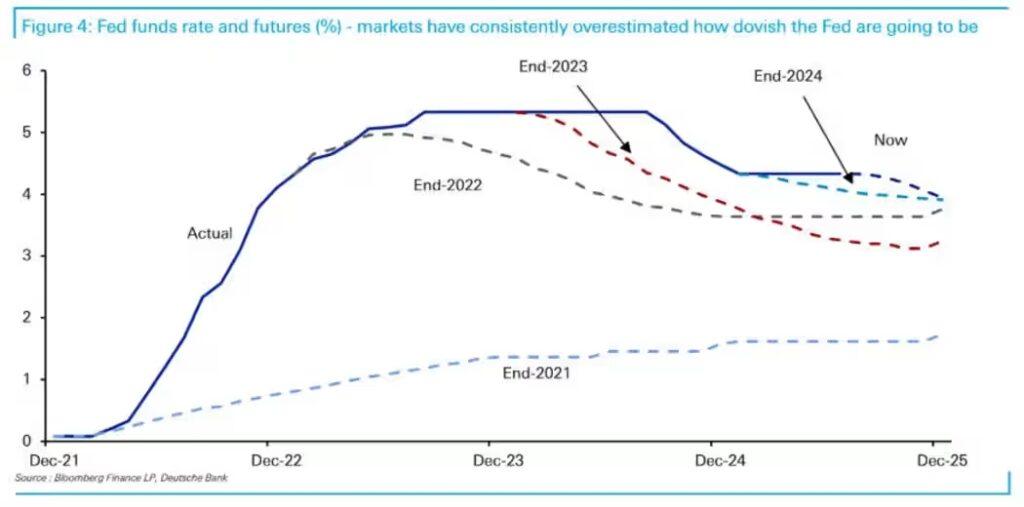
Tariff Risks Are Rising—But Markets Aren’t Paying Attention Stocks look set for a subdued session, even as warning signs build beneath the surface. Tuesday’s bond market reaction to hotter-than-expected June inflation showed just how quickly sentiment can shift—especially as tariffs start to play a bigger role. Consumer prices jumped last month by the most since early 2025, and some economists are starting to connect the dots. Henry Allen, macro strategist at Deutsche Bank, says investors remain too relaxed about the inflation outlook. “There’s still a striking complacency across major asset classes,” Allen said in a Wednesday note. “This is now the fourth consecutive year that markets have misjudged how hawkish the Fed would actually be.” One key factor Allen flags: rising tariffs. Former President Donald Trump has proposed sweeping trade policies, including a 10% baseline tariff on most imports, with additional levies on steel, aluminum, autos, and possibly copper. Markets, however, haven’t priced in these possibilities. According to betting markets, there’s a 28% chance Trump’s proposed 30% tariff on EU goods becomes reality, and a 43% chance that Canada’s 35% tariff goes through. “If enacted, they’d be a major surprise,” Allen said. “Most investors aren’t prepared for them.” Beyond the U.S., retaliation is also a risk. The European Union reportedly has a list of U.S. products ready to target in response to new duties. Allen warns this could ignite a broader inflation wave by disrupting global supply chains and pushing prices higher. Evidence may already be emerging. Tuesday’s inflation data showed the largest-ever monthly jump in household appliance prices. Allen believes this could signal a broader trend: “The strength in core goods may soon spread across the consumer basket, making inflation more persistent.” Geopolitical risks could add fuel to the fire. Allen cites last month’s Iran-Israel tensions, which briefly drove oil prices higher, as the kind of unpredictable shock that can reignite inflation expectations. Meanwhile, central banks are still expected to cut rates later this year—bets that Allen says are increasingly out of touch. “Markets keep assuming dovish pivots that never arrive. At the start of 2025, traders were pricing in a Fed rate cut by June, which didn’t happen.” Debt burdens could also play a role. Governments may be tempted to tolerate surprise inflation as a short-term fix for high debt, even if markets eventually demand higher rates to compensate. “The bottom line,” Allen said, “is that markets continue to underestimate the inflation risks still ahead—particularly from tariffs. That could set the stage for yet another round of painful surprises.”

sonic
DayTradeToWin Review

Sonic Rules to Stay in the Game

In today’s follow-up video, I’m sharing a real-time example using the Sonic trading system — and why it’s crucial for your trading strategy to be flexible enough to handle both long and short trades depending on market conditions. The goal? Trade with precision and discipline, not guesswork. Spotting the Setup At the time of recording, the market was moving sideways — nothing compelling. But then, a clean short signal appeared using the Sonic system. Here’s the breakdown before entering: That’s the kind of environment we want. Time-Based Stops: An Overlooked Edge Many traders hold losing trades too long. Not here. Using a 1-minute chart? Don’t hold a position longer than 15–20 minutes. If your trade hasn’t hit your target or stop by then, get out. Break-even? Small loss? Small win? Exit and move on. In this example, the target was hit in just 4 minutes — a perfect setup and a quick win. When to Hold Back After two solid trades within 20 minutes of the open, I paused. Why? Because no clear trend = no need to force a trade. If you’re in our Accelerated Mentorship, you have tools like the Roadmap, Atlas Line, and Trade Scalper to help filter signals. But even with just the Sonic system, the strategy can stand on its own — as this session showed. Built-In Filters and Forward Clarity One great feature of Sonic is the directional filter — that yellow dashed line. This gives you a heads-up on which direction the next trade will likely be, reducing hesitation and letting you prep early. Trading Rules to Live By Let me leave you with some key rules: Ready to Level Up? Want to trade like this every day? ➡️ Visit daytradetowin.com➡️ Create a free member account➡️ Access trial software and learn more about our Accelerated Mentorship Program You’ll get access to everything — including the Sonic system, and our proven methods that focus on price action, not cluttered indicators. Let’s get you started the right way.

nvidia
Market News

Nvidia Teases Return to China Market After Sales Halt

Nvidia Eyes Return to China Market After $8 Billion Setback Nvidia is preparing to re-enter the Chinese market with its H20 chip, a move that could recover billions in lost revenue after facing strict U.S. export restrictions. In a blog post released late Monday, Nvidia said it is seeking approval to resume sales of its H20 chip—a lower-spec version of its Hopper series tailored to comply with U.S. trade rules. The company disclosed it has received assurances from the U.S. government that licenses for the chip “will be granted,” opening the door for a return to the market. This development comes just three months after Nvidia warned that tighter U.S. regulations would significantly impact its business in China. In April, the company took a $4.5 billion charge in its fiscal first quarter, largely due to excess inventory and canceled orders related to the H20 chip. It estimated $2.5 billion in lost revenue for that quarter alone and forecast an additional $8 billion shortfall in the current quarter. The turnaround follows a series of high-level meetings between U.S. and Chinese officials earlier this month. While the U.S. Commerce Department has not commented, Nvidia is optimistic it can resume shipments soon. The potential return to China comes as Nvidia bets big on artificial intelligence. CEO Jensen Huang said in a May interview that the global AI market could grow to $50 billion within a few years—a market China plays a critical role in. If H20 sales resume, it could mark a major win for Nvidia’s efforts to navigate geopolitical headwinds without missing out on the AI boom.

sonic
DayTradeToWin Review

The Sonic System in Action: Small Start, Big Gains

It’s Monday, and we’re starting the week strong with a real-time look at trading the market open using the Sonic Trading System from DayTradeToWin. Whether you’re new to trading or a seasoned professional, understanding how to approach the open with structure and precision can make all the difference. Navigating the Market Open The opening minutes of the trading day can be unpredictable. That’s why I recommend waiting about 5 to 10 minutes after the bell rings. Let the initial volatility settle before jumping in. Once the dust clears, clearer opportunities tend to present themselves. Today, I began by adjusting the Sonic system’s visuals—specifically, the target and stop areas—to make them easier to read. I also set the profit target to 1.5 times the Average True Range (ATR), which gives more room for the trade to breathe and potentially earn a larger return. Passing on the First Signal The first Sonic signal appeared right after the open: a short entry at 6291.50. However, the price was already moving toward the target, so I decided to sit this one out. The key takeaway here is simple—don’t chase trades that are already in motion. Instead, wait for the next solid opportunity. Confidence Through Confirmation What gives me added confidence is seeing multiple signals in the same direction—several shorts or longs lining up. It’s not a guarantee, but when you see that kind of consistency, it’s often a strong sign the market is trending. Frequently Asked Questions We often receive several questions from new and experienced traders alike. Here are some quick answers: The Trade Breakdown: Setup to Exit The second trade of the morning came shortly after: a short signal at 6292.75. I managed to get a slightly better entry, which has two advantages: I set my target at 6289.50 and placed a stop to protect against unexpected reversals. The trade filled and reached the target, resulting in a 3.25-point gain, or about $162 on a single contract after commissions. If you were trading 10 contracts, that’s approximately $1,625—all within just a few minutes. Time is Money This trade took just three to four minutes. Using a 1-minute chart, each candle represents a minute of price action. Entering around 9:39 and exiting by 9:43 is efficient, and a solid way to begin the trading day. Fast, focused trades with proper risk management—that’s the Sonic system in action. Ready to Start? With the Sonic Trading System, you’re not only getting the software—you’re joining a mentorship program that provides: Visit daytradetowin.com to create a free member account. You’ll get access to exclusive trial tools, including the ABC software, and start learning how to trade using professional methods that avoid outdated indicators. Start your trading journey the right way. Learn, practice, and grow with a team that’s here to help every step of the way. We’ll see you in the next training.

tariffs
Market News

Why Tariffs Don’t Scare Wall Street

Big Tech Gets a Boost From New Tax Law as Markets Shrug Off Tariff Jitter Investors may be uneasy over the latest tariff headlines, but history suggests that fear might be misplaced — especially with the S&P 500 sitting just 0.3% off all-time highs. According to UBS, when the index is at record levels, it typically takes 105 days before a 5% pullback occurs. In that time, equities tend to outperform cash and short-term Treasurys. So while going defensive might feel safe, historically it hasn’t been the winning strategy. Mike Wilson, Morgan Stanley’s chief U.S. equity strategist, sees additional reasons for investor confidence. One is the belief that many of the proposed tariffs — particularly on Mexico and Canada — won’t be fully implemented. Goods that meet the rules under the U.S.-Mexico-Canada Agreement (USMCA), such as those manufactured entirely within member countries or significantly transformed, are likely to be exempt. Wilson’s team analyzed which industries are most exposed to tariffs. U.S. goods-focused sectors rely heavily on imports from China, followed by Mexico, Canada, and the EU. The real risk, they argue, would be a steep escalation in China tariffs — both due to broad sector exposure and the high market cap concentration of affected companies. Tariffs on Mexico would be the next-biggest threat, particularly if USMCA exemptions fall through. A specific area of concern is semiconductors. New levies on chips — vital to U.S. supply chains — could have broad ripple effects. “This could become a major issue depending on how Section 232 tariffs are applied,” the strategists warned. But there’s another story playing out beneath the surface — a rapid turnaround in earnings expectations. Analyst revisions have flipped from -25% in April to +3% now. Financials, in particular, have seen the strongest rebound in expected earnings per share. Then there’s the impact of the newly passed tax legislation, nicknamed the “One Big Beautiful Bill.” A key provision allows companies to expense R&D costs upfront, effectively lowering the corporate tax rate from 20% to around 13%. While this change won’t affect GAAP earnings — which already require immediate expensing — it will significantly improve cash flow. That cash flow benefit could explain why the so-called “Magnificent Seven” tech titans have led the market in recent months. Companies with more than $10 billion in deferred R&D tax assets — and thus poised to gain the most — include Alphabet, Amazon, Meta, Microsoft, Apple, Intel, and General Motors, according to separate investment bank research.

market
Market News

3 Things the Market Gets Wrong About U.S. Stocks

HSBC: Market Earnings Forecasts Are Too Pessimistic Ahead of Q2 Season With second-quarter earnings season about to begin, HSBC says the market is underestimating corporate performance — setting the stage for positive surprises. Despite recent shifts in U.S. trade policy, HSBC strategists, led by chief multi-asset strategist Max Kettner, believe markets are no longer as reactive to tariff headlines. “The tariff debate has faded into the background following the U.S.-China trade pause,” they note. “Risk assets are showing less sensitivity to these developments.” They point out that the U.S. economy remains solid, especially with consumer spending rebounding. As a result, current consensus earnings forecasts may be too low. “Pessimistic estimates create room for upside surprises, which could lead to positive earnings revisions and support further gains in risk assets,” the strategists explain. While tariffs carry inflation risks, HSBC says there’s little evidence of that so far — in fact, inflation appears to be cooling. Tariffs may also serve to keep investor positioning in check. Looking ahead to Q2 results, HSBC challenges the market’s expectation for a quarter-on-quarter earnings decline. “We don’t agree,” the team states. “Earnings estimates have seen the largest cuts in three years, and the front-loading of economic activity should provide a temporary boost to Q2 EPS.” Concerns about market valuation are also overstated, according to HSBC. On an equal-weighted basis, the S&P 500 is only slightly above its historical average — far from overvalued, in their view. In fact, many widely held bearish views on the U.S. — from slowing growth to a weaker dollar and continued equity underperformance — could be misguided. HSBC sees these as “pain trades” likely to catch investors off guard. Reflecting its bullish stance, HSBC raised its U.S. equity allocation by 4 percentage points, now recommending a 31% weight in its multi-asset portfolio. The full portfolio allocation is: 50% equities, 25% government bonds, 10% corporate credit, 5% commodities, and 5% cash.

Scroll to Top