sonic
DayTradeToWin Review

How Sonic Keeps Hitting High-Probability Shorts

If you’ve been watching the market closely, you know it’s been anything but quiet — even in the typically slow summer months. That’s exactly where the Sonic Trading System comes in, helping traders take advantage of fast-moving opportunities. We just wrapped up a fourth straight winning short trade using Sonic, and this setup has once again delivered results — this time on the E-mini S&P September contract at 6266. ⚠️ As always, remember: Trade with capital you can afford to risk. Why This Short Setup Worked Here’s why this Sonic short trade stood out: This specific trade played out quickly — price hit the target, and we closed out with a $250 gain. Automated Strategy, Simplified Execution If you’re using NinjaTrader, you can automate your entries and exits with the ATM strategy — set it and let Sonic do the rest. That means faster execution and less second-guessing. Ready to Trade Smarter? If you’re ready to learn how to spot trades like this consistently, we’ve got what you need: ✅ Free Member Account at DayTradeToWin.com🎓 Includes the ABC Price Action Course🛠️ Sonic System, News Indicator & Starter Videos📅 Live Training + Access to Our Trading Room Want everything we offer in one package? Join our Accelerated Mentorship and get instant access to all our software and strategies. 👉 Visit DayTradeToWin.com and start trading with a system designed for today’s market. Let’s get you set up. See you in the next training!

jpmorgan
Market News

JPMorgan: Massive Inflows to Power H2 Stocks

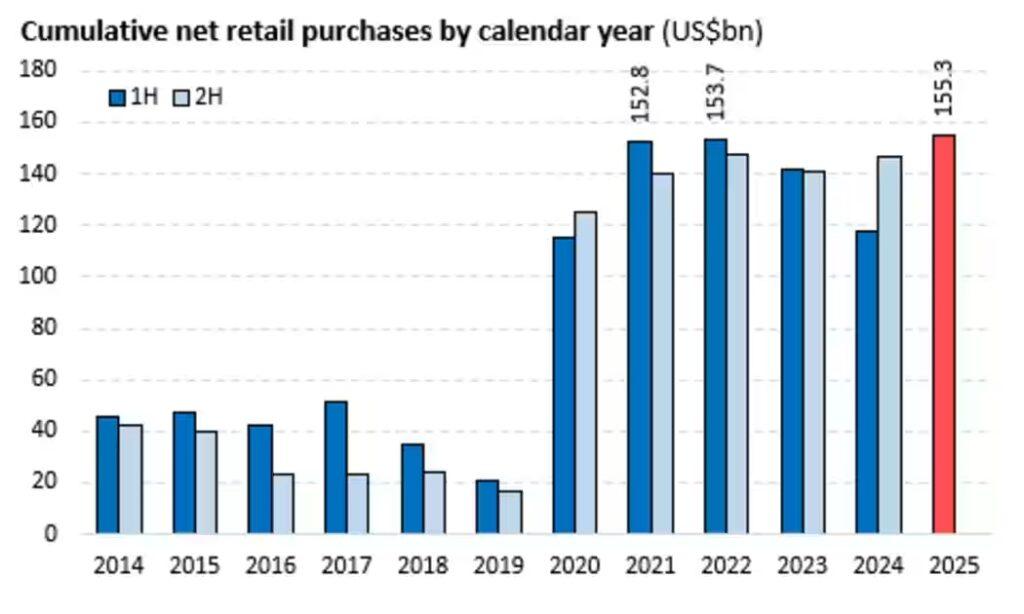
JPMorgan: Foreign Investors Will Return as Retail Buyers Fuel U.S. Stock Rally Retail investors have played a major role in powering this year’s market gains — and JPMorgan believes they’re about to take the lead again. In a new report, strategist Nikolaos Panigirtzoglou and his team forecast a massive $500 billion in net inflows into U.S. equities over the second half of 2025, with retail investors expected to contribute around $360 billion of that total. The result? Potential gains of 5% to 10% by year-end. After aggressively buying the dip in March and April, retail investors pulled back in May and June to lock in profits. But JPMorgan says this was a temporary pause — not a sign of fading interest. “We expect retail investors to resume equity buying and continue supporting the market from July onward,” the strategists wrote. Other investor groups may offer limited upside. Hedge funds have already boosted their equity exposure and likely won’t add much more. Quantitative funds, which reduced positions earlier in the year, could re-enter later. Pension funds and insurers, however, are expected to keep selling stocks as they rotate toward bonds — with estimated outflows of $360 billion this year. One surprising potential source of renewed demand? Foreign investors. According to JPMorgan, overseas buyers have largely stayed on the sidelines since February — a trend they describe as a short-term “boycott” of U.S. equities. But that’s unlikely to continue for long. “Foreign investors can’t ignore the most dynamic part of the global equity market — the S&P 500 and the Magnificent 7,” the strategists said. The key to their return may lie in currency stability. A weaker dollar has discouraged international investment, but the ICE Dollar Index (DXY) is now hovering near its April lows around 98. If the dollar stabilizes, JPMorgan believes foreign inflows could rebound by another $50 billion to $100 billion. Combined, these factors could drive nearly half a trillion dollars into U.S. equities in the months ahead — and fuel another leg of the rally.

oil
Market News

Oil Rises as Supply Battle Begins

OPEC+ Output ‘Superhike’ Sparks Unexpected Oil Price Rally Oil prices surged to their highest levels in two weeks on Tuesday—despite OPEC+ announcing a sizable increase in supply next month. The oil alliance, made up of OPEC and its partners, revealed over the weekend that it plans to boost production by 548,000 barrels per day in August. That’s a sharp uptick from the 411,000-barrel monthly increases seen from May through July. But instead of easing prices, the move has stirred up tensions in the global energy market and reignited the battle for market share. “This surprise superhike isn’t just a number—it’s a message,” said Stephen Innes, managing partner at SPI Asset Management. “OPEC+ has dropped the scalpel and picked up the trident. They’re no longer carefully managing prices—they’re forcefully staking their claim.” The production boost is part of a broader strategy to unwind 2.2 million barrels per day in voluntary cuts from last year, with a full reversal now expected as early as September—much sooner than previously anticipated. Innes likened the move to a sudden, aggressive strike meant to reset the balance of power. More Than Just More Barrels Behind the scenes, OPEC+ appears to be reshaping its approach. Compliant members are being rewarded, while countries like Iraq and Russia—who exceeded their output limits—are facing cutbacks in future quotas. “This isn’t just a pump fest—it’s a punishment regime,” said Innes. The group also seems to be eyeing struggling U.S. shale producers. American drilling activity has cooled significantly, with rig counts now at their lowest since 2021. Analysts say producers typically slow operations when prices fall below $60 per barrel. “This could be the ideal moment for OPEC+ to ramp up output while U.S. drilling stays muted,” noted Fawad Razaqzada, market analyst at City Index and FOREX.com. According to the U.S. Energy Information Administration, falling oil prices are already curbing domestic production growth. Its latest forecast shows a downward revision in U.S. output through 2026. Geopolitics, Supply Wars, and a Volatile Market Adding to the complexity is a wave of geopolitical tension. Last month, a U.S. military strike on Iranian targets and the short-lived conflict between Israel and Iran sent Brent crude prices soaring more than 30%—only to reverse quickly after a ceasefire. Meanwhile, fears over global inflation and trade wars have eased, helping lift investor sentiment. U.S. stocks have rebounded strongly since April, boosting the outlook for oil demand. On Tuesday, Brent crude rose 0.8% to $70.15 a barrel, while U.S. benchmark WTI climbed 0.6% to $68.33—both logging their best closes since June 23. Still, WTI remains down nearly 5% for the year. In short, OPEC+ is signaling it’s done playing defense. With U.S. shale struggling and demand recovering, the group is betting that a bold supply push—backed by geopolitical leverage—will secure a bigger slice of the market.

goldman
Market News

Goldman Lifts Forecast, Flags 3 Smart Plays

Goldman Sachs Forecasts 11% Stock Market Gain Despite Trade Risks Even as the White House once again delays tariff decisions, Goldman Sachs remains confident in the market’s upside potential. In their latest outlook, strategists led by David Kostin now project the S&P 500 will rise 11% over the next 12 months, targeting 6,900—up from a previous estimate of 6,500. They expect steady gains along the way, forecasting a 3% climb to 6,400 in the next three months and a 6% rise to 6,600 within six months. The team’s optimism is driven by several key factors: stronger-than-expected earnings growth in 2026, the anticipated return of Fed rate cuts, and neutral investor positioning, which they believe provides room for the rally to broaden beyond just a handful of large-cap names. Not all analysts share the upbeat view. Ipek Ozkardeskaya of Swissquote Bank warns that markets are acting “suspiciously optimistic,” turning a blind eye to the potential economic damage from tariffs. “Assuming everything will be magically resolved in the next three weeks is like seeing unicorns in the sky,” she wrote. Still, Goldman sees signs of resilience. They now forecast a forward P/E ratio of 22, up from 20.4, as investors seem willing to overlook short-term earnings softness. EPS growth is projected at 7% for both 2025 and 2026, though the team admits tariffs could pose downside risks to these estimates. Goldman expects the impact of tariffs to play out slowly, noting that many large-cap companies have stockpiled inventory, providing a buffer. However, one major concern remains: market breadth. The median S&P 500 stock is still more than 10% off its 52-week high, pointing to a narrow rally. Yet, the strategists believe this could turn into a “catch-up” rally, where more stocks join the climb rather than pull back. Goldman’s 3 Investment Themes for H2: As tariff fears begin to fade, Goldman expects investors to rotate into overlooked names. Among their top Russell 3000 picks with high short interest, low valuations, and strong upside potential are:Kohl’s (KSS), Intellia Therapeutics (NTLA), Gogo (GOGO), Plug Power (PLUG), and Apellis Pharmaceuticals (APLS).

market
Market News

Brace Yourself — More Market Volatility Ahead

Stocks May Face Headwinds as Valuations Stretch and Trade Tensions Reignite U.S. equities entered the Independence Day break at record highs—but the road up has been anything but smooth. Julian Emanuel, strategist at Evercore ISI, likens the market’s 2025 ride to a rollercoaster: thrilling, volatile, and now teetering at a peak. “We began with a surge fueled by post-election optimism, plunged into worries over trade wars and stagflation, and then rebounded sharply as Trump’s tariff pause cleared the way for fresh highs,” Emanuel wrote in a Sunday note. “Like any true rollercoaster, the recovery was just as violent as the drop.” What comes next, he says, hinges on which forces take the lead. On one side is long-term optimism driven by what Emanuel calls a structural AI bull market. On the other: renewed trade friction and sky-high valuations. The S&P 500 now trades at 24.5 times earnings—historically a level that tends to lead to weaker returns in the following years. “Markets are cresting again,” Emanuel warns, “and the next stretch could bring more turbulence, much like the sector rotation seen last July. Stay strapped in—the ride isn’t over.” Still, he sees potential for medium-term gains. Emanuel notes that the recent 20% market drop technically qualified as a bear market, but occurred without a recession—a rare pattern. Since 1960, such setups have led to average gains of 26% over the next 18 months. However, the road ahead won’t be smooth. “A rally doesn’t eliminate volatility,” he says, pointing to past drawdowns of 7.5% to 15% before stocks hit final highs. Evercore’s year-end target for the S&P 500 stands at 5,600—suggesting optimism, but with a cautious eye on whether history will repeat.

markets
Market News

Trump Sparks Fresh Trade Worries — Markets React

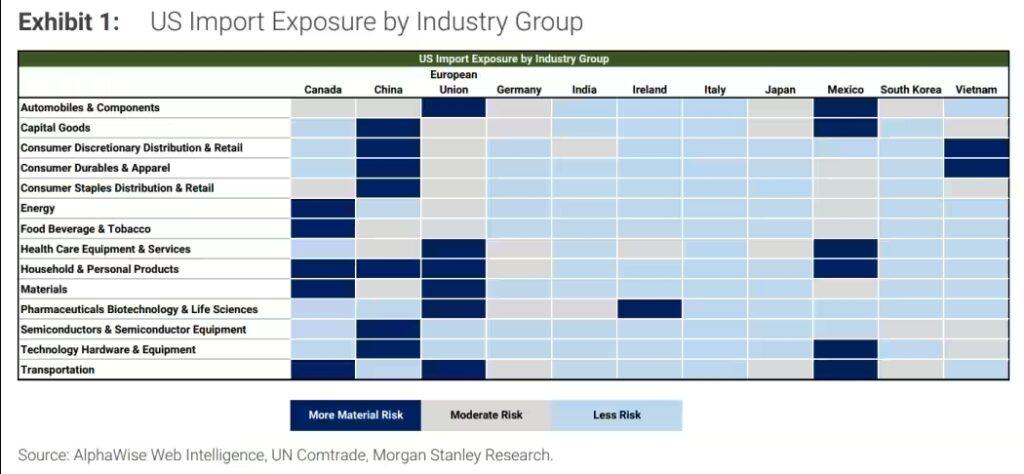
Markets Slip as Trump Threatens New Tariffs Ahead of Deadline U.S. equity futures declined and the dollar weakened after President Trump signaled a potential escalation in trade tensions, saying his administration may begin sending letters to trading partners outlining new unilateral tariffs as early as Friday. “We’re probably going to start sending some letters out tomorrow—maybe 10 a day—to various countries explaining what they’ll have to pay to do business with the U.S.,” Trump told reporters Thursday, just days ahead of the July 9 deadline for trade negotiations. Markets had been rallying, with the S&P 500 closing at a record high Thursday after a holiday-shortened session, up 26% from its April low. The rally was partly fueled by optimism that Trump had backed off his aggressive April 2 tariff proposal, which had pushed import duties to levels not seen in over a century. But Trump’s latest remarks suggest that few, if any, trade deals will be reached before the deadline, renewing fears of heightened protectionism. Deutsche Bank strategist Jim Reid noted Trump floated tariffs between 10% and as high as 60–70%, potentially taking effect on August 1. “That kind of range has major economic implications depending on the country,” Reid said. Though U.S. equity and bond markets are closed for Independence Day, futures are still trading. The E-mini S&P 500 fell 0.6% early Friday, as investors appeared to shrug off the passage of the GOP’s sweeping tax-cut bill. The dollar also weakened, down 0.4% against the yen and 0.2% versus the euro. Globally, markets were under pressure, particularly in economies more vulnerable to U.S. trade penalties. South Korea’s KOSPI dropped 2%, Germany’s DAX slipped 0.8%, and France’s CAC 40 fell 1% by midday in Europe. “Risk appetite is fading fast,” said Kathleen Brooks, research director at XTB. “Trump appears to have walked away from negotiations, choosing instead to play hardball with trade partners.” Concerns over slowing global trade hit commodities, with copper futures falling 1.7% and oil down 1.3%. “Optimism is fading fast as the U.S. tariff deadline approaches,” said Susannah Streeter of Hargreaves Lansdown. “The signs point to steeper and broader tariffs than expected.” Gold rose 0.2% to around $3,350 an ounce, while bitcoin slipped 0.5% amid the broader risk-off sentiment.

Scroll to Top