stocks
Market News

Will the Santa Rally Boost Stocks?

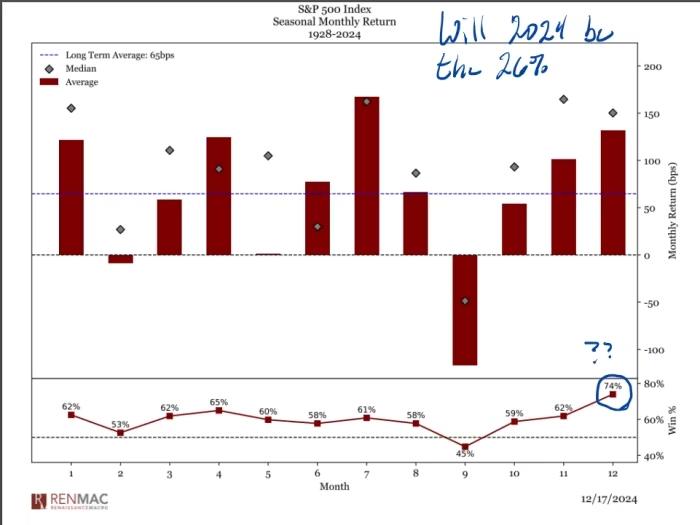
While 2024 has been a banner year for the S&P 500, December has been an underperformer, defying its historical reputation as one of the strongest months for stocks. S&P 500 Erases December Losses in Pre-Holiday Surge The S&P 500 rebounded sharply on Tuesday, erasing its December losses with a 1.1% gain in a shortened pre-holiday trading session. This marked the index’s third consecutive day of advances, reversing last week’s mid-month downturn and setting a positive tone for the start of the seasonal “Santa Claus rally” period. Jeff deGraaf, chairman and head of technical research at Renaissance Macro Research, noted earlier Tuesday that December historically has a 74% chance of delivering positive returns. However, he cautioned that this year’s performance is shaping up to fall within the 26% that bucks the trend unless momentum builds. The Santa Claus rally, a term coined by Yale Hirsch of the Stock Trader’s Almanac in 1972, refers to a historical pattern where the S&P 500 tends to rise during the final five trading days of December and the first two trading days of the new year. According to historical data, the index has averaged a 1.3% gain during this period, significantly outpacing the typical seven-day average gain of 0.24%. MarketWatch columnist Mark Hulbert has suggested that the rally persists in part because many investors disengage from active trading during the holidays, allowing the seasonal trend to play out relatively undisturbed. Tuesday’s rally provided a promising start to this year’s Santa Claus period. The S&P 500 turned its December decline into a 0.2% month-to-date gain. The Dow Jones Industrial Average rose 0.9%, trimming its December loss to 4%, while the Nasdaq Composite jumped 1.3%, extending its monthly gain to 4.2% on the strength of tech stocks. With markets closing early Tuesday and shutting down entirely on Wednesday for Christmas, investors are keeping an eye on the potential implications of the Santa rally—or its absence. As Jeff Hirsch, editor of the Stock Trader’s Almanac, has pointed out, a lack of a Santa rally has often been a harbinger of flat or bearish markets in the year ahead, as seen in 2000, 2008, and 2015. Still, 2024 has defied many traditional patterns. Despite the challenges of December, the S&P 500 is on track to post a stellar 26% annual gain, with its steepest pullback of the year—a modest 8.5%—occurring between mid-July and early August. As the year-end approaches, traders are hopeful that the Santa rally will bring its characteristic boost, helping the market finish an already strong year on an even higher note.

dollar
Market News

Dollar, Bonds, and the Elusive Market Rally

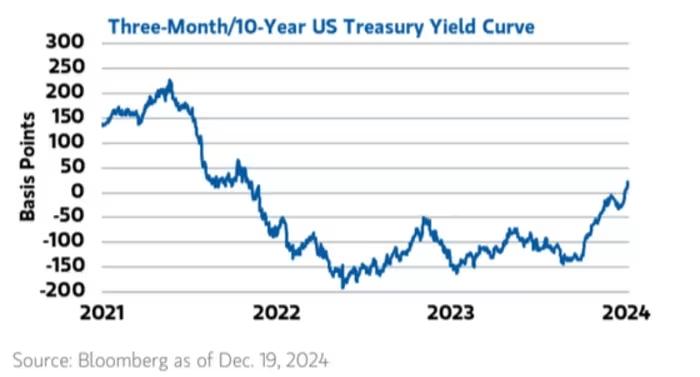
Treasury Yields and Dollar Levels Present Challenges for Stock Market Recovery Stocks started the holiday-shortened week on a positive note Monday, but the continued rise in Treasury yields and the U.S. dollar could act as hurdles to sustained equity gains, a prominent market analyst warned. Both the bond market and the dollar extended their upward trends, reaching levels that could pressure stock-market performance. This follows last Wednesday’s surge, when the Federal Reserve indicated it would implement fewer interest-rate cuts in 2025 than previously expected. The 10-year Treasury yield climbed to 4.594%, marking its highest close since late May, based on Dow Jones Market Data. Meanwhile, the ICE U.S. Dollar Index (DXY), which measures the dollar against six major currencies, rose 0.4% to 108.09, nearing Friday’s high of 108.54—its strongest level since November 2022. After a brief pullback last Friday driven by a positive inflation report, both yields and the dollar resumed their climb Monday. Rising yields, which move inversely to bond prices, and a stronger dollar often create headwinds for equities by pressuring corporate valuations and weighing on export-driven profits. Tom Essaye, founder of Sevens Report Research, described the current levels of the 10-year yield and the dollar as “mild” headwinds but cautioned that their impact could grow if they continue to rise. Despite these pressures, stocks managed to post gains Monday, albeit in thin preholiday trading. The Dow Jones Industrial Average added nearly 100 points, or 0.2%, while the S&P 500 advanced 0.8%, led by strength in semiconductor stocks. The Nasdaq Composite outperformed with a 1% increase. Even with Monday’s gains, major indexes remain down for the month following losses last week. However, the S&P 500 continues to show impressive year-to-date performance, with gains exceeding 25%. In the bond market, last week saw the yield curve return to its typical upward slope, ending an extended period of inversion. Inverted yield curves, where short-term yields exceed long-term yields, are often seen as recession indicators. Analysts noted, however, that the end of an inversion has historically been a more immediate precursor to economic downturns. Lisa Shalett, CIO at Morgan Stanley Wealth Management, suggested the yield curve’s normalization signals a shift from disinflationary growth to a reflationary environment. This transition could pose challenges for high-growth stocks, as higher long-term yields reduce the present value of future earnings. Higher yields and a strong dollar remain obstacles to higher stock valuations, Essaye noted. “Calm currency and bond markets are what stocks need to continue to rally, and we got the opposite last week,” he said. He added that clearer signals from the Federal Reserve or supportive economic data could help stabilize markets and pave the way for further stock market gains.

Dow
Market News

Will the Dow Join the Santa Claus Rally?

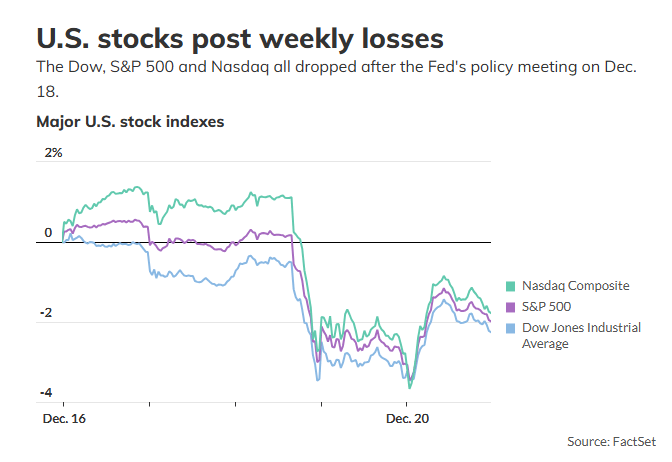
U.S. Stocks Close the Week with Losses Despite Friday Rally U.S. stocks ended the week in negative territory, weighed down by concerns over Federal Reserve policy, inflation, and narrowing market breadth. While Friday’s rally offered a brief respite, it wasn’t enough to erase losses for the week. December Slump Undermines Holiday Optimism The U.S. stock market stumbled in December after a robust November rally. Mark Hackett, chief market strategist at Nationwide, described an “almost light-switch moment” earlier this month that led to a “breakdown in breadth.” “I don’t feel comfortable that the traditional Santa Claus rally is going to come,” Hackett said, noting that the November surge might have borrowed gains typically seen in late December. The Dow Jones Industrial Average (DJIA) dropped 4.6% this month, erasing most of its quarterly gains. The S&P 500 (SPX) recorded consecutive weekly losses, while the Nasdaq Composite (COMP) ended its streak of four straight weekly gains, per Dow Jones Market Data. Fed Signals and Inflation Concerns Investor sentiment soured after the Federal Reserve suggested it may scale back interest rate cuts in 2025. Coupled with persistent inflation concerns and a concentration of gains in a few large-cap stocks, this dampened optimism surrounding the broader market. Holiday Trading Period Holds Uncertainty Historically, the “Santa Claus rally” period—spanning the final five trading days of December and the first two of January—has delivered average gains of 1.29% for the S&P 500 since 1950. However, last year bucked this trend with a 0.9% decline, and this year’s market conditions suggest a repeat could be possible. Softer Inflation Data Sparks Friday Rebound November inflation data, which came in slightly below expectations, brought relief to investors on Friday. The Dow rose 1.2%, marking its largest single-day gain since November, while the S&P 500 and Nasdaq climbed 1.1% and 1%, respectively. Despite this rally, all three major indexes finished the week lower, with the Dow down 2.3%, the S&P 500 off 2%, and the Nasdaq slipping 1.8%. Tech Sector Under Pressure Big Tech stocks, which have driven much of 2024’s rally, delivered mixed results this week. The Roundhill Magnificent Seven ETF (MAGS), which tracks key tech giants like Apple, Microsoft, Alphabet, Amazon, Nvidia, Tesla, and Meta, lost more than 1% for the week, ending its streak of four weekly gains. Policy and Economic Risks Loom Market uncertainties extend beyond inflation, with concerns over potential changes to trade and immigration policies in 2025. Analysts worry that aggressive measures, such as new tariffs or mass deportations, could fuel inflation and slow economic growth. A Strong Year Faces a Quiet Finish Even with December’s struggles, 2024 has been a strong year for equities. The Nasdaq is up 30.4% year-to-date, the S&P 500 has gained 24.3%, and the Dow has risen 13.7%. However, the S&P 500 remains 2.6% below its December 6 record high. “There’s a lot of optimism already priced into stocks,” said Anthony Saglimbene, chief market strategist at Ameriprise Financial. “We’ve had a really strong year, but I don’t think we’ll see a significant rally from now until year-end.”

sonic
DayTradeToWin Review

$275 Profit in Real-Time: Mastering the Sonic System

Today, we have an important task to kick off the trading day: rolling over our contracts from December to March 2025. Whether you’re trading the E-mini S&P 500, NASDAQ, crude oil, or other markets, keeping your contracts updated is critical for accurate trading. Let’s walk through the process and dive into a live trade example using the Sonic trading system. Rolling Over Contracts in NinjaTrader With these steps, you’ll be ready to trade using the most current data. Trading Live with the Sonic System The Sonic trading system is a powerful, price-action-based tool designed for simplicity and precision. Here’s a summary of today’s trade: Trade Details Key Features of the Sonic System Best Practices for Successful Trading Why Choose the Sonic System? The Sonic trading system offers: For those ready to dive deeper, the Accelerated Mentorship Program provides access to all our proprietary software, daily training, and a wealth of resources. Visit daytradetowin.com to learn more and start with a free trial of tools like the ABC software. Final Thoughts Trading is a challenging journey, but with the right tools and education, success is achievable. The Sonic system showed its value today, turning a single trade into a meaningful profit. Stay disciplined, trade smart, and prioritize continuous learning. For more strategies, training, and proprietary tools, join us at daytradetowin.com. Until next time, happy trading!

sonic
DayTradeToWin Review

Fast Profits: Mastering Double System Trading

Hello, traders! Today is Thursday, December 19th, and I’m excited to share insights on a powerful trading approach that combines the Trade Scalper and Sonic System. Using these systems together provides increased confidence and better results by leveraging their unique strengths. The Power of Combining Systems Integrating the Trade Scalper with the Sonic System offers a comprehensive trading strategy: Together, these tools help traders make well-informed decisions with enhanced accuracy. Real-World Example: A Profitable Trade Here’s a recent trade that illustrates the synergy of these systems: While not every trade is a winner, disciplined execution and strategic filtering ensure consistent, favorable results over time. Sonic System Highlights The Sonic System stands out with these features: Leveraging Combined Signals Pairing the Sonic System with the Trade Scalper creates: For example, overlapping short signals from both systems within minutes highlight high-probability opportunities. Trading Tips for Success Start Your Trading Journey Today Ready to elevate your trading? Visit daytradetowin.com and create a free member account. You’ll gain access to: Trading doesn’t have to be complicated. By using the right tools and strategies, you can simplify your process and achieve consistent success. Let’s get started today!

trading
DayTradeToWin Review

Elite Traders’ Secret Tactics for 2025

As we enter 2025, now is the perfect time to sharpen your trading strategies and prepare for a year filled with opportunities. The markets are ever-changing, but by honing your approach and understanding key market behaviors, you can position yourself for consistent profitability. In this blog post, we’ll explore powerful strategies, risk management techniques, and tools that can help you navigate the markets and capitalize on key movements throughout the year. 1. Identifying Key Entry Points: Breakouts and Retracements Successful trading is all about timing, and one of the best ways to identify strong entry points is by watching for breakouts and retracements. When the market moves sharply in one direction, it often pulls back (a retracement) before continuing its trend. These pullbacks create excellent opportunities for entering a trade at a favorable price. For example, if the market pushes higher and then retraces to test previous highs, this can indicate that the trend is still intact. The next move higher could present a prime entry point. Waiting for the market to close above the previous high offers confirmation that the retracement is over, allowing you to enter with confidence. 2. Understanding Market Momentum: Higher Closes and Opens One of the simplest ways to gauge market momentum is by looking at the open and close of a trading candle. If the close is higher than the open, it suggests bullish momentum, indicating that the market may continue to rise. On the flip side, if the close is lower than the open, the market is likely to continue its downward trend. Looking at market behavior in January can provide valuable insights. Historical patterns show that when the market opens with a higher close and open in January (as we saw in January 2023), the chances of sustained upward momentum throughout the year are higher. Identifying these early signals can set you up for profitable trades. 3. Risk Management: Don’t Over-Leverage and Stick to Your Plan While the potential for big profits is enticing, risk management is key to long-term success. Trading without a plan or risking too much capital can quickly lead to losses. To avoid this, it’s essential to have a clear strategy that includes stop-loss orders, target profits, and proper position sizing. It’s important to avoid over-leveraging, as this can expose you to unnecessary risk. Stick to your plan and adjust it as necessary based on market conditions. By managing your risk effectively, you can protect your capital while still capturing profitable trades. 4. Price Action: The Power of Simplicity in Trading Many traders rely on complex indicators, but the most effective way to understand market behavior is often through price action. Price action analysis helps you focus on the true movement of the market, without relying on external signals. By analyzing key price levels, retracements, and breakouts, you can gain a deeper understanding of the market’s direction. One proven method for trading based on price action is the Sonic System, which uses simple principles to identify profitable trades. Whether you’re focusing on breakouts or retracements, price action strategies can help you make confident and well-informed decisions. 5. Utilizing the Right Tools: Software to Enhance Your Trading Strategy While price action is a powerful tool, having the right software can give you an edge. Platforms like Day Trade to Win offer proprietary tools like the Sonic System, which automates much of the analysis process and helps identify high-probability setups. These tools can streamline your decision-making and provide valuable insights that may be difficult to spot with the naked eye. In addition, these tools allow you to trade on different timeframes. Whether you prefer a 30-second chart for quick trades or a one-minute chart for more strategic setups, using the right software can help you stay ahead of the market. 6. When to Trade: Timing Matters The time of day can have a significant impact on your trading results. Certain market sessions—such as the Asian, London, and U.S. sessions—tend to be more volatile, with greater price movements and liquidity. Trading during these active sessions increases the likelihood of capturing profitable trades. Avoid trading during slower market hours, as price action can become erratic and unpredictable. By aligning your trading with active market sessions, you improve your chances of making high-quality trades. 7. 2025: A Year of Opportunity As we look ahead to 2025, it’s important to start planning your strategy now. Look for signs of bullish or bearish sentiment in January, particularly based on the market’s close and open. If January shows a higher close and open, it could signal the start of an upward trend for the year, providing plenty of trading opportunities. By leveraging simple yet effective strategies like those mentioned here—combining price action, breakouts, retracements, and risk management—you can position yourself for success in 2025. Final Thoughts Trading is not about luck; it’s about strategy, discipline, and consistency. By refining your approach and taking advantage of opportunities when they arise, you can make 2025 your most profitable year yet. Whether you’re new to trading or have years of experience, these strategies can help you navigate the markets with confidence and precision. Ready to trade smarter in 2025? Let’s make this your best year in the markets!

Scroll to Top