Market News

Wall Street’s Confidence: A Dangerous Oversight?

If that were true, it would actually suggest that Wall Street irrational exuberance is fading, a positive sign for contrarian investors. Stock traders are growing more bullish and complacent—and that’s a bearish indicator. A new concern for the stock market is the CBOE’s SKEW Index reaching an all-time high. Many market analysts are interpreting this as a sign that traders now view a Black Swan event, like a market crash, as more likely. However, this interpretation misses the mark. In fact, the rising SKEW Index suggests the opposite: traders have become even more bullish, which is a bearish signal from a contrarian viewpoint. To understand why, let’s first take a look at how the SKEW Index works. While the math behind the index is complex, it essentially measures the difference between the consensus outlook of the majority of traders and the views of a small, highly bearish minority. The index rises when this gap widens. There are two ways this gap can expand. One is when the bearish minority becomes more pessimistic while the consensus view of the majority of traders remains unchanged. This is the interpretation most commentators suggest when they point to the high SKEW Index as a sign of growing concerns about a market crash. However, there’s another way for the SKEW to rise: when the bearish minority remains steady, but the majority of traders become even more optimistic. In this scenario, a higher SKEW doesn’t indicate increased fear of a crash—it signals that traders are growing less worried about a downturn. The implications of these two scenarios are vastly different for investors. There are two main reasons why the current SKEW reading reflects reduced concern about a crash. First, the Yale “U.S. Crash Confidence Index,” conducted by Robert Shiller, shows that individual investors are less worried about a crash than they have been in the past 15 years. It would be strange for the SKEW to signal heightened crash fears when other data points, like Shiller’s, suggest the opposite. Second, the SKEW Index has historically risen in tandem with bull markets. As the market climbs, the consensus among traders becomes more optimistic, increasing the gap between their views and those of the bearish minority. Over the past 15 years, there has been a 56.3% correlation between the SKEW Index and the S&P 500’s trailing 12-month returns, further supporting the link between rising markets and a higher SKEW. In conclusion, despite some interpretations, Wall Street is not concerned about a market crash. And that’s precisely why we should be worried.

sonic
DayTradeToWin Review

Master the Sonic Trading System

The Sonic Trading System is a powerful tool for day traders, offering a clear framework for identifying opportunities. However, using it effectively requires more than just following signals—it’s about understanding the system, managing risk, and staying disciplined. Here’s how to make the most of the Sonic Trading System and improve your results: 1. Focus on Quality, Not Quantity Overtrading can lead to unnecessary losses. Instead, focus on high-probability setups where the potential reward justifies the risk. Not every signal is worth trading—choose wisely. 2. Get the Risk-Reward Ratio Right Before entering a trade, evaluate three key factors: Example: If the target is small and the stop is large, reconsider the trade. Look for at least a 50/50 balance or better (e.g., 60/40). 3. Leverage Road Map Zones The Roadmap Zones are a valuable addition to the Sonic system: 4. Use Limit Orders to Control Entries Limit orders are crucial for minimizing slippage and ensuring you get the best possible entry price. This approach helps maintain consistency and keeps you in control of your trades. 5. Stay Disciplined Once you’ve planned a trade, stick to it. Avoid making impulsive changes to your targets or stops mid-trade. Trust your strategy and let the system do its job. 6. Continue Learning Trading is a continuous learning process. To enhance your skills: Final Thoughts The Sonic Trading System provides structure and clarity for day traders, but its true potential lies in how you use it. By managing risk, focusing on quality setups, and continuously improving your skills, you can achieve consistent success in trading. Ready to take your trading to the next level? Visit Daytradetowin.com to explore tools, mentorship, and strategies designed to help you trade with confidence.

bitcoin
Uncategorized

Bitcoin Breaks $100K: A New Era Begins

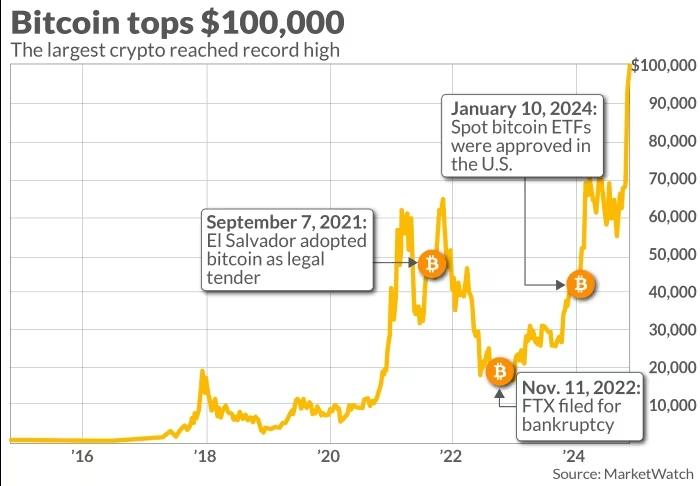
Bitcoin Surges Past $100,000: A Stunning Comeback Fueled by Wall Street and Regulatory Shifts Bitcoin reached a historic milestone on Wednesday night, surpassing $100,000 for the first time. This marks a dramatic recovery for the cryptocurrency industry just two years after the collapse of major players like FTX in 2022. The world’s largest cryptocurrency peaked at $103,853, representing a more than 520% surge from its cycle low of under $16,000 in November 2022. Year-to-date, Bitcoin has climbed approximately 146%, according to CoinDesk data, underscoring a renewed wave of confidence in the digital asset market. A Turning Point in Regulation Driving part of this momentum is a changing regulatory landscape. Earlier Wednesday, President-elect Donald Trump announced his intention to nominate Paul Atkins to head the Securities and Exchange Commission (SEC). Known for his crypto-friendly stance, Atkins is expected to replace outgoing SEC Chair Gary Gensler, who has been criticized by industry leaders for an enforcement-heavy approach. While Gensler’s tenure expanded regulated access to crypto investments, it also saw significant legal action against digital asset firms. The prospect of a more supportive regulatory environment under Atkins has fueled optimism across the industry, potentially paving the way for broader adoption. Institutional Investors Enter the Fray Institutional interest has played a key role in Bitcoin’s ascent. In January, the SEC approved several exchange-traded funds (ETFs) directly tied to Bitcoin, attracting global asset managers like BlackRock and expanding the cryptocurrency’s reach to mainstream investors. Federico Brokate, head of U.S. operations at crypto asset manager 21Shares, called the $100,000 milestone “a sign of legitimacy” for Bitcoin. “For many, this mark represents the maturing of the asset class,” he said. Peter Chung, head of research at algorithmic trading firm Presto, highlighted the psychological impact of crossing this threshold. “People are drawn to round numbers like $100,000. It generates media attention and public interest, which can drive further growth,” Chung explained. Challenges Amid the Celebration Despite its meteoric rise, Bitcoin’s journey to $100,000 has been marked by intense volatility, a reminder of the market’s speculative nature. Concerns about the sustainability of the rally linger, with analysts warning that the cryptocurrency’s long-term trajectory will depend on factors like regulatory clarity and adoption beyond speculative trading. “The driving factors behind Bitcoin’s price surge matter more than the milestone itself,” Brokate noted, emphasizing the importance of sustained industry growth and favorable policies. The Future of Crypto As Bitcoin solidifies its comeback, the cryptocurrency market faces a critical inflection point. The path forward hinges on balancing investor enthusiasm with pragmatic steps toward widespread adoption and regulatory acceptance. One thing is clear: Bitcoin’s rise above $100,000 signals a new chapter in its evolution as a global financial asset.

bond
Market News

Why Bond Vigilantes Target France Differently

French Bond Yields Match Greek Levels Amid Political Turmoil Yields on French 10-year bonds have risen to levels comparable to those of Greece, signaling market concerns over France’s political and fiscal stability. On Tuesday, French bond yields reached 2.90%, just shy of the 2.92% yield on Greek bonds of the same maturity, according to FactSet. While still below the July peak of 3.28%, this marks a significant shift for a country long considered a pillar of European financial stability. The rise in borrowing costs comes as Prime Minister Michel Barnier’s government faces a no-confidence vote on Wednesday, threatening its survival just three months after taking office. Barnier’s administration was formed following President Emmanuel Macron’s call for snap elections aimed at curbing the influence of Marine Le Pen’s far-right National Rally party. However, political uncertainty has deepened, with questions mounting about France’s ability to stabilize its debt-to-GDP ratio, which stands at approximately 112%. France’s high level of foreign-held debt amplifies its vulnerability in the bond market. Robin Marshall, director of global investment research at FTSE Russell, highlighted that around 40% of French government debt is owned by overseas investors. “Foreign holdings are often quite volatile,” he noted, making France’s debt particularly sensitive to external market sentiment. Unlike other recent debt market disruptions, such as the U.K.’s gilt crisis under Liz Truss or the rise in U.S. yields tied to Donald Trump’s fiscal policies, France’s bond sell-off is rooted in political deadlock and austerity measures. The European Commission has already criticized France for excessive debt, and Barnier’s 2025 budget proposal, which includes tax increases and spending cuts, has failed to ease investor concerns. Strategists Thierry Wizman and Gareth Berry of Macquarie describe the situation as a referendum on political paralysis, warning that the uncertainty undermines confidence in France’s fiscal trajectory. “This raises doubts about whether France can ever stabilize its debt burden,” they noted. The bond market’s reaction underscores the influence of global creditors, who remain vigilant over fiscal policies. As borrowing costs rise, France’s political and financial challenges serve as a stark reminder of the importance of fiscal discipline in maintaining market confidence.

vix
Market News

What the VIX Move Means for the S&P 500

Stocks Signal Promising Returns as Volatility Falls and Late-Day Buying Surges: SentimenTrader Traders have been snapping up stocks during the final hour of trading over the past two weeks, coinciding with a sharp decline in the Cboe Volatility Index (VIX). These developments suggest favorable conditions for the stock market in the months ahead, according to Dean Christians, senior research analyst at SentimenTrader, in a recent note. The VIX Drops Below Key Levels The VIX, often called Wall Street’s “fear gauge,” tracks expected 30-day volatility for the S&P 500. On Friday, it closed below 14 for the first time in four months, following a retreat from summer highs above 20 during a market pullback. Historically, when the VIX falls below 14 after surging past 20, the S&P 500 has delivered strong medium- and long-term returns. According to SentimenTrader’s analysis of 26 similar past instances, the S&P 500 has risen a year later in 96% of cases, with a median gain of 14.2%. The sole exception was in 2015. Following comparable conditions in late 2023, the index rose 10% in three months. Late-Day Buying Indicates Confidence SentimenTrader’s last-hour trading indicator, which measures the cumulative direction of trading in the final hour, has surged in nine of the past 10 sessions. This pattern signals growing trader confidence and aligns with the “upward drift” often observed in rising markets. Historically, when the S&P 500 is within 2% of its all-time high and the last-hour indicator rises in nine of 10 sessions, the index has gained 90% of the time over the following six months. Over three months, the success rate drops slightly to 81%, but the indicator has delivered 14 consecutive gains since 1995. A Repeat of the 2016 Election Rally? The current market dynamics echo those following the 2016 presidential election. After a similar VIX decline and late-hour buying surge, stocks rallied into December before consolidating and resuming their upward trend. Strong Year for Stocks The S&P 500 ended November with a 5.7% monthly gain, its best performance of 2024, and has climbed nearly 27% year-to-date. The index closed at a record high on Friday, positioning it for further gains. Outlook Remains Bullish Christians highlighted that the combination of a declining VIX and robust late-hour buying activity signals a “constructive environment for stocks.” Despite normal fluctuations during uptrends, he noted that the current evidence strongly supports continued bullish momentum.

Market
Market News

Jobs Data Disrupts Trump-Driven Market Optimism

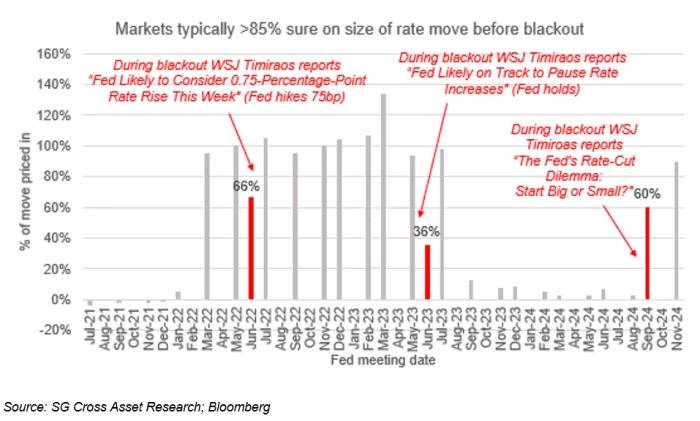
While political drama, including speculation about Donald Trump’s return to the White House, has dominated recent headlines, financial market are about to face a critical reality check. The November jobs report, set to be released on Friday, could have significant implications for the Federal Reserve’s interest rate strategy, with ripple effects across stocks, bonds, and broader market sentiment. November Payrolls Could Shape the Fed’s Next Moves “The market is hoping for good news—but not too good,” said Brent Schutte, Chief Investment Officer at Northwestern Mutual Wealth Management. “If the jobs data is too strong, it could raise doubts about whether the Fed will continue cutting rates.” Such a scenario would challenge a stock market that’s already trading at historically high valuations. Much of the optimism for a continued rally into 2025 hinges on expectations of Fed rate cuts, which would lower borrowing costs and enhance the appeal of high valuations. Conversely, higher rates tend to reduce the present value of future earnings, putting pressure on elevated prices. A Look Back at History Investors wary of the Fed’s impact on markets might recall the dot-com bubble of the late 1990s. Nicholas Colas, co-founder of DataTrek Research, noted that the bubble burst in 2000 after the Fed raised interest rates to 6.5%. “Even a modest series of hikes sent a clear message that the Fed intended to cool the economy, which was enough to dampen investor enthusiasm,” Colas explained. This time, the situation is different but no less delicate. While DataTrek remains optimistic about equities, parallels to past Fed interventions are a reminder of how sensitive markets can be to changes in monetary policy. The Fed Walks a Tightrope Currently, markets are pricing in a 66% chance that the Fed will cut rates by 25 basis points next month, according to the CME FedWatch Tool. This follows cuts in September and earlier this month. However, sticky inflation and resilient economic growth have fueled speculation about whether the Fed might pause its rate-cutting cycle. Minutes from the Fed’s November meeting revealed a divided outlook among policymakers. Many expressed uncertainty about the neutral rate—the point at which monetary policy is neither restrictive nor stimulative. Steve Blitz, Chief U.S. Economist at TS Lombard, underscored the significance of the jobs report, saying, “The November payroll data could be pivotal for this data-driven Fed.” Momentum Meets Risk Despite lingering uncertainty, markets have been riding a wave of momentum. Last week, the S&P 500 notched its 53rd record close of the year, up 26.5% year-to-date. The Dow Jones Industrial Average briefly surpassed the 45,000 mark, while the Nasdaq Composite gained more than 6% in November. Meanwhile, the 10-year Treasury yield dropped to its lowest level since October, offering some relief to equity investors. However, soaring confidence in future stock gains could signal caution ahead. Economist Ed Yardeni of Yardeni Research observed that consumer confidence in higher stock prices over the next year recently hit an all-time high. “From a contrarian perspective, this suggests a pullback may be on the horizon,” Yardeni warned. The Bigger Picture Market moves are often more aligned with economic fundamentals than political shifts. Lauren Goodwin, Chief Market Strategist at New York Life Investments, explained, “Markets respond to real economic changes, not just politics. Durable trends come from broader economic forces.” While optimism over potential tax cuts and deregulation is buoying sentiment, November’s labor-market data could provide a clearer picture of whether those trends are sustainable. As Paul Christopher of Wells Fargo Investment Institute noted, “The Trump trade aligns with existing economic and inflation trends.” This week’s jobs report won’t just influence the Fed’s decision-making—it could also shape investor confidence as markets enter the final stretch of the year. Whether the data reinforces the current rally or signals caution, its impact is likely to be significant.

Scroll to Top