day trading
DayTradeToWin Review

Unlocking Day Trading Success with the ABC Method

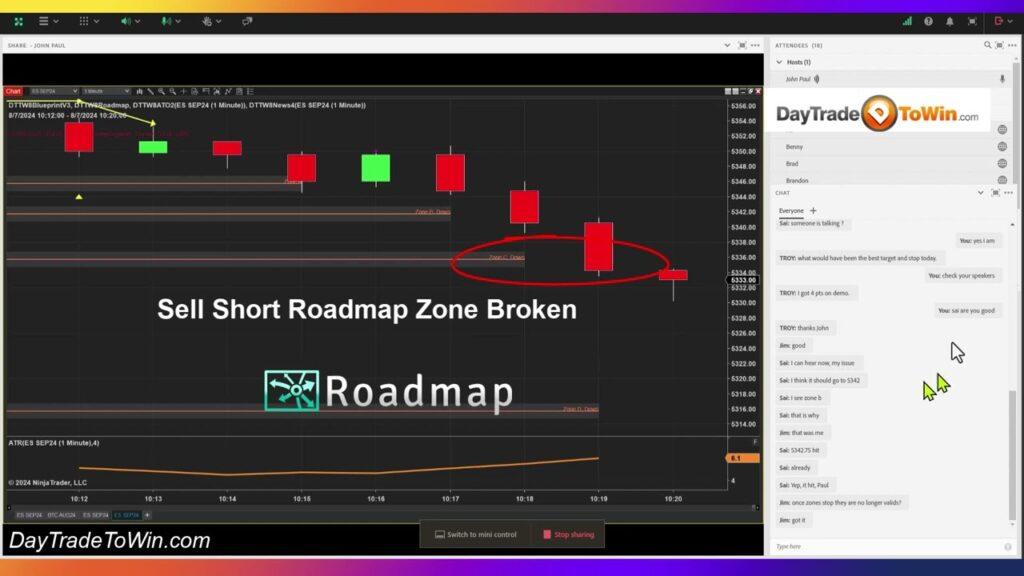
In day trading, utilizing a clear and strategic approach is essential for making well-informed decisions. One such strategy is the ABC method, which assists traders in spotting potential trends and reversal points within the market. This post will explain the workings of the ABC method, with a particular emphasis on how to interpret and respond when a zone is breached and ceases to plot. Understanding Trading Zones Trading zones represent specific price ranges that signify strong support or resistance within the market. When the market moves through these zones, it often indicates the start of a new trend or a possible reversal. However, if a zone is breached, it stops plotting, signaling that it is no longer a reliable indicator for making trading decisions. When the price breaks through a zone by a few ticks, it often serves as an entry point for a short position. For instance, if the price breaks a support zone by two or three ticks, traders might see this as a signal to go short, anticipating a downward trend. Once the zone is breached, it ceases to plot, and attention shifts to the next zone, which represents a future area of interest. After a zone is broken, the system stops plotting that zone and begins to plot the next one, based on future price movements. It’s crucial to recognize that the original zone is no longer valid, and the market’s behavior within the new zone will guide your next decisions. The ABC Method The ABC method divides the trading day into three distinct sections. The first 2.5 hours of the session are critical for determining the day’s trend. If the market continues in the same direction after this initial period, it often indicates a strong trending day. The highs and lows established during this time become key support and resistance levels. Identifying Key Support and Resistance The initial 2.5 hours of trading set the stage for the day, establishing strong support and resistance levels. If the price breaks through these levels, it typically signals a trending day. On the other hand, if the price touches these levels and then reverses, it suggests that the market may remain range-bound, requiring a more cautious trading approach. Effectively Using the ABC Method: Conclusion The ABC method offers a structured framework for day trading by helping traders pinpoint critical support and resistance levels. By focusing on these zones and understanding when they become invalid, traders can make better-informed decisions, ultimately enhancing their trading performance. Whether you’re a novice or an experienced trader, integrating the ABC method into your strategy could be key to achieving better trading outcomes. Join our live trading room to see the ABC method in action. Sign up for a free member account at DayTradeTowin.com to download trading software for TradingView or NinjaTrader, and start applying these strategies today!

Market News

Volatility Strikes: Historical Trends to Watch

The recent upheaval in the U.S. stock market has served as a stark reminder of volatility after an unusually long period of calm, which could signal a shift in market sentiment, according to Jason Goepfert, founder and senior research analyst at SentimenTrader. For eight consecutive sessions, the S&P 500 index moved at least 1% intraday, driven by concerns over a weakening U.S. economy and the unwinding of a Japanese yen carry trade. This volatility marked the end of a 430-session streak without a 2% 10-day average intraday move. Over the past 10 trading days, the index’s intraday range averaged over 2%, making it one of the most volatile periods in the last decade. Goepfert pointed out that while intraday volatility spikes have historically led to a temporary market shakeout followed by a recovery, the past 25 years show that these spikes have sometimes resulted in more risk than reward over the following year. For instance, while the 2011 and 2015 volatility spikes were good entry points for long-term investors, other periods led to more significant risks. He warned that if the S&P 500 continues to experience lower lows, it might indicate a shift towards defensive stocks. As of Monday afternoon, the major U.S. indexes were mixed, with the S&P 500 down 0.1%, the Dow Jones Industrial Average down 0.5%, and the Nasdaq Composite up 0.2%, according to FactSet data.

Blueprint
DayTradeToWin Review

Mastering Blueprint v3: Elevate Your Trading Strategy with New Features

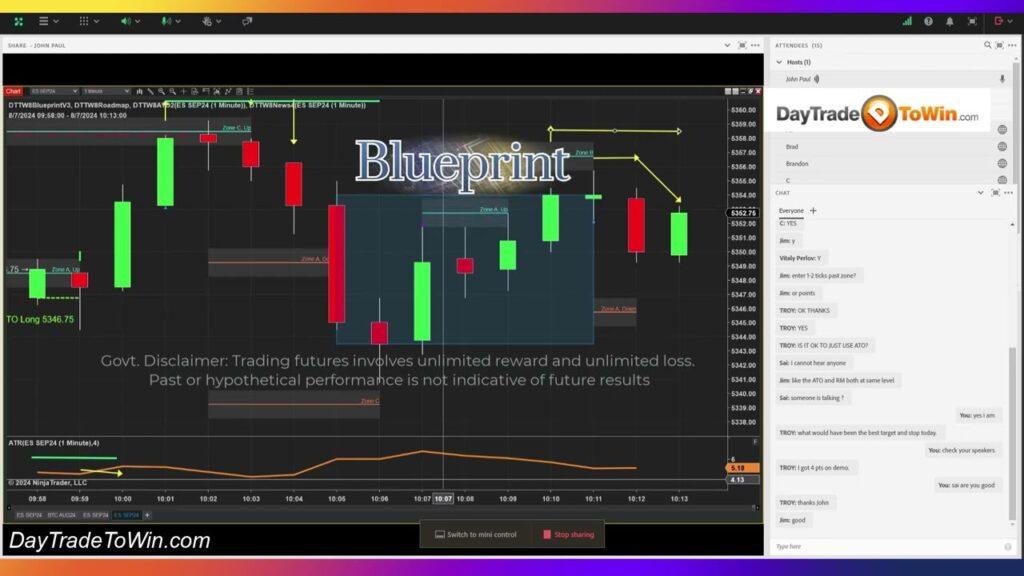
Traders, great news! Blueprint version 3 is here, and it’s packed with new features and enhancements that will take your trading strategy to the next level. Whether you’re a high-frequency day trader or prefer a more relaxed swing trading approach, Blueprint v3 offers the flexibility and precision you need to make informed decisions in the market. What’s New in Blueprint v3: Maximizing Your Blueprint v3 Settings: Understanding the Roadmap: A common question we receive is about the Blueprint roadmap and why it stops plotting after a certain point. The roadmap is designed to highlight key trading zones. Once the market breaks through a zone, the system stops plotting it because it recognizes that the zone is no longer relevant. This allows you to focus on the next potential trading opportunity without being distracted by outdated information. Conclusion: Blueprint v3 is a game-changer for traders looking to refine their strategies and increase their market success. With new features like audible alerts, customizable time frames, and enhanced swing trading options, this version offers the tools you need to stay ahead in the market. If you haven’t upgraded yet, simply send us an email, and we’ll provide you with the latest version. Happy trading!

inflation
Market News

Why U.S. Stocks May Struggle Amid Inflation and Earnings Volatility

This week’s spotlight for the stock market is on Wednesday’s inflation report, set against a backdrop of significant earnings announcements from major retailers and a retail sales update. Wall Street is increasingly uneasy about the U.S. economy’s health, and the strain on American households could be confirmed in this week’s economic and earnings reports, potentially derailing the stock market’s recovery after its worst day in two years. Last week, U.S. stocks concluded a turbulent period marked by the unwinding of a yen-driven carry trade and fears of a weakening U.S. economy, which rattled global financial markets. Despite the volatility, the major indexes ended the week just short of reversing their losses. The S&P 500 dipped by less than 0.1% for the week, the Nasdaq Composite fell 0.2%, and the Dow Jones Industrial Average dropped 0.6%, according to FactSet data. Now, the focus shifts to a new wave of U.S. economic data, including July’s Consumer Price Index (CPI), a retail sales update, and earnings reports from top U.S. retailers. Investors are watching closely to see if American households are facing greater stress from high inflation and rising interest rates. “Markets have temporarily calmed after a brief panic over hard-landing risks,” said Michael Gapen, an economist at BofA Global Research. “Upcoming data will reveal whether the economy is slowing gradually or sharply.” As always, the CPI report is crucial, but this time, investors are especially concerned that signs of an economic slowdown or persistent inflation could trigger another downturn in stocks. Economists surveyed by the Wall Street Journal expect headline inflation to remain steady at 3% year-over-year in July, while core CPI, which excludes volatile food and energy prices, is forecasted to ease slightly to 3.2% from 3.3% in June. Brian Weinstein, head of global markets at Morgan Stanley Investment Management, noted that inflation will likely remain above the Fed’s 2% target for some time. He pointed to persistent price increases in areas like car and home insurance, particularly in regions with rapid population growth. “These ongoing costs are cutting into consumers’ budgets every month,” Weinstein said. Weinstein also mentioned that geopolitical uncertainties and the economic plans of the 2024 U.S. presidential candidates are contributing factors that could keep inflation elevated. Consumers are feeling the pinch, and businesses are starting to notice. The Fed’s strategy to curb inflation while maintaining economic growth worked well in the year’s first half, but recent months have shown early signs of a consumer spending slowdown, as highlighted by several companies focused on consumer goods. For instance, luxury-goods giant LVMH recently reported a decline in second-quarter sales from its Asia (excluding Japan) operations, which accounted for 30% of its first-half 2024 revenue. McDonald’s Corp. also reported that inflationary pressures are making lower-income consumers more cautious with their spending. Similarly, Airbnb Inc. expects a slowdown in leisure travel as consumers hold back on bookings amid economic uncertainty. Years of high inflation and the Fed’s tightening policies have squeezed American households, who are now depleting the savings they built up during the COVID-19 pandemic. As a result, many consumers are becoming more selective in their spending. “Most consumer-facing companies, like Starbucks and McDonald’s, have issued profit warnings, signaling a tough environment for consumers,” said Brad Conger, chief investment officer at Hirtle Callaghan & Co. “This reflects the exhaustion of consumers’ savings and their concerns about job security and future income.” This makes the upcoming earnings reports from major U.S. retailers a critical event for the stock market this week. Walmart Inc. and Home Depot Inc. are among the companies set to release earnings on Tuesday and Thursday, respectively. Investors are eager for more insights into the state of consumer spending from companies that sell essential household goods. Conger warned that the slowdown in consumer spending could spread to other parts of the economy. “People are cutting back on all kinds of expenses, which means businesses might reduce hiring, leading to a feedback loop affecting employment and incomes,” he said. Despite these concerns, recent economic data has shown mixed signals about growth. Last week, the service sector rebounded in July, countering fears that the U.S. might be edging closer to a recession. Additionally, the number of Americans filing for unemployment benefits fell to 233,000, a sign that the labor market may still be strong despite a soft July jobs report. These reports helped stocks recover some of their earlier losses. “There’s a sense of panic and fragility in the stock market right now,” Conger told MarketWatch. “Positive economic data is unlikely to dramatically shift market sentiment, and if more positive reports emerge in the coming weeks, each will have a diminishing impact on the market.” Weinstein expects more volatility ahead, which could limit gains in the stock market. However, he added, “This doesn’t necessarily mean a hard landing or guarantee a recession.”

At The Open
DayTradeToWin Review

Mastering Market At The Open Strategies

Trading during the market open is an exciting yet challenging endeavor. The first few minutes can set the tone for the day, offering significant opportunities for profit if you have the right strategy in place. Whether you’re new to trading or looking to sharpen your skills, this guide will walk you through the essential strategies to navigate the market open effectively, focusing on the “roadmap” and “at the open” methods. Understanding the Roadmap: Your Trading Compass The roadmap is a crucial tool for traders, especially during the volatile market open. It helps you identify key zones where the price might reverse or break through, allowing you to make informed trading decisions. How to Use the Roadmap At the market open, watch closely as the candles approach the roadmap zones. These zones act as potential turning points or breakout levels. Adapting to Volatility During high volatility, adjust your strategy to maintain control. Consider switching to shorter time frames, like a 20 or 30-second chart, to pinpoint more precise entry points. Key Points: The “At the Open” Strategy: Capturing Early Momentum The “At the Open” strategy is designed to help you capitalize on the initial volatility when the market opens. This method focuses on identifying a precise entry point based on early price action and placing a limit order near that level. How to Execute the “At the Open” Strategy Managing Risk with ATR and Time-Based Stops Conclusion Trading the market open requires a disciplined approach and a solid understanding of your tools. Whether you’re using the roadmap to identify key levels or applying the “At the Open” method to catch early moves, staying focused and managing risk are critical. For those looking to deepen their trading skills, consider joining our live trading room where we apply these strategies in real-time. Visit DayTradeToWin.com to create a free account, access free trading tools, and start mastering your market open strategies.

S&P 500
Market News

Amazon Leads: S&P 500’s Largest Stocks Are Now Cheaper

Amazon’s stock has become more attractive relative to its expected earnings and sales. Amazon.com Inc. has long focused on growth, often reporting low profits due to heavy reinvestment in its business. However, the recent broad stock market decline has led to a significant shift: Amazon’s stock, which once traded at high multiples relative to expected earnings, now has a forward price-to-earnings (P/E) ratio that aligns more closely with other large, successful companies. Below is a comparison of how forward P/E and price-to-sales valuations have changed for the largest U.S. companies following the recent market downturn. Encouragement for Long-Term Investors Investors may have felt some relief when the S&P 500 rebounded with a 1% gain on Tuesday, after a three-session 6.2% slide. Despite a 0.8% pullback on Wednesday, the index remains 7.8% below its July 10 high, yet still up 9% for 2024 (excluding dividends). For those focused on the long term, it’s important to recognize that large market fluctuations are common. From October 19, 1995, through May 17, 2024, the Russell 3000 Index experienced 51 declines of 7.5% or more, with an average drop of 14.2% over 55 days. These were balanced by 51 gains of 7.5% or more, averaging a 21.3% increase over 145 days. Historically, investors who remained patient through downturns have generally been rewarded. Shifts in Valuation Metrics Focusing on the largest stocks in the S&P 500, all 10 have seen their forward P/E ratios decrease since July 10. For Amazon, the forward P/E ratio has dropped to 30, down from 38.1 on July 10 and 41.7 at the end of 2023, despite the stock still being up 31% for 2024. Amazon now has the lowest P/E ratio compared to its five-year and 10-year averages among these companies. This shift could make Amazon more attractive to value-oriented investors who previously tolerated its high P/E ratios. However, Amazon’s recent second-quarter results were met with a mixed response. While Amazon Web Services continues to grow rapidly, overall revenue fell short of expectations, likely due to a broader economic slowdown. A Potential Bargain in Price-to-Sales Ratio Amazon also stands out for its forward price-to-sales ratio, which is now lower than the S&P 500’s average. Among the top 10 S&P 500 components, Amazon is one of only two companies trading below both its five-year and 10-year average price-to-sales ratios. The other is Tesla, which, despite high valuations, is still priced lower relative to its sales. In summary, Amazon’s P/E ratio has adjusted to more typical levels after years of being exceptionally high, and its price-to-sales ratio suggests the stock might be undervalued in the current market. As always, it’s crucial to conduct your own research when assessing any stock, considering the company’s long-term potential and competitive position.

Scroll to Top