

daytrading

election
Market News

Why the Election Outcome Could Shock the Markets

Throughout most of 2024, stock-market investors showed little concern over whether Donald Trump or Kamala Harris might win the presidential race. However, with Election Day just two weeks away, political anxiety has finally begun to impact equities. This week, a notable climb in Treasury yields, which have been on the rise since September, rattled the U.S. stock market. The selloff raised worries that this surge might jeopardize what’s been a record-breaking year for stocks as the election draws near. On Wednesday, U.S. markets saw a dip with the S&P 500 and Dow Jones Industrial Average both falling nearly 1%, marking three consecutive days of declines — the longest losing streak since early September. The tech-focused Nasdaq Composite dropped by 1.6%, its sharpest daily decline since early September, according to Dow Jones Market Data. The selloff aligned with long-dated Treasury yields hitting their highest levels in nearly three months. Many investors worry that the election could exacerbate the fiscal deficit, while rising odds of a Trump victory in a close race, combined with expectations of less aggressive monetary easing from the Federal Reserve in November, weighed on the market. Concerns have heightened over both Trump’s and Harris’s economic policies, each seen as likely to increase inflation, interest rates, and deficits. However, Brad Neuman, senior VP at Fred Alger & Co., told MarketWatch that Trump’s proposals are anticipated to have a more inflationary impact. Treasury yields have been climbing since mid-September, following the Fed’s rate cuts and strong economic data, yet the stock market had remained relatively calm until now. Last Friday, the S&P 500 closed at a record high, marking its 47th such close this year and capping a six-week winning streak — the longest since last December. On course for its best first ten months of an election year since 1936, the S&P is defying the seasonal trend by showing gains in October, often a volatile month in election years, as per Dow Jones Market Data. Even as the Cboe Volatility Index (VIX), Wall Street’s “fear gauge,” has surged nearly 16% this month, it’s still below the “high volatility” threshold of 20. Until recently, stock prices have seemed unaffected by fluctuations in bond yields and the dollar. Jonathan Krinsky, chief market technician at BTIG, remarked that investors have been more focused on the pace of yield increases than their levels, pointing to a sense of market complacency. However, stocks now appear to be absorbing concerns over both the election and rates. Krinsky expects broad downside risk for stocks in the coming weeks and anticipates a pullback in the S&P 500 to between 5,500–5,650. The index closed Wednesday at 5,797.42. Aaron Clark, portfolio manager at GW&K Investment Management, told MarketWatch he doesn’t foresee a major selloff or spike in volatility before Election Day, as both candidates’ policies are likely to moderate post-election. He noted that “markets can’t predict which policies will actually be pursued or implemented,” suggesting that a divided Congress, which could temper drastic changes, would likely benefit markets and the economy. Clark believes that a split Congress would limit significant policy shifts. While there may be modest adjustments in taxes, tariffs, or immigration policies, he expects any changes to be less extreme than current campaign rhetoric. On Thursday morning, U.S. stock futures showed mixed movement: S&P 500 futures rose 0.4%, Nasdaq 100 futures climbed 0.8%, while Dow futures dropped slightly by 0.1%, per FactSet data. John PaulJohn Paul is the founder of DayTradeToWin, a trading education and software company established in 2008, supporting traders worldwide. His expertise focuses on price action-based futures trading strategies and structured market analysis. DayTradeToWin delivers trading education, indicators, and software tools designed to help traders apply disciplined, rule-based decision-making across global futures markets. He is the creator of multiple trading methodologies, including the Sonic System, Atlas Line, and Trade Scalper, which help traders identify structured opportunities in markets such as the E-mini S&P 500 (ES), Nasdaq (NQ), crude oil (CL), and gold (GC). Official website: https://daytradetowin.com daytradetowin.com
trader
Market News

Trader Confidence Back to Pre-Plunge Levels

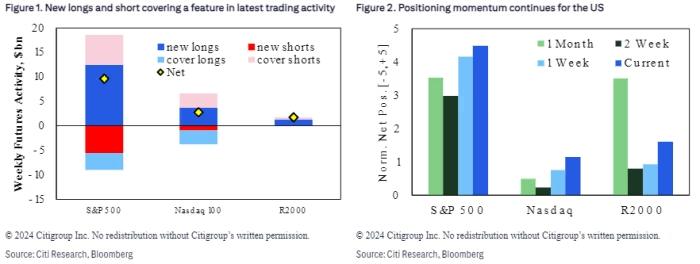
Citigroup strategists are growing concerned about the current bullish sentiment in the stock market but aren’t advising investors to reduce their positions yet. Chris Montagu, Citigroup’s global head of quantitative research, noted that net-long positioning in S&P 500 futures has reached its highest level since July 2023. At that time, such extreme bullish positioning was followed by a sharp three-month decline, with the S&P 500 falling 10%. Montagu warns that a similar pullback could happen if investors aren’t cautious. “The last time positioning was this stretched, the S&P 500 fell more than 10% over the next 2-3 months. While we aren’t suggesting reducing exposure, positioning risks increase when markets get this extended,” Montagu and his team said in a report shared with MarketWatch. Nasdaq-100 futures are less overextended than the S&P 500, avoiding the frothy conditions seen in mid-2023 and again in July 2024. The strategists also pointed out that recent short-covering in S&P 500 futures may have driven the market higher. A key difference from mid-2023 is that investors’ profit-and-loss positions are less stretched now, so they may be less inclined to sell off stocks to protect their gains, Montagu noted. Additionally, all short positions in both S&P 500 and Nasdaq-100 futures are currently underwater, which could force further buying as trader cover their short positions. While markets have been climbing in October, Tuesday saw the first consecutive losses for the S&P 500 since early September, as rising Treasury yields reignited concerns of a repeat of the 2023 selloff, when the S&P 500 dropped 10% between August and October. On Tuesday, the 10-year Treasury yield rose 2.5 basis points to 4.204%, its highest level since July. The S&P 500 fell slightly by 2.78 points (0.1%) to close at 5,851.20. The Dow Jones Industrial Average dropped 6.71 points, and the Nasdaq Composite lost 33.12 points (0.2%). John PaulJohn Paul is the founder of DayTradeToWin, a trading education and software company established in 2008, supporting traders worldwide. His expertise focuses on price action-based futures trading strategies and structured market analysis. DayTradeToWin delivers trading education, indicators, and software tools designed to help traders apply disciplined, rule-based decision-making across global futures markets. He is the creator of multiple trading methodologies, including the Sonic System, Atlas Line, and Trade Scalper, which help traders identify structured opportunities in markets such as the E-mini S&P 500 (ES), Nasdaq (NQ), crude oil (CL), and gold (GC). Official website: https://daytradetowin.com daytradetowin.com
markets
Market News

U.S. Exceptionalism: Markets Gains and Potential Pitfalls

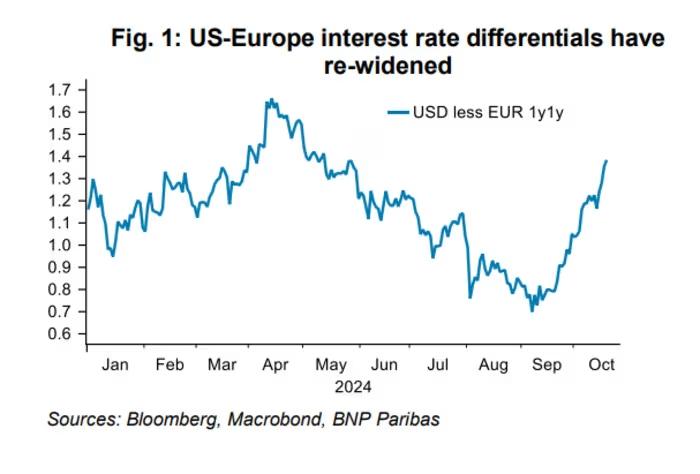
BNP Paribas and UBS Global Wealth Management Highlight U.S. Economy’s Resilience The U.S. economy is once again in the spotlight, with The Economist calling it the envy of the world in a recent cover story. While some, like Brett Donnelly from Spectra Markets, have noted that such magazine covers often signal a contrarian view, it’s not just The Economist that is praising U.S. economic strength. BNP Paribas strategists are focusing on U.S. resilience as policymakers and market participants head to Washington D.C. for the International Monetary Fund and World Bank meetings. They pointed out that the Atlanta Fed’s Q3 GDP growth forecast is an impressive 3.4% annualized, while the eurozone is expected to grow just 0.3% quarter-on-quarter. This means U.S. growth is likely to triple that of the eurozone in the third quarter. This performance difference is reflected in the markets. The spread between one-year forward rates in the U.S. and eurozone has widened by 60 basis points over the past month, with the U.S. dollar index rising 3%, and the S&P 500 outperforming the Euro Stoxx 50. In terms of central bank strategy, the Federal Reserve faces uncertainty heading into its next meeting, relying on current data to potentially support a quarter-point rate cut in November. In contrast, the European Central Bank has been more reactive to recent data, cutting rates unexpectedly just five weeks after hinting that a cut was unlikely. UBS Global Wealth Management has also revised its outlook, raising its target for the S&P 500 from 6,200 to 6,300 for June, and introducing a year-end 2025 target of 6,600. UBS cited a more resilient labor market, stronger-than-expected economic performance, and a medium-term growth rate above the Fed’s long-term projection of 1.8%. This strength, combined with falling inflation, has reinforced UBS’s positive view on U.S. equities for the future. John PaulJohn Paul is the founder of DayTradeToWin, a trading education and software company established in 2008, supporting traders worldwide. His expertise focuses on price action-based futures trading strategies and structured market analysis. DayTradeToWin delivers trading education, indicators, and software tools designed to help traders apply disciplined, rule-based decision-making across global futures markets. He is the creator of multiple trading methodologies, including the Sonic System, Atlas Line, and Trade Scalper, which help traders identify structured opportunities in markets such as the E-mini S&P 500 (ES), Nasdaq (NQ), crude oil (CL), and gold (GC). Official website: https://daytradetowin.com daytradetowin.com
market
Market News

How the Market Bets on the Next President

The Dow Jones Industrial Average’s performance as a predictor of U.S. presidential election outcomes warrants serious consideration. There is a strong correlation between the Dow’s year-to-date return through mid-October and the chances of the incumbent party winning the presidency. This relationship is statistically significant at a 97% confidence level. Currently, the Dow’s impressive year-to-date return suggests a 72% probability that Vice President Kamala Harris, the Democratic candidate, will win the November election. Just two months ago, the Dow indicated a 64% chance of her victory, and in May, that figure was 58%. These rising probabilities are driven by the stock market’s gains, as historical data reveals a strong link between the Dow’s performance in an election year and the incumbent party’s likelihood of success. It’s worth noting that this 72% probability stands in contrast to the 43% chance assigned by electronic futures markets, as aggregated by Election Betting Odds. Which forecast should you trust? There is no clear-cut answer. Electronic futures markets are relatively new, with limited data to establish a strong track record. The Dow, however, has over a century’s worth of data, covering more than 30 presidential elections since the late 1800s. My analysis shows that the correlation between the Dow’s year-to-date performance by mid-October and the incumbent party’s chances of winning is statistically significant. The data shows a clear pattern: The logic behind using the stock market as a predictor is that it serves as a leading indicator of the economy’s future performance, and voters tend to base their decisions on their financial situation. While consumer sentiment has been weak this year despite a strong stock market, statistical analysis shows that the stock market remains a more reliable predictor of election outcomes than consumer sentiment. In summary, the Dow’s performance as an election predictor is backed by significant historical data and deserves to be taken seriously. John PaulJohn Paul is the founder of DayTradeToWin, a trading education and software company established in 2008, supporting traders worldwide. His expertise focuses on price action-based futures trading strategies and structured market analysis. DayTradeToWin delivers trading education, indicators, and software tools designed to help traders apply disciplined, rule-based decision-making across global futures markets. He is the creator of multiple trading methodologies, including the Sonic System, Atlas Line, and Trade Scalper, which help traders identify structured opportunities in markets such as the E-mini S&P 500 (ES), Nasdaq (NQ), crude oil (CL), and gold (GC). Official website: https://daytradetowin.com daytradetowin.com
ETFs
Market News

Chinese Stock ETFs Struggle Amid Stimulus Doubts

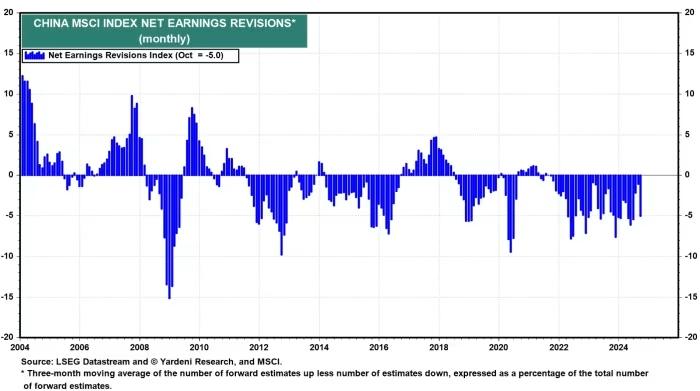
Yardeni Research remains unconvinced that recent stimulus measures will make China a more attractive investment than the U.S. or India, stating that “it would take much more than interest-rate cuts, easier financing, and fiscal stimulus.” Chinese stocks have been under pressure, with recent declines wiping out gains from the September rally driven by China’s stimulus announcement. “Investors appear to have lost faith that government intervention will resolve the deeper issues in China’s economy,” Yardeni Research commented in a recent briefing. “The quick rally in Chinese equities now looks short-lived.” Exchange-traded funds (ETFs) investing in Chinese stocks have struggled. The iShares MSCI China ETF (MCHI) is on track for a 5.6% drop this week, despite a sharp increase on Wednesday, following a 7.7% loss last week. Other China-focused ETFs have fared even worse, extending their October losses. For example, the Invesco China Technology ETF (CQQQ) and KraneShares CSI China Internet ETF (KWEB) both saw weekly losses of around 7.5%, while the Invesco Golden Dragon China ETF (PGJ) dropped 7%, according to FactSet data. So far this month, these ETFs have continued their downward trend, with KWEB down nearly 5%, and MCHI retreating over 2%. “Aside from the risks of investing in China, corporate earnings have been stagnant for the past 15 years and have consistently disappointed since 2022,” Yardeni noted. “It’s easier to manipulate national growth numbers with government projects, but corporate earnings tell a more truthful story.” China faces nearly $36 trillion in outstanding bank loans, which is three times the U.S. figure. Yardeni Research likened China’s current challenges to those the U.S. faced after the global financial crisis, suggesting that without a large-scale fiscal stimulus, similar to the U.S. response during the pandemic, China may struggle to reignite growth and inflation. Consumer confidence in China has collapsed, and Yardeni pointed out that higher stock prices alone won’t be enough to boost spending. With China’s housing minister set to announce more measures to support the property sector, Yardeni remains skeptical. “Trying to stimulate an over-leveraged economy with easier financing may not be the solution. It will take time for consumers and businesses to rebuild their balance sheets after a period of excessive debt,” the firm concluded. John PaulJohn Paul is the founder of DayTradeToWin, a trading education and software company established in 2008, supporting traders worldwide. His expertise focuses on price action-based futures trading strategies and structured market analysis. DayTradeToWin delivers trading education, indicators, and software tools designed to help traders apply disciplined, rule-based decision-making across global futures markets. He is the creator of multiple trading methodologies, including the Sonic System, Atlas Line, and Trade Scalper, which help traders identify structured opportunities in markets such as the E-mini S&P 500 (ES), Nasdaq (NQ), crude oil (CL), and gold (GC). Official website: https://daytradetowin.com daytradetowin.com

sonic
DayTradeToWin Review

How Limit Orders Can Boost Your Trading using Sonic System

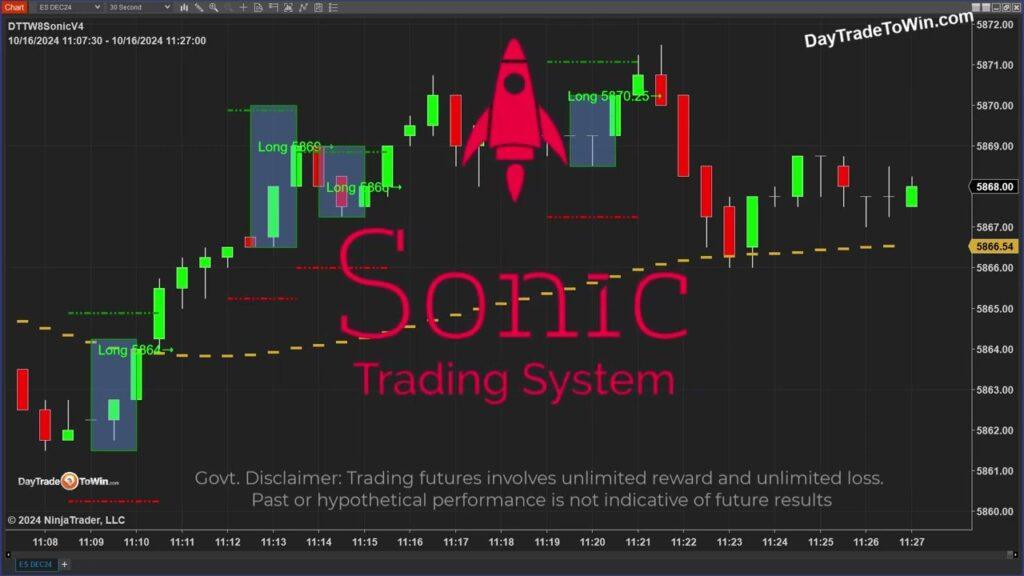
Hello, traders! Today, I’m excited to guide you through the Sonic Trading System, an advanced method for identifying both long and short trade opportunities. We’ll dive into how this system operates, focusing on how to leverage price action, optimize your entries and exits, and avoid common mistakes like overtrading and slippage. The Sonic Trading System: An Overview The Sonic Trading System is a powerful tool that provides real-time trading signals for both long and short trades. These signals are driven by price action, which means you’re making decisions based on the actual movement of price rather than relying on lagging indicators. A key feature of this system is the use of the Average True Range (ATR) to calculate targets and stops, helping traders to account for market volatility. By understanding the mechanics of the system, you can better follow market momentum, manage risk, and position yourself for success. Executing Long Trades: Maximizing Opportunities Let’s start with a long signal example. Suppose the system generates a signal at 5868.25, indicating it’s time to buy. The key here is following the system’s guidance for setting targets and stops. Targets are often determined by the ATR, a metric that adjusts based on whether the market is fast or slow. For instance, if the ATR suggests four ticks of movement per candle, setting a target of 1x or 2x the ATR can offer a balanced risk-reward ratio. One advantage of the Sonic system is that it allows traders to place limit orders instead of market orders. By placing a limit order, you can aim for a slightly better entry price, reducing slippage and maximizing your potential profit. For example, if the system suggests entering at 5868.25, you could place a limit order at 5868 or better. This way, when the market hits your target, you’ll have captured more profit, or, if the trade moves against you, your loss will be smaller. Mastering Short Trades: Profiting in a Falling Market The Sonic system also shines when it comes to identifying short trade opportunities. A short trade involves selling at a higher price with the aim of buying back at a lower one. For example, if a short signal is generated at 5867.75, the goal is to sell at that price and buy back lower to lock in a profit. The system includes a useful filter line that helps distinguish between long and short trades. Any trade signal below the filter line is a short, and any trade above the line is a long. This ensures that you’re always trading with the prevailing trend, reducing the risk of getting caught on the wrong side of a move. As with long trades, short trades can benefit from using limit orders to secure better prices. If the system signals a short at 5867.75, placing a limit order at 5868 (or even one tick higher) allows you to sell at a more advantageous price, increasing your potential profit. Slippage and Risk Management: Why Limit Orders Matter Slippage, which occurs when your order is filled at a worse price than expected, can erode profits. To combat this, the Sonic system encourages the use of limit orders. By setting a limit order one or two ticks better than the system’s recommended entry, you can avoid the impact of slippage and improve your overall trade outcome. For example, instead of entering a long trade at 5868.25 with a market order, placing a limit order at 5868 gives you a better price and reduces risk. If the trade hits your target, you earn more profit. If it hits your stop, the loss is minimized. Managing Risk and Avoiding Overtrading A crucial element of successful trading is knowing when to cut your losses or exit a trade. The Sonic Trading System is designed for efficiency, meaning it expects trades to hit their targets or stops relatively quickly. If your trade isn’t moving as expected within 5-10 minutes, it’s better to exit with a small win, break even, or even a small loss. Another key point is to avoid overtrading. While it’s tempting to chase every signal, it’s wiser to limit yourself to 4-6 solid trades in a session. Overtrading can lead to poor decision-making, especially during volatile market conditions or news events. Short-Term vs. Long-Term Targets The Sonic system’s versatility allows for both scalping and longer-term trades. While shorter trades focus on smaller targets, you can also use the system to set larger targets based on the ATR. For instance, if the ATR suggests four ticks of movement per candle, setting a target of two times the ATR can provide a more substantial profit opportunity. Keep in mind that while larger targets may offer bigger rewards, they also require more patience. Be sure to adjust your trading style to match your strategy. Adapting to Market Conditions As with any trading system, flexibility is crucial. The market is always changing, and the Sonic system allows you to adapt by tweaking entries, stops, and targets. For instance, if you notice that price action is stalling, consider exiting early to protect your account. Similarly, if the market allows you to secure a better entry price, take it! Trading isn’t about hitting every target perfectly; it’s about making smart decisions based on the available data. Join the Sonic Trading Community The Sonic Trading System is part of a broader suite of trading tools that include the Trade Scalper and Atlas Line. To enhance your trading skills, consider joining a live trading room or mentorship program where you can receive real-time guidance and support. These programs allow you to learn directly from experts, ask questions, and and refine your strategy. Ready to elevate your trading? Visit DayTradeToWin.com to open a free member account. Get access to live trading rooms, proprietary strategies like the Sonic system, and one-on-one mentorship. Whether you’re a beginner or a seasoned pro, the right tools and guidance can help you master price action trading and achieve consistent success. John PaulJohn Paul is the founder

Scroll to Top