
daytrading

S&P 500
Market News

S&P 500 Breaks Records with Unmatched Gains in the First Half of 2024

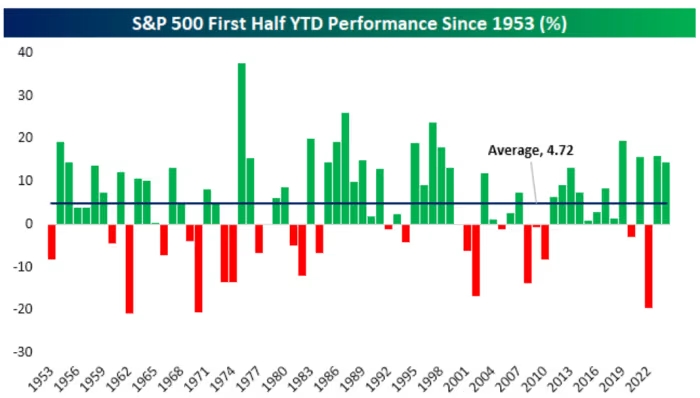
As the U.S. stock market nears the end of June, Bespoke analyzed the typical first-half performance of the S&P 500. The S&P 500 index is on track to post significant gains for the first half of 2024, poised to surpass the historical average, according to Bespoke Investment Group. “The end of the first half of 2024 is rapidly approaching,” Bespoke said in a note emailed Wednesday, with the U.S. stock market in its final week of June trading. The S&P 500 index, a measure of U.S. large-cap stocks, finished Wednesday with a modest rise, boosting its year-to-date gain to 14.8%, according to FactSet data. While the index’s first-half performance in 2024 is similar to its gains in the first six months of last year and 2021, it significantly exceeds the historical average gain of 4.72% since 1953, Bespoke found. A handful of Big Tech stocks have driven the S&P 500’s rally this year. Nvidia Corp. shares have surged around 155% in 2024, according to FactSet data. Facebook parent Meta Platforms Inc., Google parent Alphabet Inc., Amazon.com Inc., and Microsoft Corp. have all seen their shares rise more than the S&P 500 index this year through Wednesday. The U.S. stock market closed higher Wednesday, with the S&P 500 up 0.2%, the tech-heavy Nasdaq Composite climbing 0.5%, and the Dow Jones Industrial Average eking out a less than 0.1% gain. The S&P 500 gained more than 4% in the second quarter, following a 10.2% jump in the first three months of this year, according to FactSet data. The S&P 500 has risen 3.8% so far in June. Looking ahead, “July is a great time of the year for equities,” historically, according to Bespoke. “The best month of the year for the S&P 500, both since its inception and over the past 20 years, is July,” the firm said. John PaulJohn Paul is the founder of DayTradeToWin, a trading education and software company established in 2008, supporting traders worldwide. His expertise focuses on price action-based futures trading strategies and structured market analysis. DayTradeToWin delivers trading education, indicators, and software tools designed to help traders apply disciplined, rule-based decision-making across global futures markets. He is the creator of multiple trading methodologies, including the Sonic System, Atlas Line, and Trade Scalper, which help traders identify structured opportunities in markets such as the E-mini S&P 500 (ES), Nasdaq (NQ), crude oil (CL), and gold (GC). Official website: https://daytradetowin.com daytradetowin.com

nvidia
Market News

From Slump to Surge: Nvidia’s Stock Rebound Shakes Up the Market

Nvidia Corp. shares surged back with impressive force on Tuesday after a three-day slide that sent them into correction territory. The stock jumped 6.8%, securing its position as the second-best performer in the S&P 500 SPX for the day. This strong rebound came after Nvidia shares (NVDA) had fallen 12.9% over the preceding three sessions. This was the first time since March 9, 2021, that Nvidia’s stock climbed by 6% or more following a decline of 6% or more in the previous session, according to Dow Jones Market Data. Morgan Stanley reaffirmed its optimistic outlook on Nvidia’s stock in a Tuesday report, following a recent trip to Taiwan. “Demand-side indications remain robust, with surprising demand still for H100, growing visibility for limited H200 ramp, Blackwell demand booked out through mid-next year, and a strong ramp of the H20 for the China market,” wrote Morgan Stanley analyst Joseph Moore. The H100 is Nvidia’s older chip, while the H200 is its current line. Blackwell is expected to start shipping later this year. Moore also acknowledged a “mixed” supply-chain situation, though this was not unexpected. For instance, it makes sense that the H100 has “very short” lead times given where Nvidia is in its product lifecycle, he said. “We are, of course, aware that the stock has added nearly a trillion in market cap since earnings, so a good outlook is at least partly discounted — but we can report that the outlook does remain good,” he added. UBS analyst Karl Keirstead also found strong support for Nvidia in his recent survey of enterprise executives. “As expected, and consistent with the results of our prior survey, Nvidia remains the dominant choice for both training and inference workloads, with respondents now leaning much more into Hopper (H100 + H200) and away from legacy and lower-end GPUs,” he wrote. Furthermore, Keirstead noted that rack-scale systems are set to experience significantly higher demand, particularly for model work. John PaulJohn Paul is the founder of DayTradeToWin, a trading education and software company established in 2008, supporting traders worldwide. His expertise focuses on price action-based futures trading strategies and structured market analysis. DayTradeToWin delivers trading education, indicators, and software tools designed to help traders apply disciplined, rule-based decision-making across global futures markets. He is the creator of multiple trading methodologies, including the Sonic System, Atlas Line, and Trade Scalper, which help traders identify structured opportunities in markets such as the E-mini S&P 500 (ES), Nasdaq (NQ), crude oil (CL), and gold (GC). Official website: https://daytradetowin.com daytradetowin.com
trade setup
DayTradeToWin Review

Fast Profits: The Ultimate Quick $500 Trade Setup Strategy

Tuesday morning kicked off with a bang as I executed two trades back-to-back. Today, I’ll walk you through the highs, lows, and key insights from these trades. We’ll explore what worked, what didn’t, and share tips for managing trades for the best possible outcomes. Let’s dive right in without wasting any time. Trade 1 – Short Setup This morning at around 10:00 AM, during our live trading class, we executed the first trade using the Trade Scalper and the Roadmap strategies. These are popular among our traders with funded accounts. While other tools like the Atlas Line and Blueprint are also effective, I’ll focus on the Trade Scalper and Roadmap to keep things straightforward for our funded traders. Around 10:30 AM, we received a double wick long signal. Unfortunately, this trade ended up being a loss. Effective trade management is crucial in such scenarios. If a trade doesn’t show a profitable move within four to five bars, it’s best to close the position. Even though the long trade didn’t work out, we managed to exit at break-even or a minimal loss, underscoring the importance of strategic trade management. Shortly after, we received a double wick short signal from the Trade Scalper. The market tends to move towards the roadmap zones, which act like magnets for price action. Entering this short trade as it headed down towards the roadmap zone was key. Managing the Short Trade The Trade Scalper’s double wick short signal was clear. Managing trades effectively involves monitoring the trade: if the market doesn’t move into profit within four to six bars, consider closing the position. At that time, the market’s ATR (Average True Range) was around 1.75 to 2 points, giving us a realistic target. We heard an audible alert indicating another signal. However, since we were already short, there was no need to re-enter or add to the position. If you missed the initial double wick short, you could take the subsequent main short signal. We exited the trade with a solid two-point profit, adhering to our strategy of always setting a target and a stop. Managing trades with three to five candles and knowing when to exit is crucial. If a trade doesn’t move in your favor quickly, it’s often best to exit early. Trade 2 – Short Strategy Around 15-20 minutes later, another opportunity arose with the E-mini S&P. This time, the Trade Scalper gave a long signal at 529. However, this signal appeared near a roadmap level, indicating potential resistance. Combining strategies like the Trade Scalper and the Roadmap helps filter out conflicting signals. Although the Trade Scalper suggested a long entry, the Roadmap advised caution. I placed a stop order above the roadmap zone to go long only if the resistance was broken, ensuring a more reliable trade setup. If the market reversed, I was prepared to cancel the long position and take a short trade based on the Roadmap signal. This cautious approach allowed me to avoid potential losses and wait for a better setup. Trade 3 – Long Entry As the market continued, the Roadmap provided a short signal. I canceled the long position and took the short trade instead. Being adaptable is crucial in trading. If a trade setup doesn’t work out, be ready to switch directions based on new signals. Managing trades involves evaluating the stop, target, and any conflicting signals. Most successful trades show a profit within three to four bars. If not, consider exiting the trade to avoid larger losses. Conclusion Today’s trades highlighted the importance of trade management, combining different strategies, and being adaptable. Not every trade will be a winner, but effective management can minimize losses and maximize gains. If you’re interested in learning more about our trading strategies and tools like the Trade Scalper, Roadmap, Atlas Line, and more, visit daytradetowin.com. Join our live trading room to see these strategies in action and become part of our trading community. Happy trading! John PaulJohn Paul is the founder of DayTradeToWin, a trading education and software company established in 2008, supporting traders worldwide. His expertise focuses on price action-based futures trading strategies and structured market analysis. DayTradeToWin delivers trading education, indicators, and software tools designed to help traders apply disciplined, rule-based decision-making across global futures markets. He is the creator of multiple trading methodologies, including the Sonic System, Atlas Line, and Trade Scalper, which help traders identify structured opportunities in markets such as the E-mini S&P 500 (ES), Nasdaq (NQ), crude oil (CL), and gold (GC). Official website: https://daytradetowin.com daytradetowin.com

wall street
Market News

A Surprising Turn on Wall Street: What It Means for Your Investments

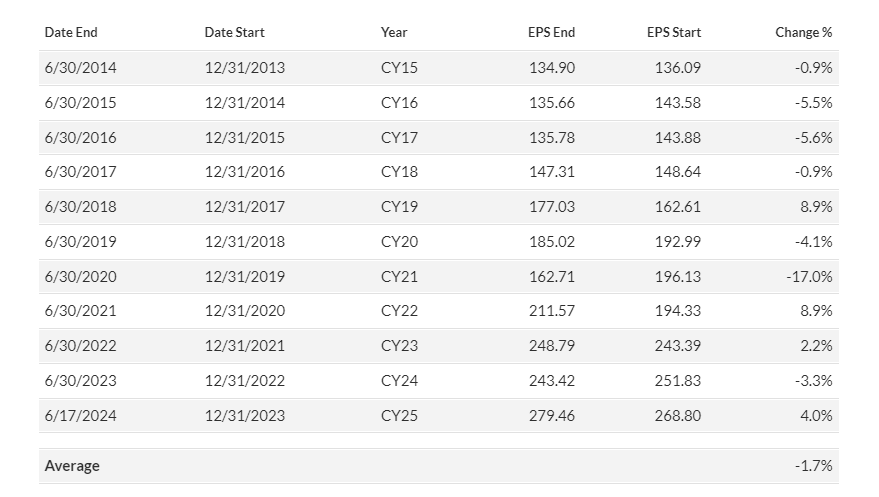
Something unusual is happening on Wall Street, boosting the confidence of stock-market bulls as the first half of 2024 draws to a close. Corporate-earnings estimates, which typically decline throughout the year, are actually growing, according to FactSet data. John Butters of FactSet shared with MarketWatch that S&P 500 firms have seen their earnings-per-share estimates for 2024 increase by 2.4% since late December, reaching $244.79. In contrast, bottom-up estimates have typically fallen 2.6% on average during the first six months over the past decade. Estimates for 2025 are also rising, up 4% to $279.46, compared with an average decline of 1.7% for the second year out. Analysts expect the S&P 500 to report year-over-year earnings growth of 11.3% in 2024 and 14.4% in 2025. This optimism is strengthening bullish investors’ confidence despite a growing list of concerns from market skeptics. Common concerns include high valuations for large-cap stocks, the S&P 500’s dependence on Nvidia Corp., political risks related to the upcoming U.S. election, and uncertainty around the Federal Reserve’s interest-rate cut, even as data suggest the U.S. economy is straining under high interest rates. Despite these worries, many Wall Street strategists are optimistic, with several recently raising their price targets for 2024, citing rising corporate forecasts to support their positive outlooks. “We’ve been surprised by how rapidly expectations for earnings have grown,” said a team at Capital Economics on Friday, announcing their decision to raise their 2024 price target for the S&P 500 to 6,000. Expectations vs. reality To be sure, earnings expectations are merely that — expectations. Typically, Wall Street’s forecasts for the largest companies are too conservative. This was evident in the first quarter when S&P 500 firms outperformed estimates, mainly due to contributions from Nvidia and other giants like Microsoft Corp. The return to strong earnings growth in the first quarter marked a significant shift from 2023, when an “earnings recession” led to just 1% growth. Despite this turnaround, some skeptics worry that the AI boom has introduced uncertainty to Wall Street’s earnings outlook. The timing of AI’s promise to boost productivity remains unclear, and so far, aside from Nvidia and a few semiconductor companies, few firms have significantly benefited from AI. The Capital Economics team acknowledged the risk of overly optimistic earnings expectations but saw no reason to doubt them, given the strong performance in the first quarter. Wall Street does not expect Nvidia and its peers to sustain their rapid earnings growth. Consensus forecasts for the S&P 500 suggest that the top 10 stocks’ contribution to overall earnings growth will decline in the second half of 2024, while contributions from the other 493 companies will rise. This trend is expected to continue into early 2025. The big question: Can margin growth keep up? Bearish investors see a potential inconsistency between earnings expectations and sales growth. FactSet estimates suggest sales will grow by just 5% in 2024 and 5.8% in 2025, meaning companies will need to expand net margins to meet profitability targets. Lisa Shalett, chief investment officer of Morgan Stanley Wealth Management, noted that consumer prices are no longer rising faster than wholesale prices, limiting companies’ pricing power. Any further margin expansion will likely require cost-cutting, lower labor costs, or increased productivity, Shalett said. Some previously skeptical investors are becoming more optimistic about margin expansion. S&P 500 companies reported an aggregate net profit margin of 11.8% for the first quarter, close to the record 12.2% margin in 2021, according to FactSet. This convinced James Abate, fund manager of the Centre American Select Equity Fund, that large American companies might continue expanding their margins in the coming quarters. He previously viewed this as a potential hurdle for the rally. “I’m becoming more optimistic about it,” Abate told MarketWatch. U.S. stocks traded mixed on Monday, with the S&P 500 losing 0.3% to 5,447.87 and the Nasdaq Composite shedding over 192 points, or 1.1%, to 17,496.82. Both indexes were affected by a 6.7% decline in Nvidia shares, officially entering correction territory. The Dow Jones Industrial Average, meanwhile, gained over 260 points, or 0.7%, to close at 39,411.21. John PaulJohn Paul is the founder of DayTradeToWin, a trading education and software company established in 2008, supporting traders worldwide. His expertise focuses on price action-based futures trading strategies and structured market analysis. DayTradeToWin delivers trading education, indicators, and software tools designed to help traders apply disciplined, rule-based decision-making across global futures markets. He is the creator of multiple trading methodologies, including the Sonic System, Atlas Line, and Trade Scalper, which help traders identify structured opportunities in markets such as the E-mini S&P 500 (ES), Nasdaq (NQ), crude oil (CL), and gold (GC). Official website: https://daytradetowin.com daytradetowin.com
stock
Market News

Election Year Boom: Key Factors for Sustaining the Stock Market’s Record Rally

U.S. stocks have posted an impressive election-year rally so far in 2024. As investors question whether the rally will continue, they’re closely watching inflation and economic-growth data to gauge the Federal Reserve’s potential interest-rate decisions and corporate earnings in the second half of the year. The S&P 500 is on track for its best first-half performance during an election year since 1976 and the second-best performance in an election year in its history, according to Dow Jones Market Data. However, the rally has “left valuations stretched, sentiment optimistic, and the market overbought,” say analysts at Ned Davis Research. Several factors leave the U.S. stock market vulnerable to a correction in the second half of the year, the analysts noted — including corporate earnings estimates, uncertainty around potential Fed rate cuts, the upcoming presidential election, and the limited breadth of the market’s rally. While earnings estimates have been improving since the start of the year — with analysts now expecting earnings growth of 12% to 13% for 2024 — valuations are rising even faster, said Sam Stovall, chief investment strategist at CFRA. This could be concerning, Stovall told MarketWatch. “We have to see whether the rising stock prices and price-to-earnings ratios are actually the result of the market expecting better earnings,” he said. For now, as investors wait for the second-quarter earnings season to kick off, such data is mostly on the back burner, he added. Investors are even more concerned about persistent inflation, which together with growth data will influence the timing and magnitude of any interest-rate cuts by the Fed this year, said William Northey, investment director at U.S. Bank. While the Fed has forecasted only one rate cut for the rest of the year, fed-funds futures traders are currently pricing in two cuts starting in September, according to the CME FedWatch Tool. The most important inflation-related data point to be released next week is the personal-consumption expenditures, or PCE, price index due out Friday. James Ragan, director of wealth-management research at D.A. Davidson, expects the PCE numbers for May to confirm that inflation is slowing, as was reflected in consumer-price index data released earlier this month. Stovall echoed that point, saying he expects both the headline and core PCE inflation figures to be lower than in the previous month, which may bode well for the stock market. Meanwhile, economic-growth data remains another major focus, as the market is expecting U.S. GDP growth to slow but stay positive, Ragan noted. “If we get weaker data, it’s not necessarily bad for the market,” he said, as that could spur the Fed to move quicker on rate cuts. “Bad news is good news — as long as it’s not too bad news.” For the stock market to continue its rally, investors will need to see a broadening of the rally from both a price perspective and an earnings-contribution perspective, said U.S. Bank’s Northey. He observed that so far this year, the stock market’s strength has mostly been driven by megacap tech companies like Nvidia Corp., due to their outsized earnings growth and excitement around artificial intelligence applications. The S&P 500’s 14.6% gain so far this year has mostly been driven by its information-technology sector, which has risen 28.7%, and its communication-services sector, which has advanced 24.8%, according to FactSet data. “If the economy is achieving a soft landing and stays positive, we would expect to see better participation from some of the cyclical sectors such as energy, financials, materials, and industrials,” Ragan said. “We should watch those sectors pretty carefully; if they start to perform better, that’s how we’ll have a more sustainable rally.” U.S. stocks ended this past week higher, with the Dow Jones Industrial Average up 561.17 points, or 1.5%, to 39,150.33, according to Dow Jones Market Data. The S&P 500 finished the week up 33.02 points, or 0.6%, at 5,464.62, while the Nasdaq Composite closed the week up 33.02 points, or 0.6%, at 5,464.62. Next week, investors will also be watching for new consumer-confidence data on Tuesday, new home-sales data on Wednesday, and initial jobless-claims numbers on Thursday. John PaulJohn Paul is the founder of DayTradeToWin, a trading education and software company established in 2008, supporting traders worldwide. His expertise focuses on price action-based futures trading strategies and structured market analysis. DayTradeToWin delivers trading education, indicators, and software tools designed to help traders apply disciplined, rule-based decision-making across global futures markets. He is the creator of multiple trading methodologies, including the Sonic System, Atlas Line, and Trade Scalper, which help traders identify structured opportunities in markets such as the E-mini S&P 500 (ES), Nasdaq (NQ), crude oil (CL), and gold (GC). Official website: https://daytradetowin.com daytradetowin.com

deflation
Market News

Brace for a Gentle Decline: Slow Deflation vs. a 40% Market Drop

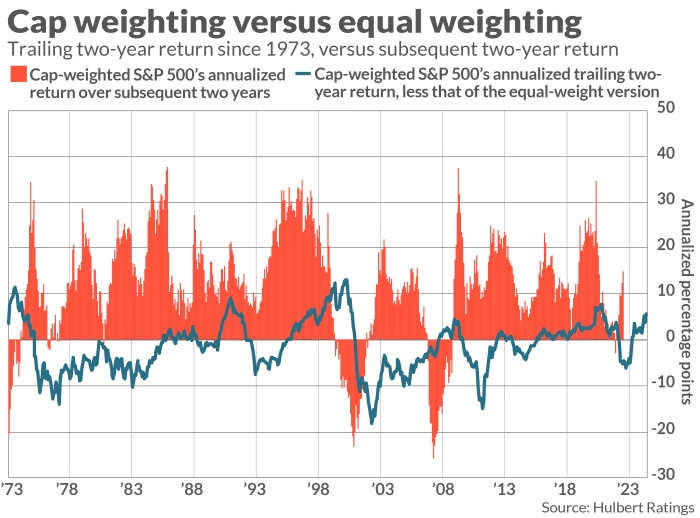
Current forecasts suggest that the likelihood of a U.S. stock market crash is below average. According to State Street Associates’ “froth forecasts,” which draw on Harvard professor Robin Greenwood’s research, there’s an 18% chance of a 40% market decline within the next two years, compared to a five-year average of 26%. This outlook extends to the high-tech sector, known for its recent dynamic returns. State Street estimates its crash probability to be four percentage points lower than the five-year average. Yale University’s Will Goetzmann contends that bubble predictions often reflect more about the analysts making them than the actual risk. Many lack precise definitions and criteria for what constitutes a bubble or a crash, leading to more subjective and less reliable predictions. The crash probabilities by Greenwood and State Street are linked to the market’s performance over the past two years. Higher past performance correlates with a higher likelihood of a crash. For instance, a 100% price increase over two years raises the crash probability to 50%, while a 150% increase nearly guarantees it. However, the S&P 500’s 48.9% return over the past two years is well below these critical levels. Some argue that the market’s reliance on the largest stocks indicates an imminent bubble. The cap-weighted S&P 500 has outperformed the equal-weight version by more than 10 percentage points this year and by 12 percentage points last year. This concentration in large stocks is viewed by some as a sign of market vulnerability. However, historical data since 1970 shows no consistent pattern supporting this theory. Although the U.S. stock market is overvalued, there are various ways it can correct itself besides crashing. According to State Street’s forecasts, a gradual adjustment through mediocre performance is more likely than a sudden crash. John PaulJohn Paul is the founder of DayTradeToWin, a trading education and software company established in 2008, supporting traders worldwide. His expertise focuses on price action-based futures trading strategies and structured market analysis. DayTradeToWin delivers trading education, indicators, and software tools designed to help traders apply disciplined, rule-based decision-making across global futures markets. He is the creator of multiple trading methodologies, including the Sonic System, Atlas Line, and Trade Scalper, which help traders identify structured opportunities in markets such as the E-mini S&P 500 (ES), Nasdaq (NQ), crude oil (CL), and gold (GC). Official website: https://daytradetowin.com daytradetowin.com

Scroll to Top