Market News

The S&P 500 Pathway: Anticipating Market Rally Pre-Fed Rate Cut

Wednesday witnessed a relaxation in the VIX, commonly referred to as the stock market’s ‘fear gauge,’ following its surge on Tuesday in response to higher-than-expected inflation figures. Despite this spike in volatility, U.S. stocks might maintain their upward momentum before the Federal Reserve’s anticipated initial interest rate cut, according to research from DataTrek. Although the S&P 500 experienced a significant 1.4% decline on Tuesday, marking its most substantial drop since January 31, it remains in positive territory for the year and since the Fed’s last rate hike in July, as per FactSet. The index, which tracks the performance of large-cap U.S. stocks, showed signs of recovery on Wednesday afternoon with around a 0.6% increase. Since the Fed’s July rate hike, the S&P 500 has surged by 8.5%, aligning with historical patterns of post-rate-hike rallies, as noted by Jessica Rabe, co-founder of DataTrek. Rabe’s analysis suggests further potential gains for the S&P 500, citing historical data that indicates an average increase of 28% in the year following a rate-hike cycle cessation, except for the period after the dot-com bubble burst in 2000. Despite these positive indicators, Rabe cautions that the Fed has not yet initiated a rate-cut cycle, primarily due to a robust U.S. labor market and persistent inflationary pressures, as highlighted in Tuesday’s consumer-price index report. The surge in U.S. stock market volatility on Tuesday, prompted by the CPI inflation report, saw the CBOE Volatility Index (VIX) spiking to nearly 18 during intraday trading, although remaining below its long-term average of 20, according to Nicholas Colas, co-founder of DataTrek. Colas emphasizes that even with the VIX hovering around 17, the market still reflects a bullish sentiment rather than a bearish one. Following Tuesday’s inflation report, Treasury yields surged, leading to a sell-off in stocks. The 10-year Treasury note yield rose to 4.315%, its highest level since late November, while the 2-year Treasury yield reached 4.654%, the highest since mid-December. Investor expectations for Fed rate cuts this year have moderated, with Fed-funds futures now suggesting approximately four rate reductions based on 25-basis-point cuts, and potential rate decreases starting as early as June. Despite the optimism, historical trends suggest that while U.S. equities may receive an initial boost from the Fed’s first rate cut, sustained gains are not guaranteed, especially given the prevailing macroeconomic and geopolitical landscape. Nonetheless, the S&P 500 has shown resilience, posting gains both this year and in the previous year, underscoring a continued bullish outlook for U.S. large-cap stocks.

DayTradeToWin Review

Chart Customization Unleashed: NinjaTrader’s Pro-Level Features

Greetings, traders! Today, we embark on a journey into the intricacies of customizing your NinjaTrader chart setups. Whether you’re a seasoned professional or just beginning your trading voyage, understanding how to fine-tune your charts can significantly elevate your trading experience. Join us as we delve into various techniques aimed at optimizing your trading platform to align with your preferences and strategies. Let’s start by focusing on the appearance of candlesticks. By simply right-clicking on the chart and selecting “Data Series,” a plethora of customization options unveil themselves. From tweaking the size and color of candle wicks to adjusting the thickness of candle bodies, NinjaTrader offers a plethora of possibilities. Navigating through these settings allows traders to tailor their charts to perfectly match their unique trading styles and preferences. Saving Your Preferences One crucial yet often overlooked aspect is the importance of saving your preferred settings. After meticulously adjusting the appearance of your candlesticks, it’s imperative to click on “Presets” and “Save.” This ensures that your customized settings remain intact every time you open your chart, ultimately saving you valuable time and effort. Moreover, enhancing the readability of your charts is vital for effective analysis. By tweaking font sizes, styles, and the spacing between candlesticks and chart margins, traders can create a visually pleasing environment conducive to making informed trading decisions. Utilizing Shortcuts To streamline the customization process, NinjaTrader provides several shortcuts. For instance, holding down the “Control” key while pressing the up or down arrow keys effortlessly adjusts chart size. Similarly, holding down the “Alt” key enables quick changes in candlestick thickness. These shortcuts empower traders to focus more on analyzing market trends and less on navigating the platform. For traders interested in visualizing trade executions on their charts, NinjaTrader offers the option to plot executions. However, it’s crucial to strike a balance between clarity and clutter on your charts. Traders can choose between displaying all trade executions, only text and markers, or opting not to plot executions altogether, depending on their preferences and trading style. Conclusion In conclusion, mastering NinjaTrader chart setups is paramount for traders seeking to optimize their trading experience. By customizing candlestick appearance, saving preferences, enhancing chart readability, utilizing shortcuts, and strategically plotting executions, traders can create a personalized trading environment tailored to their unique needs. Remember, successful trading hinges on the ability to adapt and customize your tools effectively. Happy trading!

Market News

Riding the Bull: How Sideline Cash Reserves Signal Continued Stock Market Growth

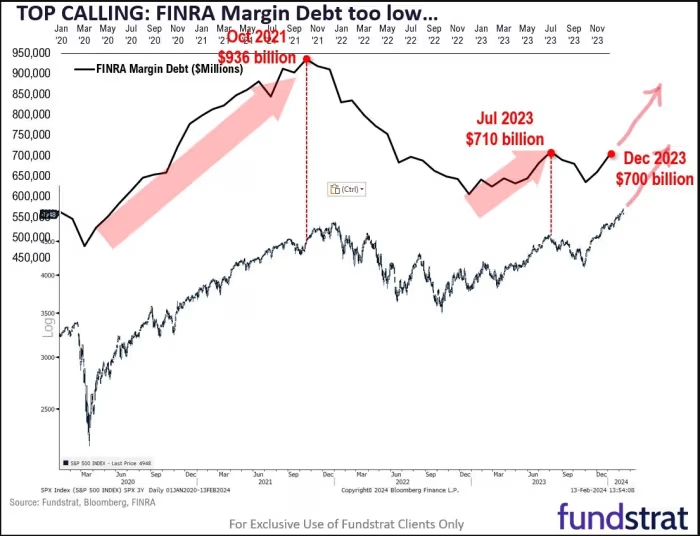
The stock market saw a sharp downturn just before Valentine’s Day, leading some to question if it was an overreaction. However, indications from stock futures suggest that bargain hunters are already on the lookout. Chris Weston, head of research at Pepperstone, explains that the market was caught off guard, lacking adequate safeguards and being overly optimistic about risk. He notes the frustration among those betting against risk, as such sell-offs often lack sustained momentum. Additionally, the Federal Reserve’s preferred inflation data is yet to be released, scheduled for February 29. Tom Lee, head of research at Fundstrat and a notable bullish figure on Wall Street, describes Tuesday’s stock plunge as an overreaction, predicting that it won’t gain traction. Lee, who accurately turned bullish in 2023 when others were bearish, believes this downturn will be temporary, though he warns investors to brace for a challenging first half of the year. Lee’s optimism is supported by several factors. Firstly, he observes that markets typically don’t falter on positive news, as was the case with Tuesday’s Consumer Price Index (CPI) data. He also notes that despite inflation concerns, the downward trend hasn’t halted. Secondly, Lee points to ample “dry powder” on the sidelines, suggesting that buying power has yet to peak. He compares the current level of NYSE margin debt to previous market tops, indicating room for further borrowing before a downturn. Furthermore, the presence of significant cash reserves, as mentioned by a BlackRock executive in November, supports the notion that the market hasn’t reached its zenith. Lee emphasizes that skepticism remains prevalent, which typically doesn’t coincide with a market peak. Lee anticipates that a significant macroeconomic event triggering a stock sell-off could signal the peak. In the meantime, he advises investors to focus on small-cap stocks, particularly through the iShares Russell 2000 ETF, which he believes will rebound as the market stabilizes. The Russell 2000 index suffered the most on Tuesday, experiencing its largest single-day decline since June 2022, yet Lee remains optimistic about its prospects once the market regains its footing.

DayTradeToWin Review

Trade Smart: Harnessing AI for Successful Trading Strategies

Greetings Traders! Today, we’re immersing ourselves in the realm of autopilot trading. Buckle up as we guide you through seven trades, from start to finish, utilizing our cutting-edge automated trading system. This strategy handles all the heavy lifting for you – from executing buys and sells to managing trailing stops – all on autopilot. However, before we plunge into the trades, it’s essential to remember the inherent risks associated with trading. Only invest funds that you can afford to lose. Our Autopilot System: Now, let’s dive right in. Trade 1: Long 50/50 Quarter We kick things off with a long position, with our autopilot system promptly establishing a trailing stop and break-even point. Witness how the trailing stop adjusts as the market moves in our favor. Additionally, we’ve integrated a two-bar loss strategy for added security. Trades 2 – 7: Continuous Triumphs Each trade seamlessly transitions into the next, with our autopilot system effortlessly navigating the markets. Whether it’s securing profits or mitigating losses, our system performs with unwavering precision. Throughout these trades, we’ll spotlight some key features and options of our autopilot system. From trailing stops to accelerated mentorship, we offer a comprehensive toolkit for traders. In Conclusion As we wrap up the day, we reflect on our successful trades and present viewers with an array of options, including discounted bundles and mentorship programs. If you’re intrigued by the potential of autopilot trading, visit daytradetowin.com to explore further. Don’t forget to sign up for a free member account to access exclusive discounts and resources. Until next time, may your trades be prosperous!

Market News

Insights from a Former Hedge Fund Star: The Next Bear Market Signal

What hangs in the balance with the release of Tuesday’s CPI data? Many in the financial world are expecting a decrease in inflation, but if the numbers surpass expectations, it could dampen hopes for a rate cut in May, potentially affecting the S&P 500’s climb towards 5,000, warn some analysts. Despite this, given Nvidia’s impressive 47% increase this year and the frenzy surrounding AI companies like ARM, it appears prudent to refrain from opposing the momentum, at least for now. Indeed, the latest fund manager survey from Bank of America shows continued enthusiasm for tech stocks. So, what might eventually trigger a downturn in this market? Former hedge-fund manager Russell Clark suggests looking to Japan, where loose monetary policy persists as a significant factor. Clark, despite stepping away from his consistently bearish RC Global Fund in 2021 after a decade of misjudgments on stock markets, presents a compelling argument regarding Japan’s importance. In his recent Substack post, Clark argues that the true catalyst for a bear market could arise when the Bank of Japan ends quantitative easing. He suggests that we’re in a “pro-labor world,” where certain economic trends should be emerging: increasing wages, declining unemployment, and interest rates trending higher than anticipated. In line with his analysis, real assets began surging in late 2023 as the Fed adopted a dovish stance and the yield curve steepened. However, subsequent events haven’t unfolded as expected. While Clark anticipated that higher short-term rates would divert money from speculative assets, funds instead flowed into cryptocurrencies like Tether, and the Nasdaq fully recovered from its 2022 decline. Returning to Japan, Clark offers a less conventional explanation for the resilience of financial and speculative assets. He points out that during the 1990s, despite the Fed maintaining high interest rates, the dot-com bubble thrived. However, the bubble eventually burst when the Bank of Japan raised rates in 1999. Similarly, Japan’s attempt to raise rates in 1996 is associated with the Asian Financial Crisis. According to Clark’s analysis, it seems that markets are more sensitive to the Bank of Japan’s balance sheet than to the Fed’s policies. He argues that the BOJ’s introduction of quantitative easing in the early 2000s preceded the subprime crisis, which erupted shortly after the BOJ withdrew liquidity from the market in 2006. In summary, Clark suggests that the Bank of Japan is the central bank that truly matters and that a bearish stance on the U.S. might be warranted when the BOJ raises interest rates. He closely monitors the BOJ’s actions as they could signal impending market shifts.

Market News

Investor’s Guide: Lunar New Year 2024 Insights on Stock Market Performance and Gold Trends

Tom Lee from Fundstrat points out that the U.S. stock market has historically flourished during the Years of the Dragon, boasting an average gain of 12.7% since 1871. This historical trend indicates that the recent uptrend in the S&P 500, which has propelled it to the significant 5,000-point milestone, may have further room to grow. Lee’s analysis suggests that by the end of 2024, the S&P 500 could potentially surge to 5,350 points, marking a projected 6.4% increase from its current level. As we approach the onset of the Year of the Dragon on February 10, 2024, Lee also highlights the promising performance of small-cap stocks during this period. Over the years, small-cap stocks have tended to outshine the S&P 500, prevailing in 88% of instances since 1979. Additionally, Lee draws attention to the current price-to-book ratio of the Russell 2000 index compared to the S&P 500, which mirrors conditions observed in 1999 when small-cap stocks outpaced their large-cap counterparts for the subsequent 12 years. Anticipating a reversal in the trend of investor outflows from equities, Lee foresees positive inflows into the market in 2024. This shift could further bolster small-cap stocks and potentially broaden the market rally beyond the “Magnificent Seven” mega-cap growth and technology companies. A more expansive rally could drive the S&P 500 towards the upper bounds of a projected range between 5,400 and 5,500 by the year’s end. In addition to equities, the Year of the Dragon typically sees heightened demand for gold, particularly from China during the Lunar New Year vacation season. This tradition, combined with ongoing geopolitical tensions and robust central bank demand, sets a favorable backdrop for gold prices in 2024.

Scroll to Top