sonic
DayTradeToWin Review

How Limit Orders Can Boost Your Trading using Sonic System

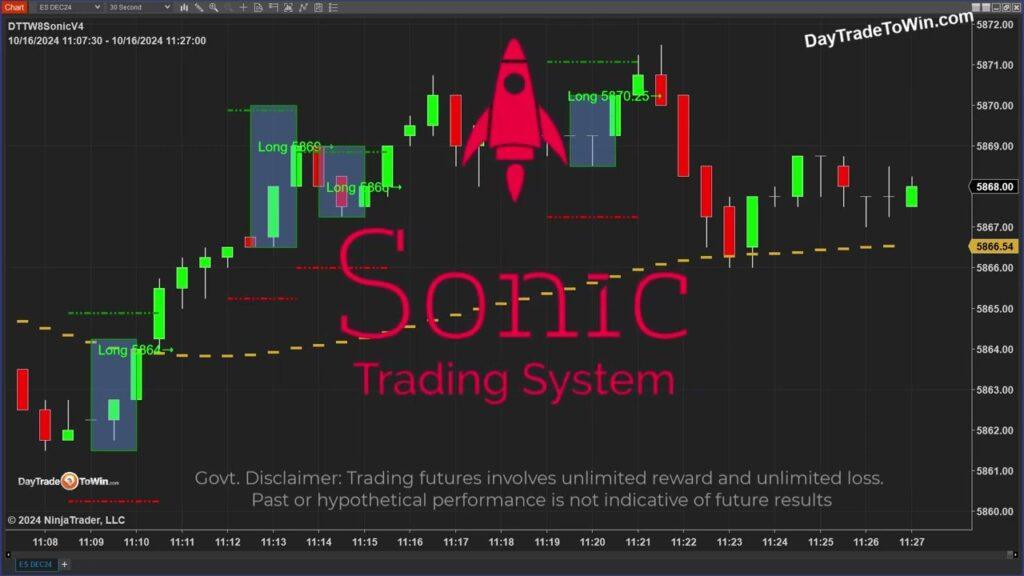
Hello, traders! Today, I’m excited to guide you through the Sonic Trading System, an advanced method for identifying both long and short trade opportunities. We’ll dive into how this system operates, focusing on how to leverage price action, optimize your entries and exits, and avoid common mistakes like overtrading and slippage. The Sonic Trading System: An Overview The Sonic Trading System is a powerful tool that provides real-time trading signals for both long and short trades. These signals are driven by price action, which means you’re making decisions based on the actual movement of price rather than relying on lagging indicators. A key feature of this system is the use of the Average True Range (ATR) to calculate targets and stops, helping traders to account for market volatility. By understanding the mechanics of the system, you can better follow market momentum, manage risk, and position yourself for success. Executing Long Trades: Maximizing Opportunities Let’s start with a long signal example. Suppose the system generates a signal at 5868.25, indicating it’s time to buy. The key here is following the system’s guidance for setting targets and stops. Targets are often determined by the ATR, a metric that adjusts based on whether the market is fast or slow. For instance, if the ATR suggests four ticks of movement per candle, setting a target of 1x or 2x the ATR can offer a balanced risk-reward ratio. One advantage of the Sonic system is that it allows traders to place limit orders instead of market orders. By placing a limit order, you can aim for a slightly better entry price, reducing slippage and maximizing your potential profit. For example, if the system suggests entering at 5868.25, you could place a limit order at 5868 or better. This way, when the market hits your target, you’ll have captured more profit, or, if the trade moves against you, your loss will be smaller. Mastering Short Trades: Profiting in a Falling Market The Sonic system also shines when it comes to identifying short trade opportunities. A short trade involves selling at a higher price with the aim of buying back at a lower one. For example, if a short signal is generated at 5867.75, the goal is to sell at that price and buy back lower to lock in a profit. The system includes a useful filter line that helps distinguish between long and short trades. Any trade signal below the filter line is a short, and any trade above the line is a long. This ensures that you’re always trading with the prevailing trend, reducing the risk of getting caught on the wrong side of a move. As with long trades, short trades can benefit from using limit orders to secure better prices. If the system signals a short at 5867.75, placing a limit order at 5868 (or even one tick higher) allows you to sell at a more advantageous price, increasing your potential profit. Slippage and Risk Management: Why Limit Orders Matter Slippage, which occurs when your order is filled at a worse price than expected, can erode profits. To combat this, the Sonic system encourages the use of limit orders. By setting a limit order one or two ticks better than the system’s recommended entry, you can avoid the impact of slippage and improve your overall trade outcome. For example, instead of entering a long trade at 5868.25 with a market order, placing a limit order at 5868 gives you a better price and reduces risk. If the trade hits your target, you earn more profit. If it hits your stop, the loss is minimized. Managing Risk and Avoiding Overtrading A crucial element of successful trading is knowing when to cut your losses or exit a trade. The Sonic Trading System is designed for efficiency, meaning it expects trades to hit their targets or stops relatively quickly. If your trade isn’t moving as expected within 5-10 minutes, it’s better to exit with a small win, break even, or even a small loss. Another key point is to avoid overtrading. While it’s tempting to chase every signal, it’s wiser to limit yourself to 4-6 solid trades in a session. Overtrading can lead to poor decision-making, especially during volatile market conditions or news events. Short-Term vs. Long-Term Targets The Sonic system’s versatility allows for both scalping and longer-term trades. While shorter trades focus on smaller targets, you can also use the system to set larger targets based on the ATR. For instance, if the ATR suggests four ticks of movement per candle, setting a target of two times the ATR can provide a more substantial profit opportunity. Keep in mind that while larger targets may offer bigger rewards, they also require more patience. Be sure to adjust your trading style to match your strategy. Adapting to Market Conditions As with any trading system, flexibility is crucial. The market is always changing, and the Sonic system allows you to adapt by tweaking entries, stops, and targets. For instance, if you notice that price action is stalling, consider exiting early to protect your account. Similarly, if the market allows you to secure a better entry price, take it! Trading isn’t about hitting every target perfectly; it’s about making smart decisions based on the available data. Join the Sonic Trading Community The Sonic Trading System is part of a broader suite of trading tools that include the Trade Scalper and Atlas Line. To enhance your trading skills, consider joining a live trading room or mentorship program where you can receive real-time guidance and support. These programs allow you to learn directly from experts, ask questions, and and refine your strategy. Ready to elevate your trading? Visit DayTradeToWin.com to open a free member account. Get access to live trading rooms, proprietary strategies like the Sonic system, and one-on-one mentorship. Whether you’re a beginner or a seasoned pro, the right tools and guidance can help you master price action trading and achieve consistent success.
bond
Market News

The Bond Market vs. Untamed Inflation

Matt Rowe, head of portfolio management and cross-asset strategies at Nomura Capital Management, warns that “higher degrees of inflation are our reality moving forward.” Investors are increasingly anxious about inflation risks that haven’t yet been factored into the bond market, especially with the upcoming November 5 presidential election looming. As of Tuesday, prediction markets showed Republican nominee Donald Trump leading Democratic nominee Kamala Harris. Despite this, the overall inflation outlook remains uncertain, regardless of who wins. On Tuesday, inflation concerns continued, even as oil prices dropped and Treasury yields fell. The 10-year Treasury yield ended at 4.037%, reflecting a decline from recent highs. Nevertheless, bond-market volatility, as measured by the ICE BofAML MOVE Index, remains near its highest levels of the year, raising fears that inflation could surge beyond the Federal Reserve’s ability to control it. Economists predict that Trump’s policies may result in higher inflation, interest rates, and federal deficits compared to those of Harris. However, some experts believe that inflation and economic growth could be similar regardless of the election outcome. The nation’s growing debt, which now stands at $35.7 trillion, along with a $1.9 trillion budget deficit, is also a major factor contributing to long-term inflation concerns. Eric Vanraes, head of fixed income at Eric Sturdza Investments, suggests that Trump’s potential victory could increase inflationary pressure on long-term interest rates. Still, the composition of Congress will play a crucial role. If Democrats control Congress, Trump’s policies may face limitations, meaning that the balance of power in the Senate and House could have a greater impact on long-term yields than the presidential race itself. Rowe highlights that inflation could persist due to the rising costs tied to reshoring and a more insular U.S. economy. As globalization wanes and the U.S. faces a more complex economic environment, there are limits to what interest rate policy can achieve. The past 15 years of favorable trade and accommodative policies are coming to an end, and now inflation risks could disrupt the bond, currency, and stock markets. Adding to inflation worries is the debate over the “neutral” rate of interest—a theoretical level that neither stimulates nor slows the economy. If the Federal Reserve cuts rates too aggressively, it could unintentionally ignite more inflation. Both Trump and Harris have outlined fiscal policies that could further strain the national debt and increase inflationary pressures. Although inflation may ease in the short term, the outcome of the U.S. election and the makeup of Congress will play a key role in shaping long-term inflation trends and the country’s fiscal future.

inflation
Market News

Inflation-Proof Stocks: One Common Factor

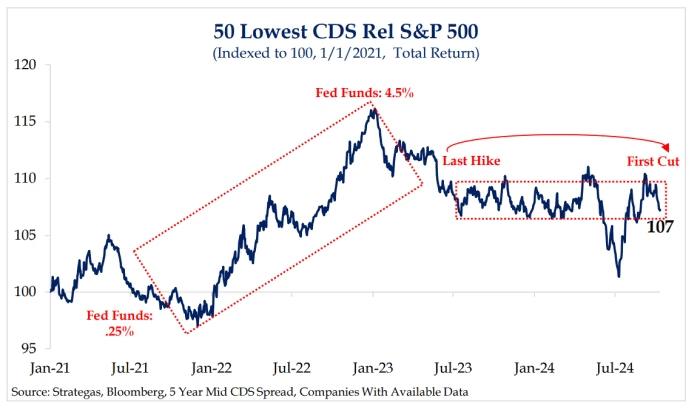
This rise is largely due to stronger-than-expected economic data, including falling unemployment and persistent inflation. Nearly a quarter of S&P 500 companies now have lower credit-default swap (CDS) spreads than the U.S. government, reflecting shifting market perceptions of risk. As bond trading resumes following the Columbus Day break, the U.S. Treasury market has experienced volatility, with the 10-year yield climbing nearly 50 basis points over the past month. Political factors may also be at play. Former President Donald Trump has outlined significant tax cuts, which the Tax Foundation estimates could cost up to $6 trillion over the next decade. Vice President Kamala Harris, on the other hand, has proposed tax-and-spending policies that could amount to $3.5 trillion, according to the Committee for a Responsible Federal Budget. Strategists Jason DeSena Trennert and Ryan Grabinski from Strategas note that 117 S&P 500 companies currently have lower CDS spreads than the U.S. government, indicating a lower perceived risk of default for these corporations. While a U.S. government default would affect all entities, this group of companies is considered a high-quality proxy. During the inflation surge of 2022 and 2023, the 50 companies with the lowest CDS spreads, including tech leaders like Apple, Microsoft, and Alphabet, outperformed the broader market. As inflation concerns resurface, this group of stocks could once again attract investors seeking stability in uncertain economic times.

market
Market News

Navigating the Bull Market Turn: Key Strategies

The U.S. stock market recently celebrated the two-year anniversary of its bull run, with the Dow Jones Industrial Average and S&P 500 ending the week at record highs. Despite ongoing concerns about inflation and uncertainty regarding future interest rate cuts by the Federal Reserve, analysts believe stocks could continue to climb. Since the S&P 500 hit a bear-market low of 3,577.03 on October 12, 2022, it has surged over 60%, according to Dow Jones Market Data. This rally has been stronger and faster than many analysts predicted, causing Wall Street firms to repeatedly adjust their year-end forecasts. However, the latest inflation data has sparked questions about the Fed’s upcoming decisions. September’s Consumer Price Index (CPI) showed a 0.2% increase, slightly above the forecasted 0.1%, while core CPI, excluding food and energy, rose by 0.3%, exceeding expectations. This, along with a strong jobs report, has raised doubts about whether the Fed will cut interest rates at its next meeting in November. Despite the CPI surprise, the stock market responded calmly, with the S&P 500 posting a modest loss. Investors are still concerned about inflation’s impact on the Fed’s rate path, especially with potential inflationary pressures from the Middle East oil price spike and ongoing labor strikes. According to Interactive Brokers senior economist José Torres, October’s inflation numbers could be more worrisome due to these external factors. However, that data won’t be released until after the Fed’s November 7 meeting. Currently, Fed funds futures suggest an 87.9% chance of a 25-basis-point rate cut next month, down from 97.4% a week earlier. Some strategists, such as Thierry Wizman and Gareth Berry of Macquarie, are watching inflation expectations closely. Five-year breakevens, a key inflation indicator, have risen to 2.3% from around 1.95% in September. If breakevens climb closer to 2.5%, the Fed might reconsider its rate-cut plan. Additionally, many investors are concerned that interest rates may not fall as much as they had initially hoped. JoAnne Bianco of BondBloxx Investment Management suggests that a fed funds rate closer to 3% is more likely, rather than the near-zero levels seen at the beginning of 2022. Damian McIntyre of Federated Hermes echoed this sentiment, saying the final rate could land between 3% and 4%, depending on inflation trends. While higher interest rates could slow the economy, stocks may continue to perform well if the Fed remains accommodative and tolerates slightly higher inflation. Torres pointed out that stocks are priced based on earnings per share, which could rise alongside inflation if profit margins remain stable. One major risk to the market remains the possibility of a recession. However, with the Fed already cutting rates by 50 basis points in September, policymakers have signaled their intent to avoid driving unemployment higher. As a result, recession fears have diminished. With the Fed’s dovish stance and favorable seasonal trends ahead, analysts believe the equity market is unlikely to face a significant downturn in the next few months. Last week, the Dow Jones rose 1.2%, closing at a record 42,863.86, while the S&P 500 gained 1.1% to finish at 5,815.03. Investors will be watching key economic reports this week, including jobless claims, retail sales, and housing data, for further insight into the market’s direction.

tesla
Market News

Tesla $30K Cybercab: A New Era in Autonomous Vehicles

Elon Musk unveiled the Robovan and a new version of the Optimus humanoid robot at Tesla’s highly anticipated event in Southern California on Thursday night. In addition to showcasing the Cybercab, Tesla’s latest robotaxi prototype with no steering wheel or pedals, Musk introduced the Robovan, a futuristic, boxy vehicle designed to transport up to 20 passengers or cargo. The event, held at Warner Bros. Studios in Burbank, highlighted Tesla’s advancements in autonomous vehicles and robotics. The Cybercab, which Musk said would cost less than $30,000, is set to be fully autonomous, allowing passengers to reclaim time once spent driving. Musk reiterated that vehicles like the Model 3 and Model Y will achieve full self-driving capability by 2025 in states like Texas and California, pending regulatory approval, and predicted mass production of fully autonomous cars by 2027. The Robovan, with its sleek, stainless-steel body reminiscent of the Cybertruck, is designed for both personal and commercial use, capable of carrying people or goods. Musk also showcased a revamped Optimus humanoid robot, emphasizing its role as a personal assistant for domestic tasks. He compared it to iconic robots like R2-D2 and C-3PO from Star Wars, saying, “Optimus robots will walk among you.” While the event offered exciting glimpses into Tesla’s future, Musk did not provide updates on the development of lower-cost Tesla models, leaving investors eager for more details. He acknowledged that full autonomy will require regulatory approval, and some analysts noted that the timeline for autonomous vehicles remains uncertain. Tesla shares (TSLA) dropped by 6% in early trading following the event, with no news about affordable Tesla models to excite the market. Tesla’s stock has lagged behind the broader market this year, raising concerns among investors. The event, which started nearly an hour late due to a reported medical emergency in the audience, concluded with attendees taking test drives of Tesla’s latest innovations in a city-themed set designed for the occasion.

Dow
Market News

The Dow Heats Up: Why History Favors a Rally

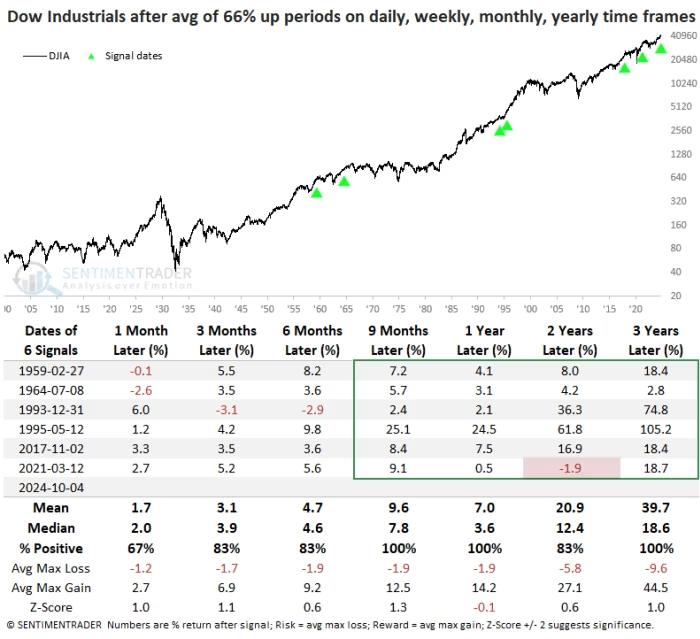
Buying pressure on the Dow Jones Industrial Average has reached historic levels across multiple time frames, according to SentimenTrader. In a recent note, Jason Goepfert, senior research analyst, pointed out that the Dow has risen in 152 of the past 250 trading days—an impressive win rate of nearly 61%. The only other times this level of consistency occurred were in April 2010 and May 2018, both of which preceded several months of volatile trading. This momentum, however, extends beyond the short term. Over the past 100 weeks, the Dow has climbed in just over 60% of them—a solid recovery after a tough 2022, though not an extreme figure relative to the last 40 years. Additionally, the index has risen in 63% of the past 60 months and 80% of the past 15 years, both on the higher end of historical performance. “The buying pressure isn’t limited to one or two time frames,” Goepfert explained. The current level ranks in the top 6% of all readings since 1900, and excluding the tech bubble of 1995-2000, it would be in the top 2%. In the past, extreme upside momentum has sometimes led to sector exhaustion, particularly in utilities, but the Dow itself has generally fared well. Goepfert noted that when the average of rising periods across different time frames exceeded 66%, losses were rare, and the Dow often posted strong gains over the next nine months. Goepfert also highlighted that the Dow has risen at least 60% of the time across daily, weekly, monthly, and yearly periods—a rare occurrence that has only happened six times. While returns following this signal have been mixed, particularly due to the 2018 global financial crisis, these signals have typically been followed by some continued gains, albeit short-lived. In the two instances when the Dow showed both of these signals—once in 1959 and again in 2017-18—the index extended its rise for several months before hitting a period of stagnation. The latter lasted until the market recovery from the pandemic. “The buying pressure across time frames is truly historic,” Goepfert concluded. “While this has generally been a positive signal for the next 6-9 months, the longer-term outlook is less clear. The late 1990s tech boom is the only precedent of sustained momentum, and bulls are hoping the current AI revolution will deliver similar results.

Scroll to Top