Goldman Sachs
Market News

Why Goldman Sachs Raised Its S&P 500 Target Again

As third-quarter earnings season begins, Goldman Sachs has once again raised its target for the S&P 500. Led by David Kostin, the Goldman Sachs team has now increased its forecast for the S&P 500 to 6,000 in the next three months, up from the previous estimate of 5,600. Looking further ahead, they expect the index to reach 6,300 in 12 months, an upgrade from their prior projection of 6,000. The driving force behind this upgrade is their optimism about earnings growth in 2025 and 2026. Goldman expects S&P 500 companies to earn $268 per share in 2025 and $288 in 2026, outpacing Wall Street’s consensus estimates of $265 and $281. Although these numbers are below aggregated estimates of $275 for 2025 and $307 for 2026, Goldman remains more positive than many of its peers. “From a top-down view, our U.S. GDP growth forecast is above consensus. However, bottom-up earnings estimates are often too optimistic and tend to be revised down over time,” said the team. Goldman Sachs attributes much of this confidence to expected improvements in profit margins. They now predict margins will increase to 12.3% in 2025, up from 11.5% in 2024, and will continue to rise to 12.6% by 2026. This marks a significant shift from their earlier projection of a 24-basis-point margin expansion in 2025, now revised to 78 basis points. “The economic backdrop continues to support moderate margin growth, with prices rising faster than input costs,” they explained. A portion of this margin improvement is also expected to come from industry-specific factors. Goldman anticipates that elevated research-and-development costs in healthcare, particularly for companies like Bristol-Myers Squibb, will stabilize. They also expect that one-time charges taken this year by Warner Bros. Discovery and Uber Technologies will not recur. Additionally, a recovery in the semiconductor industry and strong performance from large tech companies are anticipated to fuel growth. While Goldman acknowledges that earnings surprises may moderate, they believe the continued strong demand for AI, as highlighted in their recent GS Communacopia Conference, will benefit key technology stocks.

U.S. stock
Market News

A Foreigner’s Take on U.S. Stock Market Revival

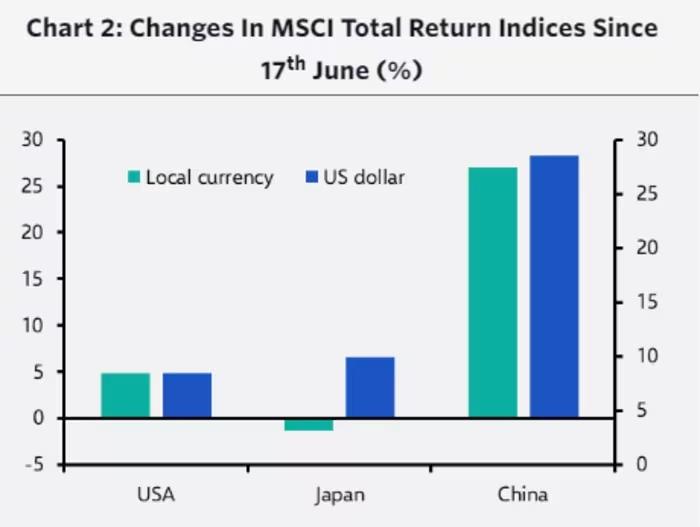
U.S. Equities Could Reclaim Market Leadership, Analyst Predicts As inflation cools and the nonfarm payroll report regains its prominence, some normalcy has returned for traders. However, the U.S. stock market has experienced unusual underperformance lately. Hubert de Barochez, senior markets economist at Capital Economics, notes that since mid-June, the MSCI USA index has returned less than 5%, only half of what global markets outside the U.S. have achieved. De Barochez highlights four main factors behind this lag. First, U.S. tech stocks, which represent a large part of the market, have been struggling. While there’s been a recent bounce, the U.S. tech sector has seen sharper declines than elsewhere, and communication services have fallen in the U.S. but gained globally. Fears of an economic slowdown have raised doubts about tech earnings growth, with many companies previously “priced for perfection.” Second, the U.S. market has a smaller share of financial stocks, which have benefited from a steepening yield curve. Financials make up just 13% of the U.S. index, compared to 22% of global markets outside the U.S., limiting their positive impact on U.S. returns. Third, the U.S. dollar’s depreciation has boosted foreign equity returns in dollar terms. For instance, Japanese stocks saw significant gains, driven in part by the yen’s 8% rise against the dollar since mid-June. Finally, a 30% surge in Chinese stocks, fueled by Beijing’s economic stimulus, has added to the pressure on U.S. equities. Despite these challenges, de Barochez believes the U.S. market will eventually retake the lead, consistent with historical trends during past Fed easing cycles, which have typically led to stronger returns for U.S. stocks. He also expects a renewed surge in investor enthusiasm for AI, potentially creating a stock market bubble. If AI is recognized as a transformative “general purpose technology” like the internet or the steam engine, equity valuations could soar even higher. However, de Barochez warns that a possible AI bubble burst around 2026 could hit U.S. stocks the hardest.

market
Market News

Market Turbulence in 2025: The Presidential Factor

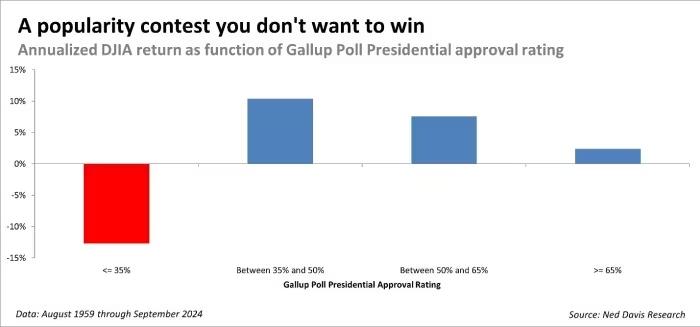
Stock market often experience a downturn in the three months following a presidential inauguration. No matter who wins the U.S. presidential election, the stock market tends to face challenges after Inauguration Day in January. Since the creation of the Dow Jones Industrial Average (DJIA) in 1896, one of its weakest quarters has been the first of a new president’s term, averaging a mere 0.2% return. By comparison, the market usually gains an average of 1.9% in other quarters, regardless of whether the incumbent party remains in power. A study by Ned Davis Research sheds light on this trend, revealing an inverse relationship between a president’s approval rating and the stock market. After Inauguration Day, a president’s approval rating is typically at its peak, which seems to create a drag on market performance. However, when a president’s approval rating dips below 35%, the market tends to fare worse. This has happened only 6.8% of the time since 1959, with notable examples including Richard Nixon’s resignation and the end of George W. Bush’s term during the financial crisis. Currently, President Biden’s approval rating is 39%. It’s puzzling why investors wait until Inauguration Day to recalibrate their expectations, especially since campaign promises often don’t align with economic realities. Even with a cooperative Congress, the math doesn’t support increasing government benefits while simultaneously cutting taxes and reducing the deficit. Yet, political rhetoric frequently leads to unrealistic optimism. Warren Buffett likens this to a joke about an oil prospector who convinces others that oil has been found in hell, prompting them to rush off in pursuit. Similarly, the lofty promises made by politicians are often equivalent to that rumor. Investors should remain cautious, even when the stock market is soaring. It’s important to remember that post-inauguration market weakness is an average trend, not a guarantee. In fact, other market indicators, such as the gold-platinum ratio, are currently signaling a bullish outlook, suggesting that stock prices could rise over the next year—even if the first quarter of 2025 is challenging.

sonic
Uncategorized

Master Day Trading with the Sonic System

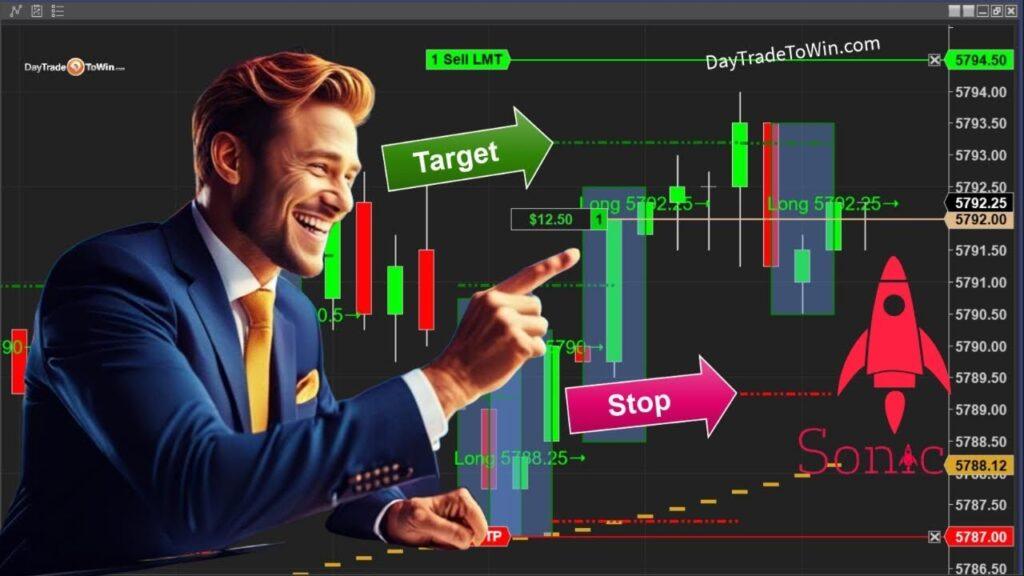
Hello, traders! Today, we’ll dive into using the Sonic Trading System from Day Trade to Win. This system provides the key elements you need for day trading success: entries, targets, and stops. However, managing trades based on the system’s rules is just as important. Let’s break down some critical lessons from today’s session and explore how you can improve your trading game. Handling Missed Trades Missed trades are a part of day trading, especially when the market moves fast. In today’s example, I attempted to enter at 5788 quarter, but I wasn’t filled before the market hit my target. In this situation, holding on or chasing the trade isn’t a good idea. If you miss your entry and the target is hit, cancel the order and move on. The market offers numerous opportunities, especially when using a system like Sonic. Don’t let one missed trade derail your focus. Adjusting Targets and Stops Properly After successfully entering at 5790, I adjusted my target and stop as per the system’s rules. Sonic makes it easy by providing clear targets and stops on the chart. However, it’s essential to manage these parameters yourself. If your target or stop is hit, avoid taking the same trade again. Many traders fall into the trap of trying to re-enter after missing out, which can lead to unnecessary losses. Stick to the system and wait for the next signal. Navigating Market Delays When I entered the trade at 5790, my target was 5791—just a few ticks away. But in fast-moving markets like the mini S&P, NASDAQ, or Dow, even small targets can take time to hit. While it’s tempting to hold on, the goal is to avoid staying in a trade for too long, especially during the first few hours of the session. Patience is crucial, but knowing when to cut your losses or take a small profit is equally important. The Importance of ATR and Quick Profits The Average True Range (ATR) is a critical tool in the Sonic system. It helps define your target and stop levels based on market volatility. In today’s trades, I aimed for a target that was less than one times the ATR. This approach allows you to take quick profits without holding onto trades for extended periods, which can be risky. If you prefer bigger profit targets, you can set your target to two times the ATR and trail your stop, but the safest approach is often to go for quicker exits based on the market’s immediate movement. Avoiding Common Mistakes: Don’t Take the Same Trade Twice A common question in our live trading room is whether you should take the same trade again if you missed it the first time. My advice? No. Once a trade hits its target or stop, that opportunity is done. Re-entering increases your risk and can lead to poor decisions. Additionally, if you didn’t adjust your target correctly and missed your profit, it’s better to close the trade at break-even or a small profit/loss. The goal is always to protect your account, not to chase the market. Learn More with a Free Member Account If you’re new to day trading or looking to enhance your skills, sign up for a free member account at Day Trade to Win. You’ll get access to our live trading room, the ABC Method, and software for NinjaTrader or TradingView. It’s an excellent way to start learning how to trade using price action, without relying on outdated indicators. Conclusion Day trading requires not only a solid strategy but also disciplined trade management. The Sonic Trading System gives you a clear framework, but it’s up to you to follow the rules—adjusting stops, managing targets, and knowing when to walk away from a trade. Stick to these principles, and you’ll set yourself up for consistent success. Happy trading, and don’t forget to sign up for your free member account to learn more!

Market News

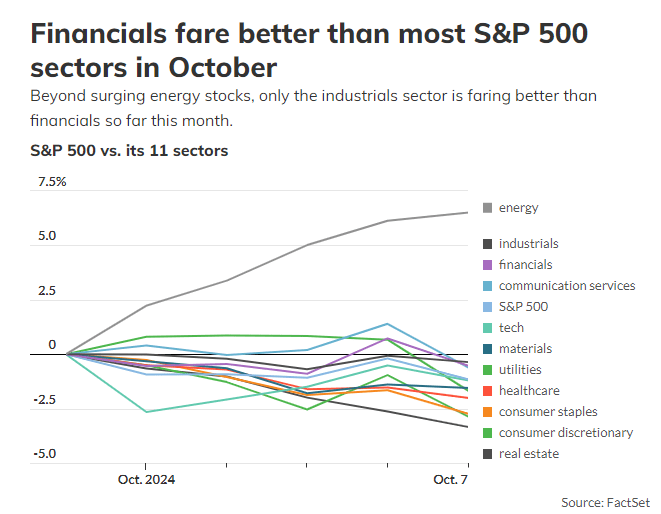
What Drove Tuesday’s Market Decline? More Than Just Iran

The strike has raised concerns about supply chain disruptions and price increases for goods. Jose Torres, a senior economist at Interactive Brokers, highlighted that the uncertainty around the strike, along with strong warnings from union leaders, has further unsettled market. Port Strike Adds to Softer Start for October While Iran’s missile strike on Israel triggered a sharp selloff in U.S. stocks on Tuesday and caused oil prices to surge, it wasn’t the only factor rattling Wall Street. Analysts also pointed to the impact of a U.S. dockworkers’ strike, which has shut down major East Coast and Gulf ports, potentially affecting the economy by as much as $4 billion per day. Although the missile attack sent stocks plummeting early in the session, pushing investors toward safe-haven assets like U.S. Treasurys and gold, markets regained some ground later in the day. The Dow Jones Industrial Average ended down 173 points, or 0.4%, and the S&P 500 closed with a 0.9% loss. Oil prices, which spiked earlier, settled with gains of over 2%. The geopolitical risks in the Middle East, alongside the port strike, are expected to keep markets volatile. Despite this, some analysts believe these events could present buying opportunities. Ed Yardeni, president of Yardeni Research, noted that market selloffs driven by geopolitical concerns often create favorable entry points for investors. However, the risk of further escalation in the Middle East remains a key threat to the stock market’s momentum.

roadmap
DayTradeToWin Review

Guide to Pivot Points in Roadmap Trading

In day trading, timing and precision are crucial for maximizing profits and minimizing risk. One highly effective method is the Second Candle Close Trading Strategy in combination with the Roadmap signal. This approach helps traders make informed decisions by identifying key market zones and managing risk effectively. Here’s a breakdown of how it works and why it can be a game-changer for short trades. Understanding the Roadmap Setup The Roadmap signal helps traders identify critical price zones where the market has previously reacted. It acts as a guide for finding optimal entry points and placing stop-losses. The process starts by identifying a setup bar—a key candle that signals the potential start of a move. Here’s how to use it: Applying the Strategy in Real Time When a new setup bar forms, you want to time your entry carefully. Waiting for the second candle close is generally the safest approach, but if the market is volatile and you’re close to the roadmap zone, an earlier entry can give you a better price. The key advantage of using the roadmap is that it often indicates where the market has previously retraced. This gives you a better chance to enter at a favorable price. As the price pulls back to the roadmap zone, you can enter short, knowing that the market frequently retests these areas. Using the Pivot for Effective Risk Management Managing risk is one of the most important aspects of this strategy. The pivot point—either the setup bar high/low or a couple of ticks beyond the zone—becomes your stop-loss. By placing your stop here, you limit your downside risk while allowing the trade room to move in your favor. The goal is to time your entry so that your stop-loss is as small as possible while leaving enough room for the price to move in the direction of your trade. Knowing where your stop is in advance helps you stay disciplined and prevents emotional decision-making. Enhancing Your Strategy with Sonic Tools and Timeframes For added precision, traders can combine the roadmap with Sonic tools. Sonic strategies allow you to fine-tune your entry by using shorter timeframes, such as the one-minute or 30-second charts, especially in a strong market. Average True Range (ATR) can guide you on when to adjust your timeframe. If the ATR is low or normal, a one-minute chart is typically sufficient. However, if the ATR rises, indicating more volatility, you may want to use a shorter timeframe or pay closer attention to each open-close candle pattern for more accurate entries. In summary, the Second Candle Close Trading Strategy paired with the Roadmap signal provides a structured and effective approach to short trades. By focusing on setup bars, using pivot points for risk management, and utilizing tools like Sonic, you can confidently time your entries, limit risk, and maximize profits. To dive deeper into this strategy and start using the roadmap in your own trading, visit daytradetowin.com and sign up for a free trial. You’ll gain access to powerful tools like the ABC software, helping you master price action and make informed trading decisions with confidence.

Scroll to Top