market
Market News

Reliable Market Signal Says It’s Time to Buy

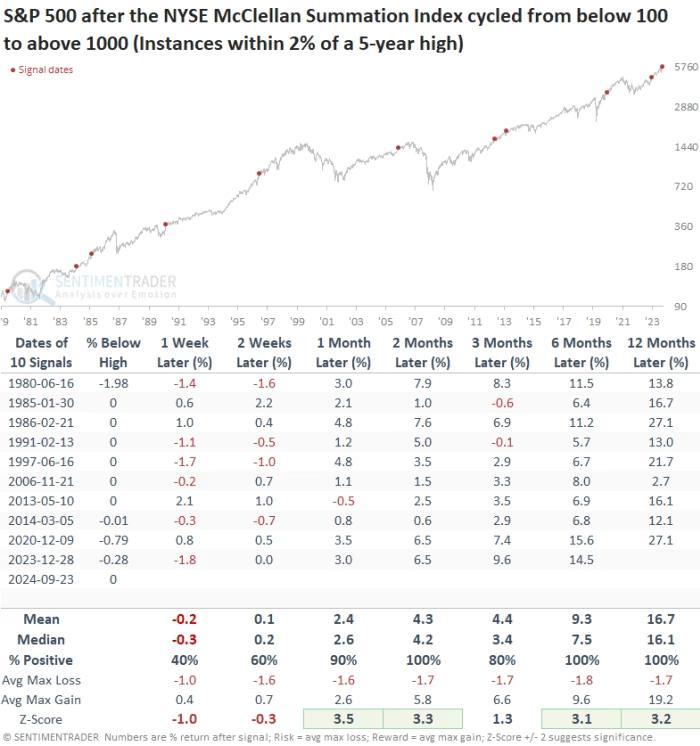
A closely-watched stock-market indicator is flashing a strong buy signal as more companies’ shares join the rally. The McClellan Summation Index, which tracks market breadth, has sharply increased, signaling more gains for the S&P 500 with near-perfect accuracy, according to Dean Christians, a senior research analyst at SentimenTrader. The McClellan Index measures how many stocks are participating in a markets move. When it’s rising, more stocks are rallying, signaling stronger market breadth. When it’s falling, market breadth is weakening, often indicating a broader market sell-off. Technical analysts use the index to monitor what’s happening beneath major indexes like the S&P 500. Historically, sharp improvements in the index have accurately predicted further stock market gains. When it surges from below 100 to over 1,000, stocks have gone on to rise over the next year with 96% accuracy. Even more impressive, that success rate jumps to 100% when the signal occurs while the S&P 500 is within 2% of a significant high. This signal was triggered on Monday. According to Christians, this means the projected gains are more significant than just the typical upward drift of the stock market over time. On Tuesday, the S&P 500 rose 14.36 points, or 0.3%, to close at 5,732.93, marking its 41st record close of 2024. The Dow Jones Industrial Average gained 83.57 points, or 0.2%, to 42,208.22, also hitting a record, while the Nasdaq Composite rose 100.25 points, or 0.6%, to 18,074.52, though it remains more than 3% below its July record.

S&P 500
Market News

S&P 500 Surge: 6,000 in Sight

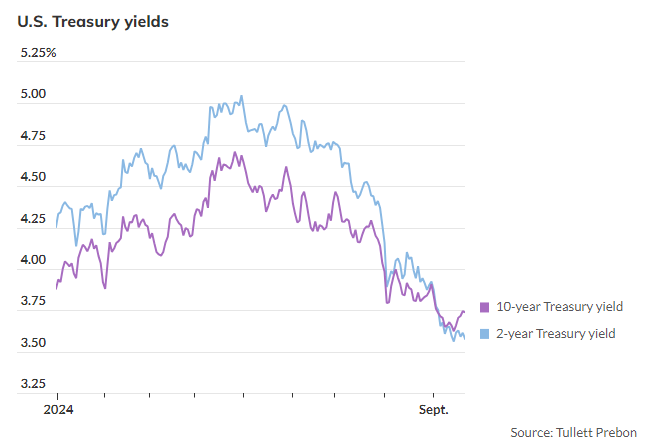
The U.S. stock market continued its strong upward momentum on Monday, with the S&P 500 and Dow Jones Industrial Average reaching new all-time highs. According to DataTrek Research, the S&P 500 could hit 6,000 by 2024, a target that now seems realistic after the Federal Reserve began cutting interest rates. The S&P 500 closed at 5,718.57, setting a fresh record, while the Dow also reached a new peak. Nicholas Colas, co-founder of DataTrek, noted that growth in the S&P 500 isn’t just being driven by technology and artificial intelligence. “Multiple sectors are contributing to earnings growth,” he said. Wall Street analysts forecast S&P 500 earnings per share to grow by 15.2% next year, up from 10% this year, with the biggest growth expected in cyclical sectors like energy, materials, and industrials. DataTrek projects earnings will rise to $258 per share over the next four quarters, a 12% increase from the previous year. With the Federal Reserve now easing interest rates, and the economy still growing, Colas sees the path of least resistance for stocks as higher. The S&P 500 is trading at 22.1 times forward earnings, higher than its five-year average of 19.5 but still below the 2020 peak of 23.2. Colas believes 6,000 is an “optimistic but achievable” target based on current earnings expectations. Stocks Rise After Fed’s Rate Cut The S&P 500’s new high comes after the Federal Reserve initiated a rate cut of half a percentage point last week, marking the start of its easing cycle. John Madziyire, head of U.S. Treasuries at Vanguard, said the probability of a “soft landing” for the U.S. economy has increased, as inflation cools under tighter monetary policy. He expects the Fed to lower its benchmark rate toward a neutral level of around 3%, down from the current target range of 4.75% to 5%. On Monday, the 10-year Treasury yield finished at 3.74%, while the two-year Treasury closed at 3.576%. Colas emphasized that reaching 6,000 for the S&P 500 is “hardly a stretch” given rising earnings and lower interest rates, representing just a 5.2% increase from last Friday’s close. The broader market also gained Monday, with the S&P 500 rising 0.3%, and both the Nasdaq Composite and Dow Jones Industrial Average up 0.1%.

Market News

Why Stocks Are Poised for Gains This September

September is typically the worst month for U.S. stocks, but 2024 is breaking that pattern. Historically, September has earned a bad reputation on Wall Street, with the S&P 500 averaging a 1.2% loss, making it the weakest month of the year, according to Dow Jones Market Data. However, this year’s market performance tells a different story. For the first time in five years, U.S. stocks are set to end September with gains. In recent years, September has been particularly brutal. The S&P 500 fell nearly 5% in 2023 and over 9% in 2022, continuing a trend of steep losses. But 2024 is seeing a reversal. As of now, the S&P 500 has gained 1%, the Dow Jones is up 1.6%, and the Nasdaq Composite has risen 1.5%, positioning these indexes for their best September in years. Much of this optimism can be attributed to the Federal Reserve’s recent 50-basis-point interest-rate cut, which has boosted investor confidence. According to Thomas Martin of GLOBALT Investments, the Fed’s easing cycle is a key factor in the market’s recovery. Although stocks have generally performed well in 2024, they experienced volatility in August and early September, as investors feared a faster-than-expected economic slowdown. Despite these concerns, the Fed’s intervention helped stabilize the market. Looking forward, the market could still face some short-term swings, especially with the upcoming U.S. presidential election, which may cause temporary uncertainty. Investors are also closely monitoring upcoming economic data, such as GDP growth and inflation figures, to assess whether the Fed’s actions will continue to support the market. The so-called “September Effect” has puzzled analysts for years. Some attribute the month’s usual losses to increased trading activity after the summer or portfolio rebalancing by funds. However, this year is defying expectations, giving investors hope as they approach the end of 2024.

day trading
Uncategorized

Mastering ATM Strategies: Boost Your Day Trading Precision

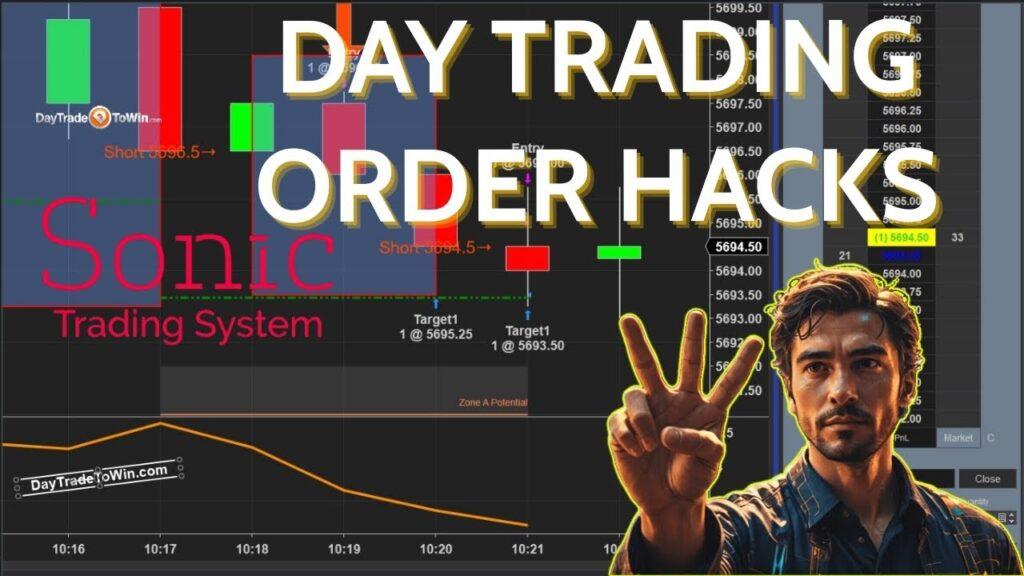
Precision and timing are the foundation of successful day trading. Many traders struggle with issues like slippage, poor trade entries, and inefficient management, but by mastering key tools and strategies, you can avoid these pitfalls and improve your performance. One essential tool is the ATM (Automatic Trade Management) strategy. Let’s explore how to effectively use ATM strategies alongside limit orders to gain an advantage in volatile markets. Aligning Your ATM Strategy with ATR The ATR (Average True Range) is a key indicator used to gauge market volatility. By aligning your ATM strategy with the ATR, you can respond more effectively to changing market conditions—whether it’s fast or slow. This means setting appropriate stop-loss and profit targets based on current market volatility. To start, customize your ATM strategy by adjusting stop-loss and profit target levels to suit your trading style. For instance, in a volatile market, you might use a 20-tick stop-loss with a 10-tick profit target. This setup takes advantage of larger price swings, balancing risk and reward. How to Customize Your ATM Strategy Tailoring an ATM strategy to your needs is straightforward: By creating multiple ATM strategies—such as setups for slow and fast markets—you’ll be able to quickly adapt to market changes. Timing Your Limit Orders for Maximum Efficiency With your ATM strategy set, it’s crucial to focus on limit order execution. Many traders wait too long to place limit orders, missing out on opportunities or entering trades poorly. The key is to place your limit orders in advance and adjust them as needed, based on market signals. For instance, if you’re planning a short trade, place a limit order slightly above the current price. When the signal appears, simply adjust the order for a smooth execution with minimal slippage. By anticipating the market’s movement, you ensure that your order gets filled at the best possible price. Using the Drag-and-Drop Technique for Quick Execution One effective trick to speed up trade execution is the drag-and-drop method: This method saves valuable seconds, which are critical for day traders, and provides better control over your entry point. Why Limit Orders Outperform Market Orders Although market orders get you into trades quickly, they often lead to slippage—where your trade is executed at a less favorable price. This is particularly an issue in fast-moving markets. Limit orders guarantee you get filled at your chosen price or better, ensuring greater precision in your entries. However, in rare cases where the market moves favorably while you’re distracted, it might be worth using a market order to lock in a better price. But in most cases, sticking to limit orders will yield better results. Final Thoughts: Smarter Trading with ATM Strategies and Price Action Mastering ATM strategies and limit orders, especially when combined with price action analysis, can significantly enhance your day trading results. Planning trades in advance and using tools like the Atlas Line, Trade Scalper, and ATR-based strategies can help you make more informed and efficient trading decisions. Looking to elevate your day trading skills? Visit daytradetowin.com to create a free member account and explore trial access to advanced tools like the ABC software. Start learning to trade the right way using price action, without relying on conventional indicators.

market
Market News

Stock Market Veteran: Rate Cuts May Not Prevent Recession

On Wednesday, the U.S. Federal Reserve made waves by cutting interest rates by half a percentage point. While market responded positively, whether this marks a successful move remains uncertain. David Rosenberg’s Top Picks: Long-Term Treasury Bonds, Gold, Utilities, Real Estate, Financials, and Dividend Growth Stocks “The Fed’s 50-basis-point rate cut is merely an admission that it had kept policy too tight for too long.” David Rosenberg, former chief North American economist at Merrill Lynch and now president of Rosenberg Research, remains cautious. A vocal critic of Fed Chair Jerome Powell, Rosenberg believes that while the rate cut was the right move, it was long overdue. “The Fed’s decision acknowledges that they stayed too tight for too long,” said Rosenberg. In an interview with MarketWatch, Rosenberg explained that while the move addresses some economic pressures, it’s unlikely to prevent a recession. He argues that the Fed, having been slow to combat inflation, will also struggle to avert an economic slowdown. As a result, Rosenberg advises investors to focus on rate-sensitive assets that can benefit from a prolonged easing cycle, predicting that the federal funds rate will fall to its pre-pandemic level of 1.75%. “The recession has been delayed, but it’s not off the table,” Rosenberg said. Investment StrategyRosenberg recommends investors shift toward sectors that traditionally perform well in times of slower growth, lower inflation, and declining interest rates. His top choices include long-term Treasury bonds, gold, utilities, real estate, financials, and dividend-paying growth stocks. Rosenberg is skeptical that the Fed’s easing measures will create a “soft landing” for the economy, warning that past missteps make a recession likely. For investors, he suggests focusing on assets that can weather the storm.

ATR
DayTradeToWin Review

Maximize Trades with ATR and News Insights

In today’s trading session, we’re diving into critical market factors, including news events, the Average True Range (ATR), and practical trading strategies. Let’s explore how to interpret these elements for a successful trading day. 1. Monitoring News Events: The Backbone of Market Movements When entering a trading session, it’s essential to check for upcoming news events. Market-shifting announcements, particularly those from the U.S., often drive significant price movements. By focusing on high-impact news, such as those released by the Federal Open Market Committee (FOMC), you can anticipate periods of increased volatility and plan your trades accordingly. For example, during today’s session, a 2:00 PM FOMC event was highlighted as a key moment to watch for market movement. Pro Tip: Adjust your news calendar to filter for only high-impact U.S. events. Medium- or low-impact events tend to clutter your charts without offering much trading value. 2. Understanding the ATR: A Guide to Market Speed The Average True Range (ATR) is a vital indicator that tells you whether the market is moving quickly, slowly, or somewhere in between. This information is especially useful when planning your trades for the day. The market often moves in cycles, with days of high volatility followed by quieter periods. Typically, after three to four days of fast or slow movement, the market shifts gears. For instance, if yesterday’s market was slow, you can expect a similarly slow environment today. Conversely, if the previous day was chaotic, brace yourself for more volatility. The ATR helps you quantify this pace, enabling you to set realistic trade targets based on current conditions. Key Takeaway: When the ATR is around 2.5, it indicates that each candle (on a 1-minute chart) is moving by about 2.5 points from high to low. Understanding this can help you set achievable trade targets. If the ATR increases to 5 or 6, expect sharper, quicker movements that require faster decision-making. 3. Setting Trade Targets: The Power of ATR-Based Planning Now that we understand how to read the ATR, let’s apply it to trade targeting. If the market’s ATR is 2.5 points, you can expect the market to move approximately 2.5 points in either direction within the next few bars. This information is crucial when setting your profit targets. For day traders, hitting a target just under the ATR (e.g., 2 points when the ATR is 2.5) is often more achievable than aiming for 5 points in a slower market. If the ATR rises to 3 points, adjust your strategy accordingly, recognizing that it’s easier to achieve a target of 2 points than to push for larger profits when the market may not have the momentum to sustain that. Pro Tip: To maximize profits while minimizing risk, set trade targets slightly below the ATR, as this allows for quicker, more consistent exits. 4. Upgrading Your Tools: Maximizing Version 4 of Sonic For those using Sonic, it’s important to ensure you’re using the latest version. Version 4 includes essential upgrades, including customizable ATR-based trade targets, making it easier to adapt your strategy based on real-time market conditions. When setting your target, adjusting it to half of the ATR (0.5) allows for faster exits with smaller targets. Conversely, setting it at 1x ATR offers a larger target but takes longer to achieve and comes with increased risk. Key Insight: Whether you’re using Sonic, Trade Scalper, or your own strategy, leveraging ATR-based targets can help you exit trades at the optimal moment. 5. Refining Your Entry: Using Limit Orders for Better Prices In fast-moving markets, precision is key. Avoid chasing trades with market orders, which can lead to bad fills, especially in volatile conditions. Instead, use limit orders to secure a better entry price. For example, if a signal is triggered and the market moves up a few ticks, using a limit order allows you to enter at a better price and improves your potential return. When looking at signals from tools like Trade Scalper, waiting for the price to move up a few ticks before entering a short trade gives you a more favorable entry point. This small adjustment can significantly impact your overall profit, especially when dealing with tight ATR-based targets. Pro Tip: Always strive for better entries by using limit orders and avoiding slippage, which can cost you valuable ticks in fast-moving markets. 6. The Road Map: Aligning Your Strategy with Market Conditions The Road Map tool is another essential resource for traders. It offers a clear visual of market direction and helps you anticipate reversals or continuations. For those using the Sonic system, coupling it with the Roadmap provides an extra layer of confidence in your trades. For example, when you receive a Sonic signal to short the market, wait for a slight price uptick before entering your trade. This approach increases your odds of a favorable entry and allows you to align your strategy with market momentum as shown by the Road Map. Final Thoughts: Trading is a game of precision and patience. By using tools like news event calendars, ATR indicators, and the Roadmap, you can create a comprehensive strategy that maximizes your chances of success. Stay disciplined, and always adjust your targets and entries based on the real-time conditions of the market. By understanding how news events impact market movements, leveraging ATR for better target-setting, and refining your entry points, you’ll be well-equipped to make smarter, more profitable trades. Happy trading!

Scroll to Top