roadmap
DayTradeToWin Review

Mastering Market Entries: How to Use TradingView’s Roadmap Secrets

In the dynamic world of trading, having the right tools can significantly enhance your success. One such standout tool is the Roadmap Indicator, an institutional-level indicator offering unique market insights. This post will explore what the Roadmap Indicator is, how it functions, and how traders can leverage it for more informed decisions. What is the Roadmap Indicator? The Roadmap Indicator is designed to highlight institutional levels of interest within the market. Unlike widely accessible retail trading tools, the Roadmap is a sophisticated tool primarily used by institutional traders. It identifies key levels where major market players, such as hedge funds and investment banks, are likely to place their trades. How Does It Work? The primary function of the Roadmap Indicator is to show institutional levels of interest. These levels are crucial as they can indicate potential areas of support and resistance, where significant buying or selling activity is likely to occur. Here’s a brief overview of how it works: Trading with the Roadmap Indicator At Day Trade to Win, we utilize the Roadmap Indicator to make informed trading decisions. Our approach involves scalping within a five-point range for the following reasons: Timing Your Trades Timing is crucial when using the Roadmap Indicator. We generally enter the market around 10:00 a.m. Eastern Standard Time, as this period often coincides with market settling times, providing more predictable trading conditions. However, it’s essential to pay attention to the economic calendar, as high-impact news events can cause significant volatility. Economic Calendar Indicator To aid in this, we offer an economic calendar indicator for Ninja Trader and TradingView. This tool highlights upcoming high, medium, and low-impact events, allowing traders to avoid entering the market during potentially volatile periods. Practical Example Let’s consider an example. Suppose the market is showing a low at a particular point, and the Roadmap Indicator suggests an institutional level of interest. You would enter a trade around this level, aiming to exit once the market has moved approximately five points. If the market moves from a low to a high within this five-point range, you would exit the trade at or near the top of this range. Entry Strategies We use different entry strategies depending on market conditions: Conclusion The Roadmap Indicator is a powerful tool for traders looking to gain an edge by understanding and capitalizing on institutional levels of interest. By focusing on scalp trades within a five-point range and timing entries around key market periods, traders can enhance their strategies and improve their chances of success. For those interested in learning more, we offer live trading rooms and comprehensive training sessions to help traders master these techniques. Join us live every day in our trading room, and explore the wealth of resources we offer to help you become a successful trader. Visit daytradetowin to learn more and check out our range of tools and educational materials.

bullish
Market News

Rare Bullish Signal for Small-Cap Stocks from Options Traders

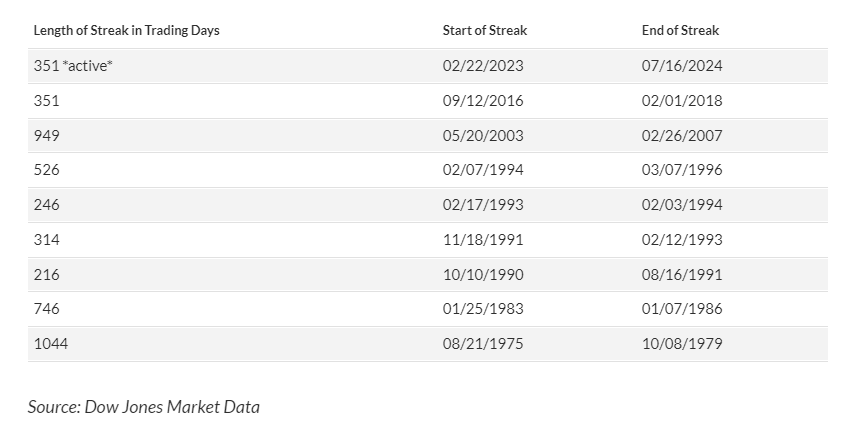
The demand for bullish call options linked to the Russell 2000 has soared, significantly outpacing the demand for bearish puts. This trend sends an optimistic signal to small-cap investors. Mandy Xu, head of derivatives-market intelligence at Cboe Global Markets, reports that recent sessions have seen a notable rise in call option demand tied to the Russell 2000 and its corresponding ETF. This surge has pushed these contracts to trade at a premium over bearish puts, suggesting that the small-cap rally could continue in the near term. Xu noted a similar pattern in late 2023, when investors boosted stocks expected to benefit from aggressive Federal Reserve interest rate cuts. At that time, the Russell 2000 rallied over 20% from early November to early December, outperforming the S&P 500 and the Nasdaq Composite, according to FactSet data. “We saw this in the fourth quarter last year when bullish sentiment in small caps hit an extreme, though ultimately, the trade faded as rate-cut bets were pared back. Will it be different this time?” Xu commented in an email. Call options grant traders the right to buy shares of the underlying stock or ETF at an agreed-upon price before they expire, while put options allow traders to sell. Option contracts tied to an index are usually settled in cash. On Thursday, trading volume for calls tied to both the Russell 2000 and the iShares Russell 2000 ETF (IWM) reached their highest levels in years, as reported by Dow Jones Market Data. Nearly 2.1 million calls tied to the ETF were traded that day, marking the highest daily turnover since December 2009 and the sixth-highest on record since 2005. Call options directly linked to the index saw their highest volume since 2021. Thursday also marked the Russell 2000’s best session since November. Small-cap stocks soared following a softer-than-expected inflation reading from the June CPI report, reviving expectations of a Federal Reserve interest rate cut in September. The Russell 2000 outperformed major indices like the S&P 500 and the Nasdaq, showing its most significant outperformance since March 2020 when the COVID-19 pandemic initially impacted global markets, according to Cboe data. Over the past four sessions, the Russell 2000 has gained 7.7%, on track for its best four-day streak since 2020, according to Dow Jones Market data. The index is poised to finish at its highest level since January 2022. Demand for bullish call options has remained elevated since Thursday. Trading volume in call options tied to the iShares ETF has been more than triple the daily average from the past two years on both Friday and Monday, according to market data. The call-put volume ratio, which compares activity in bullish calls to bearish puts, has also stayed above average. On Monday, the Russell 2000 was up 2.1% at 2,194, while the S&P 500 was up 0.1% at 5,619. The Nasdaq also saw a 0.1% increase to 18,415. Meanwhile, the Dow Jones Industrial Average (DJIA) was up 157 points, or 0.4%, at 40,281.

Autopilot
DayTradeToWin Review

Algo Trading Secrets: Maximize Profits with Successful Autopilot Trading

Welcome to today’s blog post, where we’ll dive into the Autopilot Trading System—an innovative automated trading tool designed to place trades for you and manage them efficiently. We’ll explore its features and settings to determine if it’s the right fit for your trading needs. Trading Disclaimer Before we begin, please remember that trading involves significant risk. Never trade with money you cannot afford to lose. What is the Autopilot Trading System? The Autopilot Trading System is an automated tool that simplifies the trading process by: Key Features 1. Break-Even Settings The break-even feature is essential for risk management, ensuring that once the market moves favorably by a set number of ticks, your stop loss adjusts to your entry point, protecting you from a loss. Example: 2. Trailing Stop A trailing stop follows the market price at a set distance, ensuring that as the market moves in your favor, your stop loss also moves to lock in profits. Example: Managing Your Trades Effective trade management is vital. The Autopilot Trading System offers several settings to help you manage your trades: Practical Examples Let’s look at some real-world scenarios demonstrating how the Autopilot Trading System operates: Benefits of Using the Autopilot Trading System Conclusion The Autopilot Trading System is a powerful tool for traders seeking to automate their strategy and manage risk effectively. If you’re interested in learning more or signing up for a free member account, visit DayTradeToWin. Members receive access to free information, indicators for NinjaTrader and TradingView, and much more. Happy trading, and remember to trade responsibly! For more details, check out the links in the description of this post. If you have any questions or need further information, feel free to reach out. Until next time, good trading!

Small Caps
Market News

Small Caps: The Hottest Investment Now

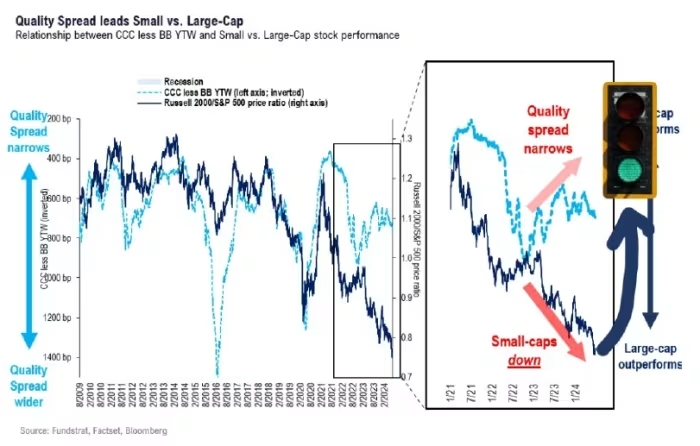
Futures indicate a positive start for equities, with the S&P 500 nearing a record high. Despite recent calm, analysts detect a significant shift in market sentiment. Greg Boutle of BNP Paribas notes that last Thursday’s softer-than-expected consumer price index report and the resulting dip in Treasury yields triggered a major rally in overlooked market segments. Small-cap stocks gained favor, while Big Tech faced heavy selling. Though this trend partially reversed on Friday, the key question is whether small caps will maintain their upward momentum. Tom Lee of Fundstrat is optimistic. He believes small caps, tracked by the iShares Russell 2000 ETF (IWM), present the “most compelling near-term investment case,” predicting a potential 50% gain in 2024. With small caps currently up only 6%, there is significant growth potential. Lee attributes this to the low June CPI, which he believes signals continued small-cap rallies. Lee’s optimism is based on five key factors: “We see the conditions for a strong rally in IWM. Mark Newton, head of technical strategy, believes a confirming ‘breakout’ of small caps could happen this week,” concludes Lee.

market
Market News

Small Caps Shine Amid Market Rotation

Thursday was a rough day for hedge funds heavily invested in megacap tech stocks and shorting the rest of the market. A cooler-than-expected June consumer-price index (CPI) reading ignited a rotation into previously neglected sectors. “Hedge funds are blowing up today,” said Jay Hatfield, CEO of Infrastructure Capital Advisers, referring to strategies that involve long positions in large-cap tech stocks and short bets against small- and mid-cap stocks. While this strategy had been profitable during a rally led by a select group of tech giants in 2024, the tide turned abruptly. Small-cap stocks surged, with the Russell 2000 index up 3.6%, while the Nasdaq Composite fell 2%. This marked the biggest one-day outperformance for the Russell over the Nasdaq since records began in 1986, according to Dow Jones Market Data. The key question for investors is whether this rotation is temporary or the beginning of a broader rally, following a period of concentrated market leadership. Market analysts noted sharp rises in heavily shorted stocks, indicating the squeeze could persist for some time. On Thursday, the S&P 500 pulled back 0.9% after hitting a record intraday high, while the Dow Jones Industrial Average gained 0.1%. The consumer-price index fell 0.1% in June, slowing the year-over-year rate to 3%. The core rate, excluding energy and food costs, rose 0.1%, slowing to 3.3% from 3.4%. Economists warn that more data will be needed to ensure a September rate cut by the Federal Reserve, but fed-funds futures traders now see a better than 90% probability of at least a quarter-point reduction, according to the CME FedWatch Tool. The Magnificent Seven megacap tech stocks, which had led the rally since October 2022 due to AI enthusiasm, were each down at least 2% by midday Thursday. This resulted in a market cap drop of more than $500 billion, the largest single-day loss since September 13, 2022. Despite the decline in heavyweight tech stocks dragging down the S&P 500, around 80% of the index’s stocks were higher on the day. The equal-weighted S&P 500 outperformed its market-cap-weighted version by around 1.8 percentage points, marking the biggest relative gain since January 2021. Hatfield, also the portfolio manager of the InfraCap Small Cap Income ETF, sees potential for the rally to broaden as the market anticipates continued cooling inflation readings and eventual Fed rate cuts. He expects the overall market to extend its run, having recently raised his year-end target for the S&P 500 to 6,000. A September rate cut by the Fed could continue a trend of global central banks injecting liquidity into the banking system, historically boosting both stocks and bonds. Although the S&P 500’s pullback Thursday was exacerbated by the tech selloff, Sonu Varghese, global macroeconomic strategist at Carson Group, believes it won’t be a lasting drag on the index. He anticipates that large-cap value stocks could rally and support the index’s forward momentum, even if tech consolidates.

Uncategorized

Act Fast: Short the Dollar, Says Goldman Sachs

Happy CPI day to all who observe! Here’s a deeper look into today’s crucial report. If inflation aligns with economists’ expectations, there could be a brief opportunity to bet against the U.S. dollar, according to Karen Reichgott Fishman, senior currency strategist at Goldman Sachs. After reaching 2023 highs, the dollar has been declining and might weaken further. Fishman explains, “The tactical backdrop looks increasingly friendly for risk and negative for the dollar.” This year’s dollar fluctuations have primarily been driven by interest rate expectations, shown in a chart that plots the dollar against a weighted average of the rate differential in 5-year securities of major counterparts. Comparing the dollar’s performance against major rivals reveals this trend: it has risen sharply against the Japanese yen (USDJPY), where rate differentials have widened, and fallen against the British pound (GBPUSD), with minimal changes. Interest rates are not the only factor behind the dollar’s strength. Fishman notes that the second-largest contributor to the dollar’s gains has been the Mexican peso (USDMXN), influenced by a significant shift after Mexico’s landslide election. Fishman also points out that the correlation between stocks and bonds has been mostly positive this year, which often coincides with broad dollar swings. When stocks and bonds rise together, the dollar typically struggles. “This makes it all the more surprising to see the dollar simultaneously hit new highs and reinforces the scope for a tactical sell-off,” she adds. Currently, there appears to be a narrow window for further relief in U.S. yields and gains for U.S. equities, with few major obstacles expected until mega-cap tech earnings at the end of July. In such an environment, the dollar usually weakens against most currencies and becomes a good candidate for funding emerging-market carry trades. However, Fishman emphasizes that the dollar’s bullish trend is likely to resume in the second half. Ahead of the U.S. election, broader tariffs, especially against the Chinese yuan and other Asian currencies, pose an upside risk. This is in addition to the expected limited cross-border investment flows leading up to the election.

Scroll to Top