

stock news

market
Market News

How the Market Bets on the Next President

The Dow Jones Industrial Average’s performance as a predictor of U.S. presidential election outcomes warrants serious consideration. There is a strong correlation between the Dow’s year-to-date return through mid-October and the chances of the incumbent party winning the presidency. This relationship is statistically significant at a 97% confidence level. Currently, the Dow’s impressive year-to-date return suggests a 72% probability that Vice President Kamala Harris, the Democratic candidate, will win the November election. Just two months ago, the Dow indicated a 64% chance of her victory, and in May, that figure was 58%. These rising probabilities are driven by the stock market’s gains, as historical data reveals a strong link between the Dow’s performance in an election year and the incumbent party’s likelihood of success. It’s worth noting that this 72% probability stands in contrast to the 43% chance assigned by electronic futures markets, as aggregated by Election Betting Odds. Which forecast should you trust? There is no clear-cut answer. Electronic futures markets are relatively new, with limited data to establish a strong track record. The Dow, however, has over a century’s worth of data, covering more than 30 presidential elections since the late 1800s. My analysis shows that the correlation between the Dow’s year-to-date performance by mid-October and the incumbent party’s chances of winning is statistically significant. The data shows a clear pattern: The logic behind using the stock market as a predictor is that it serves as a leading indicator of the economy’s future performance, and voters tend to base their decisions on their financial situation. While consumer sentiment has been weak this year despite a strong stock market, statistical analysis shows that the stock market remains a more reliable predictor of election outcomes than consumer sentiment. In summary, the Dow’s performance as an election predictor is backed by significant historical data and deserves to be taken seriously. John PaulJohn Paul is the founder of DayTradeToWin, a trading education and software company established in 2008, supporting traders worldwide. His expertise focuses on price action-based futures trading strategies and structured market analysis. DayTradeToWin delivers trading education, indicators, and software tools designed to help traders apply disciplined, rule-based decision-making across global futures markets. He is the creator of multiple trading methodologies, including the Sonic System, Atlas Line, and Trade Scalper, which help traders identify structured opportunities in markets such as the E-mini S&P 500 (ES), Nasdaq (NQ), crude oil (CL), and gold (GC). Official website: https://daytradetowin.com daytradetowin.com

ETFs
Market News

Chinese Stock ETFs Struggle Amid Stimulus Doubts

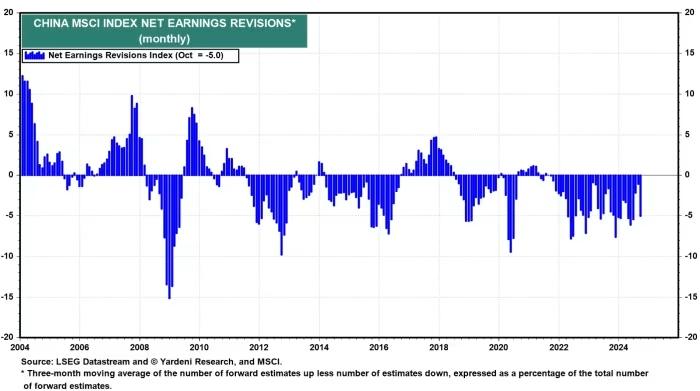
Yardeni Research remains unconvinced that recent stimulus measures will make China a more attractive investment than the U.S. or India, stating that “it would take much more than interest-rate cuts, easier financing, and fiscal stimulus.” Chinese stocks have been under pressure, with recent declines wiping out gains from the September rally driven by China’s stimulus announcement. “Investors appear to have lost faith that government intervention will resolve the deeper issues in China’s economy,” Yardeni Research commented in a recent briefing. “The quick rally in Chinese equities now looks short-lived.” Exchange-traded funds (ETFs) investing in Chinese stocks have struggled. The iShares MSCI China ETF (MCHI) is on track for a 5.6% drop this week, despite a sharp increase on Wednesday, following a 7.7% loss last week. Other China-focused ETFs have fared even worse, extending their October losses. For example, the Invesco China Technology ETF (CQQQ) and KraneShares CSI China Internet ETF (KWEB) both saw weekly losses of around 7.5%, while the Invesco Golden Dragon China ETF (PGJ) dropped 7%, according to FactSet data. So far this month, these ETFs have continued their downward trend, with KWEB down nearly 5%, and MCHI retreating over 2%. “Aside from the risks of investing in China, corporate earnings have been stagnant for the past 15 years and have consistently disappointed since 2022,” Yardeni noted. “It’s easier to manipulate national growth numbers with government projects, but corporate earnings tell a more truthful story.” China faces nearly $36 trillion in outstanding bank loans, which is three times the U.S. figure. Yardeni Research likened China’s current challenges to those the U.S. faced after the global financial crisis, suggesting that without a large-scale fiscal stimulus, similar to the U.S. response during the pandemic, China may struggle to reignite growth and inflation. Consumer confidence in China has collapsed, and Yardeni pointed out that higher stock prices alone won’t be enough to boost spending. With China’s housing minister set to announce more measures to support the property sector, Yardeni remains skeptical. “Trying to stimulate an over-leveraged economy with easier financing may not be the solution. It will take time for consumers and businesses to rebuild their balance sheets after a period of excessive debt,” the firm concluded. John PaulJohn Paul is the founder of DayTradeToWin, a trading education and software company established in 2008, supporting traders worldwide. His expertise focuses on price action-based futures trading strategies and structured market analysis. DayTradeToWin delivers trading education, indicators, and software tools designed to help traders apply disciplined, rule-based decision-making across global futures markets. He is the creator of multiple trading methodologies, including the Sonic System, Atlas Line, and Trade Scalper, which help traders identify structured opportunities in markets such as the E-mini S&P 500 (ES), Nasdaq (NQ), crude oil (CL), and gold (GC). Official website: https://daytradetowin.com daytradetowin.com
bond
Market News

The Bond Market vs. Untamed Inflation

Matt Rowe, head of portfolio management and cross-asset strategies at Nomura Capital Management, warns that “higher degrees of inflation are our reality moving forward.” Investors are increasingly anxious about inflation risks that haven’t yet been factored into the bond market, especially with the upcoming November 5 presidential election looming. As of Tuesday, prediction markets showed Republican nominee Donald Trump leading Democratic nominee Kamala Harris. Despite this, the overall inflation outlook remains uncertain, regardless of who wins. On Tuesday, inflation concerns continued, even as oil prices dropped and Treasury yields fell. The 10-year Treasury yield ended at 4.037%, reflecting a decline from recent highs. Nevertheless, bond-market volatility, as measured by the ICE BofAML MOVE Index, remains near its highest levels of the year, raising fears that inflation could surge beyond the Federal Reserve’s ability to control it. Economists predict that Trump’s policies may result in higher inflation, interest rates, and federal deficits compared to those of Harris. However, some experts believe that inflation and economic growth could be similar regardless of the election outcome. The nation’s growing debt, which now stands at $35.7 trillion, along with a $1.9 trillion budget deficit, is also a major factor contributing to long-term inflation concerns. Eric Vanraes, head of fixed income at Eric Sturdza Investments, suggests that Trump’s potential victory could increase inflationary pressure on long-term interest rates. Still, the composition of Congress will play a crucial role. If Democrats control Congress, Trump’s policies may face limitations, meaning that the balance of power in the Senate and House could have a greater impact on long-term yields than the presidential race itself. Rowe highlights that inflation could persist due to the rising costs tied to reshoring and a more insular U.S. economy. As globalization wanes and the U.S. faces a more complex economic environment, there are limits to what interest rate policy can achieve. The past 15 years of favorable trade and accommodative policies are coming to an end, and now inflation risks could disrupt the bond, currency, and stock markets. Adding to inflation worries is the debate over the “neutral” rate of interest—a theoretical level that neither stimulates nor slows the economy. If the Federal Reserve cuts rates too aggressively, it could unintentionally ignite more inflation. Both Trump and Harris have outlined fiscal policies that could further strain the national debt and increase inflationary pressures. Although inflation may ease in the short term, the outcome of the U.S. election and the makeup of Congress will play a key role in shaping long-term inflation trends and the country’s fiscal future. John PaulJohn Paul is the founder of DayTradeToWin, a trading education and software company established in 2008, supporting traders worldwide. His expertise focuses on price action-based futures trading strategies and structured market analysis. DayTradeToWin delivers trading education, indicators, and software tools designed to help traders apply disciplined, rule-based decision-making across global futures markets. He is the creator of multiple trading methodologies, including the Sonic System, Atlas Line, and Trade Scalper, which help traders identify structured opportunities in markets such as the E-mini S&P 500 (ES), Nasdaq (NQ), crude oil (CL), and gold (GC). Official website: https://daytradetowin.com daytradetowin.com

inflation
Market News

Inflation-Proof Stocks: One Common Factor

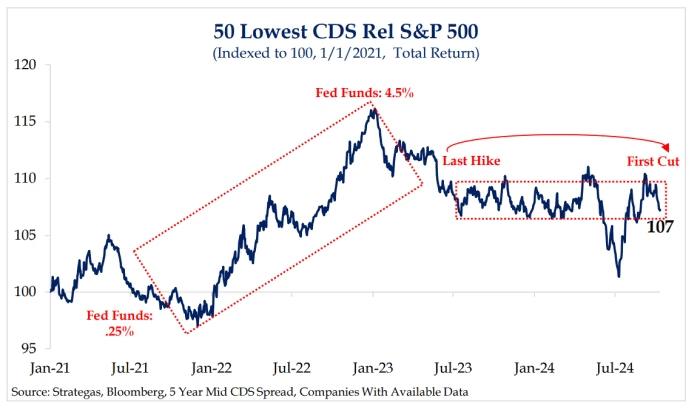
This rise is largely due to stronger-than-expected economic data, including falling unemployment and persistent inflation. Nearly a quarter of S&P 500 companies now have lower credit-default swap (CDS) spreads than the U.S. government, reflecting shifting market perceptions of risk. As bond trading resumes following the Columbus Day break, the U.S. Treasury market has experienced volatility, with the 10-year yield climbing nearly 50 basis points over the past month. Political factors may also be at play. Former President Donald Trump has outlined significant tax cuts, which the Tax Foundation estimates could cost up to $6 trillion over the next decade. Vice President Kamala Harris, on the other hand, has proposed tax-and-spending policies that could amount to $3.5 trillion, according to the Committee for a Responsible Federal Budget. Strategists Jason DeSena Trennert and Ryan Grabinski from Strategas note that 117 S&P 500 companies currently have lower CDS spreads than the U.S. government, indicating a lower perceived risk of default for these corporations. While a U.S. government default would affect all entities, this group of companies is considered a high-quality proxy. During the inflation surge of 2022 and 2023, the 50 companies with the lowest CDS spreads, including tech leaders like Apple, Microsoft, and Alphabet, outperformed the broader market. As inflation concerns resurface, this group of stocks could once again attract investors seeking stability in uncertain economic times. John PaulJohn Paul is the founder of DayTradeToWin, a trading education and software company established in 2008, supporting traders worldwide. His expertise focuses on price action-based futures trading strategies and structured market analysis. DayTradeToWin delivers trading education, indicators, and software tools designed to help traders apply disciplined, rule-based decision-making across global futures markets. He is the creator of multiple trading methodologies, including the Sonic System, Atlas Line, and Trade Scalper, which help traders identify structured opportunities in markets such as the E-mini S&P 500 (ES), Nasdaq (NQ), crude oil (CL), and gold (GC). Official website: https://daytradetowin.com daytradetowin.com
tesla
Market News

Tesla $30K Cybercab: A New Era in Autonomous Vehicles

Elon Musk unveiled the Robovan and a new version of the Optimus humanoid robot at Tesla’s highly anticipated event in Southern California on Thursday night. In addition to showcasing the Cybercab, Tesla’s latest robotaxi prototype with no steering wheel or pedals, Musk introduced the Robovan, a futuristic, boxy vehicle designed to transport up to 20 passengers or cargo. The event, held at Warner Bros. Studios in Burbank, highlighted Tesla’s advancements in autonomous vehicles and robotics. The Cybercab, which Musk said would cost less than $30,000, is set to be fully autonomous, allowing passengers to reclaim time once spent driving. Musk reiterated that vehicles like the Model 3 and Model Y will achieve full self-driving capability by 2025 in states like Texas and California, pending regulatory approval, and predicted mass production of fully autonomous cars by 2027. The Robovan, with its sleek, stainless-steel body reminiscent of the Cybertruck, is designed for both personal and commercial use, capable of carrying people or goods. Musk also showcased a revamped Optimus humanoid robot, emphasizing its role as a personal assistant for domestic tasks. He compared it to iconic robots like R2-D2 and C-3PO from Star Wars, saying, “Optimus robots will walk among you.” While the event offered exciting glimpses into Tesla’s future, Musk did not provide updates on the development of lower-cost Tesla models, leaving investors eager for more details. He acknowledged that full autonomy will require regulatory approval, and some analysts noted that the timeline for autonomous vehicles remains uncertain. Tesla shares (TSLA) dropped by 6% in early trading following the event, with no news about affordable Tesla models to excite the market. Tesla’s stock has lagged behind the broader market this year, raising concerns among investors. The event, which started nearly an hour late due to a reported medical emergency in the audience, concluded with attendees taking test drives of Tesla’s latest innovations in a city-themed set designed for the occasion. John PaulJohn Paul is the founder of DayTradeToWin, a trading education and software company established in 2008, supporting traders worldwide. His expertise focuses on price action-based futures trading strategies and structured market analysis. DayTradeToWin delivers trading education, indicators, and software tools designed to help traders apply disciplined, rule-based decision-making across global futures markets. He is the creator of multiple trading methodologies, including the Sonic System, Atlas Line, and Trade Scalper, which help traders identify structured opportunities in markets such as the E-mini S&P 500 (ES), Nasdaq (NQ), crude oil (CL), and gold (GC). Official website: https://daytradetowin.com daytradetowin.com

Dow
Market News

The Dow Heats Up: Why History Favors a Rally

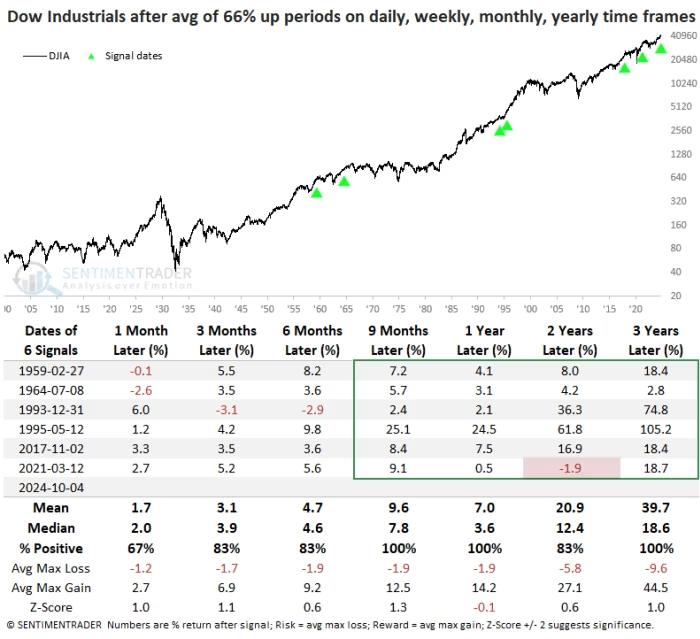
Buying pressure on the Dow Jones Industrial Average has reached historic levels across multiple time frames, according to SentimenTrader. In a recent note, Jason Goepfert, senior research analyst, pointed out that the Dow has risen in 152 of the past 250 trading days—an impressive win rate of nearly 61%. The only other times this level of consistency occurred were in April 2010 and May 2018, both of which preceded several months of volatile trading. This momentum, however, extends beyond the short term. Over the past 100 weeks, the Dow has climbed in just over 60% of them—a solid recovery after a tough 2022, though not an extreme figure relative to the last 40 years. Additionally, the index has risen in 63% of the past 60 months and 80% of the past 15 years, both on the higher end of historical performance. “The buying pressure isn’t limited to one or two time frames,” Goepfert explained. The current level ranks in the top 6% of all readings since 1900, and excluding the tech bubble of 1995-2000, it would be in the top 2%. In the past, extreme upside momentum has sometimes led to sector exhaustion, particularly in utilities, but the Dow itself has generally fared well. Goepfert noted that when the average of rising periods across different time frames exceeded 66%, losses were rare, and the Dow often posted strong gains over the next nine months. Goepfert also highlighted that the Dow has risen at least 60% of the time across daily, weekly, monthly, and yearly periods—a rare occurrence that has only happened six times. While returns following this signal have been mixed, particularly due to the 2018 global financial crisis, these signals have typically been followed by some continued gains, albeit short-lived. In the two instances when the Dow showed both of these signals—once in 1959 and again in 2017-18—the index extended its rise for several months before hitting a period of stagnation. The latter lasted until the market recovery from the pandemic. “The buying pressure across time frames is truly historic,” Goepfert concluded. “While this has generally been a positive signal for the next 6-9 months, the longer-term outlook is less clear. The late 1990s tech boom is the only precedent of sustained momentum, and bulls are hoping the current AI revolution will deliver similar results. John PaulJohn Paul is the founder of DayTradeToWin, a trading education and software company established in 2008, supporting traders worldwide. His expertise focuses on price action-based futures trading strategies and structured market analysis. DayTradeToWin delivers trading education, indicators, and software tools designed to help traders apply disciplined, rule-based decision-making across global futures markets. He is the creator of multiple trading methodologies, including the Sonic System, Atlas Line, and Trade Scalper, which help traders identify structured opportunities in markets such as the E-mini S&P 500 (ES), Nasdaq (NQ), crude oil (CL), and gold (GC). Official website: https://daytradetowin.com daytradetowin.com

Scroll to Top