Fed rate

Market News

Beyond the Hype: Delving into the Rationality Behind Investors’ Dismissal of Powell’s Fed Rate-Cut Reset

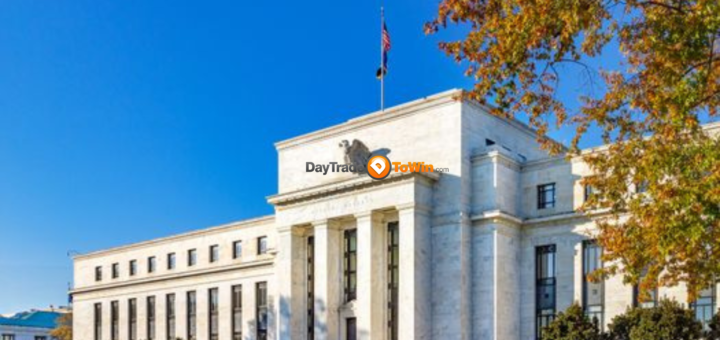
Market analysts and fund managers suggest that markets are now less reliant on Federal Reserve rate cuts and more focused on the growth of corporate earnings. Federal Reserve Chair Jerome Powell’s recent remarks on interest rates didn’t stir up as much market turmoil as anticipated. The S&P 500 closed higher than its session lows, and the Dow Jones Industrial Average broke a six-session losing streak. Although there was a slight uptick in the yield on the 2-year Treasury note, it didn’t cause significant market disruption. Experts attribute the market’s stability to two main factors: Anticipation of aggressive Fed rate cuts last year led to a broad rally, but now attention has shifted. While the market has cooled off from its speculative highs, it remains significantly higher than previous lows. The current decline in the market is viewed as routine consolidation rather than a significant downturn. However, the primary risk to stocks isn’t seen as Fed policy but rather the ability of companies to meet earnings expectations. Investors can no longer rely solely on Fed rate cuts to prop up stocks; instead, companies must deliver on earnings growth to sustain the market rally. Analysts project significant earnings growth for the S&P 500 in the fourth quarter, but many companies may struggle to meet these expectations, particularly given the trend of declining profit margins outside of a few notable exceptions. Additional threats to the market include geopolitical tensions, such as those between Israel and Iran. Despite some recent declines, stocks have generally remained resilient, with the S&P 500 and Nasdaq Composite falling for three straight days but still significantly above their recent lows. The Dow Jones Industrial Average saw a slight gain, indicating mixed market performance.

Market News

Fed Rate Cuts: A Blessing or Curse? What Stock-Market Bulls Need to Consider

Deutsche Bank’s analysis points out that historically, a 1.5 percentage point reduction (equivalent to 150 basis points) in interest rates by the Federal Reserve has typically been linked to economic recessions. Investors, hopeful for a gradual economic slowdown, find solace in the market’s anticipation of the Fed implementing such rate cuts in 2024. Nevertheless, Jim Reid, a strategist at Deutsche Bank, underscores that historical data reveals that when the Fed has executed a 1.5 percentage point rate cut within a year, it has predominantly been in response to a recession. Despite a slight pullback in stocks at the start of the new year, the robust market performance in 2023, marked by record closes for the Dow Jones Industrial Average and significant returns for the S&P 500, has contributed to this optimism. Investors fueled this sentiment as they anticipated a shift in Fed policy toward lower interest rates. Although rate traders have moderated their expectations for cuts in 2024, the CME FedWatch tool indicates a 53.8% probability of a 150 basis point or more reduction in the fed-funds rate by December. Reid highlights an exception to the recession pattern in the 1980s when Paul Volcker led the Fed. However, this was an atypical scenario as it was preceded by rate hikes into “super-restrictive” territory. Another anomaly occurred in the late 1960s, coupled with increased public spending due to the Vietnam War. However, this resulted in inflation, later deemed a policy error. Reid emphasizes that the Fed aims to avoid a recurrence of such inflationary pressures. Consequently, he concludes that historical precedents strongly suggest that the expected rate-cutting environment is more closely associated with a recession than a smooth economic landing. If a recession does not materialize, achieving a 150 basis point reduction over 12 months, based on historical data, would be a challenging outcome.

Scroll to Top