market news

S&P 500
Futures Trading

S&P 500 Volatility: Key Levels to Monitor

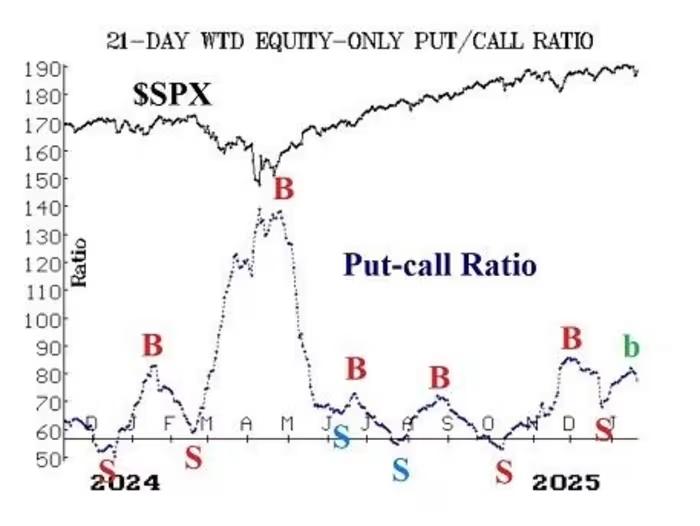
S&P 500 Approaches Key Levels: Investors Should Watch 6,700 The S&P 500 is nearing the 7,000 mark amid rising volatility, but the overall trend remains bullish. From a technical standpoint, resistance sits at the all-time high of 6,985, while critical support is at 6,720 — the December low. History shows that breaking December lows in the first quarter often signals the start of a bear market. For example: Currently, there is no volatility band signal, though the +4σ “modified Bollinger Band” remains a potential upside target near 7,100. Sentiment is improving. Equity-only put-call ratios have flipped back to buy signals following heavy call buying off the Jan. 20 lows. Both the weighted and standard ratios now signal bullish sentiment, confirmed by our quantitative models. Market breadth is also supportive. Weak sessions on Jan. 16 and Jan. 20 were offset by a strong rebound on Jan. 21, keeping mid-January breadth buy signals intact. Cumulative volume breadth hit new all-time highs as recently as Jan. 16, confirming the market’s ability to reach new highs. NYSE new highs continue to outnumber new lows, even on down days. On Jan. 21, new highs totaled roughly 250, a clear bullish indicator. Volatility has been the main source of technical uncertainty. The VIX climbed after the Jan. 20 tariff news, briefly flattening the term structure and raising caution. However, the VIX soon retreated, generating a “spike peak” buy signal for stocks. Longer-term VIX signals remain bullish, as the index never closed above its 200-day moving average for two consecutive days. The structure of VIX futures also remains positive. The upward slope of the term structure suggests continued bullish momentum, and February futures — now the front month — remain below March futures. Any sustained inversion would be a warning, but the market currently remains healthy. In summary, the recent tariff-driven sell-off primarily shook out nervous holders, showing that selling could accelerate if a major negative catalyst emerges. However, as long as the S&P 500 holds above last December’s low of 6,720, bulls remain in control. Traders should continue monitoring key levels and use new signals to guide positions, including rolling deeply in-the-money options.

market
Market News

Market Timers Make a Mistake

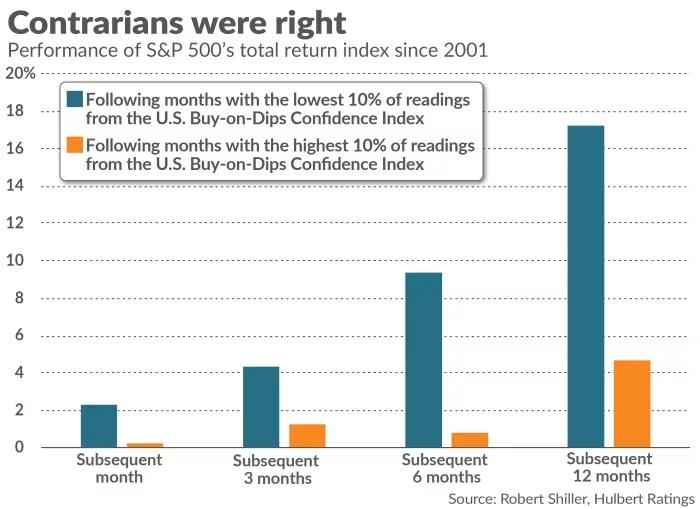
Investors’ Rush for the Exits After Tuesday’s Slide Isn’t How Bull Markets End Tuesday’s sharp stock-market selloff likely did not signal the end of the bull run — and the behavior of market timers suggests why. History shows that major market tops are usually marked by complacency, not fear. Investors tend to dismiss declines and treat them as buying opportunities. That wasn’t the case this week. Short-term market timers reacted swiftly to Tuesday’s drop, slashing equity exposure by nearly 20 percentage points, according to the Hulbert Stock Newsletter Sentiment Index (HSNSI). That ranks among the steepest one-day declines in the index since data collection began in 2000. This reaction looks nothing like what happened at the peak of the dot-com bubble. After the Nasdaq topped out on March 10, 2000, the index fell more than 10% over the next two weeks. Yet instead of pulling back, the HSNSI actually rose by 2.5 percentage points, showing that investors were still eager to buy the dip. The contrast is striking. This week’s market drop was far smaller than the one in 2000, yet investors responded with far more caution, not optimism. From a contrarian standpoint, true market tops tend to form when investors remain convinced that every pullback is an opportunity. Further insight comes from Yale professor Robert Shiller’s “Buy-on-Dips Confidence Index,” which tracks how many retail investors expect the market to rise after sharp declines. Historically, the S&P 500 has delivered weaker returns following periods of high dip-buying confidence than when such confidence is low. Although Shiller’s index is released with a delay, the sharp fall in the HSNSI suggests dip-buying enthusiasm has cooled considerably. This doesn’t mean risks have disappeared. Valuations remain stretched, and the bull market may be in its later innings. But if the market follows historical patterns, the eventual top will be met with denial and complacency — not the kind of fear-driven retreat seen after Tuesday’s selloff. Put simply, panic is usually not how bull markets end.

market
Market News

Global Market Slides, but History Says Buy the Dip

Market Sell-Off From Greenland Crisis May Be a Buying Opportunity, HSBC Says Major geopolitical shocks over the past 25 years have repeatedly turned into buying opportunities — and according to HSBC, the current market turmoil sparked by the Greenland crisis is likely to follow the same pattern. The latest escalation in geopolitical tensions and the renewed threat of tariffs triggered a broad-based sell-off across global markets, hitting a rare trifecta: U.S. stocks, bonds, and the dollar all declined at the same time. On Tuesday, the S&P 500 fell 2.1%, while the U.S. 10-year Treasury yield jumped six basis points to around 4.29%. Meanwhile, the U.S. dollar weakened against the euro, British pound, and Canadian dollar. Investors rushed toward traditional safe havens, lifting gold and the Swiss franc sharply. Despite the turbulence, HSBC chief multi-asset strategist Max Kettner says history suggests investors should stay calm. In a note released Tuesday, Kettner pointed out that roughly 75% of geopolitical and macro crises over the past 25 years have ultimately been “faded” by markets — meaning the initial panic selling eventually gives way to recovery. He cited recent examples, including the 2025 market sell-off following President Donald Trump’s “Liberation Day” tariff announcement and the Israeli strikes on Iran, as evidence that looking past short-term volatility has consistently rewarded long-term investors. Kettner expects a similar pattern this time, with tough opening rhetoric eventually softening into negotiations and compromise. Still, HSBC is not ignoring the risks. Kettner warned that U.S. interest rates and risk assets are approaching a “danger zone.” He identified 4.4% on the U.S. 10-year yield and 5% on the 30-year bond as critical technical levels. A sustained break above those levels could trigger a deeper and more prolonged market downturn. For now, however, Kettner believes the U.S. economy remains in a “Goldilocks” environment, with growth, employment, and inflation balanced well enough to keep the Federal Reserve on a dovish path. That backdrop should prevent a major repricing of expectations for two interest rate cuts in 2026. He also noted that the VIX volatility index futures curve is in backwardation — a technical signal that markets may already be oversold. On top of that, with fourth-quarter earnings expectations set relatively low, companies could find it easier to beat forecasts, potentially providing another boost to stock market sentiment. Bottom Line: Is This Market Dip a Buying Opportunity? HSBC’s conclusion is clear: while geopolitical headlines are driving short-term volatility, history suggests this sell-off is more likely to become another buying opportunity rather than the start of a sustained bear market. For traders and investors, the message is simple — don’t confuse short-term fear with long-term fundamentals.

citi
Market News

Citi Turns Neutral on Europe as Trade Fears Return

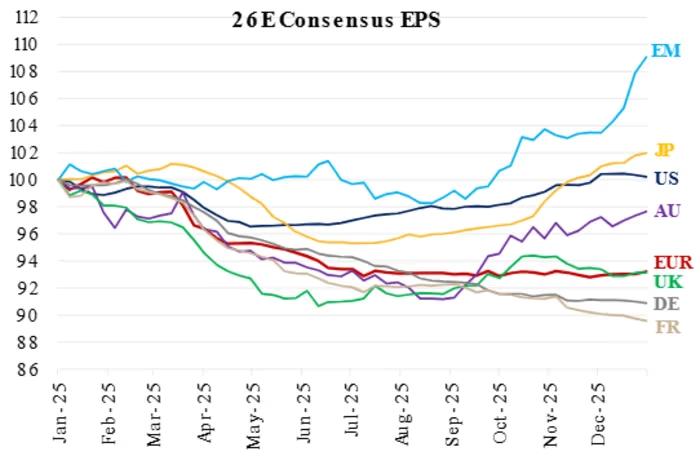
Citi Downgrades European Stocks to Neutral as Tariff Risks Threaten Earnings Recovery Citi has downgraded European equities to neutral, warning that rising trade tensions between the U.S. and Europe are clouding the outlook for corporate earnings and undermining hopes for a sustained profit recovery. The move marks the first time in more than a year that the bank has turned cautious on the region’s stock markets. Strategists said uncertainty surrounding U.S. trade policy — particularly renewed tensions linked to Greenland — has increased downside risks to earnings forecasts across corporate Europe. In a note published Monday, Citi’s European equity strategist Beatha Manthey said the threat of new U.S. tariffs has widened the risk to earnings per share expectations. U.S. President Donald Trump has warned he could impose a 10% tariff on imports from eight major European economies, with the rate rising to 25% by June 1 if his demands are not met. The European Union, in response, is considering a €93 billion ($109 billion) package of retaliatory measures targeting selected U.S. goods and services, raising the risk of a renewed transatlantic trade war. Before the latest escalation, analysts were forecasting around 10% earnings growth for European companies, driven largely by trade-sensitive sectors such as autos, technology and consumer goods. Last year, earnings grew just 1%, weighed down by earlier tariff disputes and a stronger euro. The setback comes at a delicate time for European markets. Similar expectations for a rebound in 2025 failed to materialize, when earnings growth was also expected to reach 10% but ended the year flat, reviving fears of another false dawn. Citi now expects European earnings to grow by just 8% in 2026 and says risks remain skewed to the downside given the unpredictability of U.S. trade policy. Manthey noted that every 10% rise in the euro against the dollar typically reduces European earnings forecasts by about 2%. That leaves the Stoxx Europe 600 particularly exposed. Citi estimates that the 30% of companies in the index with the greatest international exposure account for roughly 45% of its market value. The bank now sees only about 5% upside for the Stoxx 600 by year-end. Alongside the broader downgrade, Citi cut the autos and chemicals sectors to sell, while upgrading energy to neutral. European shares remained under pressure, with the Stoxx 600 down about 1.3% on Tuesday after falling by a similar amount the previous day. U.S. stock futures also weakened after a three-day market break.

tariff
Market News

Tariff Shock Hits Stocks as Trump Targets Europe

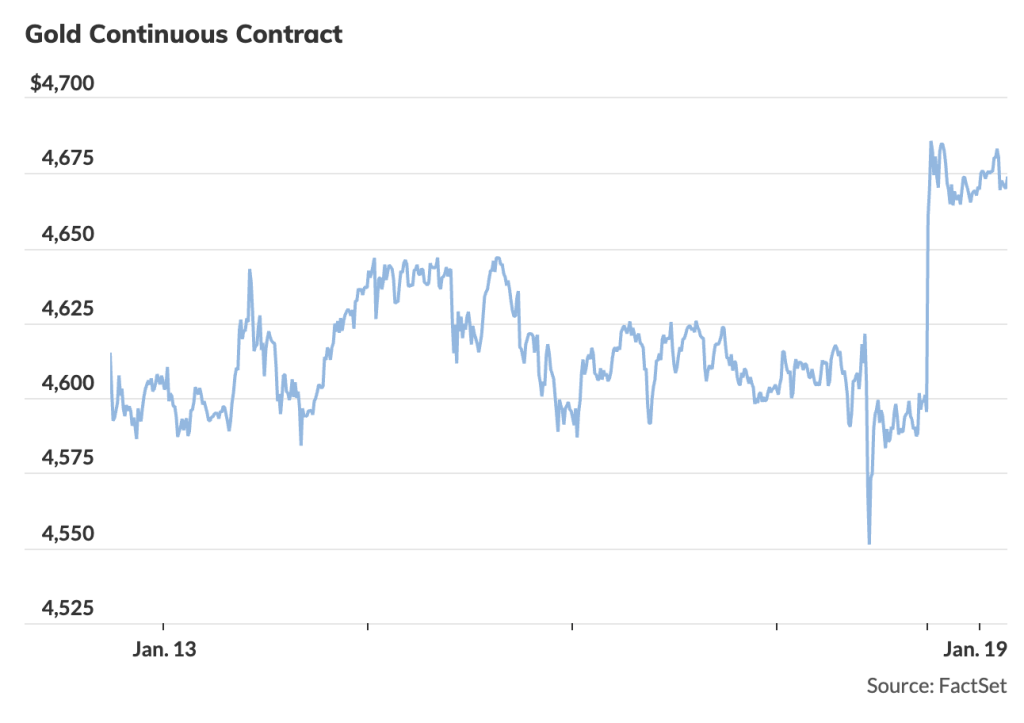
Global Markets Slide as Trump’s Europe Tariff Threats Ignite Trade War Fears, Gold Hits Record Global financial markets came under heavy selling pressure on Monday after U.S.President Donald Trump threatened new tariffs on several European countries, reigniting fears of a widening trade conflict and sending investors rushing into safe-haven assets. U.S. stock futures led global equities lower, while gold and silver surged to record highs as traders reduced risk exposure following Trump’s weekend announcement linking tariffs to negotiations over Greenland. “President Trump’s actions have reignited geopolitical risks and brought trade uncertainty back to the forefront,” said Kyle Rodda, senior financial market analyst at Capital.com. E-mini S&P 500 futures fell around 1%, Hong Kong’s Hang Seng Index dropped about 1%, and Europe’s STOXX 600 slid more than 1% in early trading. U.S. cash markets were closed for the Martin Luther King Jr. holiday. Safe Havens Rally as Risk Assets Sell Off Gold futures climbed above $4,670 an ounce for the first time on record, while silver surged past $94 an ounce to a new all-time high. Germany’s 10-year government bond yield, the euro zone benchmark, fell about two basis points as investors piled into sovereign debt. Trump Targets Eight European Countries On Saturday, Trump said the United States would impose 10% tariffs on imports from Denmark, Norway, Sweden, France, Germany, the United Kingdom, the Netherlands, and Finland starting February 1. He added that the tariff rate would rise to 25% on June 1 unless a deal is reached for the “complete and total purchase of Greenland,” according to a post on Truth Social. European officials are reportedly preparing countermeasures that could include up to €93 billion in tariffs on U.S. goods or restrictions on American companies’ access to European markets. Escalation Risks Cloud Global Outlook The eight countries targeted by Trump accounted for about $350 billion in U.S. imports in 2024. Holger Schmieding, chief economist at Berenberg, said a 10% tariff could lift U.S. consumer prices by as much as 0.15%. “Trump’s threat puts the entire U.S.-EU trade framework at risk,” Schmieding said. “If this escalates further, the damage to U.S. consumers could be nearly three times as severe.” Europe May Deploy Anti-Coercion Measures Analysts say the European Union could respond by activating its Anti-Coercion Instrument, a legal framework designed to counter economic pressure from foreign governments. “That could mean retaliatory tariffs — potentially against U.S. Big Tech — as well as investment restrictions,” said Ipek Ozkardeskaya, senior analyst at Swissquote. “That helps explain why Nasdaq futures are under heavier pressure than the broader market.” Precious Metals Remain in a Strong Bull Trend Strategists said the renewed trade tensions strengthen the bullish case for gold and silver. “With geopolitical and trade uncertainty rising again, investors are naturally moving to hedge risk, which further supports precious metals,” said Michael Brown, senior research strategist at Pepperstone. Markets Expect Familiar Negotiation Tactics Some analysts cautioned that markets may be seeing a familiar pattern. “This looks like another ‘escalate to de-escalate’ strategy that ultimately ends in a deal, though not without significant volatility along the way,” said strategists at Evercore ISI. Trump is expected to meet European leaders at the World Economic Forum in Davos this week, while markets also await a U.S. Supreme Court ruling on the legality of his use of emergency powers to impose tariffs. Defense Stocks Outperform European defense stocks bucked the broader market decline, with shares of Rheinmetall, BAE Systems, and Thales all trading higher on expectations of higher regional defense spending.

inflation
Market News

Inflation Risks Grow Amid Metals and AI Boom

Will a Trump-Led Fed Step In If Inflation Spikes in May? Rising metals prices, mounting geopolitical risks, and growing concerns over the Federal Reserve’s independence are stoking fears that inflation could accelerate more than expected in 2026 — potentially putting interest-rate cuts and market optimism at risk. That’s a big deal for investors. Inflation is already running above the Fed’s 2% target, and a renewed surge could derail the two quarter-point rate cuts markets currently expect this year. While some portfolio managers are taking steps to protect against inflation, broader markets appear complacent. On Thursday, the benchmark 10-year Treasury yield hovered around 4.16%, still stuck in the same range it has traded in since late August — a sign that inflation fears are not yet fully reflected in bond prices. At the same time, inflation traders expect headline CPI to peak near 2.8% in May before easing later in the year. Stocks also show little sign of stress. The Dow Jones Industrial Average and S&P 500 remain near record highs, lifted by enthusiasm for artificial intelligence and a rebound in bank shares. Metals Are Sending a Warning Signal Commodities — especially metals — are flashing early warning signs. Gold is already up 6.7% in 2026 after soaring 64% in 2025. Silver has jumped 31% this year following a stunning 141% surge last year. The rally is now spreading to industrial metals like copper and steel, which are critical inputs for construction, cars, and infrastructure. “Portfolio managers are whispering about this and trying to figure out how to position themselves,” said Ryan Weldon of IFM Investors. He warned that rising metals prices are “acting as a floor” under many consumer goods, especially automobiles — and could force inflation back into the Fed’s spotlight. A New Fed Chair Brings New Uncertainty Markets are also watching President Donald Trump’s upcoming choice to replace Jerome Powell when his term ends in May. Trump has said he wants a chair who “believes in lower rates by a lot,” reviving fears about political influence over monetary policy. Chicago Fed President Austan Goolsbee recently warned that undermining the Fed’s independence could cause inflation to “come roaring back.” For investors, the concern isn’t just who leads the Fed — it’s whether the central bank will still be willing and able to act if inflation starts rising again. Geopolitics and AI Add More Fuel Beyond metals, several new inflation risks are building: Marta Norton of Empower notes that the AI buildout is not only increasing power costs but also pushing up construction and equipment expenses — creating multiple pathways for inflation to spread. The Bond Market Will Blink First Despite the growing risks, traders still see about a 64% chance that the Fed’s next rate cut comes by June. But some managers think the real danger is that no cuts happen at all this year. Weldon says a quick move in the 10-year Treasury yield above 4.3% would be a clear warning sign that inflation fears are finally hitting the bond market. A sustained rise in yields — especially if the yield curve steepens — would signal that investors are being forced to reprice inflation risk. “Not a Crisis — But the Risks Are Rising” Some managers remain cautious rather than alarmed. Vincent Ahn of Wisdom Fixed Income Management says the bigger issue is whether higher input costs become sticky — pushing wages and long-term inflation expectations higher. “My base case is metals can create uncomfortable upside surprises,” he said, “but it’s more likely to be sparks than a forest fire.” Others, including GuideStone Funds’ Josh Chastant, now see a real risk that inflation stays above the Fed’s 2% target for much of the year. The Bottom Line Investors began 2026 confident inflation would keep cooling. That confidence is now being tested. With metals surging, geopolitical risks rising, AI driving up demand for energy and materials, and a potentially more politically influenced Fed leadership on the horizon, the margin for error is shrinking fast. If inflation reaccelerates this spring, markets may soon find out whether a Trump-era Federal Reserve will prioritize fighting inflation — or keeping rates low.

Scroll to Top