day trading system

DayTradeToWin Review

What’s the Secret to Day Trading?

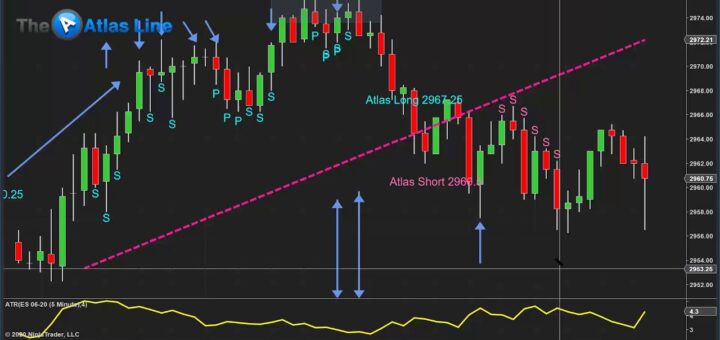
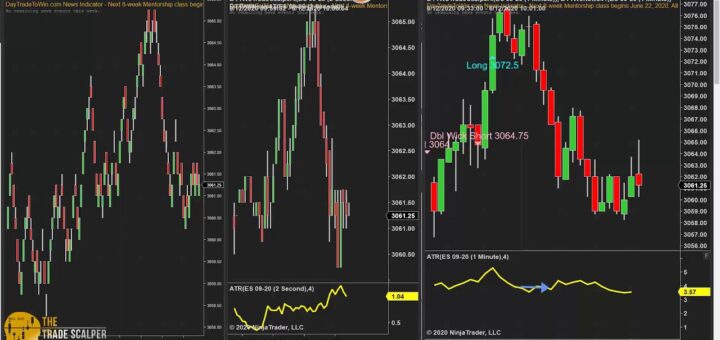
The goal of trading is consistent profitability that significantly outweighs loss and trading-related costs. Income surplus, lack of debt, and financial independence are dreams for most people. Understandably, trading draws many people in due to the relatively low cost and requirements. Many people have personal computers capable of running day trading software. The main financial requirement is qualifying for a brokerage account, but with the MES (Micro E-mini) and other more-affordable instruments, things have become more accessible. This can be a double-edged sword. On one hand, many people want to find the secret to day trading or expect that hard work will pay off as it has in regular occupations. This is not the case. You can spend months perfecting your trading strategy all to have it wash away with months of new, seemingly chaotic price patterns. What good is an income source of it’s unstable? That is true – day trading can never be guaranteed stability because the next fluctuation of price has degrees of the unknown. No one is going to tell you that price will move by five points in the next 10 minutes with 100% confidence unless they are liars, insiders, have a time machine, or access to some special technology most are unaware of. And if any of these are true, why would they share their trading secrets with you? The best option traders seem to have, considering time is always a factor (especially when looking for ways to make money), is to go with trading systems that have stood the test of time. Also, it is important to check out reviews to see what people are saying. In this industry, it is common to see many amateur trading operations pop up and disappear within weeks or months due to a system performing poorly or the business not following industry regulations. In the videos above, two price action trading systems are reviewed that have been around for a while: the Trade Scalper and Atlas Line. Look at the multiple days and the outcomes. Did price actually drop as predicted by a Short signal? Did price actually rise as predicted by a Long signal? How often does this happen?

DayTradeToWin Review

Trading Strategy: Tops & Bottoms Recipe for Disaster?

Beginner and experienced traders like to identify areas of support and resistance, or recent highs and lows, by drawing horizontal lines on the chart that coincide with barriers where price did not cross. The idea is that price, again, will not want to tread beyond those lines/values for whatever reason. High-frequency trading algorithms, which regular at-home traders are constantly up against, probably take into account these barriers and where price is “apprehensive” to penetrate. It’s also likely that these barriers are used to lure human traders in and then fake them out with a great degree of speed and precision. What is a regular stay-at-home day trader to do? Well, it’s important to first recognize tops and bottoms. From there, you may want to avoid trading around them because it may be impossible to “know” when price will retrace or surpass with any significance. This video discusses this topic. John Paul, founder of DayTradeToWin, approaches the temptation of bottom-and-top picking through his explanation of Yo-Yo Bars. He demonstrates how a 35+ min. period of stagnation is a problem. He prefers to use signals from his trading systems, namely the Atlas Line and Trade Scalper, to get an idea of when the market will move next and in what direction. Of course, these systems are not 100% accurate; no trading system is. It’s all about recognizing the risk involved with trading and making the best decision you can for your unique needs and goals, at any given moment. You’ll notice how the Atlas Line’s Strength (S) and Pullback (P) trades mark areas where price is (was) expected to move significantly. The exact mechanics of those signals are only provided to customers in the included members-only video and live training. Yes, you’ll learn exactly what constitutes those price action signals. Conceptually, John Paul belives that multiple indicator or systems that indicate, “Here is a trade and here is the anticipated direction” is better than guessing, aka picking tops and bottoms or going by arbitrary interpretations of common indicators. Indeed, the focus of DayTradeToWin has been to “listen” to price and trade based on what price is saying, rather than following one’s own impulses. Some traders will tell you that trading is a psychological game against the self. The temptation can be strong to place “one more trade” to make up for prior losses, win big enough to buy a new toy or pay that dated bill. Using price action objectively can remove the guesswork and over-trading, which are big obstacles for trading beginners and veterans alike.

Scroll to Top