price action trading

4 trading signals for traders
Trading Strategies

How 4 Confirmed Signals Led to a $1,000 Futures Trade (Sonic System Breakdown)

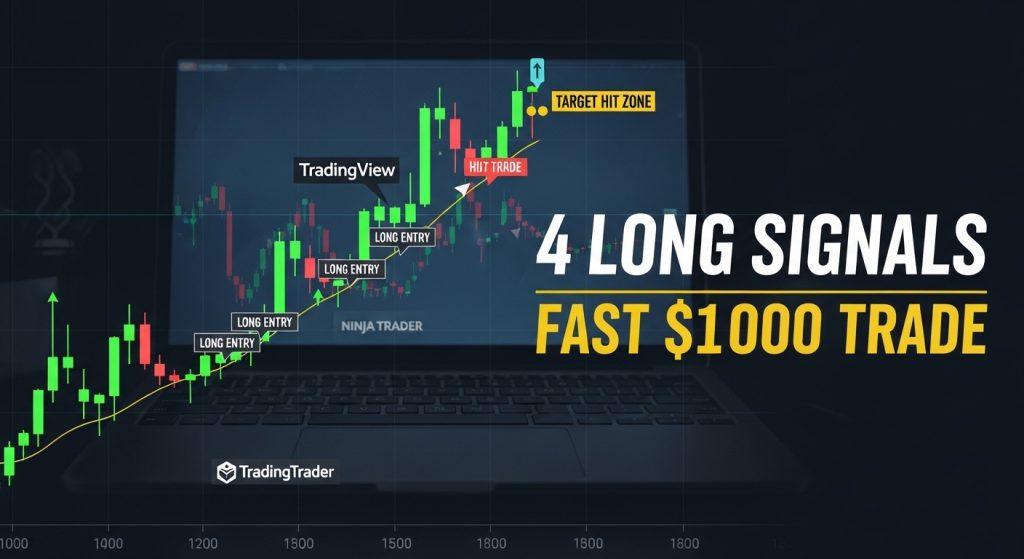
In today’s Sonic Monday session, we’re reviewing a real futures trade where patience and confirmation led to a fast $1,000 result. This example reinforces one of the most critical principles in trading: 👉 Wait for the market to confirm — don’t anticipate. The Open Can Be Misleading At the 9:30 AM market open, volatility was immediate. The first candle was large and quickly reversed direction. This is where many traders make a mistake: Instead, the smarter approach is: ✔ Let the initial volatility settle✔ Observe price behavior✔ Wait for structured signals to appear Signal Alignment Creates Opportunity After the early movement stabilized, the chart revealed: 👉 Four long signals stacking in the same direction This is where the strength of combining tools becomes clear. Using: When signals align: Strategic Entry Placement A key concept used in this trade: 👉 Entering between the projected target and stop levels This approach allows traders to: Rather than chasing price, the focus is on entering with structure and control. Managing the Trade Effectively Before entering any position, it’s essential to define: 💡 Important reminder: You don’t need to hold the full move. If the trade is in profit: 👉 Taking profits early is completely valid. Consistency comes from disciplined execution, not maximizing every trade. Avoiding Overtrading Although multiple signals confirmed the direction, there’s always a limit. ⚠️ When you begin to see: The market may be: Staying selective helps preserve gains and avoid unnecessary risk. Monitoring News and Volatility The News Indicator plays a key role in filtering trades. In this example: This helps eliminate unexpected volatility. Trade Outcome By combining: ✔ Signal confirmation✔ Structured entry✔ Controlled risk✔ Market awareness The result was a quick $1,000 trade. Getting Started as a Trader If you’re newer to futures trading: 👉 Start with micro contracts Benefits include: Access the Sonic Trading System You can explore all tools, including: 👉 Start here:Sonic Trading System Final Thoughts Trading isn’t about reacting quickly. It’s about: ✔ Waiting for confirmation✔ Following a structured process✔ Executing with discipline When you follow rules consistently, results become repeatable. About DayTradeToWin DayTradeToWin provides professional trading systems, price action strategies, and futures trading education for traders using platforms such as NinjaTrader and TradingView. The core philosophy focuses on confirmation over prediction. Instead of guessing market direction, traders are trained to wait for multiple signals to align before entering a position. This structured approach is especially effective in fast-moving futures markets like: DayTradeToWin’s proprietary tools — including the Sonic Trading System, Trade Scalper, Atlas Line, Roadmap, and Autopilot — are designed to work together to provide clarity, timing, and consistency. A strong emphasis is placed on: This helps traders reduce emotional decisions and improve long-term consistency. Educational resources, software tools, and training programs are provided to support traders at all experience levels. Disclaimer: Trading futures involves substantial risk and is not suitable for all investors. All content is for educational purposes only and not financial advice.

One Trade Every Morning - Not Scalping
DayTradeToWin Review

The ATO2 At-The-Open Strategy: A Structured One-Trade Morning Approach

Many traders spend hours in front of their screens searching for multiple opportunities throughout the day. However, not every trading method requires constant activity. Some strategies focus on identifying one structured opportunity early in the session and executing it with discipline. One example is the ATO2 strategy, also known as the At-The-Open 2 method. This approach concentrates on capturing a potential move shortly after the market opens by combining price action analysis, volatility measurements, and defined risk management rules. A Different Philosophy: Trade Once and Move On The ATO2 framework is built around a simple concept. Instead of chasing multiple signals, traders wait for a specific morning setup and execute a single trade. The process can be summarized as: One setupOne tradeEnd of the trading session For traders who prefer a structured routine, this approach can provide clarity and consistency. It also helps reduce the tendency to overtrade. Understanding the Role of Market Conditions Before considering any trade, the first step is evaluating the overall market environment. This includes reviewing factors such as: For example, many traders avoid entering positions during major economic releases because sudden volatility can distort price action. Monitoring these conditions helps traders decide whether the setup meets the necessary criteria. Using Volatility to Set Targets The ATO2 method often uses Average True Range (ATR) to determine realistic profit objectives. ATR measures how much a market typically moves during a given period. If ATR indicates a five-point range on the E-mini S&P futures contract, the strategy may set a five-point target for the trade. Aligning targets with current volatility helps traders avoid unrealistic expectations and maintain consistent trade management. Risk Control Through Time-Based Trade Management Another defining feature of the ATO2 method is the use of a time-based exit guideline. After entering the position, the market is expected to reach the target within a limited number of bars. A commonly used guideline is: approximately four to five bars. If the market does not move toward the target during that timeframe, traders may choose to exit the position rather than remain in a stagnant trade. This rule reinforces discipline and keeps trades aligned with the intended momentum. When the Market Moves Quickly Occasionally, the market accelerates immediately after the initial signal, making it difficult for traders to enter the trade. To address this scenario, the strategy includes a secondary opportunity sometimes referred to as the ATOC or chase setup. This additional entry method allows traders to participate in strong momentum when the market continues moving after the initial signal. Comparing the ATO2 Method with Other Trading Systems Some trading systems are designed to generate numerous signals throughout the day. These approaches may suit traders who prefer active participation and frequent entries. The ATO2 strategy takes a different path. Rather than emphasizing frequency, it focuses on clarity and structure. By concentrating on a single morning opportunity, traders can approach the market with a defined plan and avoid impulsive decisions. Who Might Benefit from This Approach The ATO2 method may appeal to traders who: For many traders, completing a trade early in the session allows them to focus on other priorities while maintaining a disciplined trading approach. Key Takeaways The ATO2 strategy demonstrates that trading does not always require constant activity. Instead, the focus is on: By combining these elements, traders can develop a structured morning trading routine. Learn More About Futures Trading Education Additional trading education, indicators, and strategy resources can be found at: Day Trading News and Videos – Market Updates | DayTradeToWin About the DayTradeToWin Trading Education Platform DayTradeToWin is an online trading education platform that provides structured trading strategies, indicators, and educational resources focused on futures markets. Established in 2008, the platform emphasizes price-action-based trading methods designed to help traders analyze markets with objective rules and disciplined trade management. The educational material and tools developed by DayTradeToWin are used by traders analyzing markets such as: The goal of the platform is to help traders understand how professional trading strategies are structured through a combination of market analysis, volatility measurement, and risk management principles. Resources include strategy explanations, trading indicators, and educational material designed to help traders develop a clearer understanding of futures trading. If you’d like, I can also show you something extremely powerful for your 3-site network: How to structure .com, .net, and .org so Google and AI treat them as an authority cluster instead of duplicate content sites, which can significantly increase traffic.

Iran Moves Financial Markets
Futures Trading

Bullish Pressure Builds After Iran Headlines — Futures Market Analysis

The opening session of March 2026 began with widespread concern following weekend developments involving Iran. Many market participants anticipated downside continuation. Instead, the E-mini S&P 500 displayed resilience almost immediately after the open. This type of divergence between expectations and actual price behavior is exactly why disciplined traders rely on confirmed price action rather than predictions. Support Structure Remains Intact Early analysis showed the market continuing to respect its established trading range. Notable observations included: While geopolitical headlines can introduce uncertainty, the underlying order flow continued to favor the upside. Opening Bell Volatility Management When the market opened at 9:30 AM, buying activity increased rapidly. However, experienced traders understand the importance of patience during the first minutes of the session. Rather than reacting immediately, the focus remained on: With the Average True Range near 7 points, the environment was active but still tradable. Bullish Alignment Across Multiple Indicators As the session progressed, several DayTradeToWin tools began confirming upward momentum simultaneously. Key components observed: A critical factor was that each successive long signal appeared at higher price levels — a classic sign of strengthening bullish pressure. Just as important: no meaningful sell signals emerged during this phase. Structured Risk and Position Management Even when conditions appear favorable, disciplined execution remains essential. The approach emphasized: Traders should remember that confirmation improves probabilities but never removes market risk. Understanding the Market’s Response Despite uncertainty tied to Middle East developments, price behavior remained constructive because: Until sellers demonstrate clear control, the path of least resistance often remains higher. Key Takeaway for Active Traders The March 2 session reinforces a critical trading principle: markets frequently move contrary to the prevailing narrative. By focusing on objective confirmation rather than opinion, traders can better align themselves with the actual flow of the market. Remain patient.Respect price structure.Let confirmation lead decision-making. 👉 Watch additional trade breakdowns:https://www.youtube.com/playlist?list=PLBxaNGSwQcMtEVtTaaNcM_0Q2x2fuUB4T 🚀 Start with a free member account:https://daytradetowin.com ⚠️ Risk Disclosure Trading futures, stocks, and options involves substantial risk and is not suitable for all investors. Past performance is not indicative of future results.

TradingView vs NinjaTrader_ Identical Trade Signals Using Professional Trading
Trading Software

TradingView and NinjaTrader Signal Comparison Using Rule-Based Software

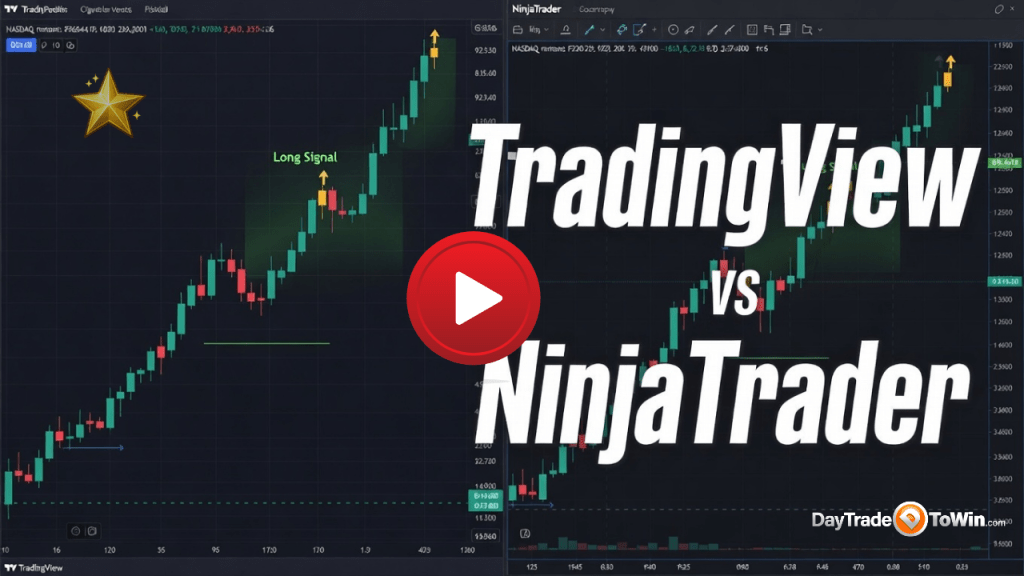
Traders frequently ask whether trading signals remain consistent when switching between platforms. Platform reliability is a major concern for futures traders, especially those managing funded accounts or preparing for prop firm evaluations. In this recent session, we ran the DayTradeToWin proprietary trading suite simultaneously on both TradingView and NinjaTrader. The objective was straightforward: determine whether structured, rule-based signals remain synchronized across platforms. The result was clear. Identical signals appeared at the same price levels in real time. This reinforces an important principle: The platform delivers the chart.The rules deliver the consistency. Real-Time Alignment Across Multiple Trading Methods During the February 18 morning session, several independent tools were applied to both charting environments: Each component of the software suite operates using predefined logic. When multiple systems confirm the same directional bias, the probability of trend continuation typically improves. In this case, every qualifying signal aligned to the long side shortly after the market opened. Most notably, the long entry triggered at the identical price on both TradingView and NinjaTrader. This type of cross-platform agreement is particularly valuable for: Why Cross-Platform Consistency Is Important Many market participants experiment with different data feeds and charting platforms. A common concern is whether signal integrity changes depending on the environment being used. The DayTradeToWin software is built on strict conditional logic. When market criteria are met, the signal is generated — regardless of platform. In situations where delayed data is used, timing of the display may shift slightly, but the qualifying price level remains the same. This structure helps eliminate: The goal is repeatable decision structure rather than prediction. Understanding Confirmation and Trend Structure During the live session, several constructive market behaviors were observed: When independent methods align without contradiction, it often reflects orderly directional movement. Professional futures traders typically emphasize: These principles apply equally to funded accounts and personal trading accounts. Psychological Resistance: The 7,000 Level Another important observation during the session was the market’s interaction with the 7,000 area, a notable psychological resistance zone. Markets frequently revisit prior ceilings and support/resistance areas. Monitoring price behavior near these zones can help traders: Combining structural signals with key price levels creates a more disciplined decision framework. Rule-Based Trading vs. Prediction Many developing traders focus heavily on trying to forecast market direction. Experienced traders typically shift their focus toward: Platform selection alone does not create consistency. Rule discipline does. DayTradeToWin Software and Member Resources The complete DayTradeToWin trading suite currently includes: The software is available for both: Members receive: You can create a free member account here: 👉 https://daytradetowin.com Final Perspective Whether participating in a prop firm evaluation or managing a personal futures account, long-term consistency typically comes from structured, rule-based confirmation. TradingView and NinjaTrader are simply delivery platforms. Alignment, discipline, and repeatable rules are what support stable execution over time. ⚠️ EDUCATIONAL DISCLAIMER All strategies, chart examples, and demonstrations are provided for educational purposes only. Futures, stocks, and other financial instruments involve substantial risk and are not suitable for all investors. Never trade with funds you cannot afford to lose. Topic Focus This article examines how DayTradeToWin proprietary trading software generates synchronized trade signals across TradingView and NinjaTrader platforms. The emphasis is on rule-based futures trading, multi-indicator confirmation, and structured execution. Platforms Covered The software maintains consistent signal generation across both environments when predefined market conditions are satisfied. Trading Systems Referenced Each system operates independently and contributes to confirmation when directional agreement occurs. Key Trading Concepts The core emphasis is on repeatable trading processes rather than predictive market calls. Educational Intent This material is intended solely for trader education. It demonstrates how professional trading tools apply consistent rule logic across multiple platforms to support disciplined decision-making.

Managing Trade Entries After Momentum Spikes
DayTradeToWin Review

Managing Trade Entries After Momentum Spikes

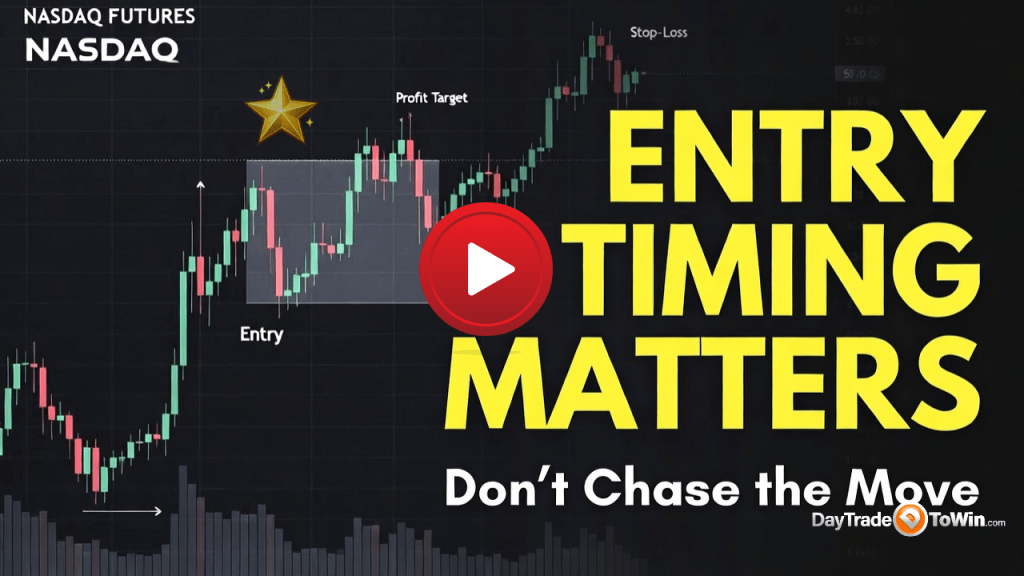
Rapid market expansions often create the illusion that price will continue moving in the same direction indefinitely. In reality, strong momentum bursts frequently lead to temporary exhaustion as traders begin taking profits. Understanding how to manage entries during these conditions is essential for maintaining consistent trading performance. In this MNQ NASDAQ futures example, the market produces an aggressive directional move followed by the potential for retracement. Rather than entering immediately after extended candles, a structured method focuses on planning entries at more balanced price levels. Positioning an entry between the predefined stop location and the projected target allows traders to maintain controlled exposure while still participating in the prevailing trend. Another critical factor involves the opening minutes of the trading session. Market-open activity often introduces elevated volatility that can distort short-term signals. Allowing the initial volatility phase to stabilize helps traders evaluate whether directional signals remain aligned or begin weakening. This observation period frequently improves trade selection and prevents impulsive entries. Confirmation-driven analysis further strengthens the process. When directional signals continue forming progressively higher or lower relative to previous signals, traders gain additional context for assessing whether trend continuation remains probable. Combining confirmation signals, retracement-based entries, and disciplined stop placement supports structured decision-making under changing market conditions. Consistent performance is rarely the result of reacting quickly to sudden price movement. Instead, it develops from planning entries in advance, managing risk carefully, and waiting for conditions that meet predefined rule-based criteria. Continue Learning Structured Price-Action Methods Explore structured trading education, platform setup training, and confirmation-based trading tools at:https://daytradetowin.com Educational Disclaimer Trading involves substantial risk and is not suitable for all investors. This information is provided solely for educational purposes and does not constitute financial or investment advice. This educational article explains a structured price-action trading framework focused on managing trade entries following strong market momentum. Topics include retracement-based entry planning, volatility stabilization at market open, confirmation-signal evaluation, and disciplined stop-loss positioning. Concepts are illustrated using confirmation-based analytical tools such as Sonic System, Atlas Line, and Trade Scalper within rule-based futures trading methodologies. Primary concepts covered:• Momentum exhaustion and profit-taking retracements• Midpoint entry positioning between stop and target• Market-open volatility and timing discipline• Confirmation signals and directional alignment• Risk-defined trade management using stops and targets About DayTradeToWin DayTradeToWin provides structured trading education focused on rule-based price-action trading methodologies designed to help traders improve execution discipline, confirmation-based analysis, and long-term consistency in futures markets. Educational Scope All chart examples, demonstrations, and trading discussions are presented exclusively for educational purposes and trader skill-development. Platform and Tools Referenced Educational materials may reference Sonic System, Atlas Line, Trade Scalper, Roadmap, and AutoPilot tools available for supported trading platforms including NinjaTrader and TradingView. Learning Resources Additional structured trading education, platform setup guides, and member training resources are available at:https://daytradetowin.com

Price Action Trading at Key Levels: Double Tops, Double Bottoms & the 7,000 Breakout
Trading Strategies

Price Action Trading Around Key Levels:

Understanding Support, Resistance, and Psychological Numbers On Monday’s market session, price action provided a textbook example of how markets behave around major support and resistance levels — particularly psychological round numbers. One of the most important principles traders must understand is that markets frequently revisit areas where they have previously traded. These retests often form recognizable structures such as double tops and double bottoms, which can provide valuable clues about future direction. Double Top Resistance Example In today’s session, price rallied strongly early in the morning and reached a key resistance area near 7,000, forming a high that was later tested again. When the market revisits a previous high and struggles to move higher, traders often classify this structure as a double top, signaling that the level is being actively defended by sellers. However, repeated testing of resistance also increases the probability of a breakout. Once the market successfully breaks above a major level such as 7,000, strong continuation moves often follow due to stop orders and breakout traders entering the market. Psychological Round Numbers in Trading Round numbers like 7,000 often act as magnets for price because many traders naturally place: This clustering of orders creates increased activity around these areas, which explains why markets frequently hover near even numbers before making decisive moves. Double Bottom Support Example Earlier in the session, price also formed a double bottom, revisiting the same low twice before moving higher. This is another classic price action structure showing how markets test previously traded zones before committing to a directional move. Trading the Breakout When resistance levels are tested multiple times, the probability of a breakout increases. A sustained move above 7,000 could trigger strong upside momentum as stop orders from short positions are activated and breakout traders enter long positions. Understanding these simple price action principles — support, resistance, retests, and psychological levels — allows traders to read the market with greater clarity and confidence. learn more at daytradetowin.com

Scroll to Top