
price action

sonic
DayTradeToWin Review

Sonic Trading Strategy: How to Profit in Slow Markets

Even in a slow, half-day holiday session, disciplined price action trading continues to deliver results. On Monday’s shortened trading day, the Sonic System generated six trade signals, producing five completed winning trades before the market closed early for the federal holiday. With liquidity reduced and volatility muted, the session provided a textbook example of how professional traders adapt strategy and timeframe to changing market conditions — and why structure-based systems outperform indicator-driven approaches. Trading a Holiday Session: Why Timeframe Matters Holiday sessions are known for: To adjust, traders using the Sonic System shifted to a 5-minute chart rather than the 1-minute chart typically used in higher-volatility conditions. The longer timeframe allows price more room to develop and creates more realistic profit targets when the market is moving slowly. Despite the quiet conditions, the system delivered: Market Structure: Why a Gap Fill Is Likely Comparing Friday’s close to Monday’s open reveals a clear price gap. From a technical perspective: The current structure suggests the market may attempt to fill the gap as early as Tuesday or Wednesday. As a result, the trading plan remains focused on long opportunities, guided by the Sonic System, Atlas Line, and Roadmap tools. Why the Sonic System Performs in All Market Conditions Whether markets are: The Sonic System is built around: This allows traders to stay synchronized with the market rather than reacting to lagging indicators. Part of the DayTradeToWin Professional Trading Suite The Sonic System integrates with the full DayTradeToWin ecosystem, including: Together, these tools help traders: Learning the Professional Approach Traders looking to move beyond indicator-based strategies can now access the Accelerated Mentorship Program, which includes: New traders can also start with a free member account at daytradetowin.com, which includes trial access to select tools, including the ABC software. Outlook Monday’s session reinforced a simple principle: Even in low-volume markets, structure and discipline create opportunity. With the market showing a bullish structure and a gap likely to be filled, attention now turns to the next sessions, where the Sonic System will continue to guide trade decisions through price action and market structure.

market
DayTradeToWin Review

January Stock Market Outlook: S&P 500 Near Key Highs

U.S. equity markets are showing renewed strength as January trading continues, with major indexes signaling that the early weeks of the year could set a constructive tone for the months ahead. The E-mini S&P 500, Nasdaq, and Dow Jones Industrial Average are all trading higher than their opening levels for the year, reinforcing the view among many traders that the broader market remains in an established uptrend. Historically, January has played a critical role in shaping investor expectations. Market participants often look to see whether the first month of the year closes higher or lower than it opens, as a strong January has frequently been associated with positive performance for the rest of the year. So far, price action suggests that a higher January close remains the more likely outcome, barring a major external shock. Markets Move Toward Key Resistance Levels Recent price behavior indicates that markets are attempting to revisit previous highs. In the E-mini S&P 500, traders are closely watching the area near the 7,000 level, a zone that represents a key psychological and technical reference point. Similar patterns are visible across other asset classes. The Nasdaq continues to hold above its January opening range and appears positioned to challenge recent highs. Gold and crude oil have also displayed comparable behavior, with prices gravitating back toward their most recent peaks. This tendency to retest prior highs is a well-known feature of market structure, particularly during trending environments. Pullback Seen as Normal Consolidation Despite the broader uptrend, markets have recently experienced a modest pullback. Rather than a sharp sell-off, the decline has taken the form of a multi-day consolidation, which many traders view as a normal retracement within a continuing trend. Such pullbacks typically unfold over several sessions rather than a single large move, allowing the market to digest recent gains before attempting another push higher. Similar price action earlier in the cycle was followed by a renewed rally toward previous highs. Breakout Could Trigger Short-Term Volatility If markets succeed in trading above recent highs, analysts note that a brief acceleration in price could follow. Breakouts often trigger a wave of stop orders and momentum-driven buying, which can result in a short-term surge in prices. This type of move is frequently accompanied by increased volatility, as rapid buying is sometimes followed by short-term profit-taking before the broader trend resumes. January’s Broader Implications From a longer-term perspective, a strong January has historically increased the probability of a positive year overall, even though periods of volatility and correction remain inevitable. While markets rarely move in a straight line, the current structure suggests that pullbacks may continue to be viewed as part of a broader upward trend rather than the start of a sustained reversal. For now, the dominant theme across major U.S. indexes remains one of resilience, with price action continuing to favor the upside as the year gets underway.

sonic
DayTradeToWin Review

Sonic Strategy: Which Timeframe Really Works?

Successful trading is not about being in the market all day. It’s about waiting for the right setups and executing them with discipline. In today’s market update, we’ll break down how the Sonic Trading System is identifying high-quality trading opportunities across multiple timeframes — from short-term scalping to swing trading — using nothing but price action, structure, and intelligent risk management. 🔹 A Strong Session: Consecutive Winning Long Trades Looking at the E-mini and Micro E-mini markets through the Sonic system, the latest sequence shows exactly what traders want to see: While this kind of streak is great, disciplined traders know that more trades doesn’t mean more profits. On a 1-minute chart especially, after five or six trades, it’s wise to become more selective. If you capture just two or three high-quality trades from a session like this, you’re already ahead. 🔹 Why the 3-Minute Chart Often Delivers Better Setups Many Sonic traders prefer the 3-minute chart because it provides: In the most recent sequence, a short trade appeared — but the following long trade was the superior setup. Why? Because the profit target was significantly larger than the stop loss. This is a core principle of professional trading: When your potential reward is greater than your risk, you give yourself a mathematical edge before the trade even starts. And if you can also get a better entry price? That edge becomes even stronger. 🔹 How to Think Like a Professional Trader The Sonic Trading System is built on structure and momentum, not lagging indicators. Here’s what we look for: If you ever find yourself wondering whether to take a trade or not, remember this: The market will always give another opportunity. Wait for the better one. 🔹 Swing Trading with the Sonic System: The Daily Chart View The Sonic system isn’t just for day traders. It works extremely well for swing trading on higher timeframes like the daily chart. The most recent daily trade from January 6 showed: Ideally, you want trades where the reward is greater than the risk — because that’s how you build a high-probability trading approach over time. 🔹 The Real Advantage: Price Action Over Indicators Most traders struggle because they rely on: The Sonic Trading System focuses on what actually moves the market: ✅ Pure price action ✅ Market structure ✅ Objective entries and exits ✅ Built-in risk management ✅ Works on any market, any timeframe 🚀 Get Lifetime Access to the Sonic Trading System If you’re serious about becoming a consistently profitable trader, the Accelerated Mentorship Program gives you everything you need: 🔥 Start Trading the Right Way Create your FREE member account and get instant access to trials and training: 👉 Visit daytradetowin.com👉 Join Accelerated Mentorship👉 Start trading using price action instead of indicators 🏁 Final Thought Trading success doesn’t come from trading more.It comes from trading better setups with better risk-to-reward — consistently. That’s exactly what the Sonic Trading System is designed to help you do.

sonic
DayTradeToWin Review

Sonic Scalping: The 15-Second Chart Trick

On Tuesday, January 6, we took a closer look at something a little different inside the Sonic Trading System—and it’s a game-changer for scalpers. While most traders are familiar with using the Sonic system on one-minute or three-minute charts, recent feedback from our community revealed something powerful: many traders are successfully applying Sonic to ultra-fast timeframes, including 15-second and 20-second charts. Let’s break down how this approach works, who it’s best for, and why it can be especially effective right after the market opens. Why Use the Sonic Trading System on a 15-Second Chart? The Sonic Trading System is built on pure price action, not lagging indicators. That’s why it works across any market and any timeframe—from indices to oil and gold. When you drop down to a 15-second chart, a few important things change: This setup is especially effective during the first 20–30 minutes after the market opens, when volatility and momentum are strongest. 15-Second vs. 1-Minute Charts: What’s the Difference? On a 1-minute chart, signals are cleaner—but fewer. On a 15-second chart: 👉 Key takeaway: Quality over quantity still matters. Even if 12 setups appear, you may only need 5–6 high-quality trades to be done for the day. Risk-Reward Still Comes First One of the most important lessons from this session: You do NOT need to take every signal. Some Sonic entries offer better balance between risk and reward than others. The strongest trades are the ones where: For example, on this session: This discipline alone can dramatically improve consistency. Best Markets to Trade With the Sonic System Because Sonic is price-action based, it works across multiple instruments, including: Choose the market that fits your personality, risk tolerance, and funded account rules. Perfect for Funded & Prop Traders If you’re trading a funded account, scalping with smaller stops and faster exits can be a major advantage. We’ve also partnered with Upchart, a platform designed for prop and funded traders.👉 Visit upchart.com to see if it fits your trading goals. Learn the Sonic System the Right Way If you want full access to: You can join Accelerated Mentorship and get instant access to all our tools. 🎯 Limited-time offer:Get 20% OFF Accelerated Mentorship Start Free and Learn Risk-First Trading New traders can begin with a free member account at daytradetowin.com, which includes: Avoid the noise. Learn to trade the market the way professionals do. Final Reminder Trading is risky. Never trade with money you cannot afford to lose.Focus on discipline, risk-reward balance, and consistency—not overtrading. Until next time—good trading.

e-mini
DayTradeToWin Review

Micro E-Mini & Micro Nasdaq Futures: Capturing Short Trades With Price Action

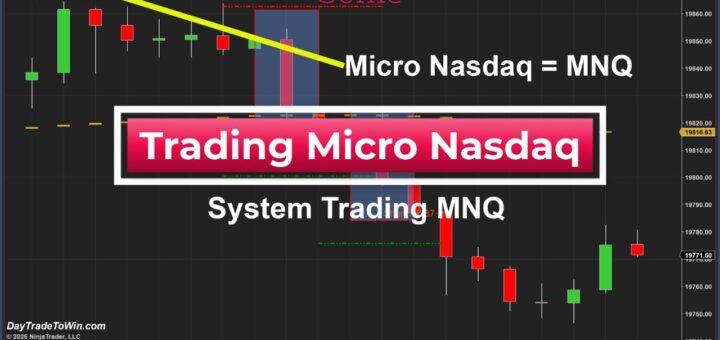
Monday, December 15 | Futures Market Breakdown When futures markets open with clear direction, disciplined traders can capitalize quickly. On Monday, December 15, price action across the Micro E-mini S&P 500 (MES) and Micro E-mini Nasdaq (MNQ) delivered exactly that—strong downside momentum and a series of high-probability short setups. For traders focused on micro futures, this session showcased how a rules-based, price-action strategy can produce consistent results in fast-moving markets. Early Market Action Signals a Bearish Bias From the opening bell, the market showed immediate weakness: When major futures contracts move in sync, it often reflects institutional selling—not random volatility. Why Micro Futures Attract Active Traders Micro futures contracts offer flexibility without sacrificing opportunity: Because the Sonic system is built entirely on price action, it can be applied to nearly any market—futures, stocks, indices, or commodities. Micro Nasdaq Trade Execution During this session on the Micro Nasdaq (MNQ): A single MNQ contract was used, with a balanced risk-to-reward ratio. Although a better entry price was possible, the strength of the trend justified taking the trade. The position moved in favor almost immediately. With one-minute candles, the trade reached its profit target in under two minutes, reinforcing the benefit of quick, decisive execution. Consistency Comes From Risk Management Even during strong trends, risk control remains critical: Despite seeing six to eight winning short signals in succession, disciplined risk management is what protects traders over time. Trading Price Action Instead of Indicators One of the strengths of the Sonic system is its simplicity: The system is available on TradingView and NinjaTrader, providing consistent signals regardless of platform. Adapting When the Market Changes Direction If market conditions shift and price begins to trend higher, the approach remains unchanged: Follow the signals—long or short. The goal is not prediction, but reaction to what price is doing in real time. Learn to Trade With Structure and Confidence Traders looking to develop consistency can access: To get started, visit daytradetowin.com and begin learning a structured, price-action-based approach to trading. Key Takeaway This Micro E-mini and Micro Nasdaq trading session highlights a simple truth: Clear trends, disciplined execution, and price action create opportunity. Whether markets move higher or lower, following a proven system keeps emotions out of the equation.

sonic
DayTradeToWin Review

Sonic Market Update: Long and Short Opportunities

Hello traders! Today is December 4, and in this update we’ll break down the latest movement in the E-mini S&P 500 (ES), Dow futures (YM/MYM), and NASDAQ futures (NQ/MNQ). We’ll also look at how to approach today’s setup using price action and tools like the Sonic System. Before we dive in, a quick reminder: trading involves risk. Only trade with capital you can afford to lose. Market Outlook: Momentum Still Points Higher Major U.S. indices continue to move largely in sync. While intraday pullbacks are expected, the broader trend still aligns with the forecast issued about one to two weeks ago:➡️ A move higher toward the most recent swing highs. Why the Highs Matter The market tends to accelerate when breaking through key resistance: A double top is possible, but historically, clean breaks above recent highs favor continuation strength. E-mini S&P 500 (ES): Bullish Bias Above the 50% Level Using a simple 50% midpoint tool on any charting platform: Even with this morning’s pullback, ES continues to form higher highs, showing buyers remain in control. The larger target remains a retest of recent highs, with the potential for continuation. Dow Futures (YM & MYM): Same Structure, Same Play The Dow is following the same pattern as the ES: When price returns to the highs:➡️ Expect another potential breakout pop. Traders using MYM can apply the exact same strategy. NASDAQ Futures (NQ & MNQ): Strongest Upside Potential The NASDAQ continues to show powerful structure: Projected upside for the micro NASDAQ sits around 1,300 points, possibly more depending on market momentum. Intraday Trading with the Sonic System On the 1-minute chart, the Sonic System is currently signaling short trades. However: The Sonic System provides: A live example in the transcript demonstrated a short trade taken immediately as the signal appeared — simple, fast, and rules-based. What to Focus on Today ✔ Overall trend favors the upside✔ Watch for a retest and breakout of recent highs✔ Intraday signals may vary, but big-picture bias is bullish✔ Sonic System signals are straightforward—follow stop, target, and trend shift✔ Price action remains the most reliable guide across all three indices Final Notes If you’re serious about improving your price-action skills: Trade smart, stay disciplined, and see you in the next update.

Scroll to Top